Connecting Teens with D&D

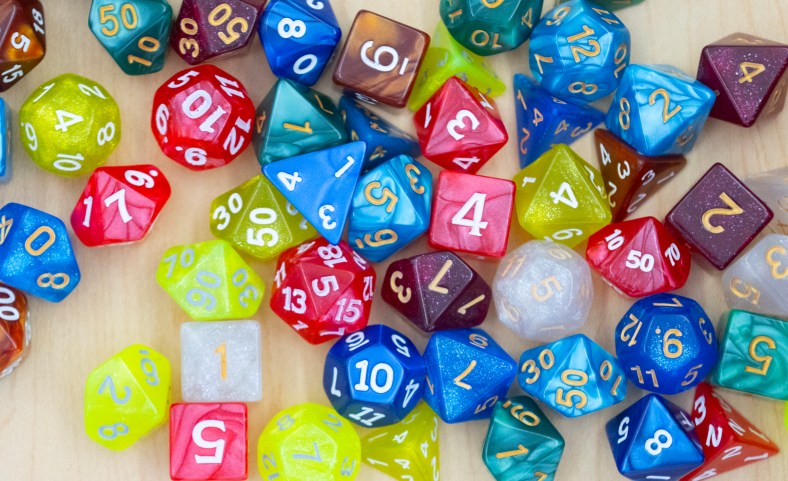
A photograph shoes mini-figures and dice in focus, with a teenager sitting behind an open book out of focus behind.
Teens gather weekly to play Dungeons and Dragons at HCLS Glenwood Branch.

by Julia M. and Paige S., teen instructors

What stemmed from a happenstance conversation in Summer 2023 with a group of teens asking for help with creating D&D characters grew into a long-term staple of teen programming at Glenwood Branch.

The first official meeting of the Glenwood D&D Club happened that September, when three students attended. I taught them how to play Dungeons & Dragons, but they were the ones who became fast friends, wove stories together, and welcomed new teens into the group over the span of the next six months. By the end of the school year, we had a group of six students meeting together every other Monday night to play the game and collaborate.

Teens love the welcoming environment, the lively atmosphere, and the opportunity to create and tell stories together where they can all play the hero. D&D is the perfect combination of a board game and a tale woven beside a flickering fire — each person contributes equally toward a collaborative, heroic adventure, the only limit of which is your own imagination.

By the end of Summer 2024, 15 to 20 teens were regularly attending. Not only that, but two of the recurring students worked with me to plan games for their peers and were running their games concurrently. We were now playing three D&D games simultaneously in our largest meeting room every other Monday night and had expanded the time to 90 minutes. With the teens recruiting their friends and neighbors, our almost entirely teen-run club continued to see an influx of new players even as the school year began and schedules shifted.

The group continued to flourish as the school year went on. We celebrated birthdays, finished complete storylines and began new ones, introduced new characters and challenges, and celebrated the group’s first anniversary.

Currently, the Glenwood D&D Club is still going strong. Teens continue to come to Glenwood excited and ready to see how their character’s stories will unfold. The fun doesn’t stop at Glenwood! In fact, D&D has found a home at the Central, Miller, and East Columbia branches, giving teens opportunities to play tabletop role playing games and build connections with one another.

Glenwood D&D Club
Mondays; Nov 10 & 24; Dec 8 & 22
6:30 pm
HCLS Glenwood Branch

Teen D&D Club
Wednesdays; Nov 19 & Dec 17
HCLS Miller Branch

Tabletop Gaming Paradise
For everyone. Register at bit.ly/tabletop-ECO
Thursdays; Nov 20; Dec 4 & 18
6 – 7:45 pm
HCLS East Columbia Branch
Gamers enjoy an evening of thrilling dice rolls and dire card draws. Explore our tabletop games collection or bring your own to share. Whether you have no experience or you are a tabletop min-maxer, this event is perfect for you!

Teen Dungeons & Dragons
Sat, Nov 22 | 1:30 pm
HCLS Central Branch

Our next chapter starts soon when the blog moves to the newly redesigned hclibrary.org. All the same great reviews and news, plus more library information! 
Global Neighbors Africa: Experience the Continent 

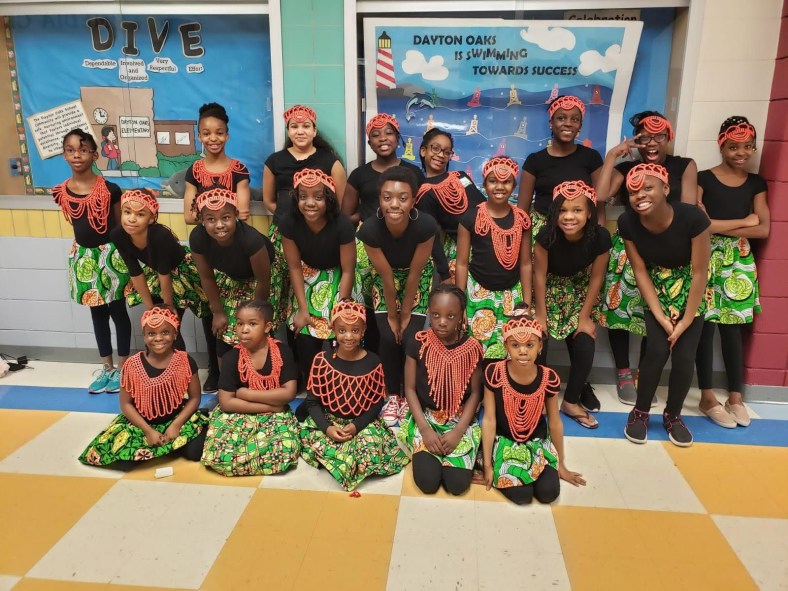
The photograph depicts a dance troupe wearing traditional clothing, posing in rows in front of a school bulletin board.

Sunday, October 5
2 – 4 pm
HCLS Miller Branch
Registration encouraged, as space may be limited.

The Global Neighbors team invites you to join in a heartfelt celebration of the traditions, stories, and values that bind us together across generations at our upcoming Global Neighbors Africa: Experience the Continent event on Sunday, October 5 from 2 – 4 pm at HCLS Miller Branch! This special program invites our community to celebrate the vibrancy and diversity of Africa through storytelling, music, dance, and food. Connect with your neighbors to share in the wisdom of the past and the promise of the future. 

An interactive and personal experience, Global Neighbors Africa showcases performances and demonstrations that highlight the continent’s regional richness. The event features art displays and offers additional layers of connection and inspiration. Intentionally inter-generational, this is about feeling, remembering, and being part of something bigger. It’s a reminder that the best lessons in life are often shared through the moments we create together. 

Guests can enjoy the opportunity to sample regional African food (as long as supplies last) and take home a door prize (also as long as supplies last). Celebrate connection, joy, and cultural discovery. Everyone is welcome – bring your family, friends, and curiosity as we travel the continent together, right here at the library. 

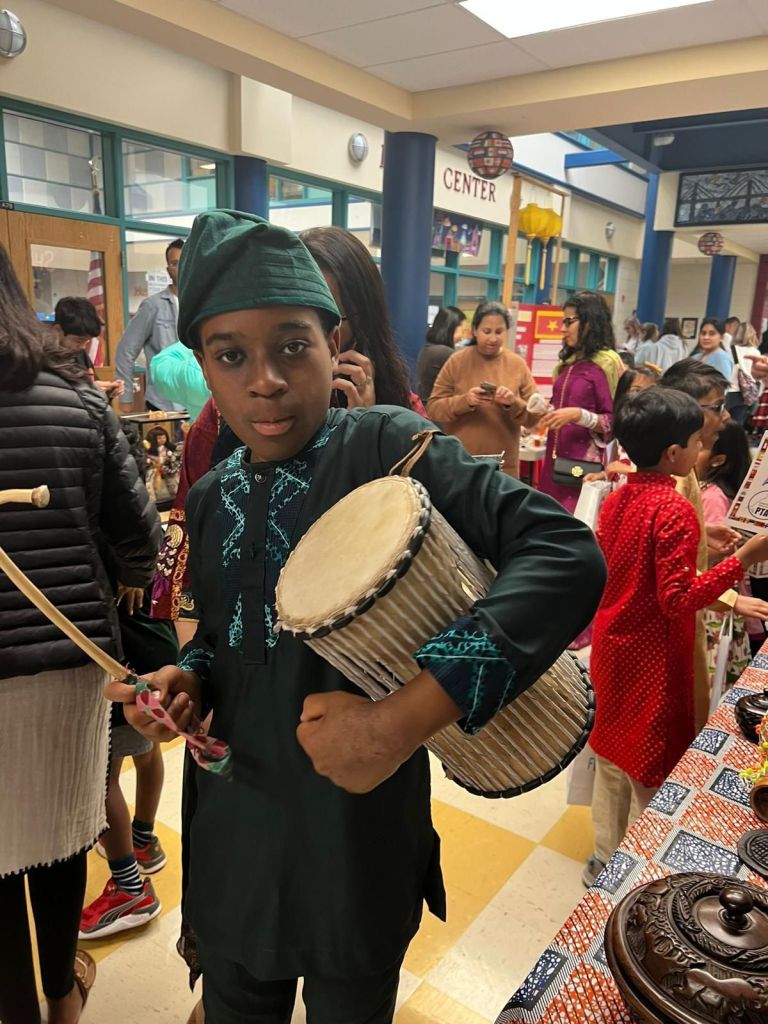
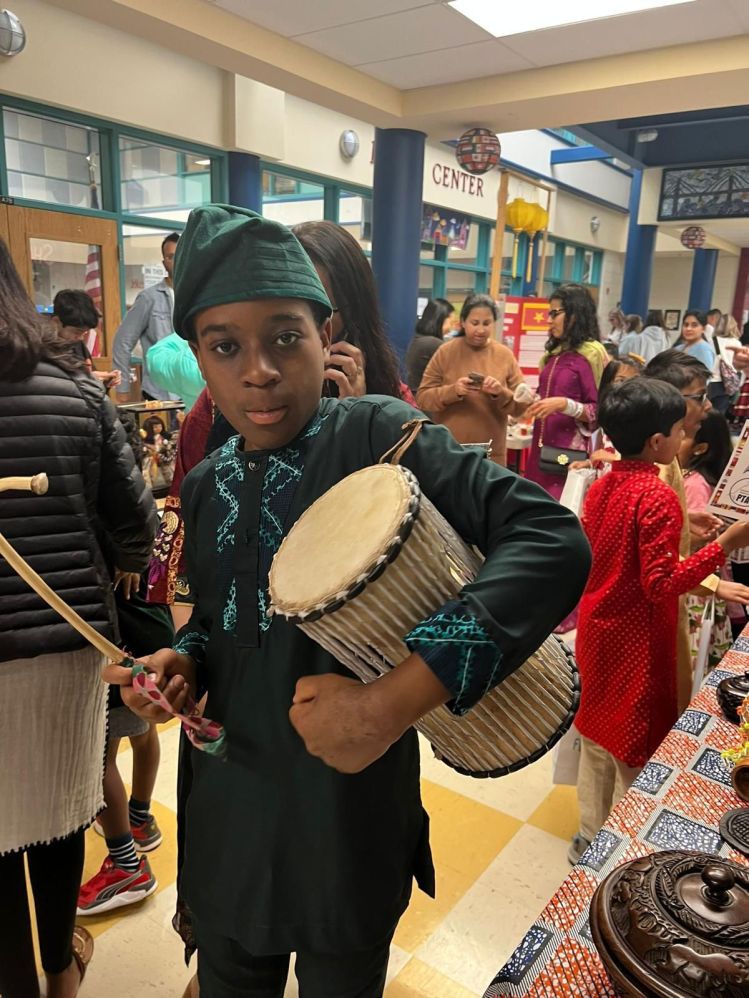
The photographs shows a little boy wearing traditional clothing carrying a drum.

Piyali is an instructor and research specialist at HCLS Miller Branch, where she facilitates two book discussion groups: Light But Not Fluffy and Global Reads. She keeps the hope alive that someday she will reach the bottom of her to-read list.

Twentieth Century Ghosts by Joe Hill

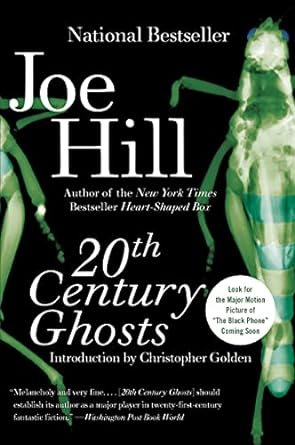
The book cover has glowing images of two bugs in iridescent green and blue against a black background.

by Angie E.

I like Joe Hill’s fiction, no matter which selection it is. I am particularly drawn to and sometimes revisit his amazing anthology 20th Century Ghosts. The collection comprises 15 short stories, each with its own unique theme and style. Joe Hill’s versatility shines through as he explores various aspects of horror, from traditional ghost stories to psychological thrillers. The stories are infused with elements of fantasy, science fiction, and dark humor, creating a diverse and engaging reading experience. 

The opening story, “Best New Horror,” sets the tone for the entire collection. It tells the tale of a jaded horror fiction editor who stumbles upon a manuscript that takes him on a horrifying journey into a world he could never have imagined. Hill’s use of meta-fiction in this story adds layers of complexity to the narrative, leaving readers with much to ponder. 

Joe Hill’s ability to create compelling characters makes his fiction unforgettable. Whether it’s a young boy who can transform into a living comic book character in “Pop Art” or the ghost of a movie projectionist in “The Projectionist,” his characters have a depth and humanity that gives the supernatural elements all the more a stirring and relatable feel. Hill’s skill in creating atmospheric settings also permeates the collection. Whether it’s a creepy movie theater, a haunted tunnel, or a sinister roadside attraction, the locations in these stories are as much a part of the narrative as the characters themselves. The sense of place adds to the overall immersion and tension in each tale. 

While horror is its primary genre, 20th Century Ghosts doesn’t rely solely on scares. Many of the stories delve into deeper emotional territory, exploring themes of love, loss, and the complexities of human relationships. “Better Than Home” and “Voluntary Committal” are poignant examples of Hill’s ability to tug at the heartstrings. Joe Hill’s imaginative storytelling is a defining feature of this collection. He doesn’t rely on clichés or tired horror tropes; instead, he constantly surprises the reader with fresh ideas and innovative twists. “My Father’s Mask” and “The Black Phone” are prime examples of his originality and the ability to keep readers on the edge of their seats. 

The titular story, “20th Century Ghosts,” is a beautiful and melancholic piece that serves as a fitting conclusion to the collection. It explores the idea that we are all haunted by the past in one way or another, and Hill’s prose resonates long after the final page is turned. 

Angie is an Instructor & Research Specialist at Central Branch and is a co-facilitator for Reads of Acceptance, HCLS’ first LGBTQ-focused book club. Her ideal day is reading in her cozy armchair, with her cat Henry next to her.

Math Made Simple with Storytelling Math

A collage of book covers: Picks for Kids, math made simple with Storytelling Math

by Sylvia H.

Summer is wrapping up as the new school year gets underway! If you are looking for ways to share early learning concepts with your kiddo(s), I present to you: Storytelling Math.

When you hear the words “storytelling” and “math,” the subject may seem self-explanatory. Maybe you picture the “How many ___?” stories, filled with little variety or excitement. Well, this is not your typical “count the bears” series. These stories feature diverse characters and cultures, blending math with everyday activities and allowing children and their caregivers to explore math together. Notes following the story often include comments from the author delving more into the topic and/or culture discussed, as well as examples of hands-on activities to try at home.

Topics covered include, but are not limited to: sorting, measurement, patterns, spatial sense, and fractions. Some stories are in board book format for the youngest learners, while others are in picture book format for preschool and prekindergarten-aged children. Both formats have titles available to borrow in English and Spanish.

Below is an overview of some of my favorites from the series. I will say, it was hard to choose! If you are interested in more recommendations, visit your local branch. We will be happy to help!  

A small child holds a wooden bird house, with blue birds sitting nearby.

Board Books

Circle! Sphere! by Grace Lin 

Olivia, Alex, and Mei are all set to blow bubbles. When they each get a different shape of bubble wand they wonder, “will their bubbles be different shapes?” Three-dimensional shapes are introduced in a fun, relatable way in this sweet story of friends playing together. 

A Beautiful House for Birds by Grace Lin 

Olivia is decorating a birdhouse and decides to paint a pattern. But when she accidentally paints the wrong color, what can she do to mend her mistake? This story explores patterning while incorporating problem-solving and perseverance, skills useful for children of all ages. 

The Last Marshmallow by Grace Lin 

After a fun time in the snow, Olivia and Mei come in to warm up with some hot cocoa. When it’s down to one marshmallow left for the two of them, they work to find a fair way to share their treat. 

A child holding an armful of balls appears to be outdoors in front of trees and bushes.

Picture Books 

Usha and the Big Digger by Amitha Jagannath Knight 

On a night of stargazing, Aarti, Usha, and Gloria see different things. Aarti sees the Big Dipper, Usha sees the Big Digger, and Gloria sees the Big Kite! Who is right? Explore spatial sense, orientation, perspective, and more as the three discover constellations. 

The Animals Would Not Sleep by Sara Levine 

As Marco prepares for bedtime, his mother asks him to tidy his toys. He decides to sort his stuffed animals, but they will not sleep! Marco tries different categories: how the animals move, their size, and color, but it doesn’t seem to work. What will help the animals feel safe? Readers will explore the concept of sorting and classifying objects, with a focus on how different methods of organization can lead to different outcomes. 

Too-Small Tyson by JaNay Brown-Wood 

As the youngest and smallest, it’s not always easy for Tyson to keep up with his four older brothers. When the family pet gerbil, Swish, escapes from his cage, Tyson and his older brothers begin a search to find him. When his brothers cannot locate Swish, Tyson thinks, “If I were Swish, where would I go?” When Swish is found under the bed, Tyson uses proportional thinking to help his little friend, showing his brothers that even though he may be the smallest, he can still think big.

Look, Grandma! Ni, Elisi! by Art Coulson 

Bo’s family is preparing for the Cherokee National Holiday festival, and he has worked hard making homemade marbles to sell at his family’s craft booth. The problem is that there is limited space to display them, so he has to find something to hold them that will not take up too much room. Bo sets out on a mission for the perfect container, experimenting with the concepts of estimation and volume along the way. Will he find something that works?

Did you know that Howard County Library System has on-demand classes for all ages? Check out our Learning for Children playlist. 

  1. Storytelling math series. (n.d.). Charlesbridge. https://www.charlesbridge.com/pages/storytelling-math-series 

Sylvia is a Children’s Instructor and Research Specialist at HCLS Miller Branch. She enjoys crafting, listening to audiobooks, naps, and walks with her dogs in 75 degree-ish weather.

The Singing Hills Novellas

The three novella coves in a row, in pinks, oranges, and blues.

by Kristen B.

Novellas have gained in popularity recently, and I suspect it’s because you get the satisfaction of a complete story without committing to a doorstop of a book. This holds particularly true in the speculative fiction genre, where 500+ page tomes are the norm. Nghi Vo is a master of this short form.

She has crafted a series of stories that follow cleric Chih of the Singing Hills Monastery as they travel, collecting stories as they go. Singing Hills specializes in history and folklore. The most reliable way Chih can elicit a story from someone happens when they tell one version of a tale. Their listener often says something to the effect of, “that’s not how I heard it,” and proceeds with the “correct” version. Chih is accompanied by a talking hoopoe bird with perfect recall named Almost Brilliant – but their interactions are entirely so. You can enjoy three installments to date, with a fourth coming this fall.

The Empress of Salt and Fortune (which won Hugo and Locus awards for best novella) is an amazing story of empire and ambition, with important details found in what is omitted as much as in what is overt. Chih visits a mostly abandoned country estate, where the only person living there happens to be the maidservant (and lover) of the former empress. She certainly has a story to tell our Singing Hills cleric! It’s one well worth the price of mild disorientation as you put the pieces of a major event together with Chih. Vo recounts this seemingly unimportant woman’s story in elegant, poetic language and imagery.

When the Tiger Came Down the Mountain may offer the best example of survival by asking for the corrected version of a story. As long as Chih keeps the tigers talking, they stay (mostly) safe until an expected contingent of mammoths can arrive to scare the hunters away. Tigers, you see, are proud creatures, clearly superior to humans. Just ask them. They also fall in love and prey to tricky foxes. The glory of this installment comes from understanding tigers as people – who are also hungry animals who regard Chih as a snack. It’s a wonderful story about relationships, empire, and living up (or down) to expectations.

Into the Riverlands brings Chih into the orbit of a group of travelers. This time they are in the riverlands, a delta area full of braided streams and marshlands where many rival martial arts masters co-exist – sometimes peacefully, often not. Here, Almost Brilliant shines by having a familiarity with the legendary personalities and combat styles involved. Again, beginning a story often elicits other versions and corrections. This installment offers more adventure, starting with the initial brawl in a tavern and ending with a spectacular battle. Many clues and inferences come together for an entirely satisfying conclusion.

I can’t wait to see where Chih and Almost Brilliant go next. Several colorful threads stitch these stories together: a non-Western milieu in the fantastical empire of Ahn; mostly humble, working-class protagonists, who nonetheless make a difference in their world; and cheerful acceptance of a generally queer outlook on the world. Beyond Chih’s non-binary identity, the books celebrate that love comes in many forms. We must all be true to our hearts, which is not a bad theme for some light-hearted books.

Kristen B. is a devoted bookworm lucky enough to work as the graphic designer for HCLS. She likes to read, stitch, dance, and watch baseball in season (but not all at the same time).

Wordless Joy

The cover shows a child and dog at the edge of a marshy pond, surrounded by trees, with herons and deer in the foreground. The pond is in shades of turquoise and the child, animals, and trees are in shades of grey and white with a hint of the turquoise blue; only the dog has a pop of yellow, on its collar and leash.

By Eliana H.

Many stunningly beautiful picture books are available to readers these days. Even if you don’t have young children in your life, you might be surprised at how much you appreciate picture books as an adult! Picture books can include a wide range of writing styles, sometimes with sparse or rhyming text aimed at younger readers, and sometimes with denser, more complex language. For this post, though, I want to highlight wordless picture books. 

The cover is a father and child walking hand-in-hand down a city sidewalk. The illustration is done entirely in shades of black and grey, except for the child's red coat and flowers in blue, yellow, and pink. The father carries a basked of groceries and their are parked cars and historic-looking buildings in the background.

Wordless picture books offer appealing illustrations that tell the creator’s story on their own. They tend to include abundant details that provide renewed enjoyment every time the book is read and reread. If you are a caregiver for a young child, you can use wordless picture books to practice important pre-reading skills. Look through the book together. Talk about what is happening in each of the pictures. Ask the child what they notice on the page. Teach sequencing ideas and language by showing the order of events in the story. Promote the child’s confidence by inviting them to read the story to you! 

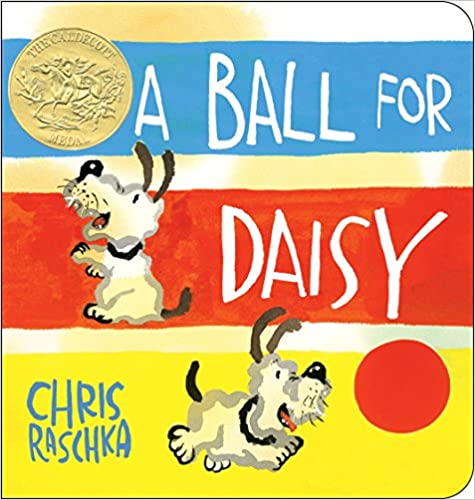
The cover depicts the dog, Daisy, a white dog with brown ears and tail and a black nose. She is shown in two scenes: standing on hind legs as if alert for a treat, and chasing a red ball. There are bands of blue, red, and yellow, with the title and white and the two pictures of Daisy, as well as the gold Caldecott medal for this award-winning book.

Even with older children, opportunities abound for wordless picture books to enhance their literacy experience. As their vocabulary and comprehension develop, children will be able to tell more detailed and complex stories to accompany the images. Repeated experiences with reading other picture books together may inspire them to create a story that sounds very much like a published book! Children can begin analyzing literature by comparing the way a story may be told without words to a version that does include text. 

Of course, the main factor that will determine the impact of sharing a wordless picture book, or one with text, is the connection between a caring adult and a child exploring the story together with joy and love. Take a look at a selection of wordless picture books from our catalog below, or ask library staff at one of our branches on your next visit.

The cover shows a royal blue bluebird against a pale blue sky and a cityscape of buildings in shades of white and grey.

A Ball for Daisy by Chris Raschka

Bluebird by Bob Staake

Delivery by Aaron Meshon

Draw! by Raúl Colón

Field Trip to the Moon by John Hare

The Fisherman & the Whale by Jessica Lanan

Float by Daniel Miyares

Flotsam by David Wiesner

Fossil by Bill Thomson

I Walk with Vanessa by Kerascoët

The Lion and the Mouse by Jerry Pinkney

The Paper Boat by Thao Lam

At the Pond by Geraldo Valério

Sidewalk Flowers by JonArno Lawson

Wave by Suzy Lee

Eliana is a Children’s Instructor and Research Specialist at HCLS Elkridge Branch. She loves reading, even if she’s slow at it, and especially enjoys helping people find books that make them light up. She also loves being outside and spending time with friends and family (when it’s safe).