Starting Friday, May 16, the East Columbia and Elkridge Branches began gun lock distribution.
Howard County Library System is proud to partner with the Howard County Health Department on a new initiative to distribute free gun safety locks to the public. This effort is part of a broader public health approach to promote safe gun storage in our community.
Between 2019 and 2023, nearly 40% of suicide deaths in Howard County involved a firearm. For adults ages 20 and older, firearms were the leading method of suicide. A gun safety lock can create a critical moment of pause—one that could save a life. Like seatbelts or smoke detectors, gun locks are a simple, effective tool to help keep our homes safe.
Gun safety locks are now available at the East Columbia and Elkridge Branches, free of charge and while supplies last. Residents of Howard County who are 18 or older can request up to two locks per day—no ID or proof of residency is required. Staff will simply ask for your ZIP code and how you heard about the program to help assess community needs. Each lock includes two keys, instructions, and a bookmark with a QR code that links to additional resources online.
Please note that firearms are never permitted inside library buildings. Library staff are unable to assist with installing the locks, but the included instructions and online resources can help. Customers may also choose to contact their local police department for further guidance.
This program is modeled after a successful initiative in Anne Arundel County and is supported by the VA Maryland Health Care System. It reflects a shared commitment between Howard County institutions to reduce harm and support the health and safety of our neighbors.
We invite you to stop by to pick up a gun lock, learn more, and take one small but meaningful step toward a safer community!
If you or someone you know is in crisis, help is available 24/7 through the Suicide & Crisis Lifeline by calling or texting 988.
Have you or someone you know and love ever experienced symptoms of depression resulting in contemplating ending your/their life? Chances are you, or someone you know, has had these thoughts and experienced feelings of hopelessness and overwhelming sadness.
Suicide and attempted suicide are widespread in this country. Suicide was the twelfth leading cause of overall death in the United States in 2020, claiming the lives of more than 45,900 people. Suicide was the second leading cause of death among 10 to 14 year olds and 25 to 34 year olds, and the fourth leading cause for people between the ages of 35 and 44 (NIH).
In 2020 alone, the US had one death by suicide every 11 minutes. Despite the prevalence, suicide is a topic that most people feel uncomfortable talking about; one that, unfortunately, carries a great deal of stigma. Those suffering in silence often do not reach out for and receive the help they need, when they need it. A person struggling with thoughts and feelings of suicide is in a deeply painful and dark place, often not knowing how or where to turn for assistance and relief.
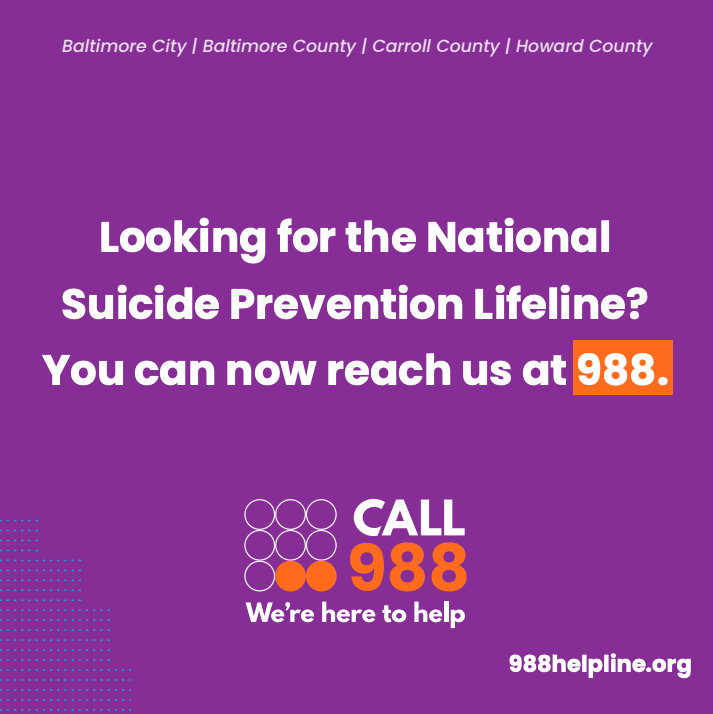
In July of 2022, to provide a resource – indeed, a lifeline – for those struggling, the federal government mandated that the National Suicide Prevention Lifeline change its ten digits to a new, 3-digit number: 988. Making this change has increased awareness, providing more equitable and accessible crisis services to people across the country. The 988 helpline is confidential, free, and available 24/7/365 for anyone experiencing mental health, substance use, or suicidal crisis.
Trained mental health counselors are available through landlines, cell services, and voice-over-internet devices for conversations on the phone or through texts and chats. The counselors are available to listen to each caller, assess their level of need, identify whether they are in a crisis state, and provide them with the connections and resources to help. 988 is a helpline for everyone, of any age, anywhere in the US, regardless of their situation and circumstances.
It is sometimes difficult to know who is suffering or how to help those struggling with overwhelming feelings of stress, anxiety, depression, grief, and/or any number of other stressors and emotional challenges. For this reason, it is important and necessary for everyone in our communities to share the 988 resource with family, friends, neighbors, colleagues – everyone in our social circles. No one is alone in their struggle. Help is here.
In partnership with Grassroots Crisis Intervention Center, HCLS Miller Branch is offering QPR (Question, Persuade, and Refer) Suicide Prevention Training Monday, May 15 at 6:30 pm. Some key components of QPR training include:
How to help someone who is considering suicide
The common causes of suicidal behavior
The warning signs of suicide
How to get help for someone in a suicide crisis
Register here for this training, specifically designed for people who do not have experience in suicide intervention.
In light of HCLS’ community partnership with Howard County General Hospital, Chapter Chats is pleased to have Laura Torres, LCSW-C, as a guest blogger today. Laura is the Behavioral Health Program Manager with the Population Health Department at Howard County General Hospital.
In 2013, I was living overseas as a military spouse and was struggling with my mental health. Desperate for help, I did a quick internet search to find the number for the Mental Health Services on base. The first question asked was, “Are you active duty?” When I replied that I was not, the response I got was, “Then we can’t help you.” Hearing those words was devastating to my despairing mind and I felt defeated in that moment. The person on the other end then asked, “Are you experiencing suicidal thoughts or do you feel that you might harm yourself or others?” My reply was, “If I was, I’d be in trouble, since you just said you can’t help me!” I made it past the lies that depression was telling me and the very insensitive message that I received that day. I have been traveling a road of healing for the last 10 years. Some days are hard, but I now know that there is help.
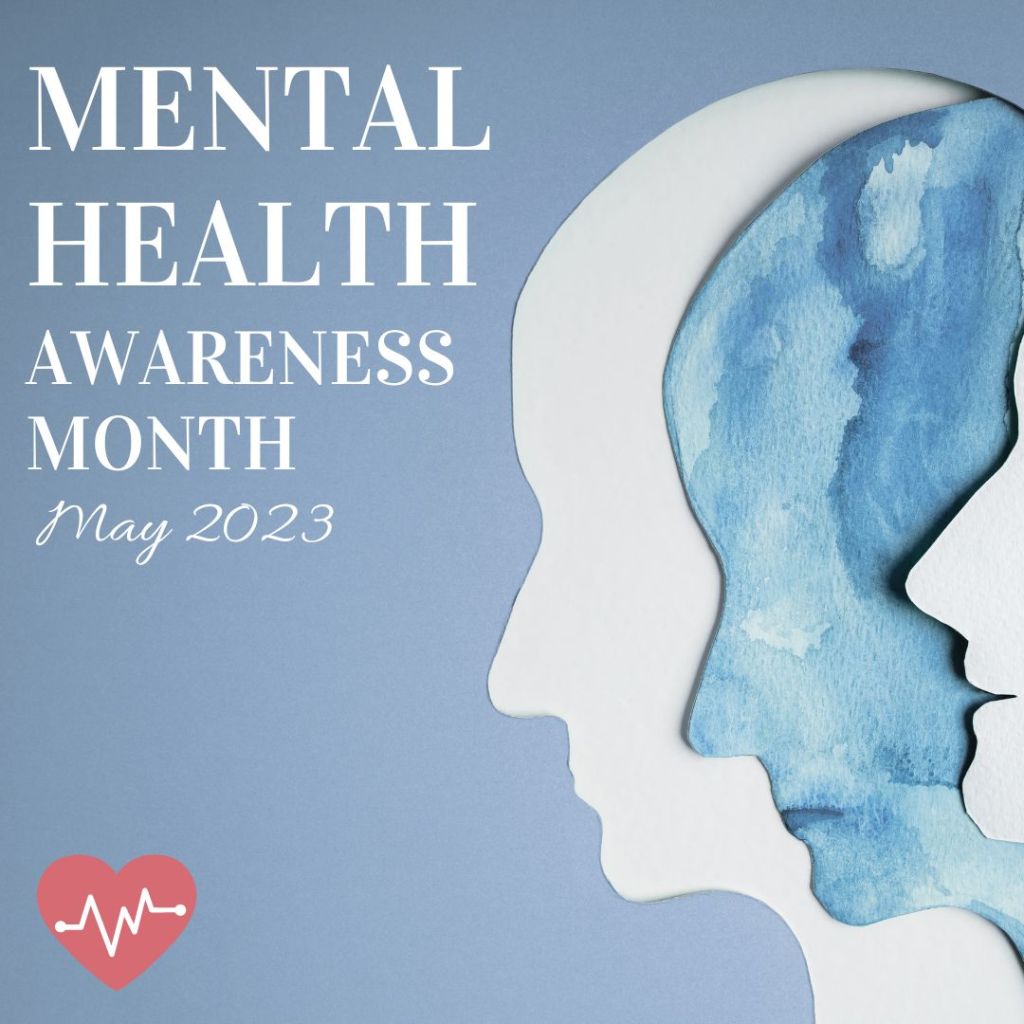
May is Mental Health Awareness Month and I want to begin by saying three things:
1. You are not alone.
2. Help is always available.
3. You (and your mental health) matter.
You Are Not Alone
Almost everyone knows someone with a mental illness. Understanding the prevalence of mental health conditions is important in destigmatizing it. Nearly 450 million people worldwide are currently living with a mental illness. In the United States, one in four adults suffer from a diagnosable mental disorder. Almost half of adults in the US will experience a mental illness during their lifetime. The three most common diagnoses are anxiety disorders, depression, and post-traumatic stress disorder (PTSD).
Life can be challenging, but every day shouldn’t feel out of control. Take time to ask yourself about your thoughts, feelings, and behaviors to see if this is part of a pattern that may be caused by a mental health condition. Here are some questions to get you started:
Have things that used to feel easy started feeling difficult?
Does the idea of doing daily tasks like making your bed now feel really, really hard?
Have you lost interest in activities and hobbies you used to enjoy?
Do you feel irritated, possibly to the point of lashing out at people you care about?
If your answers to the any of the above are yes, start a conversation with your primary care provider, a trusted friend, or a family member about your mental health. Please note: A mental health provider (such as a doctor or a therapist) can give you a full assessment and talk to you about options for how to feel better.
Help is Always Available – Free Community Resources
988 – Suicide and Crisis Lifeline – offers free 24/7 call, text, and chat (988lifeline.org/chat) access to trained crisis counselors who can help people experiencing suicidal thoughts, substance use, mental health crisis, or any other kind of emotional distress. Just text or call 988 nationwide. People can also dial 988 if they are worried about a loved one who may need crisis support. While text and chat are available in English only, calling services are in English and Spanish and use Language Line Solutions to provide translation services in over 250 additional languages.
211 Marylandis the state’s most comprehensive health and human services resource database. With more than 7,500 resources, individuals with essential needs can get connected to local help 24/7/365.
211, Press 1 is an immediate, always-on-call suicide prevention, substance use intervention, and mental health emergency assistance line available in the state of Maryland. Dial 211 and Press 1. 211 specialists are also available to chat or text. For text services, text your ZIP code to 898-211.
211 Health Check – provides proactive mental health check-ins to support those with anxiety, stress, and depression. The weekly connections provide one-on-one support with the goal of preventing suicide and other mental health emergencies. If requested, the 211 specialist can connect the caller with mental health resources. To sign up for weekly mental health checks, text MDMindHealth to 898-211.
MD Young Minds is a new resource for teens and adolescents who are struggling with their mental health. It sends supportive text messages, with a focus on teen and adolescent concerns and worries. To sign up, teens should text MDYoungMinds to 898-211. The ongoing messages also remind youth that immediate mental health support is always available through 211, Press 1.
Local Mental Health resources are available through the Howard County Health Department by visiting this website.
You (and your mental health) Matter
Mental health is an important part of overall health and well-being. Mental health includes our emotional, psychological, and social well-being. It affects how we think, feel, and act. It also helps determine how we handle stress, relate to others, and make healthy choices. Mental health is important at every stage of life, from childhood and adolescence through adulthood.
No matter your age or stage in life, you and your mental health are important. If you’re looking for resources to help make self-care part of your routine, the library can help get you started.
The Little Book of Rest: 100 Ways to Relax and Restore Your Mind, Body, and Soul by Stephanie Thomas is a book that can help you formulate your own actionable self-care plan. Everyone is unique, so make a self-care routine that works for YOU. This book is divided into four sections, with plenty of ideas for each category: physical, mental, emotional, and spiritual exercises to give yourself time and space to focus on wellness.
In The Self-Healing Mind, Dr. Gregory Brown advocates for a holistic approach to mental health treatment. Dr. Brown supports integrating conventional treatments (medication and talk therapy) with lifestyle changes that he calls the pillars of self-care: breathing mindfully, sleep, spirituality, nutrition, and movement.
Mindful Moments for Kids is an audio CD that is broken down into one-minute “mind breaks” – including guided meditations, relaxing music, nature sounds, and breathing exercises. Using these moments can help calm, focus, and inspire mental health as an everyday practice.
As a form of self-care, you can also try out meditation with some beginner’s meditation classes on HCLS’ YouTube Channel. There are three meditation sessions available:
Finally, HCLS Miller Branch is offering Suicide Prevention Training on Monday, May 15 at 6:30 pm, in partnership with Grassroots Crisis Prevention Center. Register here (starting Monday, May 8) for this training, which will show you how to recognize the warning signs of a suicide crisis and is designed for people who do not have experience in suicide intervention.
These are just a few of the resources and opportunities available at Howard County Library System.
If you are thinking about harming yourself or attempting suicide, tell someone who can help right away. Call 911 for emergency services. Go to the nearest hospital emergency room. Call or text 988 to connect with the 988 Suicide & Crisis Lifeline. The Lifeline provides 24-hour, confidential support to anyone in suicidal crisis or emotional distress. Support is also available via live chat. Para ayuda en español, llame al 988.
Sources: ADAA.org, hopkinsmedicine.org, mhanational.org, National Institute of Mental Health
Kimberly J is an Instructor and Research Specialist at the HCLS Glenwood Branch. She enjoys reading, photography, creating, crafting, and baking.



 CHAPTER CHATS