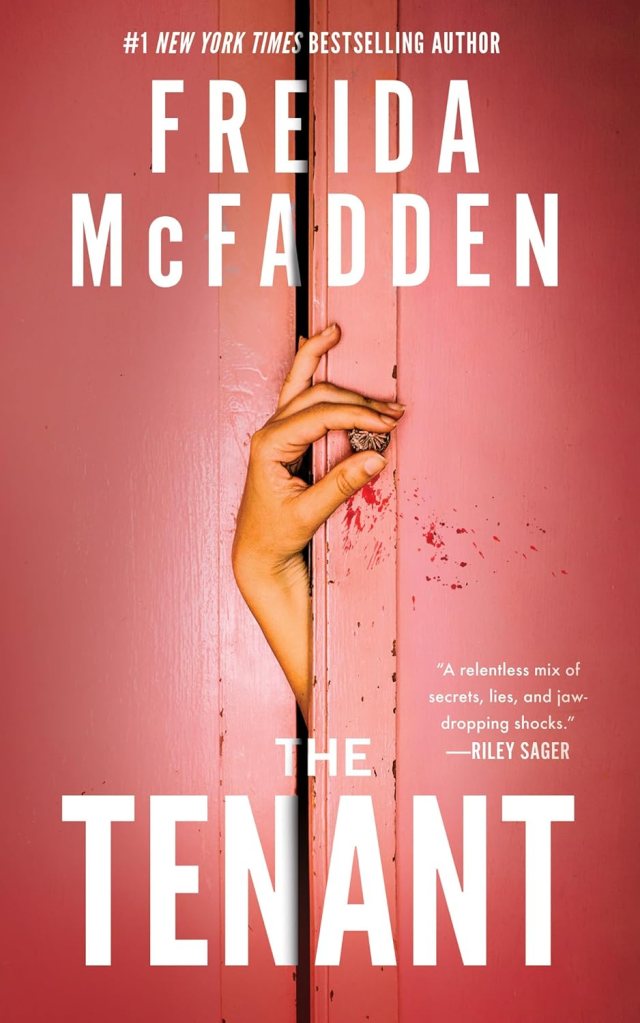
I’ve never had a live-in tenant, as the thought of living with a stranger — regardless of their glowing references and background checks — seems straight out of an episode of Criminal Minds or Law and Order: SVU. And while I don’t usually fall for hype surrounding “buzzed about” authors, I made an exception for Freida McFadden, in the interest of literary experiment.
I devoured The Tenant, which centers on Blake Porter, a VP of marketing and newly engaged to girlfriend Krista. Blake loses his job, and in order to afford his New York brownstone, he agrees to take in a tenant. But not just any ordinary tenant: The young and beautiful Whitney moves in to help make ends meet for Blake and Krista. Hard-working, charming, smart, and nice, Whitney is the perfect tenant, right? Soon, nothing is right when Blakes discovers dead bodies, family secrets, fruit flies, infidelity, itchy laundry detergent, and plenty of bloodshed. McFadden writes a story dripping with intrigue, one that makes you question how much you can truly trust a stranger living in your home.
There is a reason McFadden’s books are often checked out in our branches. Here, she’s crafted a suspenseful page-turner with twists and turns right up until the epilogue. The Tenant will live rent-free in your thoughts long after the last page.
Carmen J. is a teen instructor at HCLS East Columbia Branch. Among her favorite things are great books, all things 80s, shamelessly watching The Bachelor, gardening, and drinking anything that tastes like coffee.
It’s been awhile since I’ve read a really good stand alone spy thriller. Damascus Stationkept me on the edge of my seat, wondering how it was all going to end. Sam Joseph is a CIA agent, with a specialty in recruiting assets and a penchant for high stakes gambling in Vegas. He’s managed not to become too cynical about his work. We meet him while he’s trying to get another CIA agent and a scientist out of Syria before the scientist is arrested. The operation goes bad, and it fuels the rest of the story.
Mariam Haddad is the privileged daughter of a Christian family who works in Assad’s government in Damascus, but not entirely happily. She’s aware enough to understand the deal with the devil her family has made for its own survival. When she is asked to coerce an opposition member to come back to Syria, mostly by threatening the woman’s family, Mariam begins to ask serious questions about what she’s doing with her life.
The book spends close to the first hundred pages setting all the pieces on the board, and there are a lot of them beyond our two main characters. Author McCloskey does a great job of making the secondary characters well drawn and interesting, from Mariam’s rebellious cousin to the CIA station chief. My favorites are the three BANDITOS brothers who help Sam run surveillance. The Syrian players are equally interesting, including rival factions within the regime’s security offices and a pair of Sunni rebels from Douma who carry out assassinations. Ali Hassan is a top level Syrian counter-intelligence operative, who is feuding with his brother Rustum, the man in charge of secret prisons and political interrogations. Ali is a good man caught in a bad situation, whereas Rustum is a monster planning to use sarin gas against his fellow Syrians.
The ever increasing stakes are ratcheted by questions of who has been “made” and who is safe. The emotional stakes are high, too, as Sam and Mariam have an immediate, mutual attraction. The rules forbid their entanglement, but their hearts know differently. The book moves quickly, from Syria to the US to France and Italy, then back again. As the plot moves from setting up the board through to the fast-paced, brutal end game, you have to race to keep up with all the characters and figure out what’s really happening. The payoff is worth it!
The author leavens the tension with enough humor and personality that I really invested in the story and the characters. Station Chief Artemis Proctor is a Class-A Character! She seems to be the recurring character in other books by McCloskey (Moscow X and The Seventh Floor), which are now at the top of my summer reading list. His background with the CIA informs his novel with detailed spycraft and knowledge of how things work, but doesn’t slow down the story too much. After all, the trade of espionage is part of what makes the genre so much fun to read.
Damascus Station by David McCloskey is available in print.
Kristen B. is a devoted bookworm lucky enough to work as the graphic designer for HCLS. She likes to read, stitch, dance, and watch baseball (but not all at the same time).
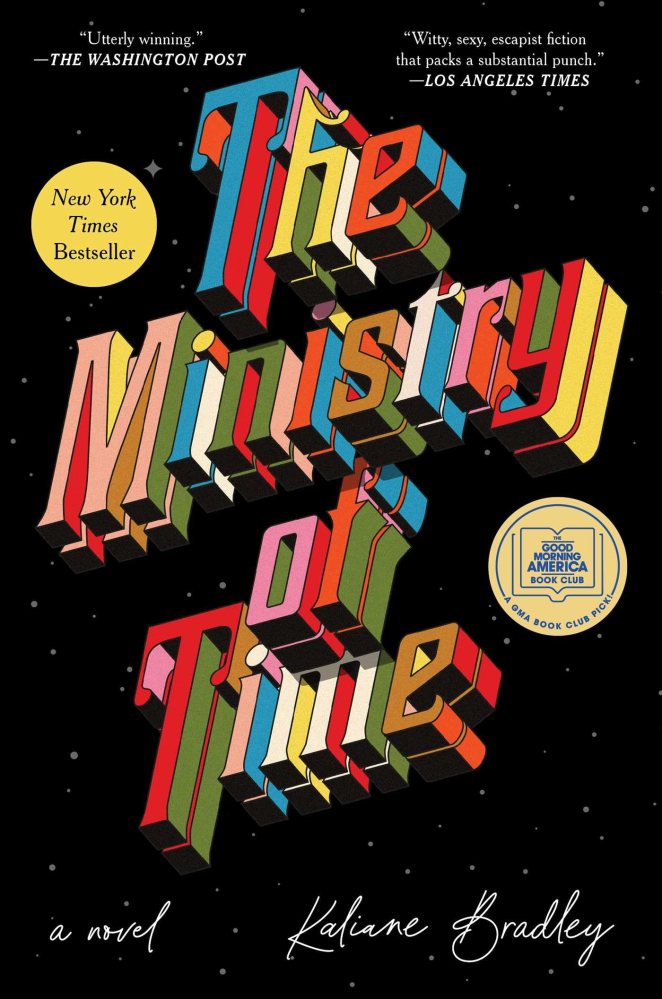
As the story begins, the main character is finishing a series of rather hush-hush job interviews. When she learns she got the new position, she hears the words, “We have time travel.” Welcome to The Ministry of Time by Kaliane Bradley, which plays with the notion that sometime in the future, we figure out how to travel in time.
It’s one of the biggest question about time travel: Can we improve the present – avert some disaster – by changing the past? This story seems a little different, more scientific at the start – wondering if it’s even possible for humans to exist outside of their own time. The Ministry devises an experiment where they “rescue” certain individuals known to have died in tragic or terrible ways: a doomed trip to discover the Northwest Passage, a plague house in the 1600s, the trenches of WWI, and other such horrible histories. Those individuals feel more like they’ve been kidnapped than rescued.
The book’s narrator, who gets that job with the Ministry (but never a name), is assigned to be a bridge between Graham Gore, officer of the Royal Navy in the early nineteenth century, and her time period in near future London. She insists on referring to him as being Victorian, but his time was actually just before Victoria’s reign began. The first third of the book delights in Gore’s observations of modern life and conveniences. But clearly, something is amiss in the Ministry. The main character just can’t quite figure it out but strange happenings keep occuring, like her handler being assassinated at a public event and certain time travelers being invisible to scanners. Other things don’t add up either, although it becomes clear there are warring factions within the Ministry. No one is quite sure who to trust.
Graham and our narrator spend almost all their time together: learning modern skills like riding a bike (which eventually improves to a motorcycle), touring museums, and going to pubs with other time traveler/bridge pairs. One session admiring a Turner exhibit at the Tate is particularly insightful. Graham becomes good friends with two other people out of time, one of whom is my favorite character. Maggie was left to die in a plague house, but she comes to embrace London’s club scene and dating apps where she can be openly gay. These friendships prove to be crucial not only to the characters’ well-being, but to the ultimate resolution of the story.
On top of the fascinating premise, the author has a gorgeous way with words. One character is described as, “Despite being out of uniform, he looked oddly formal, as if he was as the sole person in serif font.” I don’t want to spoil the surprise of this excellent debut. What ensues in the second half of the book is a complete mash-up of time travel, spy thriller, and romance into a beautifully written novel about the dangers of colonialism. Bradley really does tell you everything you need to know in the first chapter, only I didn’t realize it until I re-read it after the devastatingly bonkers ending. This is a book I’ll think about often and already have plans to re-read.
Kristen B. is a devoted bookworm lucky enough to work as the graphic designer for HCLS. She likes to read, stitch, dance, and watch baseball (but not all at the same time).
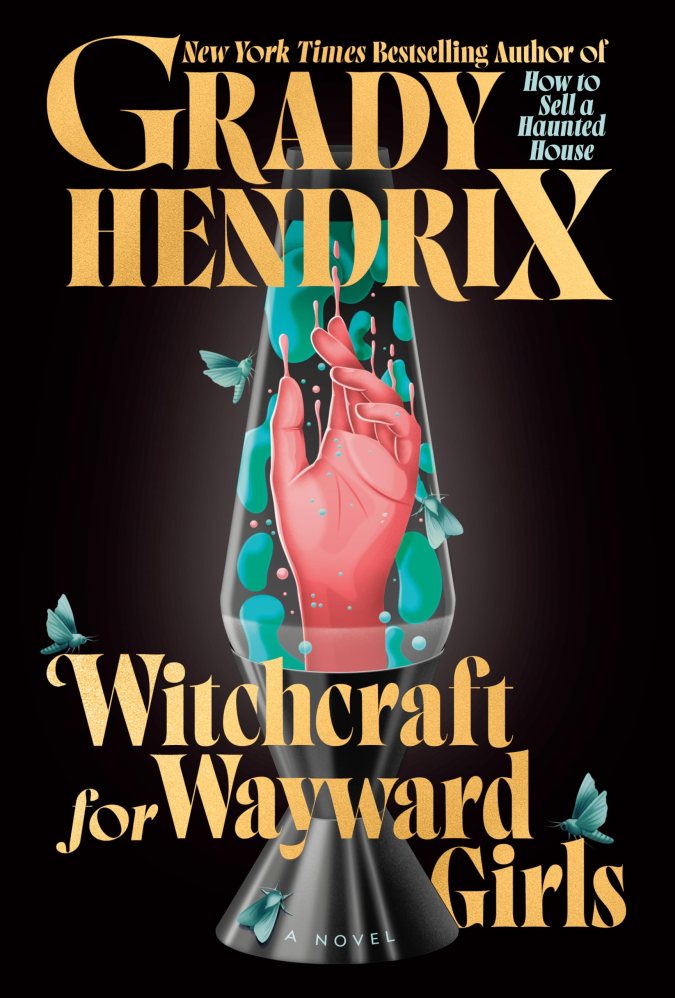
The newest Grady Hendrix book, Witchcraft for Wayward Girls, is out but a lot of people have already reserved it. While waiting on the holds list, you may want to re-familiarize yourself with his previous works or start fresh, you can always start with We Sold Our Souls or My Best Friend’s Exorcism.
Grady Hendrix is renowned for his ability to mix spine-chilling scares with biting wit and heartfelt humanity. Born in South Carolina and based in New York City, Hendrix has carved a place in the literary world by revitalizing classic horror tropes with a fresh, often darkly comedic twist. His novels, such as Horrorstör(a haunted IKEA-esque nightmare) and The Southern Book Club’s Guide to Slaying Vampires (suburban-mom vs. ancient-evil), have earned him a cult following for their nostalgic charm, social commentary, and genre-bending creativity.
If Black Sabbath and Stephen King ever had a love child, it would be We Sold Our Souls, flowing with distortion, saturated in dread, and rocking a leather jacket. Hendrix’s novel is a wild, riff-loaded joyride through the dark side of fame, where the price of stardom isn’t just your soul… it’s way messier. Kris Pulask, once a guitarist for the 1990s metal band Dürt Würk, is a down-and-out hotel night manager. When her ex-bandmate emerges as a superstar solo act, Kris uncovers a menacing plot involving Faustian deals, creepy contracts, and a conspiracy that makes Spinal Tap’s exploding drummers look tame.
Hendrix cranks the amp to 11, mixing gnarly horror with a love letter to metal’s rebellious spirit. Kris is a hero you’ll root for (think Alien’s Ripley with a Gibson SG) in a quest that is equal parts hair-raising and headbanging. Don’t let the gore and guitar solos fool you, though; beneath the blood-splattered surface lies a sharp critique of sellout culture. Hendrix nails how the music industry (and capitalism in general) chews up artists and spits out hollowed-out souls. It’s smart, savage, and uncannily uplifting, like a mosh pit that leaves you bruised but grinning.
And if you’re left wanting more and Witchcraft for Wayward Girls is still on hold, there is also My Best Friend’s Exorcist. The Exorcist meets Clueless in Hendrix’s loving ode to the 80s, with a John Hughes-level devotion to teen angst. Hendrix nails the era’s aesthetic like a crimped hair goddess: think demonic possession via Jell-O Pudding Pops, exorcisms with soundtracks by Whitesnake, and a villainous priest who probably shops at Spencer’s Gifts. The horror is gruesome, but the heart is pure ’80s cheese.
Hendrix’s work frequently explores themes of community, resilience, and the everyday fears of modern life, all while delivering page turning plots and memorably offbeat characters. A long-time horror enthusiast, he also wrote the nonfiction bestseller Paperbacks from Hell, a fond deep dive into the wild world of 1970s and ’80s horror paperbacks. In 2023, he snagged the Bram Stoker Award for Superior Achievement in a Novel for How to Sell a Haunted House, proving his gift for turning even the most absurd ideas into emotionally resonant tales. You can’t go wrong, really, with any of his books.
Angie is an Instructor & Research Specialist at Central Branch and is a co-facilitator for Reads of Acceptance, HCLS’ first LGBTQ-focused book club. Her ideal day is reading in her cozy armchair, with her cat Henry next to her.
October is the season of frights and jump-scares. If you are anything like my friends and I, it means setting aside time to indulge in the shivers, chills, and heart palpitations that come with quality horror.
Over the years, my relationship with horror has evolved in surprising ways. As a child, the game Animal Crossing scared me so badly with a cheeky Easter egg that I ripped the disc from my GameCube and banished it to the farthest corner of my basement closet. Yes, the quaint, whimsical game about quirky animal neighbors and paying off a mortgage once sent me into a panic. As an adult, however, I’ve grown to love horror.
To celebrate the season, I wanted to share a brief list of media that use horror in fascinating and effective ways (as opposed to cliché or tired tropes). This selection of my favorites showcases how horror can transcend traditional scares, confronting us not just with fear but with deeper questions about meaning, control, and survival. Whether it’s through surreal absurdity, cosmic dread, or psychological unraveling, each of these works leaves a mark that lingers long after the story ends. Happy Halloween!
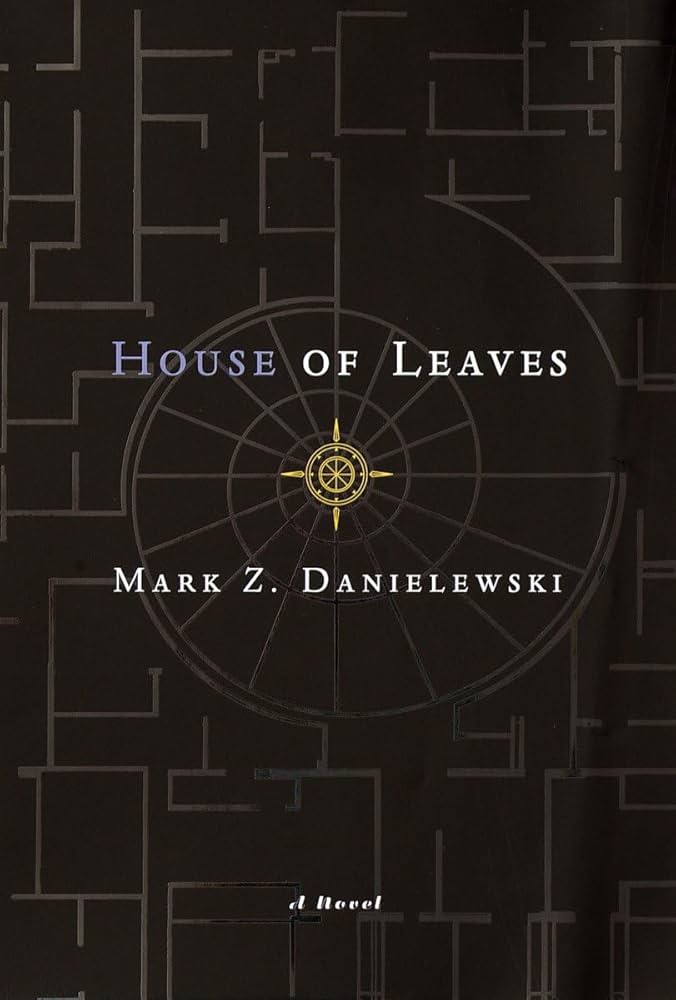
House of Leaves is one of the best pieces of fiction I have ever read – a wild, shifting text as concerned with the construction of meaning through language and signs as it is with the emotional turbulence of love, security, and existential dread. At its most succinct, House of Leaves is a book about an essay about a movie about a house that does not exist – and that house is also the book itself.
The story begins with Johnny Truant, a troubled, erratic young man living recklessly, burning the candle at both ends. One day, Johnny is invited into the apartment of his recently deceased neighbor, Zampanò. In the disheveled, eerie apartment, he discovers Zampanò’s final work: an academic treatise on a film called The Navidson Record. The catch? Zampanò had been blind for years, and The Navidson Record – a documentary by renowned photographer Will Navidson chronicling his family’s search for peace in a new home – does not seem to exist.
The house on Ash Tree Lane, as depicted in documentary, reveals itself to be bigger on the inside than the outside. As Will and a growing team investigate, the house grows endless, until the gravity of this impossibility threatens to undo everything. As you read, Johnny Turant does too – editing Zampanò’s fragmented manuscript while unraveling under his own troubles, which may all stem from the manuscript itself. Is the house real? Is it a curse? These questions spiral outward, pulling the reader into a labyrinth where certainty slips away leaving behind nothing at all —and perhaps the absence of anything is the most terrifying thing of all.
Greek filmmaker Yorgos Lanthimos has enjoyed international acclaim with films such as The Lobster, The Killing of a Sacred Deer, and Poor Things. Lanthimos excels at the strange and unsettling, crafting horror from the surreal and the absurd.
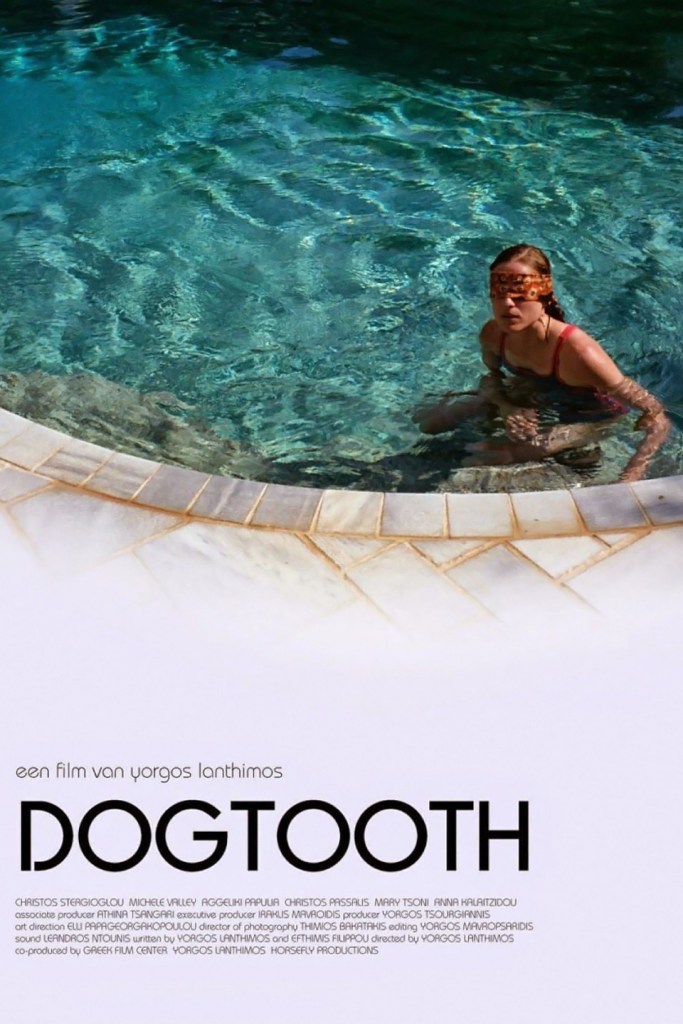
Case in point: Dogtooth centers on a family—a husband, wife, and their adult children—who live in complete isolation within a barricaded compound. The children have never left the confines of their home. They are raised on a manipulative regime of misinformation and control, where their parents deliberately distort language, knowledge, and their reality. Words are redefined to remove meaning. A ‘zombie’ is a small yellow flower. Cats are the most dangerous predator known to man. An adult is someone who has lost their dogtooth and is ready to leave the house. Fear of the outside is instilled with brutal efficiency to maintain compliance.
The result is a deeply unsettling exploration of control, isolation, and the fragility of identity. As the children struggle to conform to this artificial reality, cracks begin to form—revealing the horror that lies in the breakdown of personal autonomy. Dogtooth offers a stark, absurdist look at the consequences of power unchecked, leaving viewers disturbed not by monsters or supernatural forces, but by the cruelty of manipulation and the terrifying plasticity of human perception.
Junji Ito masterfully exposes the stark horror lurking within the mundane. Uzumaki follows the residents of a small Japanese town cursed by spirals—patterns that begin to consume not just the environment, but the minds and bodies of the people.
The father of the protagonist’s boyfriend becomes obsessed with spirals, collecting spiral-shaped objects, bathing in whirlpools, and only eating spiral-shaped noodles. He stares into spiral patterns for hours until even his eyes twist in opposite directions. Eventually, he dies attempting to twist his own body into a spiral. At his funeral, the crematory smoke spirals upward—only to shift and coalesce into a grotesque, grinning image of the man’s face, spiraling downward as if to envelop the town.
And from that moment, everything begins to unravel.
Junji Ito, a master mangaka, explores his work episodically in a sort of slice-of-fear narrative. Each chapter plays with the themes of the work, as it also delivers high quality and terrifying artwork. Uzumaki’s exploration delves into the erupting terror of grappling with forces beyond one’s control or comprehension. The horror of Uzumaki is mindless and indifferent, transforming even ordinary things—snails, ears, and babies—into sources of visceral dread. In Ito’s hands, the spiral becomes the embodiment of an absurd, indifferent universe where nothing is safe from corruption.
Berserk is a masterpiece: an amazing, serious, and beautiful piece of art.
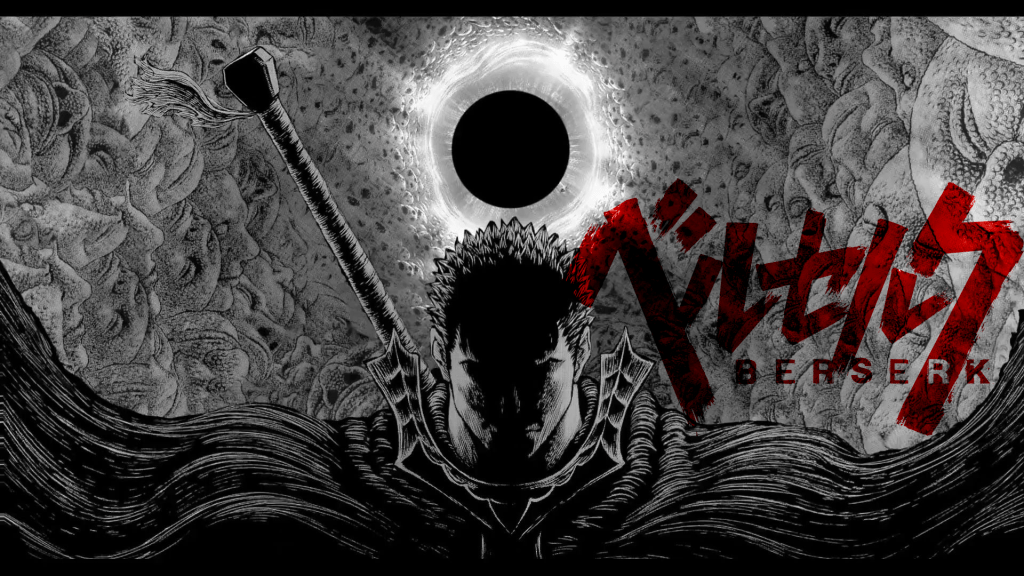
Miura blends dark fantasy, psychological horror, and cosmic dread into one stunning and harrowing tale. Berserk follows Guts, the Black Swordsman and lone mercenary, as he battles through a relentless horde of monsters and demons. What begins as a journey of survival transforms into a profound meditation on trauma, betrayal, and the price of ambition.
The horror of Berserk lies partly in its grotesque monsters and their monstrous actions, but these monsters are rarely fully inhuman. This tension between humanity and power is central to the narrative, exemplified in “The Eclipse”—the most grueling, nightmarish scene in the story. This sequence rivals the most terrifying moments in any medium, where betrayal, loss, and monstrous transformation collide, leaving an unforgettable mark on both the characters and the audience. I do not say this lightly.
Berserk’s resonance and impact go beyond its grotesque (and frankly beautiful) artwork or the epic battles between Guts and the demon apostles. Its characters are written with profound psychological depth. Guts may present as a stoic, muscle-bound warrior, dismissing his problems with grim resolve, but that could not be further from the truth. His struggle is both external—hunted by the evil Godhand and their legion of apostles—and internal, as he wrestles daily with despair and rage. These emotions stem from what he and his comrades endured at the hands of someone they once trusted as their leader.
Berserk is not just horror for the sake of horror—it is tragic, beautiful, and unforgettable. It reminds us that even in the face of overwhelming darkness, the struggle to endure can be its own kind of victory.
Berserk contains highly intense themes and disturbing scenes that may be difficult for many readers. If you’re considering reading it, I strongly recommend looking into its content beforehand to ensure you’re comfortable with the material. Berserk offers incredible depth and artistry, but it is not a story to approach lightly—you should know what you’re getting into.
Ian Lyness Fernandez is an instructor and research specialist at East Columbia Branch. Although he first engaged with most of these works in high school, he wants to emphasize that these recommendations are intended for adults—adults who want to be horrified, to boot. Dead dove: do not eat, and so on.
I’m pretty good at figuring out where a plot is headed before it ends. Whether it’s something I expected to happen or an unexpected twist, I keep it to myself. I’m not one of those people who spoils the journey through the storyline for other readers. When a book ends exactly the way I knew it would, I feel a satisfied smile spread across my face, and on the inside exclaim, “Ah ha! I knew it!”, then I move on from that author. But when my brain is spinning, my mouth drops in shock, and all I can think is “I did NOT see that coming,” I’m hooked and eagerly awaiting the author’s next book.
There is one author who keeps me guessing every time. After reading a few of her books, I still can’t figure out where she is going with the story, but I’m always glad to have read it to the end for the shocking twist. That author’s name is Freida McFadden and her books fly off the shelves at Howard County Library System.
The first McFadden book I read was The Housemaid. A young woman in desperate need of a job starts working for an affluent family. The perfect facade starts to crumble and fade the longer she is employed, ending in a shocking conclusion.
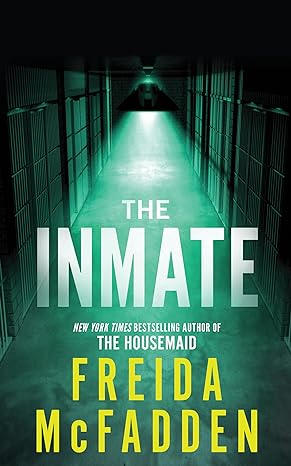
The second book I read was The Inmate. The heroine of the novel has a chilling past that haunts her on and off the job. While trying to piece together the puzzle of her past I found myself trying to guess the villain to no avail. The book had so many twists at the end that I had to go back and re-read the last few chapters to make sure I did not miss anything.
By the time I got my hands on One by One, I considered myself a solid McFadden fan who would be sure to guess the plot this time. It turns out I got too confident in my plot prediction skills and found myself wrapped up in so many twists and turns in this book that it’s my favorite one by her yet.
If you’re looking for something unpredictable, entertaining and hard to put down, a Freida McFadden book is the perfect choice. HCLS has several titles from the thrilling author, so no matter which one you choose, you’re in for a nail-biting time up until the very end.
Brittany is a Customer Service Specialist at the Miller Branch who loves writing, reading, and all things stationery. Her other hobbies include playing video games, listening to music, and spending quality time with her family.
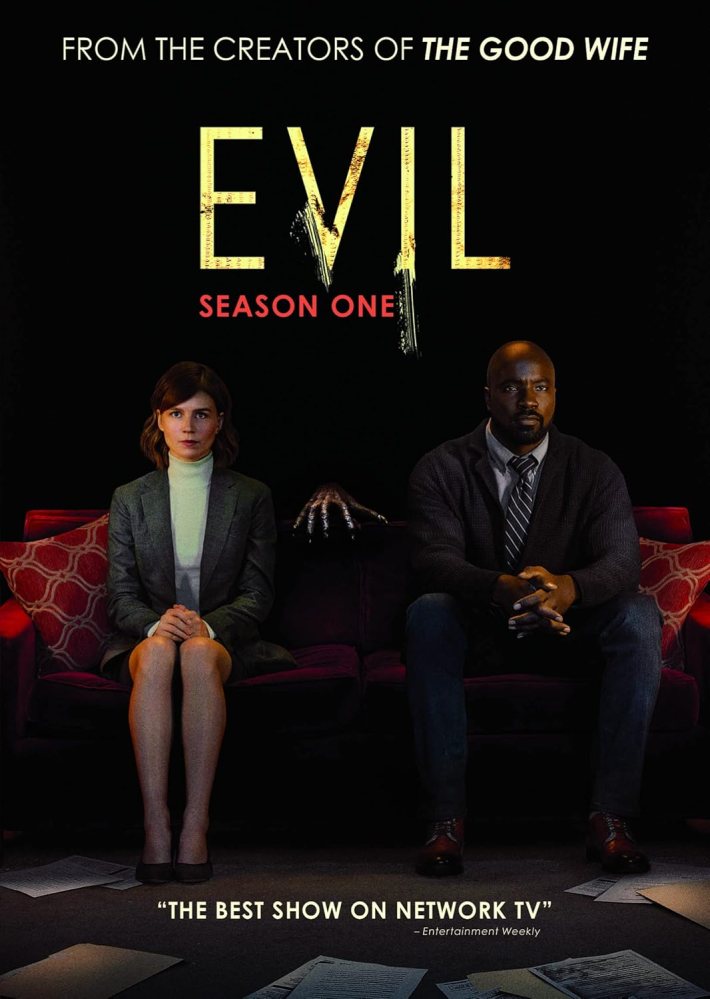
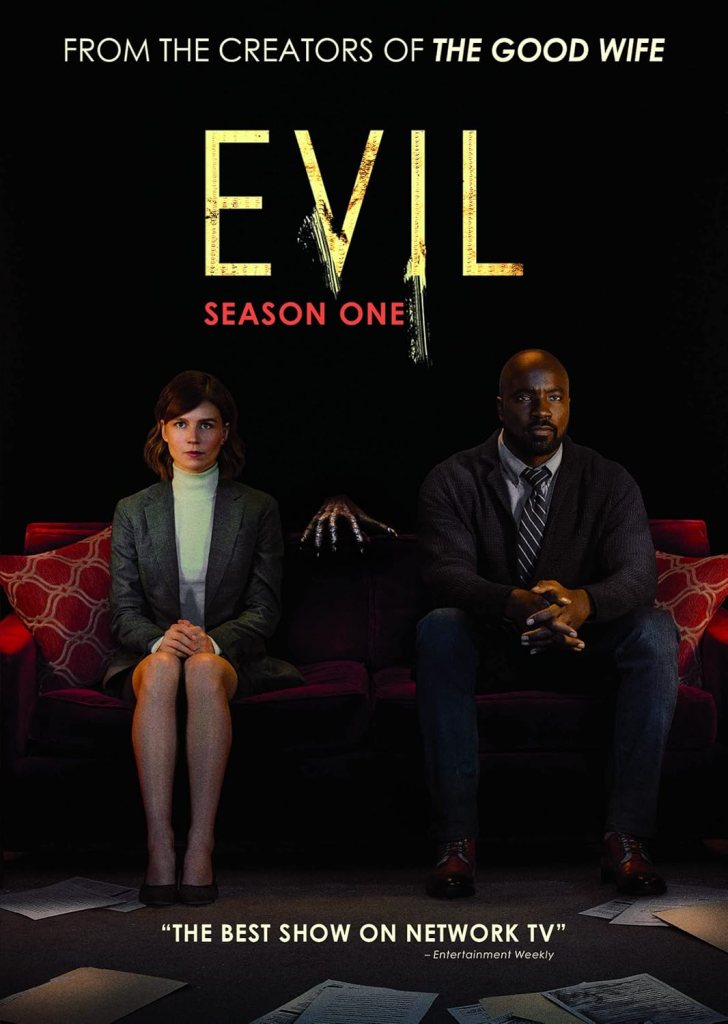
Evil is like someone threw The X-Files, The Exorcist, and a dash of CSI into a blender and hit the ‘puree’ button. The result? A show that’s part supernatural, part procedural, and completely binge-worthy. Our trio of audacious investigators includes the skeptical psychologist Kristen Bouchard, the believer David Acosta, and the tech whiz Ben Shakir. Together, they’re like the Ghostbusters of the ecclesiastical world, but with fewer proton packs and more holy water.
Evil doesn’t just flirt with the supernatural; it takes it out for a fancy dinner and then brings it home to meet the parents. Whether it features demonic possessions or prophetic visions, each episode leaves you wondering if you should sleep with the lights on. Even though it truly can be unnerving, Evil is also unexpectedly hilarious. It’s got more tongue-in-cheek moments than a dental exam, and the dark humor is so spot-on, you’ll find yourself chuckling in between gasps of terror.
So, if you’re looking for a series that combines courtroom drama with exorcism (because who isn’t?), then Evil could be your next must-watch. Just maybe don’t watch it alone… or in the dark… or anywhere near bedtime. You should still watch it, though, because Evil blends psychological thrills with supernatural elements to create a compelling story.
Especially noteworthy is the stellar cast, which includes Mike Colter, Aasif Mandvi, Michael Emerson, Christine Lathi and Andrea Martin. Michael Emerson, known for his chilling performances in shows such as Lost, plays the kind of villain you just love to hate, making the show all that more deliciously fun to watch.
Angie is an Instructor & Research Specialist at Central Branch and is a co-facilitator for Reads of Acceptance, HCLS’ first LGBTQ-focused book club. Her ideal day is reading in her cozy armchair, with her cat Henry next to her.
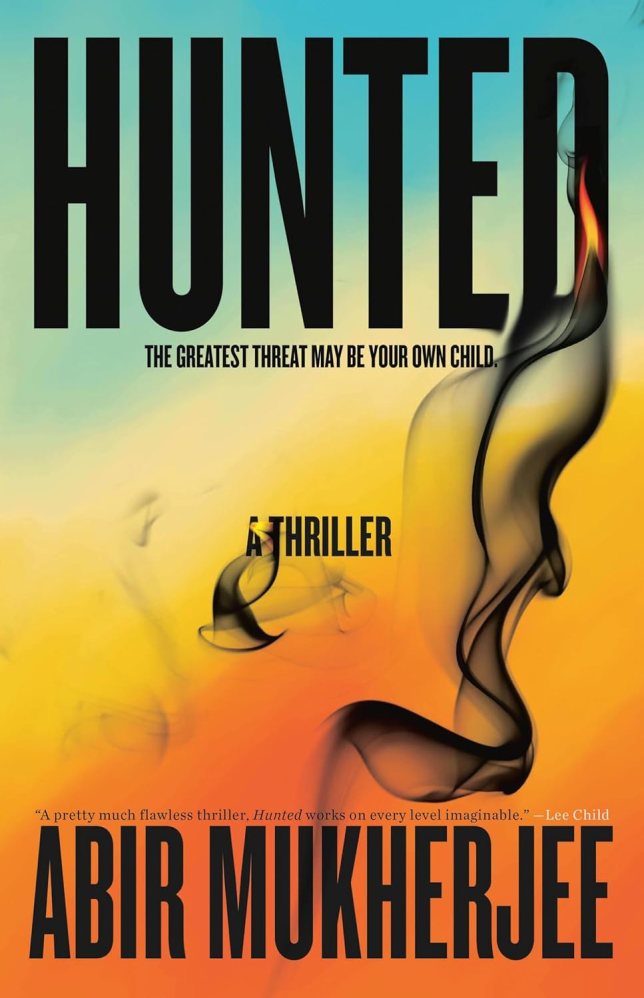
Before I delve into the review of Hunted, I want to let everyone know that I am writing this review under protest. Why, you ask? I have nothing against the book. It was a great thriller, and I am even writing a review for it. My protest is against the author’s decision to leave us with a cliffhanger in his Wyndham and Banerjee series, the last book of which is TheShadows of Men. I was counting days…no, years, for the next one in the series to come out. I was stalking the author’s Instagram profile. Then I saw that he was publishing a stand-alone – Hunted. I will read anything that Abir Mukherjee writes, so of course I got on the holds queue right away and read the book in exactly two sittings. By the way, if you love historical mysteries, you can check out A Rising Man by Abir Mukherjee, the first book in the Wyndham and Banerjee Series.
Based in the fractured landscape of American politics, Hunted is a fast-paced thriller that had me glued to the pages, so much so that I forgot to look up to enjoy the beauty of the crashing waves in front of me. Yes, I read this book at the beach.
There has been an explosion in a mall in L.A, and the Sons of Caliphate has claimed responsibility for the carnage. While checking the grainy CCTV footage of mall security, FBI Special Agent Shreya Mistry spots the scared face of a young girl, Yasmin Malik, who had supposedly planted the bomb. Through intuition and clever deduction, she is just one step behind the culprits who have threatened to cause further mayhem as the country is gripped by election fervor. A right-wing candidate is in a tight race against the Democratic vice president, who is running for the presidency of the United States.
Is it really the work of some militant Islamic jihadist group who wants to tip the balance? From the first evidence, it certainly looks that way. Forces within the Bureau want Shreya to back off from this particular case, since Shreya endangers her life repeatedly in her pursuit of the perpetrators. But, is that the only reason that higher-ups want her off this case? Shreya Mistry, on the other hand, feels like she must work doubly hard to prove her worth in a male-dominated agency, being a woman as well as a person of South Asian origin.
A father in London finds out that his 18-year-old daughter has joined the Sons of Caliphate. A mother in the United States also fears that her son is part of this militant group. Neither of them can believe that their children are cunning or cruel enough to pull off this horrible crime. They feel their children are victims themselves, kidnapped by the group. These two parents come together, determined to find their children and take them home. Will they be too late?
The thriller is certainly a roller coaster ride and definitely a page turner. Like Mukherjee’s other mysteries in my beloved Sam Wyndham Series, social issues are as important to the plot as the mystery. We read about gender inequality, racism, Islamophobia, and other pertinent social issues that are present in our world. The one critique that I have is that the characters lack depth, unlike the characters in his other books. But then again, Mukherjee has set the bar high for his fans. The action and the suspense make up for the less than realistic characters, though. If you are looking for a fast-paced, crisp, suspenseful thriller, look no further.
I grudgingly admit this was an interesting stand-alone, but bring back Sam Wyndham and Sergeant Banerjee, sir. We are waiting!
Hunted by Abir Mukherjee is available in print format.
Piyali is an instructor and research specialist at HCLS Miller Branch, where she facilitates Light But Not Fluffy and co-facilitates Global Reads. She keeps the hope alive that someday she will reach the bottom of her to-read list.
The eyes. The hot pink. The electric yellow. The cover of Bright Young Women demands attention and so does its story. Attempting to avoid bias, I tend to barely scan flyleaves and reviews. I don’t want to know before I find out for myself. I read just enough words to get a hint of the plot. For this book, “serial killer” was all I needed to see for me to put the book back on the shelf. Although I’m a big Dexter fan, I did not want to volunteer for more sleep-disturbed nights and uneasy days. But then a coworker recommended it, so I took the plunge.
The idea of writing about a serial killer from the perspective of an attack survivor is not innovative in and of itself. However, author Jessica Knoll has written a unique feminist perspective on the Ted Bundy story. The murdered and assaulted are bright young women living in the academically highest-achieving sorority governed by its formidable president, Pamela Schumacher. Pamela expertly controls all aspects of her sisters’ lives, from maintenance of the sorority house to fashion advice. On the fatal night when her closest friend is murdered, Pamela crosses paths with the killer (referred to only as “the Defendant”), becoming the only reliable eyewitness.
Forty-five years later, Pamela, now an attorney, is notified that there is additional information on the crime, and so begins the reader’s journey between past and present. We follow the events of that 1978 night at Florida State University. We meet Tina Cannon who travels to Florida in 1978 to meet Pamela. Tina hopes to link the 1978 atrocities to the 1974 disappearance of her friend in Washington state. The detectives resist connecting the two events, and the many murders and attacks in between, to one killer.
The triumphs of this novel emerge in Pamela’s and Tina’s narratives. While researching Ted Bundy after I finished this book, I learned even more about the significance of the decisions Knoll has made in crafting this historical fiction. She intentionally addresses how the police and university behaved in the wake of the murders. Knoll takes on the cavalier treatment of the students after the trauma and how they were expected to return to school without additional security or support. She describes the often absurd content of the trials and the cases’ news coverage. She includes the public’s ongoing fascination with the mysterious man who evaded capture and was eagerly embraced as intelligent and attractive despite factual evidence to the contrary.
The concept of media manipulation of readers and viewers has contemporary resonance. This novel skillfully develops each character’s perspective without losing track of the timeline of evidence. Bright Young Women simultaneously exposes how far society has come and how far it has yet to go in addressing the ways facts are researched and presented.
Bright Young Women is available from HCLS in print and in e-book and e-audiobook formats.
Cherise Tasker is an Adult Instructor and Research Specialist at the Central Branch. When not immersed in literary fiction, Cherise can be found singing along to musical theater soundtracks.
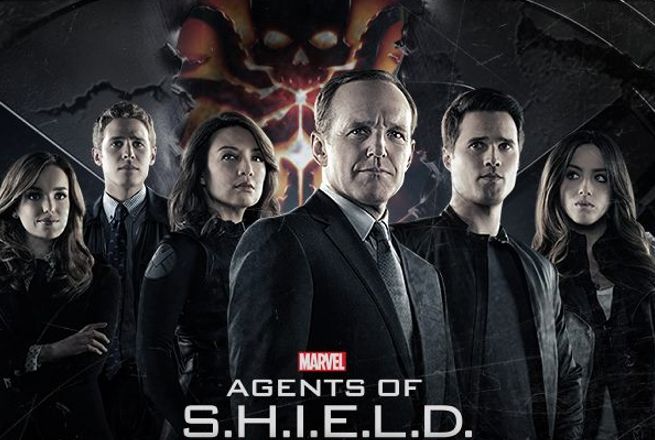
In a fit of boredom or maybe nostalgia this fall, I decided to rewatch the entirety of Agents of S.H.I.E.L.D. on Disney+. Baseball was done for the year; I needed something to do. Lucky for you, you don’t need a subscription service to do the same thing, because you can borrow them on DVD for free from the library.
The show is a wild ride of storytelling and subverting expectations. Of all the Marvel properties, this one seems closest to its comic book roots, maybe due to the inherent serialization of the format, and the fact that death never seems to keep a character down for long. (side note: I wish the MCU movies would consider rebooting some favorite – particularly female – characters.)
Over the course of seven seasons, the show progresses from being tied closely to the MCU timeline to becoming more of an independent property. The main characters are Agent Phil Coulson, introduced in the Iron Man and The Avengers movies, and his team of special agents whose mission is to track and contain enhanced humans – people with special powers who are not always good guys like Captain America or Thor. The mission is continually threatened and thwarted by SHIELD’s nemesis, Hydra. The core team of five characters makes it through all seven seasons, more or less: including Melinda May, all around warrior with some deep real world experiences; science boffins Fitz and Simmons, who make as good a team as their names suggest; and Skye, whose growth and transformation carries the first three seasons of the show. Other characters stick around for a season or two, and sometimes return at unexpected moments. It keeps the series both comfortable and fresh.
The series’ creators (Whedon, et. al.) took all kinds of risks with the show, to greater and lesser successes. I would argue that the first and last seasons are the best, with a few in the middle becoming unnecessarily complicated and dark. All in all, though, it’s a terrifically fun show. You honestly don’t know what’s coming next, from the inclusion of Ghost Rider to AI robots that control an immersive virtual reality. You can always count on decent fight choreography and the good guys achieving their goals – eventually, despite the odds. The last two seasons took on the big ideas of time travel and alternate timelines, which actually comes back into concordance with what’s happening in the MCU’s Multi-verse stories.
Baseball’s Opening Day is coming soon, but you may need something to do in the meantime.
Kristen B. is a devoted bookworm lucky enough to work as the graphic designer for HCLS. She likes to read, stitch, dance, and watch baseball in season (but not all at the same time).












 CHAPTER CHATS