
In One Person by John Irving

The book cover, a black and white photograph, shows a woman reaching with both hands behind her bare back to fasten, or possibly unfasten, her brassiere.

by Angie E.

John Irving’s In One Person is a moving and powerful exploration of identity, sexuality, and the quest for acceptance. At its heart is Billy Abbott, a bisexual man reflecting on his life. The novel chronicles Billy’s life from age 13 in the 1950s to his late 60s in 2010. Rather than following a strict chronological order, Irving skillfully weaves the narrative, shifting between pivotal moments in Billy’s journey to create a more authentic, lifelike portrayal. 

From Miss Frost, the enigmatic librarian who plays a pivotal role in Billy’s awakening, to Richard Abbott, his stepfather and a source of guidance and support, each character is richly drawn and adds depth to the narrative. Irving’s portrayal of these relationships is nuanced, highlighting the importance of connection and the impact of those who accept and understand us. 

Irving does not shy away from addressing the prejudices and challenges faced by the LGBTQ+ community. Through Billy’s eyes, readers witness the AIDS crisis, shifting attitudes towards sexuality, and the enduring struggles for acceptance. In One Person’s exploration of these themes is both heart-wrenching and hopeful, offering a candid look at the progress made and the work that remains. 

Fans of John Irving will recognize his signature style: the blend of humor and tragedy, the richly detailed settings, and the intricate plotting. Irving’s ability to create a world that feels both specific and universal is on full display, making Billy’s journey relatable to readers from all walks of life. 

When I first read In One Person I was incredibly drawn to how Billy goes to the library (thus meeting Miss Frost) seeking novels about “crushes on the wrong people.”  She starts him out with Wuthering Heights and Jane Eyre, but expresses less confidence in giving him Henry Fielding’s Tom Jones, something I both love and laugh at at every time. Anyone who has ever had a crush on the “wrong person” will probably crush, even if just for a bit, on this too.

In One Person by John Irving is available from HCLS in regular print and large print.

Angie is an Instructor & Research Specialist at Central Branch and is a co-facilitator for Reads of Acceptance, HCLS’ first LGBTQ-focused book club. Her ideal day is reading in her cozy armchair, with her cat Henry next to her.

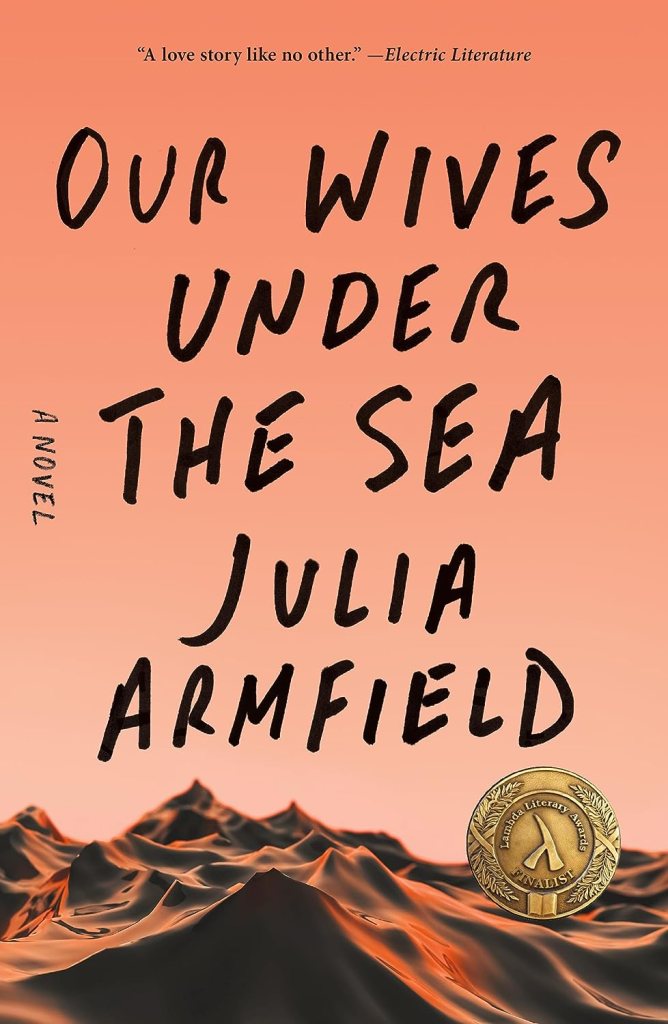
Our Wives Under the Sea by Julia Armfield

The book cover depicts waves against a reddish-orange background, possibly as if the sun is shining down on them.

By Sahana C.

There are books that belong in discussion, that beg to be read in community. Then there are books like this, that I don’t know if I’ll really be able to talk about in a meaningful way. But you deserve to know about it, so I’ll try my best.  

I’ll tell you first that I read this in one sitting. Each turned page made it evident that this book was heart-wrenchingly, desperately, tenderly romantic, and just as tragic. I was reminded of Rebecca by Daphne du Maurier in a lot of ways – the story of the protagonist, Miri, starts in the middle of an existing tragedy, with fog and haze over the order of events in such a way that everything feels like a dream. The classic gothic element where the setting acts as a main character is incredibly present as well – the sea takes its due, from Miri and from her partner Leah, and it is greedy with what it has. The home is a center, as in most gothic tales, and the sea takes the place of home for both Miri and Leah. Armfield writes, “To know the ocean, I have always felt, is to recognize the teeth it keeps half-hidden.”  

Miri thinks something is not quite right about her marine biologist wife, Leah, who has just returned from six months on a deep sea mission that did not end well. Despite Miri’s best efforts, Leah cannot seem to return to life as normal. Miri does what she can, but she can’t escape the fact that she feels she is losing Leah to the sea, somehow, inexplicably. There is a real sense of the liminal throughout the book, but especially in the first chapters as Miri begins to tell the story. Armfield herself says it perfectly, writing about loss but inadvertently summarizing the themes of the novel: “It’s not grief…it’s more like haunting.”  

This idea of haunting is compounded by the ways we learn about Miri and Leah’s relationship throughout the story, in fleeting moments and flashbacks, woven together with this real sense of longing for a time that cannot return, with desperation mounting, and mounting, and mounting, as we need to know what has happened, what will happen, what’s next.  

At some points, this book had a similar energy to one I’ve written about before, Emily Austin’s Everyone In This Room Will Someday Be Dead, with a smattering of “anxious” fiction interspersed among the more gothic notes. The characters are so unfortunately lovable, too, in their desire for one another, and that’s the real tragedy in the novel – Armfield wonders aloud “what happens when love isn’t enough?” The readers are left begging her to stop asking the question.

This book deserves to be read. I read a lot of books; I’m surrounded by them all day, and I can tell you, with full assurance, that this book will make you feel. You’ll bear witness to the love that was there, that was lost, that had something unbelievable change it, and instead of that love living on the paper, in the book, it will belong to you instead.  

Our Wives Under the Sea is available from HCLS in print and as an e-book.

Sahana is an Instructor and Research Specialist at HCLS Savage Branch. They enjoy adding books to their “want to read” list despite having a mountain of books waiting for them already.