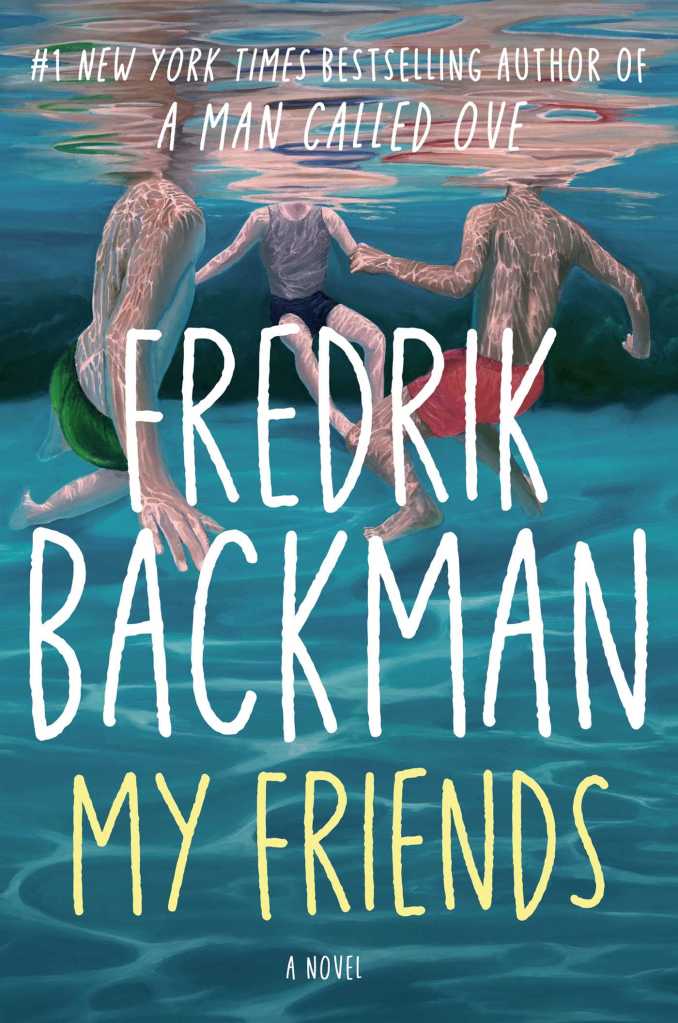
My Friends by Fredrik Backman

A sort of underwater shot, but illustrated, of three people in a swimming pool - three men in standard bathing trunks. Type treatment of title and author in the usual skinny handwriting style of Backman's books.

Our next chapter starts soon when the blog moves to the newly redesigned hclibrary.org. All the same great reviews and news, plus more library information!

by Kim J.

Once I read my first Fredrik Backman book, I couldn’t stop. I devoured each of his titles in quick succession and recommended them to anyone who would listen. Each of Backman’s books is a snapshot of humanity: character-driven stories that weave together timelines and perspectives with honesty and emotional depth. While reading his novels, I laugh, I cry, and sometimes I laugh until I cry. His characters feel so real that I become genuinely invested in their lives, making it bittersweet when their stories end. One of my favorite parts of reading Backman is his gift for language. His turns of phrase are fresh, ringing true and making me marvel at the mind that created them. 

Some favorites: 

  • “A lack of self-confidence is a devastating virus. There’s no cure.” – My Friends
  • “Boats that stay in the harbor are safe, sweetheart, but that’s not what boats were built for.”   – Anxious People
  • “Having a grandmother is like having an army. This is a grandchild’s ultimate privilege: knowing that someone is on your side, always, whatever the details.” – My Grandmother Asked Me to Tell You She’s Sorry

When I heard Backman had a new book out this year, I immediately added myself to the holds list. My Friends is the newest addition to Backman’s repertoire, and it did not disappoint. One of the main characters, Luisa, is a 17-year-old who has run away from her latest foster home. She loves art, and her favorite painting is about to go up for auction. She’s determined to see it in person at least once in her life. While she’s excellent at making plans, life has a way of surprising her. Her story is interlaced with the backstory of how her favorite painting came to be. What follows is an adventure filled with creativity, love, grief, friendship, found family, inside jokes, and storytelling. I highly recommend My Friends if you like humor, heartfelt depth, and a warm, bittersweet ending. However, it does need some content warnings: the story touches on several heavy topics including domestic violence, sexual assault, physical abuse, and bullying. In the end, it’s a story that stays with you long after you turn the last page. 

While you may have to wait for My Friends (available in print, large print, e-book, e-audiobook), you can explore other equally wonderful titles by Fredrik Backman: 

Anxious People 

Beartown Trilogy: Beartown, Us Against You, The Winners 

A Man Called Ove 

My Grandmother Asked Me to Tell You She’s Sorry 

Britt-Marie Was Here 

Kimberly J is an Instructor and Research Specialist at the HCLS Glenwood Branch. She enjoys reading, photography, creating, crafting, and baking.

Agatha Christie in the English Countryside

by Sahana C.

Like any self-respecting book nerd, I can only go on vacation if I have at least five books ready and on hand at any time. This was trouble when I was younger, before e-books and e-audiobooks, with backpacks and suitcases full to the brim with tomes. My worst-case scenario was always that I would run out of things to read.  

I went on vacation around Britain recently, and, as is my wont, brought eight different novels with me in various formats. Sure, I brought a few too many physical books, and yes, maybe I bought a book or two on the trip to weigh down my backpack. I felt adequately prepared, as I was taking train rides through the English countryside and knew that I would want to embody the aesthetic of reading whatever I had in hand, only to look up at rolling fields dotted with sheep, old worn walls of stacked rocks dividing the endless green into pastures.  

As always happens on vacation, though… I felt a craving. I was on a train. In England. Arguably there was only one author who could scratch the itch. I had read Murder on the Orient Express too recently and watched the movie even more recently, so I went onto Libby to see if anything was “Available Now” and found one of my all-time favorite Agatha Christie mysteries: And Then There Were None.  

I had read the book before, but not for years, and I was immediately immersed in the atmospheric gloom hanging over the description of the story’s central island. I arrived in Oxford, and while the day was gloriously sunny, the evening became overcast. As I curled into bed, I fell into the world of the ten main characters, each with something devious and criminal to hide, from Vera Claythorne to Phillip Lombard to Justice Wargrave. It took me two and a half hours to tear through the thriller, which gets the ball rolling early and never allows the momentum to stop.  

The original title of the book and the changes made to it have a history that has to be acknowledged as racist and problematic. There was no reason to include racism in the novel, especially such casual racism. The nursery rhyme that is the basis for the novel is a disappointing reflection of our history. But this book, plot-wise, is an impressive example of Christie’s talent, ability, and intellect. This is the locked room mystery to end all locked room mysteries, one that is nigh impossible for the reader to solve all the way through because of the masterclass in subjective narrators.  

It was a delight to read Christie as an American in England for the first time, to sit on a train as it trundled by coastlines that Christie took care to describe herself. I’d suggest, for others interested in what books to read as they travel: let the trip inform you. Give your surroundings a chance to suggest a good book or two. There’s nothing better than recognizing the view in front of you in the book you’re holding.  

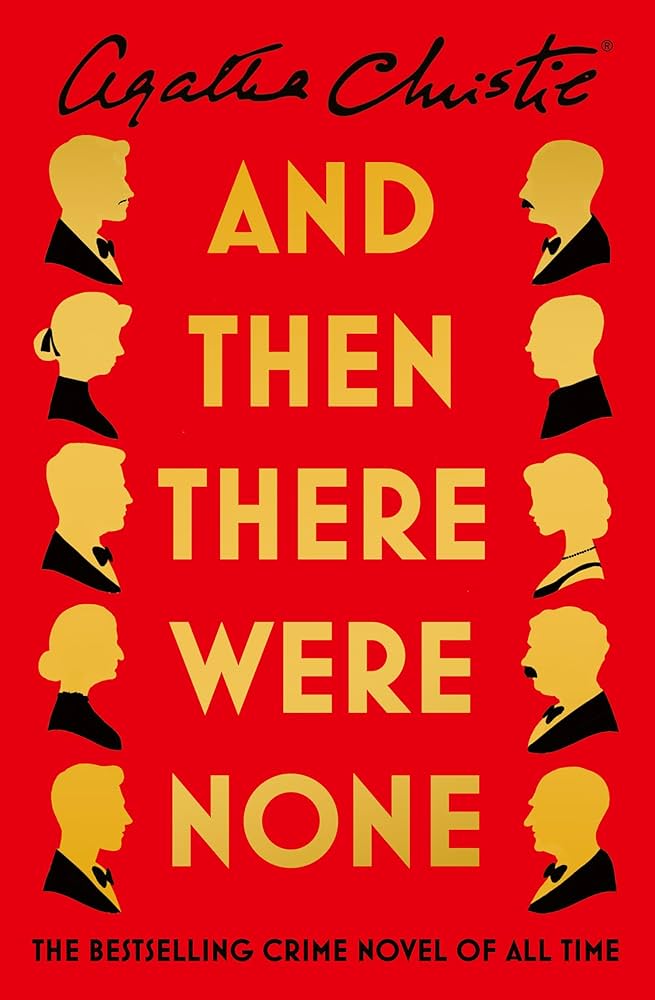
And Then There Were None by Agatha Christie is available to borrow in print, e-book, e-audiobook and audio on CD. There are also two ways to watch adaptations, a recent TV series and a classic movie.

Sahana is the Communications Strategist at HCLS. They enjoy adding books to their “want to read” list despite having a mountain of books waiting for them already.

The Message by Ta-Nehisi Coates

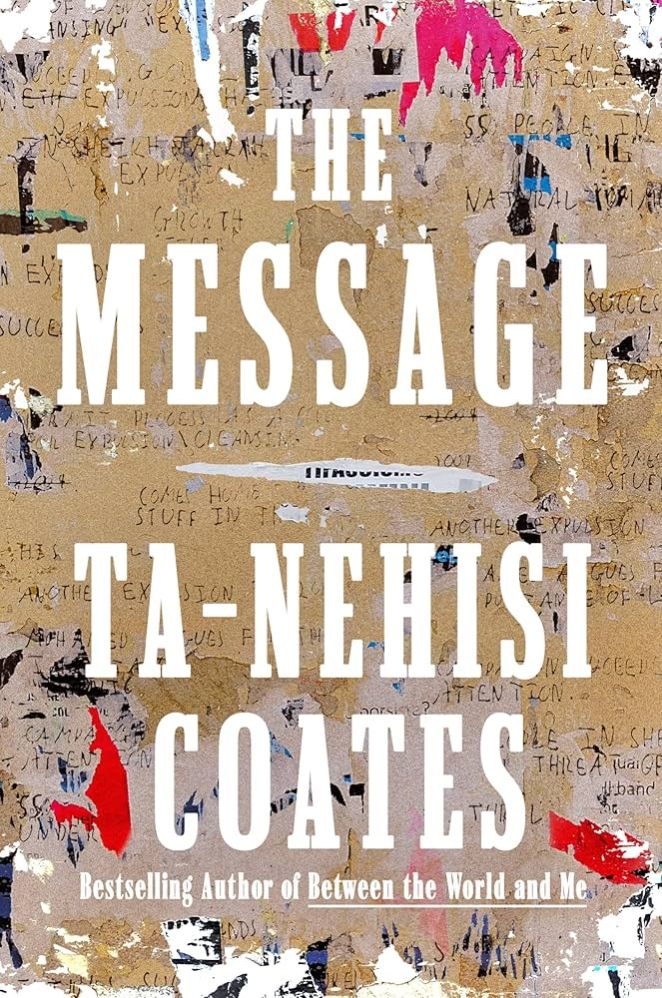
In beige, with flashes of white and red, the background image looks like a collage or a wall where messages have been posted and torn down repeatedly.

by Ben H.

Though we do not wholly believe it yet, the interior life is a real life, and the intangible dreams of people have a tangible effect on the world.

James Baldwin 

Ta-Nehisi Coates opens The Message with the above quote, and it’s a great frame for his book. Coates, the esteemed public intellectual from Baltimore and author of many excellent works such as Between the World and Me and We Were Eight Years in Power, explores three places in The Message: Senegal, South Carolina, and Palestine. Returning to the Baldwin quote for context enriched and expanded my understanding of the book.

Coates first takes us to Senegal, “I had indeed come home, and ghosts had come back with me.” He processes his own history, constantly referencing his parents, and the history of slavery and the slave trade. Coates intermingles the unbearably heavy and the humorous in the same way those things blur together in real life. He visits the “Door of No Return” and eats a delicious meal by the ocean. He stays at a luxurious hotel and thinks about, “blood in the bricks and ghosts in the attic.” He regrets the fancy hotel. The juxtaposition of heavy and humorous stretches back to his childhood and the “inheritance of the mass rape that shadows all those DNA jokes” he and his friends would make. Though we come from different backgrounds, I find Coates constantly relatable. 

After Senegal, he moves us to South Carolina. He’s flying to South Carolina to support Mary Wood. Wood, a high school English teacher, assigned Between the World and Me to her class but was ordered to stop teaching the book. What is censorship and the uproar about Critical Race Theory other than an attempt to control the intangible inner life of people to keep it from having a tangible effect on the world? Coates writes, “the arts tell us what is possible and what is not, because, among other things, they tell us who is human and who is not.” As a librarian, this chapter dealing with representation in the arts, censorship, and education felt written for me. 

After South Carolina, he visits East Jerusalem and the West Bank. Coates opens in Yad Vashem with the Book of Names. The Book of Names is a project to collect the names of all the Jews murdered in the Holocaust and display them. It’s overwhelming. Coates considers genocides and how the efforts to remember them, memorialize them, or recognize the horror of them can result in a second tragedy where the murdered men, women, and children are “reduced to a gruel of misery.” Coates is devastated by the holocaust memorial and crushed by the suffering of Palestinians. 

Coates sees Palestinians living, at best, in a Jim Crow state. He can’t unsee this connection to his own country, life, and history. In the Jim Crow South, there was a privileged group with full rights and a disadvantaged group with partial rights. In East Jerusalem and the West Bank, he sees a privileged group with full rights and a disadvantaged group with partial rights. He drives on roads with his Israeli guides that he can’t drive on with his Palestinian guides. As he travels with Palestinians, he feels the “glare of racism,” and he sees soldiers with the “sun glinting off their shades like Georgia sheriffs.” His narrative is compelling; his argument is strong. I think his assessment of the situation is accurate.

What ties Coates’s journeys together? What connects Senegal and South Carolina and the West Bank? Let’s return to Baldwin’s quote and assume that Coates included it for a reason. All three situations reflect the tangible effect of the interior life of people. The interior lives of his mother and father had a tangible effect on him as a child and he expands on this in Senegal, constantly wondering what his father was thinking or how he thought about things. The high school in South Carolina wanted to ban his book for fear of the tangible effects that would result from the change in interior lives. The heartbreaking suffering and misery in Gaza is the horrendous tangible effect of generations of interior lives.

I appreciate Coates’ approach. He’s not a sophist. This isn’t an empty academic argument or intellectual exercise. He calls his books his children. He puts his whole self into his writing. His whole being is in his work. If you’ve seen his interviews or headlines about his book, but haven’t had time to read it, I think it’s worth the time.

Ben loves his job at HCLS Project Literacy. When he’s not at work, you might find him walking around Lake Kittamaqundi (on his break), playing pretend with his daughter Annika, reading, peeling garlic,  weeding his tiny lawn (Canada Thistle, leave me be!), eating chocolate, or listening to baseball games on the radio.

Passport Services

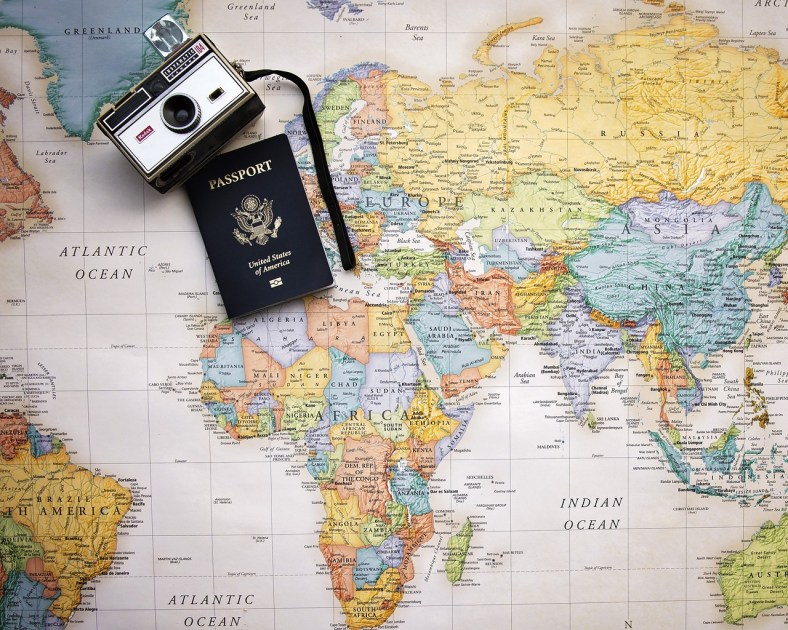
An open, flat map of the world, with Africa centered, rests under a blue USA passport and an old-fashioned camera.

by Alex H.

Does the cold weather have you dreaming of trips to warmer climates? You can apply for a passport at the Glenwood and East Columbia branches of HCLS, making your dreams of warm beaches or tropical rainforests one step closer to becoming a reality! 

Both HCLS Glenwood and East Columbia Branches process form DS-11. Depending on how old the applicant is at the time they apply, there are different requirements for what they must bring. All applicants must appear in person, regardless of their age. 

Applicants age 15 and under 

  • Parent(s) must accompany children 15 and under to apply for a passport. Proof of parental relationship must be brought (ex: the child’s birth certificate). Whoever is listed must be present. 
  • If one parent is unable to come, a notarized consent form (DS 3052) must be brought along with a photocopy of the non-appearing parent’s identification. 
  • Form DS-11 
  • Proof of US citizenship (ex: US Government issued birth certificate / certificate of naturalization / previously issued US passport) 
  • Proof of identity for the parent(s) (ex: valid driver’s license / state ID card / military ID / passport) 
  • A 2’ ’x 2’’ passport photo with a white background. The Glenwood and East Columbia Branches take photos for $15 
  • A check or money order for US State Department fees 

Applicants age 16 and older 

  • Form DS-11 
  • Proof of US citizenship (ex: US Government issued birth certificate / certificate of naturalization / previously issued US passport) 
  • Proof of identity (ex: valid driver’s license / state ID card / military ID / passport) 
  • A 2’ ’x 2’’ passport photo with a white background. The Glenwood and East Columbia Branches take photos for $15 
  • A check or money order for US State Department fees 
  • *If the applicant is 16 or 17 years old, they need to show parental consent for their application. Ways to do this include having a parent come with the applicant to apply, bringing a check signed by their parent, or having their parent write and sign a note. 

All information regarding the passport process, including acceptable evidence of citizenship and forms of identification, can be found on travel.state.gov

Passport services at Glenwood and East Columbia are walk-in only, so there is no appointment necessary. For a complete list of hours and fees, check http://hclibrary.org/how-do-i/passport-center/.  

Alex is a part-time Customer Service Specialist and Passport Agent at the Glenwood Branch. When she’s not at the library, she likes to crochet cute animals, read all the horror and romance books she can get her hands on, and write stories about things that go bump in the night. 

Ready to See the World? We Can Help!

The photograph shows a map of the world with various objects lying across it, including cameras, a passport, photographs, sunglasses, a string of light bulbs, and a coffee cup.
Photo by Charlotte Noelle on Unsplash.

by Sahana C.

The library is the home of adventure, with new unknowns to explore with every turn of a page. Visiting the library can leave you with a wealth of knowledge about a new place from every book you borrow.

But sometimes, reading about another far-off place or watching a movie set in a distant land isn’t enough. Sometimes, you’re looking for a more immersive experience, and your imagination just isn’t cutting it – it’s time for the real deal. Planning trips can be exhausting, though, and finding where and how to start can be the hardest part. Let us help plan your trip! Between travel guides, our passport centers, and ways to brush up on your language skills, the library can get you ready for your next big adventure. You’ve dreamed about it, book in hand, so let us help you get there.

Wander down the travel aisle at any of our six branches, and starting with the 914s, you’ll find inspiration for all sorts of far-off places to begin your journey, whether that be on the other side of the world, or just on the other side of the country. Once you’ve discovered your destination and decided it’s time to go, our Passport Centers in HCLS East Columbia and Glenwood Branches will accept your passport application and help you through the whole process.

In the meantime, while your passport is processed, use our language resources, Mango and Rosetta Stone Online for the adults in the family, as well as Little Pim and Muzzy Online for our younger friends! Practice your newfound language skills in the community at East Columbia and Miller Branches at our monthly World Language Cafés, working with native language speakers and other language learners.

To avoid missing us while you’re gone, make sure to pick up a Flat Booker from your closest branch too, and take pictures to show us once you return, so we can share in the adventure too.

Practice Before You Go with World Languages Café
For adults.
Meet to practice a world language with fellow community members, facilitated by a native or fluent speaker of that language. Please indicate in the registration comments field the language you would like to practice. In partnership with Columbia Association.
At East Columbia: register here.
Tuesday, Nov 28
7 – 8:45 pm

At Miller: register here.
Thursday, Dec 14
7 – 8:45 pm

Sahana is an Instructor and Research Specialist at the Savage Branch. They enjoy adding books to their “want to read” list despite having a mountain of books waiting for them already.

Explore the Ghoulish side of the Globe with the Atlas of Monsters and Ghosts!

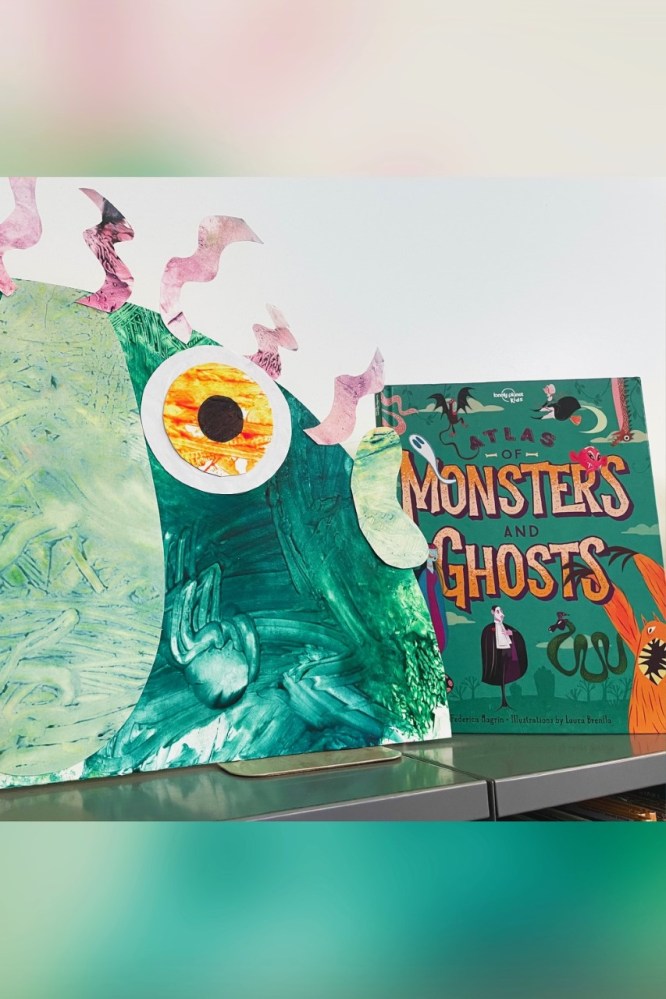
The picture depicts a teal-colored fish-like monster with a yellow eye next to the book, which has a teal color and depicts a variety of monsters, including dragons, snakes, and Dracula.

By Claudia J.

Ok, I’ll admit it: I love Halloween but I’m not the biggest fan of scary things. You won’t catch me at a movie theater watching the latest film from the Halloween franchise or reading IT by Stephen King. I tend to focus on the lighter side of the season. Yet, when I was browsing through some of the oversized books that live upstairs at the Miller Branch, I stopped at a bright teal atlas filled to the brim with whimsical illustrations and trips around our world. However, instead of historic sites and tourist destinations, this atlas is filled with MONSTERS and GHOSTS!

Atlas of Monsters and Ghosts by Federica Magrin, with immensely detailed illustrations by Larua Brenlla, takes readers on a ghastly trip to hunt down the most fearsome creatures known to humanity. Each continent is covered throughout the pages, highlighting monsters and ghosts with cultural significance. I’m sure most of us already know of Bigfoot, King Kong, and the Boogeyman through classic stories and tales. But have you heard of the Smok Wawelski from Poland, a fearsome dragon from the cave at the foot of Wawel Hill? Or Krasue, the spirit from Thailand with the floating head who feeds on anything in her sights? These monsters and spirits are not only highlighted, but their stories are tied in with learning about each country’s tales and fables. One particular feature of the atlas that I enjoyed was that it gave special sections to the monsters and spirits of Greek Mythology and the ones from Japanese folktales, both of which have been spotlighted in various other stories, movies, and video games.

One fair warning for all my budding Monster Hunters: some of these stories, no matter your age, are not for the faint of heart despite its art style and its publisher, Lonely Planet Kids. Nevertheless, it was an interesting, spooktacular read, one that may send a chill up your spine, but which will definitely teach you something new along the way. What I learned is to not visit the places where these creatures have been spotted! I think I’ll opt for a warm beach instead.

You can borrow or request Atlas of Monsters and Ghosts at all HCLS locations for your horrific, spooky enjoyment.

Claudia J. is an Instructor and Research Specialist for Howard County Library System. She enjoys stories in all forms, from books to graphic novels, movies to video games: you name it!

News of the World by Paulette Jiles

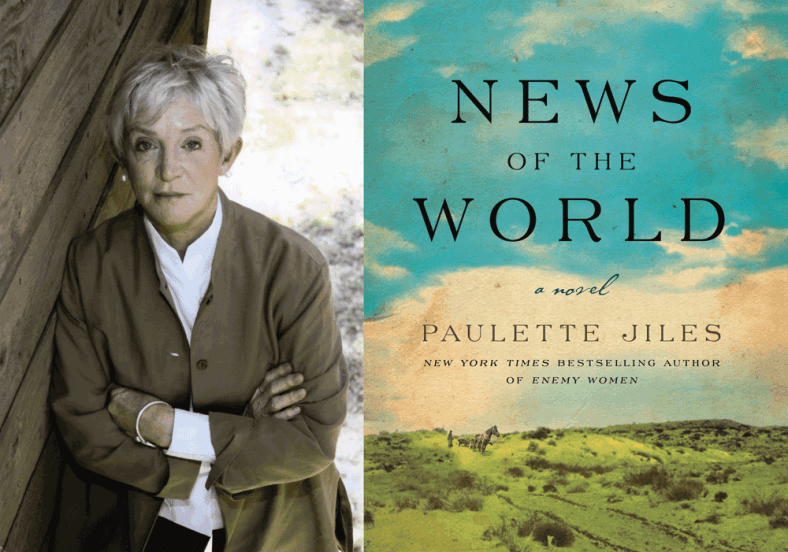
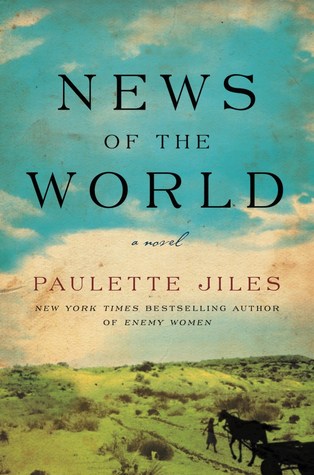
The title appears against a painting of a green landscape and blue sky with white clouds, with a silhouette of a girl leading a horse and cart in the bottom left

By Jean B.

I love a book with a map, so News of the World captured me even before page one. Throughout my reading, I pored over the sepia endpaper map of Texas circa 1870, with its bright red line tracing a path from Wichita Falls along the northern border with Indian territory, all the way down to San Antonio and the Rio Grande. As you might guess, given the map, this is a book about a journey – across both rough territory and psychological barriers. As the characters made their way along the bright red line, Giles’ beautiful prose transported me into this time and place and into the lives of Captain Jefferson Kyle Kidd, age 71, and Johanna Leonberger, age 10.  

It’s the Reconstruction era in Texas, a time of political turmoil and uncertainty, random violence and unexpected kindness, across an incredibly varied landscape. Captain Kidd, a survivor of three wars, has dedicated his life to connecting people through information. He is alone, having lost his wife and his printing business in the Civil War. Kidd now makes his living by traveling through small towns, performing live readings of newspapers from around the country and the world to isolated residents hungry for stories of faraway places and remarkable events. Suddenly, his nomadic routine is disrupted by an unsought responsibility – he must deliver Johanna, a traumatized orphan who has lived as a captive of the Kiowa tribe for six years and knows no other family, back to her relatives near San Antonio. Traversing that 400 mile path, the characters must overcome challenges small and large and, in the process, build mutual trust and companionship.

I would not call myself a fan of Westerns, in either novels or movies, but Paulette Jiles’ exquisite descriptions of the plants, weather, and settlements of this landscape drew me in. Her writing made me want to ride a horse through the hills, canyons, and prairies of Texas (minus the deadly threats along the way). Maybe I’ll do that someday, but in the meantime, luckily, we can get the visual experience by watching the 2020 movie based on the book! Starring Tom Hanks as Captain Kidd, the movie garnered four Oscar nominations, and you borrow the DVD from HCLS.  

While both the book and the movie open a window into a beautiful yet treacherous moment in Texan history, News of the World goes much deeper than a travelogue. Across the miles, the tragic characters discover the power of empathy to leap differences in age, language, experience and loss. Although the book is barely 200 pages, it paints a picture of great historical and personal complexity. If you’re looking for some armchair traveling this summer, News of the World is a journey worth taking – and it comes with a map!

Available in print, large print,audio CD,  ebook, and eaudio, as well as DVD.

Jean B. is a Children’s Instructor and Research Specialist at the Central Branch. A fan of historical fiction and nonfiction, she also enjoys exploring the natural world through books and on foot.

Take a trip with National Geographic

An underwater shot of a raft of penguins with the National Geographic text and yellow frame setting off the image.

by Holly L.

As local Covid rates drop and vaccination numbers rise, some of you are embarking on long-anticipated journeys. Whether day-tripping down to the shore or jet-setting to a distant locale, the act of travel brings a sense of relief to many who are longing to break out of their quarantine bubbles and go – somewhere, anywhere!

For others of you the time for travel hasn’t yet arrived. Finances, health, or other constraints may limit your current trip planning to a run to the grocery store or a drive across town to check on a friend. Tropical oases may beckon, but for now you just need to let that call go to voicemail.

Wanderlust – a desire to travel or roam – is something we all feel, these post(?)-pandemic days more keenly than ever. Whether you are an actual or an armchair traveler this summer, let us broaden your horizons with a terrific eResource. National Geographic has partnered with Gale to deliver a virtual steamer trunk full of high-quality digital content that brings the world to your door. Your library card is your all-access pass to the National Geographic Virtual Library (search under Magazines & Newspapers), an extensive database that includes the National Geographic Magazine digital archive from 1888 to the present (new issues are added after a minimum 45-day embargo period), National Geographic: People, Animals, and the World, and National Geographic Kids

Since its launch in October 1888, National Geographic Magazine has been regarded for its in-depth reporting, innovative storytelling, and splendid photography. Complete digital issues of National Geographic, National Geographic Traveler, and National Geographic History are available for browsing, with audio options and search functions available. Citation tools are built in, making this database a great resource for historical, social, and scientific research.

National Geographic: People, Animals, and the World connects you with even more content, including full-text books on travel, science & technology, history, the environment, animals, photography, and peoples & cultures. Also included are cross-searchable videos, full-color maps, charts, graphs, and a wealth of National Geographic’s iconic photographs and digital images.

There is plenty to engage young students with National Geographic Kids. This database includes the complete archive of National Geographic Kids Magazine from 2009 to the present, as well as books, videos, and images galore. With an intuitive, visual interface, National Geographic Kids offers age-appropriate content that supports Common Core standards. Subject indexing and easy search features empower young explorers to embark on exciting learning adventures.

Expired passport? No problem. We can help with that, too, at the East Columbia Branch. Or, use your HCLS library card to book a virtual trip this summer via the National Geographic Virtual Library.

Holly is an Instructor and Research Specialist at the Miller Branch. She enjoys knitting and appreciates an audiobook with a good narrator.

I Am An E-book Convert

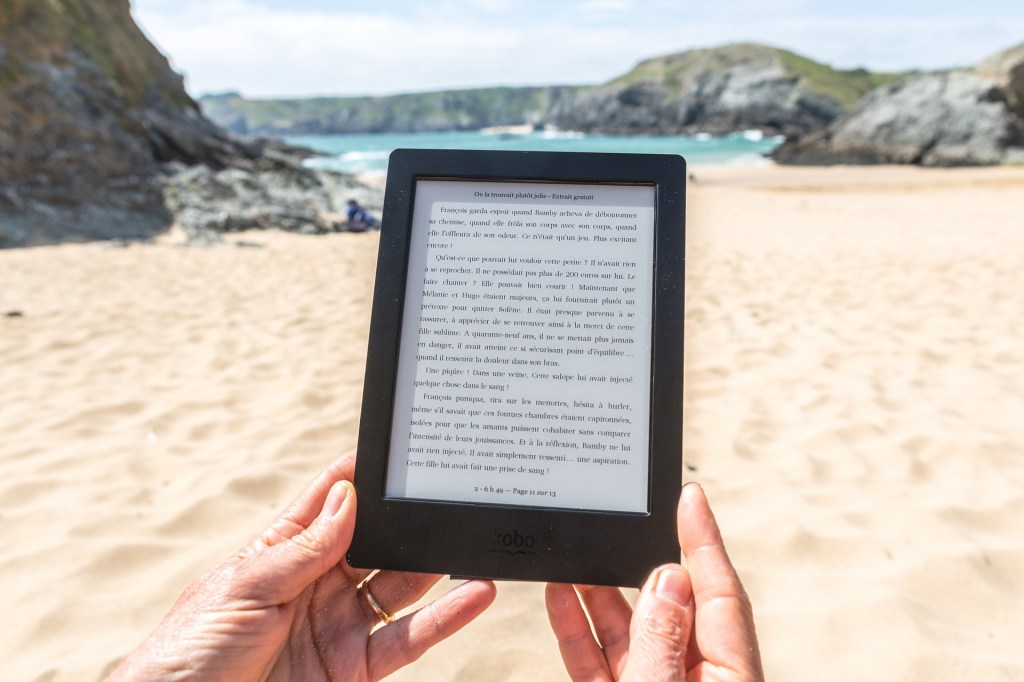
The image shows a pair of hands holding an ereader with a remote sandy beach, rocky hills, and a turquoise sea and hazy blue sky in the background.

By Alan S.

I am a recent convert to the pleasures of an e-book. I appropriately played the T-Rex who needed help in a recent Facebook video. I have always preferred physical books over eBooks, enjoying the feel of holding a book in my hand more than the feel of a tablet or phone. I resisted the call of eBooks for a while. Working in a library, all of those printed books were right in front of me. Why choose to look at a screen? What would ever make me choose to read a book on a device?

The first thing that changed my feelings about the electronic version was packing for trips, especially those requiring plane travel. When taking a road trip, it is easy to fill a bag with books and throw them in the trunk. This is not so simple when you are packing for a plane ride. I started packing one or two physical books, then downloading a few e-books as a backup. I still usually take at least one physical book on a trip, but tend more toward eBooks when traveling. I’m sure my family likes the extra space to pack other things.

An increase in the number of audiobooks I listened to also led to an increased use of eBooks. My car is still equipped with a CD player, so a book on CD is an option, but there are benefits to an eAudiobook. The biggest is the lack of a need to change CDs. I hated listening to a book in the car and getting to the end of a CD with no safe way to change to continue the book. With eAudio, the book continues without your help. I have also learned the joy of increasing the speed on some books. When reading for an assignment, or if the reader reads very slowly, I can listen at a faster speed and still enjoy the book (I might also be a tad impatient).

If you are ready to join me as an eBook convert, see HCLS’ resources.

If you need help accessing your eBooks or with any of our other online resources, please join us for live Online Tech Time Wednesday, July 22 at 11:30 am. Other sessions of this useful class will be offered in the future.

Alan has worked for HCLS for just under 25 years, currently at the Savage Branch. He enjoys reading, television, and most sports.