Elections can be an intellectually and emotionally tough subject to discuss. Howard County Library System has resources to help you make an educated decision before heading to the polls in November. Visit any of your local HCLS branches for books, resources, and events to evaluate candidates’ positions on critical issues. Our library collection includes materials from many perspectives and priorities. Many candidates have authored (or co-authored) books.
The upcoming election is crucial to the future of our country, as are all elections. Not only will we elect a new president and vice president, but also the makeup of Congress will change. Locally, we’re voting for our Howard County Board of Education. Attend one of the Speed Date the Board of Education Candidates sessions listed below to meet the people running for these important positions and ask questions.
Misinformation, disinformation, and AI deepfakes make it more important than ever to do your research for fact-based, nonpartisan information from trusted sources. The League of Women Voters publishes a nonpartisan voter guide with information about candidates, ballot questions, and polling places. The Maryland State Board of Elections (elections.maryland.gov) provides answers to frequently asked questions, links to request absentee ballots, forms to sign up to be election judges, and more. FreeState Justice is partnering with HCLS to offer a series of classes about voter rights, voting policies, and other information.
Only 27 percent of Howard County residents voted in the 2022 midterm elections, so take advantage of these resources to prepare and make informed decisions in the voting booth. Exercise your vote this fall – it’s important!
Voter Rights and Current Voting Policies For teens and adults. Register at bit.ly/voter_rights_HCLS Gain insight into the voting process with up-to-date information about voter rights, requirements, and more. Learn about recent changes to voting laws, understanding voting districts, determining polling places, same-day registration, and more. Whether you are a first-time voter or a seasoned participant, this seminar is the perfect resource to ensure you are up-to-date with current voting policies and procedures in Maryland. In partnership with FreeState Justice, a non-profit organization Fri ,Sep 13 from 4 – 5 pm | HCLS Elkridge Branch Thu, Sep 19 from 2 – 3 pm | HCLS Central Branch Thu, Sep 26 from 7 – 8 pm | HCLS Miller Branch (date change)
Speed Date the Board of Education Candidates Meet the candidates in the Board of Education race at this speed dating style event. Following brief introductions by the candidates, visit each candidate and ask your questions. At the end of five minutes, we will ring a bell, and you will switch tables to visit another candidate. The League of Women Voters will be on hand to help people register to vote and answer questions about the voting process and the election ballot. In partnership with the League of Women Voters of Howard County. Saturday, September 21 11 am – 1 pm at HCLS Savage Branch | Districts 3 & 4 3 – 5 pm at HCLS East Columbia Branch | Districts 2 & 3 Saturday, September 28 1 – 3 pm at HCLS Glenwood Branch | District 5 1 – 3 pm at at HCLS Central Branch | District 4 Saturday, October 5 11 am – 1 pm at HCLS Miller Branch | Districts 1 & 5 3 – 5 pm at HCLS Elkridge Branch | Districts 1 & 3
Brandon is a Customer Service Specialist at HCLS Central Branch who loves reading, football, and taking nice long walks around his neighborhood.
In election season, media coverage often focuses on presidential and congressional races. However, local elections – such as County Council and Board of Education (“school board”) races – can significantly impact local communities. Howard County Council and Board of Education (BOE) are nonpartisan races, meaning candidates are not separated by party. You do not have to be registered with a political party to vote in this race – even in the primary. And, because these local races are decided by a smaller voting body, your vote often holds considerably more weight.
Howard County contains five Councilmanic Districts, also known as “Council Districts.” Each district corresponds to one of five County Council members and, as of the 2020 election, one of seven members on the BOE. To determine your Councilmanic District, use the Voter Lookup at https://voterservices.elections.maryland.gov/VoterSearch
Previously, all open BOE seats in an election year were voted upon by all registered voters. However, in 2019, the Maryland General Assembly passed legislation requiring, “that certain members of the Howard County Board of Education be elected by the voters of certain districts.” Now, five school board members are elected by voters in their respective Councilmanic Districts, and the remaining two members are elected at-large, meaning any registered voter can vote for them.
BOE members serve four-year terms on a staggered basis, with elections held every two years and no term limits. In 2022, there were two seats on the ballot, specifically the at-large positions voted upon by the entire county. This year, five BOE positions are up for election – one for each district.
As of the time of writing this post, the following candidates are running:
District 1: Andre Gao, Pravin Ponnuri, Meg Ricks
District 2: Larry Doyle, Antonia Watts (Incumbent)
District 3: Jolene Mosley (Incumbent)
District 4: Hiruy Hadgu, Julie Kaplan, Jen Mallo (Incumbent)
District 5: Catherine Carter, Andrea Chamblee, Trent Kittleman
The Primary Election
Only Districts with three or more candidates will be included in the Primary Election. The top two candidates from each district advance to compete in the general election. So, Howard County voters in Districts 1, 4, and 5 have (nonpartisan) BOE choices on their primary ballot this May.
Five Tips for Researching the Candidates
1. How does each candidate present themselves on their platform(s)?
All candidates appear on the State Board of Elections website with their contact information, campaign website, and official social media accounts. Take a look at what they list as priorities, what types of policies they’d want to enact if elected, and how they express their views across online platforms.
2. Watch candidate forums and debates.
Live or recorded, virtual or in-person, candidate forums offer a great way to learn about the candidates’ views and priorities. The public speaking format demonstrates how a candidate communicates under pressure.
On April 18, the League of Women Voters (LWV)of Howard County hoststhree virtual forums to address each one of the districts that will have a primary for the Board of Education. They take place on Zoom, with livestreams on Facebook and YouTube. Recordings available online through the May 14 Primary Election. Other local organizations, such as PTAs, also hold BOE candidate forums. Check with your local school or watch the recording of the 2024 PTA Council of Howard CountyBOE Forum on YouTube.
Another upcoming BOE candidate forum will be hosted by Dar Al-Tagwa (the Muslim community center) on Sunday, April 21. You can submit questions to the candidates in advance at this link.
3. Read candidate questionnaires and surveys.
While you might get a better sense of a candidate listening to them speak live, candidate questionnaires are another resource for learning more about candidates’ perspectives on relevant topics. As you research, do you find that each candidate is consistent in their views? Are their answers specific and thorough?
TheHoward County LWVPrimary Voter’s Guide is now available online, and includes candidate answers to five questions regarding parent and student input, safety, facilities, challenges, and the Blueprint for Education goals. If you prefer to compare answers between the candidates for one district at a time, head over to Vote 411, a project of the League of Women Voters Education Fund. When you enter your address, the site generates a ballot with candidate information based on your address.
Other local organizations, such as Community Allies of Rainbow Youth, also send questionnaires to candidates, sometimes focused on the concerns of the demographic(s) served by the organization. If you’re involved with any nonprofits, PTAs, religious/faith groups, etc., check to see if they’re distributing a candidate questionnaire.
Ballotpedia has a candidate survey, though none of the HoCo BOE candidates have completed this at this time.
4. Is the candidate endorsed by, or associated with, any (non-partisan or partisan) organizations?
A good way to see if a candidate’s values align with yours is to see what organizations they’ve been endorsed by and/or are associated with, and assess whether your values align with that organization. This can provide further insight on the professional, political, and sociocultural background of each candidate.
Organizations may decide who to endorse by conducting an interview process with candidates. Written answers to a questionnaire may also be part of the process; the Howard County Education Association (HCEA) is an example of a nonpartisan, professional association that publicizes the questionnaires of the candidates they’re endorsing.
Note: Not all organizations are legally able to endorse candidates. 501(c)3 nonprofit organizations cannot endorse candidates, but they can hold candidate forums, interview candidates, and share candidate survey answers.
5. Read local news coverage – and discuss within your communities!
Because articles about school board candidates are unlikely to be front-page news, especially during the primary, you might have to dig a bit for good information. Searching “Howard County school board” on the websites of local news outlets can help, including (some require subscriptions):
You can always talk with neighbors, family, friends, and colleagues. Ask if folks are familiar with any of the candidates and if they can point you to any helpful sources. Discussing your opinions on candidates can feel taboo, but local and nonpartisan races are prime opportunities to engage in dialogue with fellow voters.
Why should I care about the Board of Education?
Even if you do not have school-aged children, the well-being and success of students and staff should be the concern of the entire community. Then consider the nationwide rise of book bans and challenges to curriculum material, and there’s a strong case for getting invested in what’s going on with your local school board.
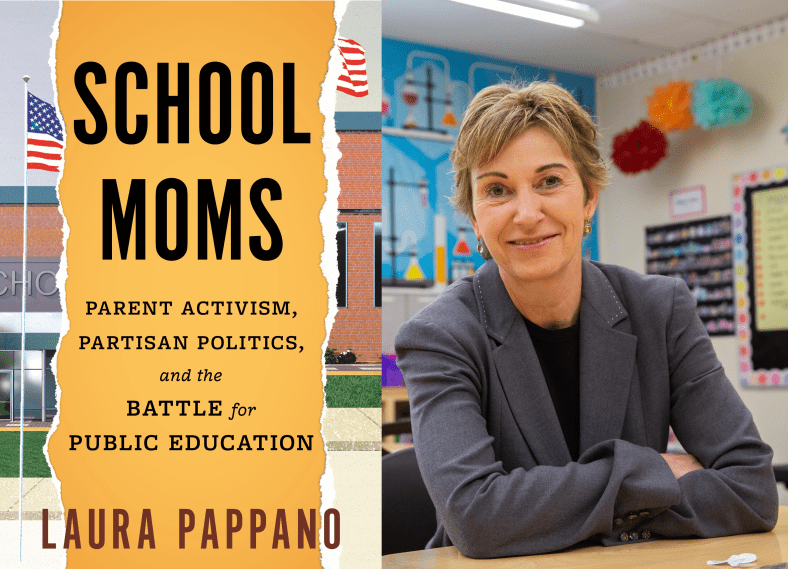
If you’re interested in learning more about the increasing politicization of school boards and conflicts over public school policies, join us on April 26 at the Elkridge Branch for an author visit with Laura Pappano, an award-winning education journalist. She discusses the key findings in her new book, School Moms: Parent Activism, Partisan Politics, and the Battle for Public Schools.
Finalize Your Voting Plan
Whether you want to vote early, by mail, or in-person on election day… make sure you have a voting plan!
Check your voter registration status, determine your voting method, and preview your ballot at Vote 411. The Howard County Board of Elections also has useful information on their site, including the polling locations for early voting (May 2 – 9) as well as Mail-In Ballot Drop Box locations.
Ash is an Instructor and Research Specialist at the Central Branch with a passion for information literacy and community engagement. They love music, gardening, hiking, and cuddling with their golden retriever.
The most important right we have as Americans is the right to vote. From the Howard County Board of Elections to the U.S. Congress, you have a voice. Everyone can vote for some of the local races, such as Board of Education. But with so many choices on the ballot, where to begin?
For Federal seats, step away from the echo chambers of social media and check the facts at FactCheck.org, a nonpartisan, nonprofit advocate for voters that helps to, “monitor the factual accuracy of what is said by major U.S. political players in the form of TV ads, debates, speeches, interviews, and news releases.” You can also visit Politifact, a fact-checking website with a rigorous and transparent process used to scrutinize claims independently by political officials, candidates, campaigns, and media.
For state races, visit Vote411.org for a personalized ballot based on your address. Click a candidate icon to find more information about the candidate. To weigh two candidates, click the “compare” button.
For Howard County races, use the resources from the League of Women Voters, a nonpartisan organization that encourages informed and active participation in government. Read the 2022 Primary Voters Guide and/or watch the Primary Candidates Forum.
County Executive: Fast forward to 2 minutes, 50 seconds.
Howard County Council:
District 1: Fast forward to 20 minutes
District 2: No attendees
District 3: Fast forward to 34 minutes
District 4: Fast forward to 40 minutes
District 5: Fast forward to 59 minutes
State’s Attorney: Fast forward to 1 hour, 5 minutes
Clerk of Circuit Court: Fast forward to 1 hour, 11 minutes
Register of Wills: Fast forward to 1 hour, 14 minutes
Sheriff: Fast forward to 1 hour, 17 minutes
Judge of Orphan’s Court: Fast forward to 1 hour, 23 minutes
Board of Education: Fast forward to 1 hour, 36 minutes
MD House of Delegates:
District 13: Fast forward to 2 hours, 20 minutes
District 12A: Fast forward to 2 hours, 57 minutes
District 9B: Fast forward to 3 hours
District 9A: Fast forward to 3 hours, 8 minutes
MD Senate:
District 13: No attendees
District 12: Fast forward to 3 hours, 37 minutes
District 9: Fast forward to 3 hours, 52 minutes
Judge of Circuit Court: Fast forward to 3 hours, 56 minutes
Polls are open from 7 am to 8 pm on Tuesday, July 19.
And once you vote, learn more about voting history with this curated list of books and films in our collection.
Whether you vote by mail, by drop box, or in person, educate yourself about the candidates and issues and VOTE!
Christie Lassen is the Director of Communication and Partnerships for Howard County Library System. She loves walking through the network of pathways in Columbia, sitting on the beach, and cheering for the Baltimore Orioles and Texas Aggies football team.
The first (and only) song I’ve ever heard to rhyme both Trump and Clinton into the same chorus was sung to me during the 2016 election – by a five-year-old in my son’s Kindergarten class.
In 2020, election talk is even more ubiquitous. Grownups aren’t the only ones figuring out voting. Many children are hearing about the election and wondering what it all means. Some may be asking their questions, while others may be unsure where to start. It’s never too early to welcome young ones into the voting process and help them understand how important it is. We may be shocked to find what they’ve heard already – and what critical gaps likely are in their understanding.
Children can understand the value of having a say, and we all know they put a lot of stock in fairness. Such basics of democracy are very accessible. Even preschoolers can use a simple form of voting to make a group decision. Pizza or sushi for dinner? Ride scooters to the park or walk? We grownups can give our little future voters lots of practice with making a choice, counting up votes, and making peace with the outcomes. Of course, the story of American democracy doesn’t end with the idea of one person, one vote, but it is a great way to start talking about it. Reading books about voting can further spark children’s interest and open up fun, informative, invaluable conversations. Encourage your kids to ask questions, then find answers together.
The President of the Jungle by André Rodrigues, et al.is a playful introduction to voting as a fair way to decide things as a group. In the story, the animals are not too happy with Lion, King of the Jungle, and they want a change. Key election concepts are explained with clever illustrations and a glossary. It’s great for big-picture questions about what’s fair and what makes a good leader. Bonus, it’s also great for character voices if you like that kind of outlet.
Vote for Our Future!, by Margaret McNamara shows the many ways kids can get involved during election season, even before they are voting on their own. The story follows an elementary class learning and doing all they can about voting as their school becomes a polling place. Vibrant drawing of people in action let kids make observations and ask logistical questions.
Voting is an important way that families act on their values and help determine what it’s like to grow up in this country. Children of all ages are paying attention. Will they see just how valuable each vote is?
Foradditional books, DVDs, and eResourcesabout voting for children and adults, check out the collection curated by our HCLS team here.
Emily is a Children’s Instructor & Research Specialist at HCLS Elkridge Branch.. Her family voted on how to celebrate their ballot drop-off this year. “I Voted” S’mores won in a landslide over the “I Vote” Rootbeer Float, and “I Voted” stickers.
Are you one of the 46,120 Howard County voters who have already requested their mail-in ballot?1 Because of the pandemic, all Marylanders have more options for how to vote to make the process safer and easier, but election deadlines are hard and fast. So, choose your path early and make sure you have time for the plan that’s best for you.
To help you plan, we’re introducing our new online HCLS Voter Smarts Guide 2020. It’s a comprehensive, nonpartisan collection of resources tailored to our Howard County community.
Use our guide to take the first critical step – make sure you are registered to vote by October 13.
Next comes the Choose Your Own Adventure part. To vote, you have several options:
1) Mail in a mail-in ballot.
2) Drop off a mail-in ballot at a county drop box,
3) Vote early in person at any Early Voting Center in your county.
4) Vote in person on Election Day at any Voting Center in your county.
Due to the pandemic, all Maryland voters are encouraged to use mail-in ballots, but they WILL NOT be sent out automatically. Go to our guide (linked above) to request your mail-in ballot by the October 20deadline. Then, return your signed ballot ASAP, no need to wait for election day.
If, on the other (sanitized) hand, you choose to vote at an in-person Voting Center, check out our COVID-19 section for theCDC Recommendations for voters. We also have Voting Tips & Accessibility information with FAQ for before, during, and after you vote.
Beyond logistics, maybe you’re looking for reliable information about all the issues at stake this election. Fortunately, the HCLS Voter Smarts Guide 2020 also connects you to trustworthy fact-checking websites and Informed Voter Resources & Guides with nonpartisan, well researched databases that lay out candidates’ positions and the pros/cons of any issue.
Some things have to be different for the 2020 election. But one thing is downright fundamental as always – your vote matters. So, get out there – or stay in – and vote!
Emily is a Children’s Instructor & Research Specialist at HCLS Elkridge Branch. She’ll be making “I Voted” s’mores with her kids to celebrate dropping off her mail-in ballot.







 CHAPTER CHATS