The Queen’s Thief series by Megan Whalen Turner

The covers of all six books of the Queen's Thief series.

by Kristen B.

A long time ago, when I first started working for the library, I was trading “have you reads” with another staff member. She asked if I – and my then elementary-aged children – had yet read The Thief. We had not but quickly rectified the situation, and I have spent the past two decades recommending that book and its sequels in turn. I re-read them this summer, one after the next as a complete series, and was blown away all over again. There are six books, and each one is excellent in its own way. They may have call numbers that place them in Children’s and YA fiction, but these books are for everyone. Honestly, I do not understand this marketing at all – these books tackle freedom, politics, religion, disability, war, espionage, being true to yourself, falling in love, friendship, loyalty, and so much more.

Part of the delight of these books comes from the fact that the author excels at turning the tables; things are often not quite what they appear. We learn in the first book not to trust the main character Eugenides, the Queen’s Thief of Eddis, any farther than you can throw him – but also, you can trust him with your life. The next five books continue to play with expectations and appearances. I don’t want to ruin the pleasure of discovery – so here’s a quick peek at each book in the series:

The Thief
We are introduced to a small peninsula of three countries, Attolia, Eddis, and Sounis, trying to survive in a world where large empires are greedily subsuming smaller states. Hamiathes’ Gift, a divine object, conveys the right to rule the mountain kingdom of Eddis, except it’s been lost for generations. A wise man, his apprentices, a guard captain, and a notorious thief removed from prison go on a quest to recover it.

The Queen of Attolia
What happens when the Thief gets caught? Eugenides suffers horrible personal consequences and must overcome them to advance his own interests and to keep the allied countries free from the Mede Empire. This book is not for the faint of heart, as it portrays dismemberment and consequent depression. However, it offers an amazing look at how people can suffer major setbacks and continue to achieve their dreams.

The King of Attolia
What happens when the Thief gets what he wants? This is my absolute favorite book of the series, mostly because it’s funny to read about Eugenides coming to terms with the life he has literally begged, bartered, and stolen for. This installment also expands the cast from the point of view of a new character, the soldier Costis, and it is better for it.

A Conspiracy of Kings
Once again, the narrative shifts to a new character – Sophos, the heir of Sounis. His coming-of-age story has larger ramifications for the little peninsula. The Medes continue to encroach, the local barons continue to scheme, and Sounis has to decide if he’s up to the task of being king. Eugenides still figures greatly, if not obviously.

Thick as Thieves
So … about those Medes. The fifth book seems like a side story, until you realize exactly how far Eugenides will go for some revenge. After all, why have only one reason to do something when you can have many? The story follows Kamet, who had a minor role previously, as he escapes his enslavement with the help of our favorite Attolian guard. Only, Kamet has no plans to leave his powerful position until he thinks he has no choice.

The Return of the Thief
Not many series get an ending as excellent as this one – and it’s just about perfect! All of the threads and themes from the previous five books come together in this stunning conclusion. War comes at a price, and that price is paid in many ways by many people.

Eugenides and the rulers are the common elements across the series, but mostly it’s about the titular Thief. It’s a fascinating look at how someone raised and trained to work outside of the conventional hierarchy behaves once he becomes synonymous with said power structures. On the other hand, these books contain some of the best stories written in the past decades, filled with humor, adventure, and a rip-roaring good time. You should read them!

Kristen B. is a devoted bookworm lucky enough to work as the graphic designer for HCLS. She likes to read, stitch, dance, and watch baseball (but not all at the same time).

Gravity’s Rainbow by Thomas Pynchon

A flat full book cover from back across the spine to the front: It is predominately orange with a bright yellow spiral on the front, with the title and author centered, above a row of townhomes. The back has a quote, "A screaming comes across the sky ..."

“This is some kind of a plot, right?” Slothrop sucking from a velvet pipe. 

Everything is some kind of plot, man,” Bodine laughing 

“And yes but, the arrows are pointing all different ways,” Solange illustrating with a dance of hands, red-pointed fingervectors. Which is Slothrop’s first news, out loud, that the Zone can sustain many other plots besides those polarized upon himself . . . that these are the els and busses of an enormous transit system here in the Raketenstadt, more tangled even than Boston’s – and that by riding each branch the proper distance, knowing when to transfer, keeping some state of minimum grace though it might often look like he is headed in the wrong way, this network of all plots may yet carry him to freedom. He understands that he should not be so paranoid of either Bodine or Solange, but ride instead their kind underground awhile, see where it takes him. . . . 

By Ian L.

I fear, dear reader, that in even attempting to describe the manifold plots contained within Gravity’s Rainbow, the constraints by which I am bound have already caused me to fail in my endeavor. Which is to say, this book is a challenge to read but even more so to describe. This novel challenges your understanding of what a novel should be. 

Gravity’s Rainbow, described as the least-read must-read of the English literary canon, is perhaps the post-war post-modern novel. Anthony Burgess, of A Clockwork Orange fame, described the novel as, “the war novel to end all others.” It is often spoken about alongside James Joyce’s Ulysses, another book notorious for being considered either a great work of literature or completely incomprehensible. I am sympathetic to the former, but I understand how people believe the latter. The narrative and prose are confusing from the launch. Gravity’s Rainbow plays with its narrative distance in much the same way that our brains do while we are dreaming. A scene might open on one character and follow them for a beat; then, the focus flies into the head of another and digs deep into their individual psychology, history, or worldview.

While we are following these various and sundry characters, many of whom are not our “main” character (which itself is a harder question to answer than you might expect), the narrative is also running along a track parallel to our real history. Pynchon’s prose is impeccably diverse, in both its form and subject. The story is interspersed with poems and songs sung by and about the people who populate this novel. Several of the “chapters” could easily be independent short stories. The narrative meanders and diverges into reveries on myriad topics: historical events, artistic movements, psychology, chemistry, physics, genocide, philosophy, and even esoteric “sciences.” Pynchon’s words manage to be witty and evocative, beautiful, and hilarious, as well as harrowing and even vulgar. Truly so. I do not have the digital real estate to expand on that point, let alone most aspects of this novel. 

Ostensibly, Pynchon’s novel is set during the final stages of World War II. The German military has been rapidly manufacturing and deploying the V-2 rocket, the first ever long-range guided ballistic missile. It screams across the sky so fast you only hear it if you survive. An initial ensemble of secret intelligence operatives catches word of a strangely serialized rocket and an unknown device included in its schematics. The 00000 Rocket and the mysterious Schwartzgerät form the central gravity well around which this novel’s narrative revolves. It is an awesome medley of carefully researched facts mixed with Pynchon’s creative labyrinth of fiction. The novel is initially disorienting, by design, aimed at confusing the reader’s understanding of what is “actually happening” within the narrative. The characters experience this feeling, too.

One recurrent theme throughout the novel is the ever-mounting presence of paranoia. The characters struggle under overarching and competing plots. They buckle under the questioning of whether anything they have ever done has helped anyone. The War has consumed them, and only too late do they realize the War Machine does not exist on both sides. It is a superposition that collapses all sides into itself. This maddening descent is humanized by Pynchon through his characters, who are irrevocably altered by their situation. Each undergoes a derangement of the self, a severing and mutilation of their minds and bodies, or for some, their souls.  

If there was a word we could use as a through line for the vast wasteland that is Gravity’s Rainbow, it might be “Preterite.” Grammarians probably recognize this word as a fancy term for the simple past tense. I imagine most people are not thinking about Christian Eschatology in their day to day. To put it simply, the Preterite, according to Calvinist doctrine, are those who are not predestined for salvation. The characters we follow are among the Preterite, the passed-over and forgotten who are used by the Elite and the Elect. Those who must live in the wake of what war wrought. It would seem trite to state something so simple as “War is Bad.” Gravity’s Rainbow is full of themes that can seem stupidly obvious when stated outright. It is not these answers that earn Pynchon his accolades, but how he moves toward his answers. That is something that must be experienced, not explained.  

Much like the end of the novel, I want to close this out with an abrupt pivot toward the mystical. Within many mystical traditions, whether hermetic or religious, lies the belief that profound truths cannot be readily grasped by the uninitiated or faithless. To expose these truths too hastily is to rob them of their power. To put it another way, for a revelation to be of any consequence, its content must first be hidden.

Knowledge is like light; the ten-tons of rocket-powered symbolism and the concentric layers of narrative are a prism which refracts and disperses the light into a visible rainbow. Without the prism the light is visible but unfiltered. The diverse cast of characters, the disparate circumstances they find themselves in, even the story of Byron (the sentient immortal light bulb), are all pieces of the prism. Pynchon expertly constructed this obfuscating puzzle to reveal something prescient about the world we inherited. Despite being published 50 years ago, I would wager its relevance has never been less in question. More than ever, we live under the shadow of Gravity’s Rainbow.  

Gravity’s Rainbow is available in print, as well as an e-audiobook and an audiobook on CD. The audiobook, skillfully narrated by George Guidall, brings Pynchon’s words into great relief and were an indispensable aid in completing the book. 

Ian is an Instructor and Research Specialist at East Columbia Branch. After finally finishing Gravity’s Rainbow, he is not sure what to do with himself. Infinite Jest stares at him dauntingly from his shelf. If anyone asks, he – never – did the “Kenosha,” kid.

Veterans Recommend Books

Shows an armed company with their gear walking across a sandy landscape.

by Rohini G.

Veterans, both active and retired military, participated in a recent online book discussion series. During five monthly facilitated sessions, conversations centered on military experiences and a unique set of readings, which included classics, fiction, memoirs, poetry, short stories, articles, and essays. The readings related in some way to military experiences or offered a veteran’s perspective. A new session begins in 2023. The Veterans Book Group is coordinated statewide by Maryland Humanities and is supported in part by the Wawa Foundation.

“If I had to narrow it down to one, it would be The Forgotten 500 by Gregory A. Freeman. The book recounts the details of American airmen shot down in Nazi-occupied Yugoslavia, and the local Serbian farmers who risked their lives to give them refuge. I really enjoyed learning about a relatively lesser-known WWII operation, and I’m always fascinated by the lengths to which humans will go to help one another when faced with desperate circumstances. This book was really good.”  – Dave O.

With the Old Breed: At Peleliu and Okinawa by Eugene B. Sledge is, perhaps, the finest individual memoir of the Pacific War. John Keegan, the noted British military historian, spoke highly of it. Ken Burns used it as a source for his documentary, The War.”
– Eugene O.

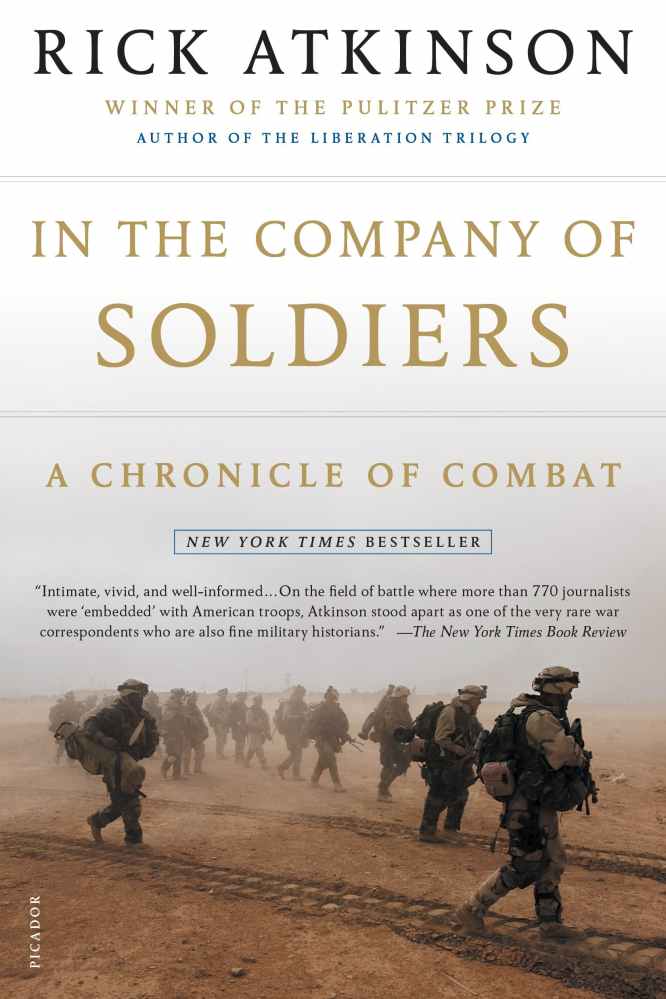
In The Company of Soldiers: A Chronicle of Combat by Rick Atkinson was my favorite book of the list we had to read. I like all books that have to deal with soldiers and this was one of the best. This book was well written and contained many individual issues that affect soldiers.” – Ron B.

HCLS joins the wider community in remembering with gratitude the service of our veterans, including the HCLS employees who have served. We are thankful for their patriotism, their willingness to serve and sacrifice for their country in wartime and in peacetime, and their love for and loyalty to our country and its citizens.

Rohini G. is an Adult Curriculum Specialist with Howard County Library System who coordinates the Veterans Book Club.

Walking in Someone Else’s Shoes

The cover has the author and title in black and white lettering against a sea green background.

by Cherise T.

When a novel is set in the reader’s hometown, appreciation for the story and characters extends beyond the book’s contents. When a novel is set somewhere new to the reader, that place is no longer foreign and unknowable. Literature expands memories, builds connections, creates new journeys, and fosters empathy.

Books by veterans, about veterans, and regarding veterans’ friends and families offer diverse perspectives of consequential events and everyday perseverance. Veterans can, perhaps, find shared experiences. For non-veterans, there are bridges to understanding. Ben Fountain’s depiction of experiencing post-traumatic stress disorder in Billy Lynn’s Long Halftime Walk is unforgettable. To some, an NFL halftime show featuring Destiny’s Child would be entertaining but to this story’s young Iraq War Army soldiers, it’s terrifying.

The cover depicts two soldiers, weapons drawn, seemingly patrolling a desert area with mottled orange sands and sky and a yellow sun at the horizon.

In his debut novel, The Yellow Birds, Iraq War veteran Kevin Powers takes on the burdens veterans face when they return home. Private John Bartle struggles to understand his own behavior in Iraq, as well as his debts and responsibilities to superiors and fellow soldiers. Veterans may relate to Bartle’s emotional efforts to move forward with his life beyond the battlefield. Readers who have never been in the military become immersed in Bartle’s psychological conflicts. He feels surrounded by death as he fights to survive both in Iraq and back home in Virginia.

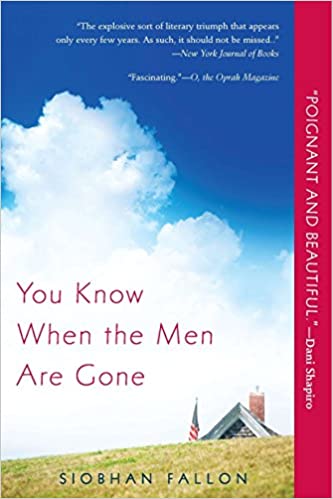
The cover depicts a white cloud against a deep turquoise sky, with a field rising to a hill in the foreground and just the upper floor and chimney of a house depicted behind the hill, with the United States flag flying in front.

Short story collections offer multiple viewpoints of war in one volume. Siobhan Fallon’s You Know When the Men are Gone focuses primarily on the family left behind, particularly military spouses in Fort Hood, Texas. The stress on these characters exceeds loneliness. Their attempts to cope with deployments are seen in actions as seemingly mundane as a shopping trip to the PX or as drastic as abandoning one’s spouse.

The cover depicts a soldier in fatigues, cap and boots with his duffel bag on the ground beside him, in what appears to be an airport or other waystation with a concrete floor and white tiled walls.

National Book Award winner Redeployment by Marine veteran Phil Klay deftly presents the outlooks of men who entered the military from varied backgrounds. The stories are heavy but often humorous as Klay addresses the absurdities inherent in active duty as well as in the abrupt return to civilian life as a veteran. Often disturbing, the situations encompass violence and PTSD but also forgiveness and compassion.

Cherise Tasker is an Adult Instructor and Research Specialist at the Central Branch. When not immersed in literary fiction, Cherise can be found singing along to musical theater soundtracks.

The Sympathizer by Viet Thanh Nguyen

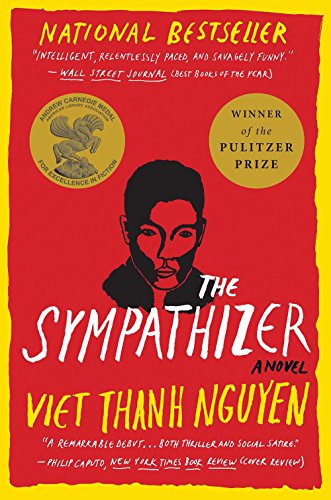
A red cover with a yellow border features an illustration of a Vietnamese man's face. Includes award stickers for the Pulitzer Prize and the Andrew Carnegie Medal for Excellence in Literature

by Eric L.

I may have opened another post like this, but if you’ve not read The Sympathizer by Viet Thanh Nguyen, do yourself a favor. It won the Pulitzer Prize in 2015, and awards aside, it’s a great book.  

The Sympathizer is an “epistolary-like” novel, as the entire thing is written as a confession of a spy from the north who has deeply infiltrated the south, and the American support apparatus. He is an aide to a general, and really has a good feel for the elite as well as those of lower social stature. 

Superficially, it is the story of the child of a Vietnamese teenager and a French priest, who does not fit in because of his parentage and is teased and taunted. In turn, this creates a protagonist of conflicted mind and spirit who artfully chronicles his experiences in Vietnam and America. He makes the profound comment that it is really the immigrants who should be the anthropologists of American society, as well as many other insightful observations throughout the book. 

He chronicles the chaotic escape from Vietnam (you’ve probably seen the footage) when the United States withdrew in 1975. When one views this sort of thing, they’re horrified by the carnage and desperation, but I’d not considered the bureaucratic tasks such as making lists of who evacuates and the intermediary steps. Spoiler alert: the Vietnamese don’t just land in their suburban American homes on a direct flight from Saigon. Sadly, these events seem apropos right now irrespective of your feelings about American wars and intervention globally. I could not even imagine trying to escape my country for fear of political reprisal. 

As someone of a certain generation, I grew up watching the fictional films about the Vietnam War and worried about the specter of the reinstatement of the draft. Perhaps, more broadly, the Vietnam War was the degradation of the cultural capital and hubris that the United States, as a country, carried until this loss. I always felt for the boys who were involuntarily ripped from their lives and sent across the world as soldiers in an ideological battle they likely only rudimentarily understood. It’s a logical reaction, since they were the protagonists of these films, if not the heroes at least sympathetic anti-heroes, and they were like me. 

A Vietnamese character comments that this cold war has always felt hot to them. That said, it’s enlightening for me to read a work of art by a Vietnamese expatriate like Nguyen (by the way, it’s set to be an HBO miniseries). The details concerning the quotidian lives that many of his compatriots lead in the US (California to be specific), and how it’s difficult for former men of power to become relatively powerless in their new country, are very well done. One portion of the book even chronicles the protagonist’s experience working as consultant for a movie about Vietnam, loosely based on Apocalypse Now (if you have not seen this film, borrow it and watch it).  

The Sympathizer (also available as an eBook) is a page turner, a spy novel, a thriller, and oddly humorous; however, I would not describe it as straight satire. In my opinion, what makes this debut novel great is that it is the work of a free thinker and an excellent writer. It may seem banal to say that there is a lot going on in this novel (it may even be worth a second read), but I’m not sure how else to phrase this. Nguyen’s writing is dense, but not difficult to read, and the story just flows. I intend to read his collection of short stories, The Refugeesand eventually the sequel, The Committed, which was published in 2021. Try them, you may like them. 

Veterans Day and Vonnegut

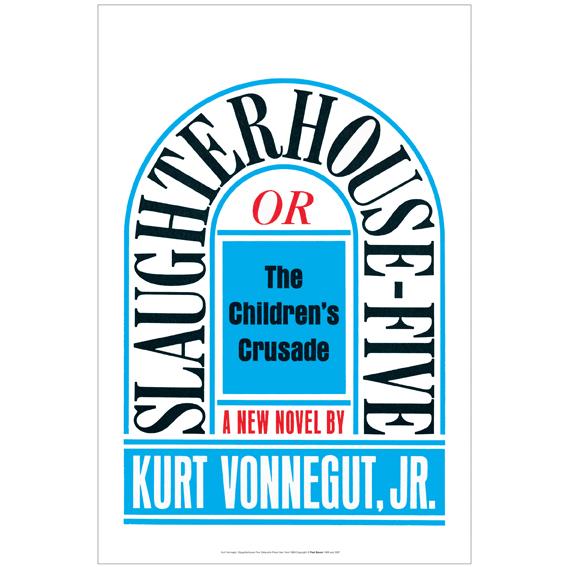
Slaughterhouse-Five arches in a tombstone shape above the subtitle, Or the Children's Crusade, and the author's name.

By Eric L.

We celebrate Veterans Day today, November 11, and it’s not just an extra day off each year. As a young person, I didn’t realize the significance of the date and why it doesn’t float like similar holidays. Veterans Day was not explained to me in school; in fact, the significance of the First World War wasn’t very clear until I took a college-level class. However, I won’t blame my teachers; there is a high probability that I was not paying attention.

I have always liked history because it seems like a big story, and I love those. I still, fortuitously, fill the gaps of my historical knowledge through books, very often through fictional stories as a gateway to the actual events. So please read them, you can borrow them for free

Kurt Vonnegut is arguably one of my favorite writers for his indefatigable humanism and wit. Sadly, I’m a huge fan of what people call gallows humor. He served in combat for the U.S. Army during the Second World War. In short, he was captured, detained as a prisoner of war, survived the fire-bombing of Dresden as a POW, and experienced horrifying things. His work Slaughterhouse Five, or The Children’s Crusade: a Duty-Dance with Death addresses this experience. The title refers to the former slaughterhouse where he and other POWS were held, and the fact that they were really children when they fought the war. Many of his works are about war and post-traumatic stress it causes. Strangely, Vonnegut was born on November 11, 1922, what would become Veterans Day.

In my opinion, the prefaces of his books, as well as his memoir Man Without a Country (also in audio) are nearly as good as the novels. I find them hilarious. In the preface to Breakfast of Champions (available in ebook, eAudio, or this collection), he describes how Armistice Day marked the end of the First World War. The cease-fire was declared on the eleventh minute of the eleventh hour, of the eleventh day of the eleventh month. Vonnegut poetically said,  

It was during that minute in nineteen hundred and eighteen, that millions upon millions of human beings stopped butchering one another. I have talked to old men who were on battlefields during that minute. They have told me
in one way or another that the sudden silence was the Voice of God. So we
still have among us some men who can remember when God spoke
clearly to mankind (504-5, Novels and Stories 1962-1973).

I can only imagine that, to a battlefield veteran, the silence of a cease-fire must indeed have sounded like providence. Vonnegut said that Armistice Day was “sacred,” I assume because it meant an end to fighting in the War to End All Wars. I’m fairly confident he supported veterans of all types, but I too hope the idea of a cease-fire is still “sacred.”  

I very much appreciate the veterans of the military. I admire their courage, and I especially admire my late Grandmother who served as a combat nurse during the Second World War. 

Check out HCLS’s list of titles to remember and celebrate our nation’s military heroes this Veterans Day.

Eric is a DIY Instructor and Research Specialist at HCLS Elkridge Branch. He enjoys reading, films, music, doing nearly anything outside, and people.

Read While Isolated

The cover depicts an open pocket watch against a black cloth background with small, glowing astrological symbols.

by Piyali C.

At the beginning of the pandemic, I found it difficult to focus on books. It seemed like Emily St. John Mandel’s dystopian novel, Station Eleven was playing out right in front of me. However, when physical distancing became a part of our daily routine, I took to reading so I could escape to other worlds created by authors. The books below are some of the ones that I truly enjoyed as I read them during isolation, borrowed from Howard County Library System.

The Pull of the Stars by Emma Donoghue (available in print, ebook, eaudiobook): A fascinating story of nurse Julia Powers, who works in the maternity ward of a hospital in war- and flu-ravaged Dublin in 1918. She takes care of expectant mothers fallen ill with the raging Spanish flu. With the help of a rebel woman doctor and a young orphaned woman, Nurse Powers tends to the needs of the quarantined pregnant women in her care to the best of her ability under the circumstances.

The Book of Lost Friends by Lisa Wingate: (available in print, ebook, eaudiobook) Told in the alternating voices of Hannie, a recently freed slave in 1875, and Benedetta Silva, a young new teacher in a tiny town in Louisiana in 1987, this story takes us through the Reconstruction era in America with Hannie, as she travels to Texas with two unwilling companions, Miss Lavinia and Juneau June, in the hope of finding her family members who were sold as slaves in different cities and towns. Benny Silva, while trying to engage her unwilling students in their own history, comes across the story of Hannie’s journey in the library of a run-down plantation house. The discovery of this quest brings forth a fascinating story of freed slaves trying desperately to reconnect with family members lost to slavery in 1870’s America.

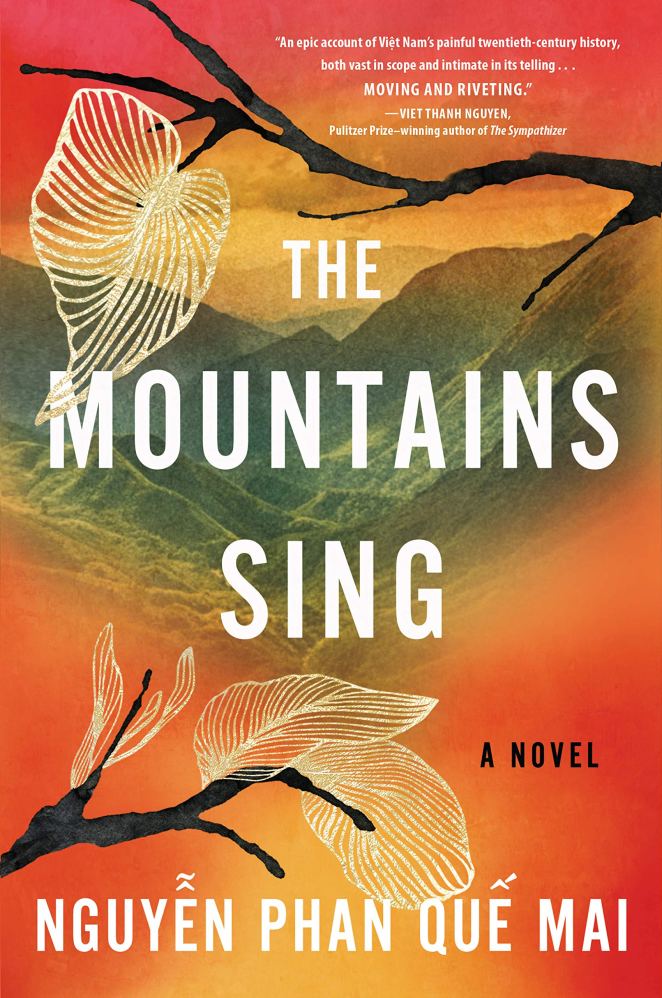
The Mountains Sing by Nguyen Phan Que Mai (available in print, eaudiobook): Drawn from the author’s own experiences of growing up in postwar Vietnam and from interviewing countless people who lived through the horrors of the Vietnam war, Ngyuen Phan Que Mai writes this amazing story of a family torn apart, not only by the war, but also by the subsequent division between north and south Vietnam. While the story talks about the unbelievable horror that wars inflict on human life, it also sings an ode to indomitable human resilience and a desperate mother’s inexplicable courage and determination to keep her children safe.

A Good Neighborhood by Therese Anne Fowler (available in print, ebook, eaudiobook): Valerie is a 48-year-old Black woman, a single mom to Xavier, and an ecology professor who nurtures a deep love for plants and trees. Brad Whitman is an entrepreneur who has risen up in wealth and power from humble beginnings. Brad builds a gorgeous house next to Valerie’s and moves in with his wife Julia, step daughter Juniper and daughter Lily. As a relationship starts to build between Valerie and Julia, an incident regarding Valerie’s favorite tree causes a rift between the two families, resulting in a law suit. But Xavier, Valerie’s 18-year-old son, and Juniper, Julia’s 17-year-old daughter, are also building a beautiful relationship. How much acceptance will an interracial relationship receive, not only from society but also from Brad Whitman? Told from the perspective of the neighbors of both Valerie and Brad, this story explores complicated race relations between Black and White, loss of innocence, coming of age, struggles of women, and much more. 

What did you read during isolation? Tell us in the comments.

Piyali is an instructor and research specialist at the Miller Branch of HCLS, where she co-facilitates both Global Reads and Strictly Historical Fiction.