Read about Women’s History Month

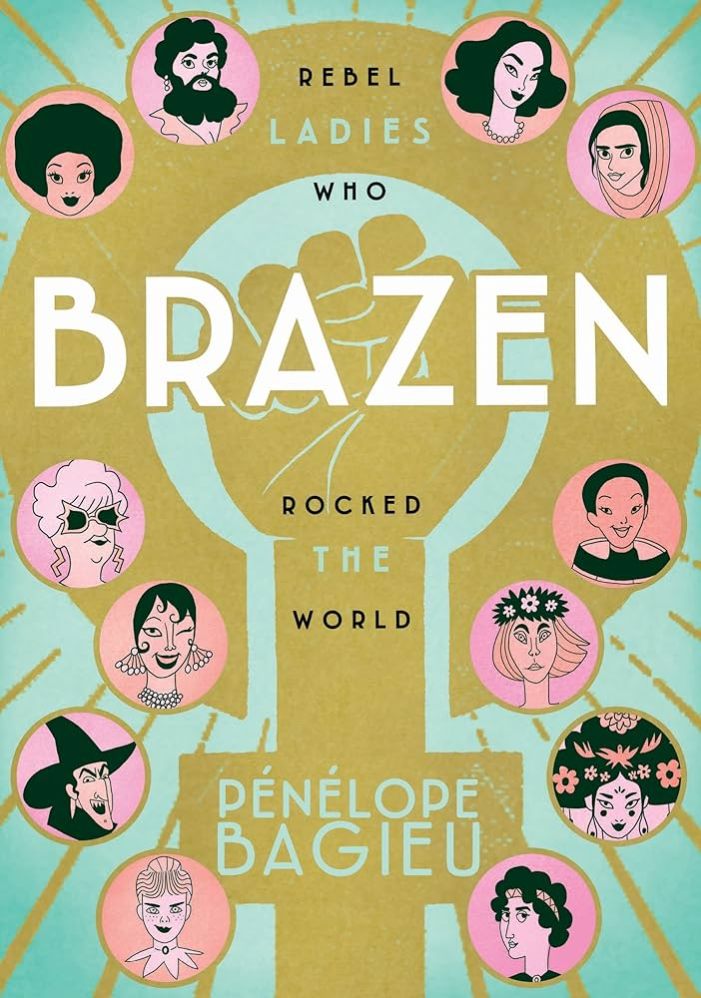
A pale green background with a golden symbol for female, with the center post an upraised fist, surrounded by illustrated heads of famous women.

by Emily B.

Women’s History was not always a month-long celebration. It started in 1980 as a week-long celebration. President Jimmy Carter offered these words as he issued his proclamation for the first Women’s History Week celebration:
“Too often the women were unsung and sometimes their contributions went unnoticed. But the achievements, leadership, courage, strength and love of the women who built America was as vital as that of the men whose names we know so well.”

Each year a new theme is chosen by the National Women’s History Alliance, a non-profit organization who lobbied and advocated for Women’s History Month to be recognized across the United States. The 2024 theme for Women’s History Month is “Women Who Advocate for Equity, Diversity, and Inclusion.” Check out these books celebrating women who did just that!

For adults
Valiant Women: The Extraordinary American Servicewomen Who Helped Win World War II by Lena S. Andrews (also available as large print, e-book, audio on CD, and e-audiobook.)
350,000 American women served during WWII, working as codebreakers, chemists, pigeon trainers, translators, and more. Learn about these unsung heroes and their previously untold stories.

The Women of NOW: How Feminists Built an Organization that Transformed America by Katherine Turk (also available as e-book and e-audiobook)
Learn about the women behind the creation of the National Organization for Women, a group that has advocated for gender equality, reproductive rights, racial justice, and LGBTQIA+ rights since its formation in 1966.

For teens
Turning 15 on the Road to Freedom by Lynda Blackmon Lowery
Read the memoir of the incredible teen who marched for civil rights alongside Martin Luther King Jr.

Brazen: Rebel Ladies Who Rocked the World by Pénélope Bagieu (also available as e-book)
This graphic novel focuses on some of history’s most impressive boundary-breaking women, like Mae Jemison, Nelly Bly, and Christine Jorgensen.

For children
Planting Stories: The Life of Librarian and Storyteller Pura Belpré by Anika Denise (also available on DVD)
Learn about Pura, the first Puerto Rican librarian in New York City. She advocated for the Spanish-speaking community by offering bilingual story times and purchasing Spanish language books. (Also available in Spanish.)

Fall Down Seven Times, Stand Up Eight: Patsy Takemoto Mink and the Fight for Title IX written by Jen Bryant; illustrated by Toshiki Nakamura
Patsy Takemoto Mink was the first woman of color in Congress and was a huge proponent in passing Title IX, which prohibits discrimination based on sex in education programs.

Emily is an Instructor & Research Specialist at the Central Branch. She enjoys puzzling, reading, listening to music, and re-watching old seasons of Survivor. 

March is Women’s History Month

Two large flowers: a pink hibiscus above a white plumeria, with other yellow petals behind the plumeria and a blue background above the hibiscus. Overall, a bright pastel compostion.
Georgia O’Keeffe, Hibiscus with Plumeria, 1939, oil on canvas, Smithsonian American Art Museum, gift of Same Rose and Julie Walters, 2004.30.6

By Emily B.

In honor of Women’s History Month, let’s take a closer look at the “Mother of American Modernism,” Georgia O’Keeffe. One of the most prolific artists of the 20th century, O’Keeffe is best known for her large-scale paintings of flowers.

O’Keeffe was born in Wisconsin in 1887, the second of seven children. By age 10, O’Keeffe decided she would be an artist. Her big break came in 1916 when, unbeknownst to her, famed photographer Alfred Stieglitz presented her art in New York City. This marked the beginning of O’Keeffe and Stieglitz’s tumultuous relationship. O’Keeffe would soon move to New York and become Stieglitz’s muse, appearing in hundreds of his photographs. The pair would go on to marry, following an intense affair.

O’Keeffe’s marriage to Stieglitz, who was 23 years her senior, was far from perfect. Though Stieglitz provided O’Keeffe with studio space and connections in the art world, there was a major power imbalance and he was not faithful. His long-term affair with another photographer took a toll on O’Keeffe’s mental health. Despite this, the pair remained married until Stieglitz’s death in 1946.
In the 1920s, O’Keefe began creating large-form flower paintings. Almost immediately, male art critics began to assert that the “essence of very womanhood permeates her pictures.” While her husband promoted and capitalized off these remarks, O’Keeffe was not comfortable with the claims. She said, “…when you took time to really notice my flower, you hung all your own associations with flowers on my flower and you write about my flower as if I think and see what you think and see of the flower — and I don’t.”

O’Keeffe’s artistry was highly sought after. In 1938, she was sent to Hawaii on an all-expenses paid trip, where she was meant to produce a pineapple painting for an advertisement campaign. After nine weeks in Hawaii, O’Keefe had the beginnings of many beautiful works depicting Hawaii and its flora, but there was nary a pineapple painting. She would not complete the contracted pineapple painting until the fruit was shipped to her in New York City.

Through her career, O’Keeffe would befriend other artistic greats. O’Keeffe and Ansel Adams had a friendship spanning 50 years, no doubt bonding over their deep passion for the natural world. O’Keeffe befriended Frida Kahlo in 1931 and there is evidence to suggest they perhaps were romantically involved.

Throughout her life, Georgia’s passion for art never wavered. Even as she grew frail and her eyesight began to deteriorate, continued painting with assistance and even learned to work with clay. O’Keeffe’s appreciation for nature is timeless and is surely why she has remained one of the most beloved American artists.

Artwork by Georgia O’Keeffe and her artist friends is available to borrow from the Art Education Collection at the Central and Glenwood branches.

Emily is an Instructor & Research Specialist at the Central Branch. She enjoys puzzling, reading, listening to music, and re-watching old seasons of Survivor. 

Selected Women’s History Month Classes

Creating the Legacy
For adults. Register here.
In the world of codes and ciphers, women have always played a role. Throughout American history, women have provided vital information to military leaders, searched for enemy secrets, and pioneered new scientific fields. Learn about the contributions and talents women have brought to cryptology. Presented by Jennifer Wilcox, Director of Education for the National Cryptologic Museum.
Sat, Mar 11; 3 – 4 pm
Savage Branch

Forgotten Women Writers of the 17th Century and Beyond
For adults. Register here.
Women’s History Month provides the perfect time to recognize that for every Austen, Dickinson, and Bronte, another unheard-of author lived who was every bit as good! Discover new-to-you women authors to add to your To Be Read list.
Wed, Mar 15; 7 – 8 pm
Central Branch

Women’s History Month Button Making
For all ages; under 12 must be accompanied by an adult. Register here.
Votes for Women! Celebrate the historical significance of buttons in the women’s suffrage movement by making one. Design your own or use a template featuring historical women’s suffrage slogans and important women throughout history.
Wed, Mar 22; 7 – 8 pm       
Central Branch

Amazing Women: How Did They Build That?
Ages 6-10, 45 minutes. Ticketed; free tickets available in branch 15 mins before class.
Learn about artist/architects Maya Lin and Zaha Hadid, the innovative structures they created, and how they stay up. Design and build structures with various materials.
Fri, Mar 31; 2 – 2:45 pm
Central Branch

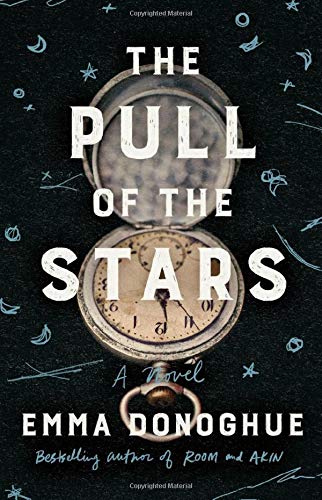
The Pull of the Stars

The cover shows an old-fashioned, open pocket watch against a dark blue background, with simple hand-drawn celestial objects including moons, stars, and planets scattered around it.

By Julie F.

Many novels depict the brotherhood of men at war. Donoghue celebrates the sisterhood of women bringing life into the world and those who help them along this perilous journey.” – Wendy Smith, The Washington Post, July 21, 2020

The Pull of the Stars by Emma Donoghue mesmerizes in the best possible sense. Both the pacing and the claustrophobia of this novel are intense – but it’s claustrophobic in a way that fully serves the plot, as the reader finds themselves in the tiny, overcrowded pandemic maternity ward of a Dublin hospital in 1918, basically the size of a closet, with the Spanish flu raging and World War I coming to a close. The little room is witness to so much – grief, pain, joy, love, trauma, fear, friendship, teamwork, unity, discovery – with the stories of nurse Julia Power and her influenza-ridden patients at the forefront of the action. The reader is propelled through the story, into this place where the characters’ trials and triumphs, representative of those experienced by women across the globe and across millennia, are so poignantly described. It is a story that will impress the reader with its introspective attention to detail and historical accuracy.

Nurse Power is a formidable character: efficient, tenacious, fearless, full of seemingly inexhaustible reserves of energy. Yet she is still young and, although not naive, full of uncertainty in a world where children randomly end up orphaned, babies and/or mothers die in childbirth, unequal outcomes are dependent upon wealth and social class, and soldiers like her brother Tim return from the war front unable to speak – or don’t return at all. She tries so hard to keep a cheerful spirit for her patients and for her young volunteer, Bridie Sweeney, yet at one point finds herself asking, “Back to this moment – what would be asked of me this morning?” (169). Her story echoes those of countless women who served their communities and countries in wars past, nurses and doctors and midwives and ambulance drivers who never shirked what was asked of them.

Post-2020 readers will find much of the pandemic description sad and uncannily eerie; Donoghue delivered the manuscript to her publishers in March of 2020, two days before Covid was declared a pandemic. But at heart, while still managing to address the random heartaches individuals experience in a world rent asunder by war, disease, and traumatic personal loss, The Pull of the Stars remains a hopeful, inspiring story (as is the author’s more famous and equally claustrophobic Room), about women’s solidarity and strength when tackling what seem to be insurmountable medical issues.

The Pull of the Stars is availalble from HCLS in print and large print, and also as an ebook and an eaudiobook from Libby/OverDrive.

Julie is an instructor and research specialist at HCLS Miller Branch who finds her work as co-editor of Chapter Chats very rewarding. She loves gardening, birds, books, all kinds of music, and the great outdoors.