To every thing there is a season. This is especially true for gardeners. Winter may bring a drop in temperatures and light, but surely not idleness for the devoted gardener. Winter is the season to prepare, ponder, and plan!
Prepare your tools for the next season by inspecting them for cleanliness and sharpness. Garden tools get dirty from use and pose risks to your plants by spreading disease. Rust accumulates from moist conditions and sharp edges dull with use. I start by removing any dirt with a stiff wire brush. Then, I use steel wool to rub off any rust. Next, I apply rubbing alcohol with a rag to disinfect. Lastly, I apply a light coat of oil to the metal parts to prevent rust and to keep moving parts working smoothly. I prefer to use a plant-based oil such as linseed oil. Tools used for pruning and cutting should be inspected for sharpness. A dull tool increases the possibility of injury to you and your plants. A few hardware stores in our local community offer tool sharpening services at reasonable prices.
Winter invites pondering the possibilities of spring. My mood soars when I look through seed catalogs and garden books. We can transform any location with a few seeds or humble seedlings. I’ve switched to online seed catalogs and tend to favor local companies such as Meyer Seed Company of Baltimore, Southern Exposure Seed Exchange (VA), and Burpee Seeds and Plants (PA). When searching for hard to find or heirloom seed varieties I turn to Seed Savers Exchange, Hudson Valley Seed Company, and Renee’s Garden Seeds. Or, cut down on shipping altogether and head to Clarks Ace Hardware or Southern States Home and Garden Service. They expect their seed selections to arrive by the beginning of February. If you’re starting seeds indoors this winter, be sure to check out the University of MD Extension – Home and Garden Information website for a short tutorial.
Garden-themed books keep my creative juices flowing. Lately, I’ve been pondering ways to grow more food in the Enchanted Garden and still provide plenty of habitat for pollinators. Edible landscaping has been around for decades, but is gaining attention as many people look for ways to grow their own food as well as flowers. Author and gardener Rosalind Creasy has written two trusted books to give you all the detail you need to get started growing a combination of flowers, vegetables, and herbs: Edible Landscaping and The Edible Herb Garden (also available as a ebook through CloudLibrary). Niki Jabbour explains how to garden in any setting and for any level gardener. Check out Groundbreaking Food Gardens: 73 Plans That Will Change the Way You Grow Your Garden. Each decision I make about gardening I examine through an “earth stewardship” lens. Reading Doug Tallamy’s latest book, Nature’s Best Hope (also available as an ebook through OverDrive/Libby), reminds me to create a garden that enriches the soil, provides for wildlife, and supports all life.
A flower garden plan from Enchanted Garden Coordinator Ann.
Planning is part of the fun of gardening. I enjoy sketching my garden plans to use as a guide and to save from year to year (with notes) as a reminder of what worked and what didn’t turn out as expected. Give me graph paper and color pencils on a cold winter afternoon and I am a happy gardener! If you prefer using online planning tools, try the GrowVeg online planner, which offers a free seven-day trial. In addition to tailoring your plan to your space and location, the planner allows you to find companion plants and provides start and harvest dates. You can learn more with their helpful overview video.
How do you prepare for a new garden season during winter? What inspires and sustains you when our gardens rest in the cold?
Ann joined the Miller HCLS staff as the Enchanted Garden Coordinator and Instructor in 2012. When not gardening you’ll find her reading, cooking, and exploring trails in the Patapsco River Valley with her husband and dog.
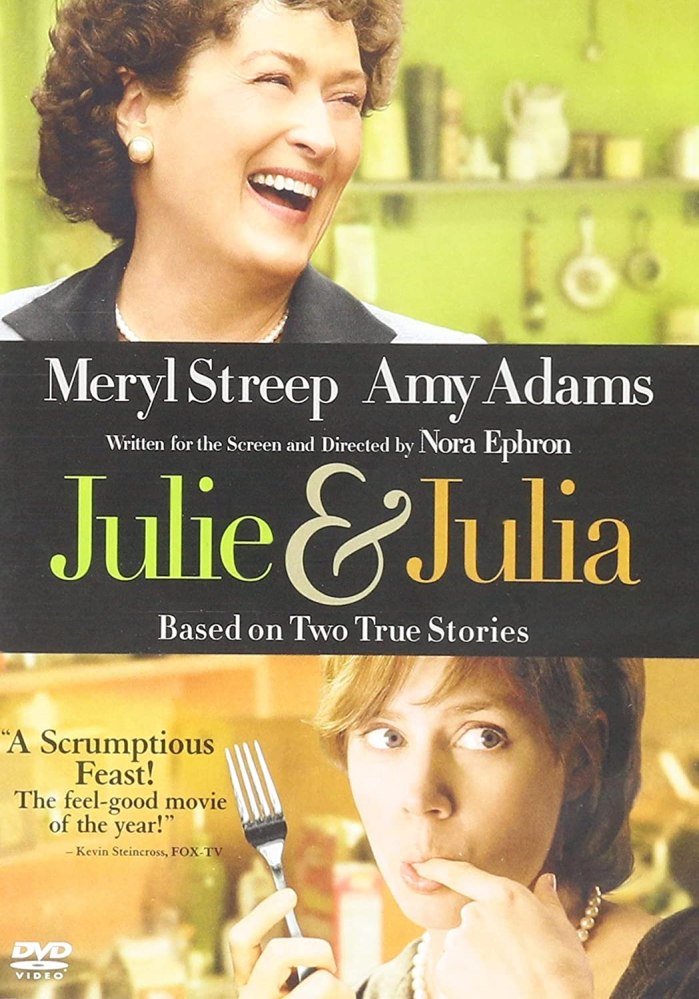
2020 was a difficult year, and we all know it. In difficult times, we often turn to things that bring us comfort such as books, music, movies, or food, and oftentimes our favorites are the ones we turn to many times over and never get tired of. What brings me comfort? The movie Julie & Julia. This 2009 film is based on Julie Powell’s 2005 book and intertwines the story of Julia Child as she grows into a chef extraordinaire with the life of government worker Julie Powell as she cooks her way through all of the recipes in Child’s Mastering the Art of French Cooking. This is a favorite film of mine for many reasons: Meryl Streep as Julia Child, Stanley Tucci, comedy, and last but not least…FOOD. Seriously, I could watch this movie once a week for forever.
As a child we didn’t have cable so I had to rely on watching whatever our TV antenna was able to pick up and most often it was PBS. I remember seeing Julia Child and Jacques Pépin cook dish after dish, and they (along with many other PBS cooking shows) are one of the reasons I became the foodie I am today.
But back to Julie & Julia: as I mentioned before, there are many reasons why I love this movie, but what I didn’t mention was that it has one of the best soundtracks I have ever heard. It’s…relaxing, for lack of a better term. When I turn on this movie, it is often just in the background as I cook, clean, or when I just want to free my mind of all the clutter. Don’t believe me? Well, check it out – it is available to stream and download from Freegal through Howard County Library System. All you’ll need is your library card number and PIN. It’s that easy!
Meryl Streep shines as Julia Child accompanied by Stanley Tucci as her husband Paul. Their onscreen chemistry makes you believe in love and triumph through hard work and determination, and I love every single scene with them. Amy Adams, however, is no slouch, and her portrayal of Julie Powell perfectly conveys how arduous the task was to cook more than 500 of Julia Child’s recipes, all while enjoying most of it, despite a few burnouts and tantrums along the way. When she describes her childhood memory of the magic of Julia’s bœuf bourguignon I am sorely tempted to make the recipe myself (but would end up eating by myself thanks to my vegetarian partner).
I leave you with a quote from Julia Child:
People who love to eat are always the best people.
Peter is an Instructor and Research Specialist at the Miller Branch where he is one of the nerdiest people you could meet.
Rely on hclibrary.org as your job seeker support system. Our excellent databases and classes can assist in your job search and career development, including Peterson’s Test and Career Prep. You may be familiar with the Testing & Education Reference Center and have used its tools or maybe read about its resources. Renamed “Peterson’s,” this database has so much to offer on your job search journey.
Looking for a job is a full-time pursuit, so you will be thrilled to know that 24-hour access to Peterson’s requires only your library card (Do you need one?). Once logged in, select the “Explore Careers” tile and dig in to all the available and FREE information. Click on “Get Started,” then explore “Find a Career” or “Career Advice” or “Create a Resume.”
The “Find a Career” section is especially useful, with a series of aptitude assessments that lead to recommended career paths. Complete all four – Interests, Values, Personality, and Workplace Preferences – to discover the most complete view of how your interests and skills mesh with different career paths. Once an assessment is completed, Peterson’s links to the job aggregator site Indeed.com with relevant current job posts.
Peterson’s will direct you to Career Matches by subject, including education; finance; health science; IT and computer science; human services; science, engineering, and mathematics; government, military, and public administration; business management and administration; marketing and sales; law and public safety; arts, media, and communication; agriculture, food, and natural resources; hospitality and tourism; transportation, distribution, and logistics; manufacturing and manual operations; and architecture and construction. Using the assessment results, Peterson’s calculates an individualized job fit.
“Career Advice” includes a virtual career library of online instruction. Access this area for advice on changing careers, transitioning out of the military, acing an interview, and negotiating a salary. You can use modules for constructing a resume, pursuing an effective job search, and writing a strong cover letter.
Under the “Create a Resume” tile, you can find nine sample resume templates that you can save to your device or in your Peterson’s account. You can choose to import your resume or even to publish your resume publicly via a Peterson-generated URL address. Check out the cover letter formatting assistant as well.
Remember to explore our class calendar. We post new classes on a regular basis. Upcoming events include Mastering the Elevator Pitch and Interview on Wednesday, January 27 and Networking or Not Working on Tuesday, February 9 and Thursday, February 11. Networking and Not Working provides a total of four hours of in-depth job search skills personalized to attendees’ needs. HCLS also provides drop-in online help in filling out job applications. Twice a month, you may register for a small group session to answer job application questions and address job search concerns.
Cherise Tasker is an Adult Instructor and Research Specialist at the Central Branch. When not immersed in literary fiction, Cherise can be found singing along to musical theater soundtracks.
Winter is a great time to curl up with a cozy read. Cold and sometimes dreary weather begs for a blanket, a hot drink, and a fire. This month, the Elkridge branch staff members have collected a list of titles to encourage you to Stay Cozy! Keep an eye on the HCLS Facebook page to see titles for all ages highlighted throughout January, and make sure to track titles for the Winter Reading Challenge. Here are just a few of those titles.
Cozy up with canines and a large bowl of snark in The History of the World in Fifty Dogs by Mackenzi Lee, a compilation of Milkbone-sized, illustrated essays about interesting bits of human history accompanied by dogs. Dogs have won Pets in World Mythology Best in Show for millennia. While Cerberus, Anubis, and Fenrir take first place in name recognition, you can find other good dog deity stories such as Gourd Tray, a bug-turned-dog-turned-prince. I especially liked the guide dog to the underworld, Wepwawet, whose name I now consider the greatest dog name aside from Entropy. Sit, stay, and play an around-the-world game of Fetch the Friendship of doggo and hooman.
Now imagine a different sort of mutt–a sport with lineage derived from rugby, capture the flag, and Krav Maga. With magic. On dragons. Lana Torres eats, sleeps, and breathes Blazewrath. It connects her to her Papi and the golden age prior to her parents’ divorce when they lived together amid Puerto Rico’s Cayey mountains. Now, for the first time, her beloved homeland has the requisite number of dragons to play the game. Amid internal and external debates about identity and merit, pro-dragon terrorists attack. When the Dragon Knights threaten the World Cup, Lana fears it to be a Hydra. Runners do not run from the fight; they run toward it. With worldbuilding adventure at its finest, with a diverse cast of authentic LGBTQ+, POC, and disabled characters, this book enthralls.
One of the most engaging books I have read all year involves a ghost Springer Spaniel named Kirby and an unnamed ghost trilobite, because our Lipan Apache heroine enjoys paleontology. Elatsoe, Ellie for short, has the enviable ability to resurrect spirits. Magic, in all its multicultural glory, gore, and grace, exists, and Ellie can summon the spirits of dead animals, just like her Six-Great-Grandmother.
The story opens with the death of her older cousin, with whom she had been close. On the way to his afterlife, his spirit pops in to see Ellie. He tells her he was murdered, who murdered him, and tasks her with seeking justice for him while protecting his widow and newborn baby. Elatsoe gets help from her parents, friends, and the stories of her ancestors, which are an ever-present, essential aspect of her life. There’s a cyclical feel to the storytelling, as if the past, present, and future are one.
Dear Santa, aside from a ghost wooly mammoth, can I please have a billionaire bequeath me his entire fortune? No? Then I will follow Avery Grambs’s quest to understand why billionaire Tobias Hawthorne, a complete stranger, cut every blood relative out of his will to name Avery his heir. Sure, she’s appreciative, but also confused and curious. Raised by a single mother who treated every action and event as a game, be it chores, poverty, or cancer, Avery’s affinity for puzzles and games sends her down dangerous rabbit holes. With the help of three vastly different, handsome brothers, she unlocks truths about each member of the family. Everyone has a story, often entertaining, always suspect.
Dogs + snow = instant cozy. Fourteen-year-old Victoria Secord is angry. A local musher offered her dibs on his high-quality sled dogs. As an aspiring racer, Vicky recognizes the chance of a lifetime, but her mom has to work and apparently does not trust her daughter to drive her dog team across town alone. Vicky sneaks away with her team. Vicky is snow savvy with survival skills to rival Bear Grylls, thanks to her dad. Of course, Chris has none of these skills. Who is Chris? He’s the guy Vicky finds sprawled in the snow bleeding beside a smashed snowmobile. Actually, most household appliances possess more non-urban survival skills than Chris. Go ahead, start your worry. After Vicky administers first aid, she offers him a ride. They get lost. More fun, there’s a rising snowstorm, and by morning everything is hidden under an endless expanse of white, camouflaging all landmark vegetation. Have you started worrying yet?
Hygge (pronounced hoo-ga) is the Danish word for the contentment that comes from embracing life’s simplest pleasures. Warm, inviting homes, quality time with family and close friends, and an appreciation for all things natural and handmade are just some of its components. Meik Wiking, author and CEO of the Happiness Research Institute in Copenhagen, recommends recipes, tips for interior design, and activities to enjoy from the comfort and safety of home, and describes how an approach of feeling gratitude for the everyday has helped make the Danes some of the happiest people in the world.
Based on the beloved podcast, Nothing Much Happens proves that we never outgrow the calming magic of a cozy bedtime story. This collection of short, sensory-delighting stories will lull even the busiest mind into a restful state. In describing everyday moments of joy and beauty, these stories conjure a deep and soothing sense that all is well. The included meditation practices, recipes, and relaxation techniques nurture the body and train the mind in the habit of wellbeing that begins with a good night’s sleep.
Knitting is a trendy hobby, and what’s cuter than a dog in a sweater? Cable-knit, ribbed, chunky, turtleneck – you name it. You’ll love the fifteen knitting projects, ranked from “one paw” for a straightforward pattern to “three paws” for more complicated projects, as well as stunning photographs of adorable canine models. Whether or not you have a furry companion to keep warm this winter, you’ll enjoy looking through these fun designs.
The Elkridge Branch + DIY Education Center opened the doors of its new building in March 2018. All our staff wish that we could see you in person, but we are happy to help you discover new reads while we are apart.
As we approach the quiet season of winter and start 2021, cozy reads will definitely be on the top of my list to recover from such an unprecedented year. You may recognize the typical books that are categorized as cozy from our adult fiction collection: fun mysteries filled with humor and intrigue, romances that capture the hearts of fans around the world, and hopeful, literary tales that keep readers optimistic. But did you know that you can find some of the best cozy reads in our graphic novel collection?
Yes, you read right! Graphic novels, which include Japanese manga and traditional comic books, are as diverse as our fiction and nonfiction collections. While their beginnings stem from comic strips in newspapers and classic superhero tales, graphic novels have expanded to include a plethora of plots that readers of all ages can enjoy. In fact, while I will always enjoy a traditional novel, I happen to be a long-time graphic novel fan.
I am excited to share some of my favorite cozy choices that will leave you smiling well after the last page:
Note: In regards to all of my series picks, my reviews are for Volume 1 only.
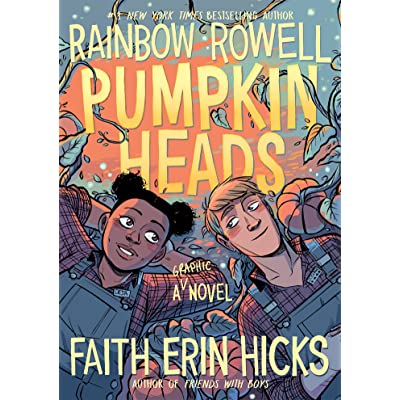
I find myself always missing autumn and Halloween right after they have ended! If you feel the same, then you will revel in the crisp, fall nights depicted in Pumpkinheads. You may recognize Rainbow Rowell of young adult fame with novels like Eleanor & Park and Fangirl, and I can see why she is one of the most critically acclaimed authors. Two teenagers have seasonal jobs at one of the best pumpkin patches in the country, and every Halloween they come together to revel in the best of the season. Yet, this year is different: they’re seniors in high school and getting ready to go to college next fall. What if they make their last shift an adventure they’ll never forget? With gorgeous illustrations by Faith Erin Hicks, Pumpkinheads is a nostalgic trip down memory lane for every reader who loves pumpkin patches, hayrides, apples and, of course, the crisp air of Halloween.
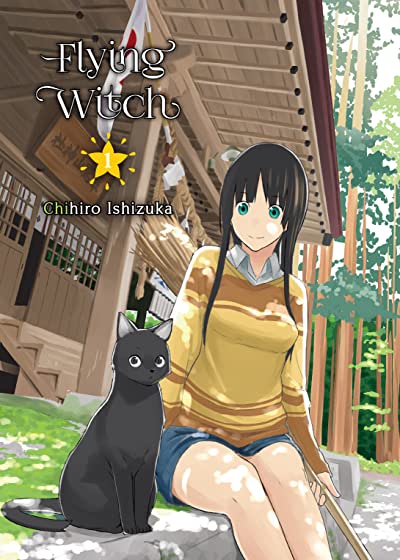
Keeping with the Halloween theme, I had to choose Flying Witch to be on this list. Unlike the fantastical nature of Harry Potter or the ghoulish vibes of the Sanderson Sisters from Hocus Pocus, Flying Witch evisions witches as….well, normal people, with some exceptions. Makoto Kowata is a witch-in-training who travels to Aomori, Japan to stay with her cousin and his family. A bit forgetful but also amazingly kind, Makoto navigates the new town, a relaxed lifestyle, as well as learns how to be an independent witch in the most comedic ways possible. Despite my earlier mention of Halloween, Flying Witch can be read at any time of the year since all four seasons are featured in the story. Be prepared for a fun, gentle read with a dose of magic thrown in.
Like much of the media I discover, I happened to learn of Mari Andrew and her beautiful work on Instagram. Her combination of reflections, color, and unique calligraphy drew me in immediately. When she released Am I There Yet, her work effortlessly transferred from my screen to the page. Her majestic use of words and illustrations provided me with a sense of calm and were immensely relatable to my current stage of life. While her words are very uplifting, Mari also tackles harsh realities while softening the blow with poignant moments of humor and happiness.
Traditionally, manga is characterized by magical beings, action-packed fights, and occasional monsters. However, Emma is uniquely placed in Victorian England. Kaoru takes readers on an intricate journey of forbidden romance between an intelligent but quiet maid and an up-and-coming aristocrat. While many stories begin in a similar fashion, what I enjoyed about Emma was the fascinating use of manga art to tell the story, along with the slow burn of the budding romance. If you have ever wanted to read a manga series but you are unsure of where to start, Emma would be an excellent choice for you!
In the medieval town of Eiteriach, its citizens have grown weary of the continual, basic menu. While fulfilling, it leaves something to be desired. Enter Nobu, a mysterious pub that appears almost magically one day. It becomes the talk of the town, known for its unique cuisine and the warmth of its staff. But can it persuade even the toughest customers? This was one of my favorite reads of the year. Natsuya does an excellent job drawing out the flavors of the cuisine with her art. Coupled with its low-key, heartwarming story, Otherworldly Izakaya Nobu will leave you hungry for the meals but also for the rest of the series.
A story of an unlikely childhood friendship takes plenty of unexpected turns in Jen Wang’s Stargazing. I was fully engaged with the story of Christine and Moon, two girls on the verge of becoming teenagers with different backgrounds and personalities. Heartwarming and beautiful, this graphic novel has just the right amount of topics that can relate to all ages: cultural differences, friendship, health, and even small crushes. The best part of Stargazing is that it is a perfect book for adults to read with their children and discuss afterwards. The blossoming friendship alone is enough to cozy up to this colorful read.
I tend to lean towards slice-of-life graphic novels as opposed to fantasy, but Snow White with the Red Hair is a welcome exception to my rule. For fans of the Disney classic Snow White and the Seven Dwarfs, this series is nothing like the princess we have come to know in our childhood. Shirayuki (“Snow White” in Japanese) is a cheerful, red-haired girl living in the countryside of Tanbarun. Her red hair is so unique in the land that the prince of Tanbarun, Prince Raji, tries to force her to become his concubine. Refusing a life of serving a prince, she cuts her hair and runs away to the forest in search of a new, independent life. With many more twists and turns, this series is a treat for readers who enjoy light fantasy with a touch of female empowerment.
We could all use a little comedy every now and then, especially during these turbulent times. Abbi Jacobson of Broad City fame brings the weird, hilarious view of our bags in Carry this Book. Part faux exposé, part examination of our everyday objects, this book contains the real and imagined objects inside the bags and storage of our icons. Ever wondered what’s in Michelle Obama’s clutch or Harry Potter’s duffel bag? Well, here you go. I struggled with putting this book on the list since it is technically an art book, not a graphic novel. However, I thought it was so creatively put together, and provides stories on fictional characters as well. Abbi does a fantastic job at creating a book that gives such an intimate view of imagination, and how the things we carry everyday may share a deeper look into our personalities than we thought.
Marie Kondo has taken the world by storm with her organization tips and tricks from her published books on the KonMari method as well as her Netflix series Tidying Up with Marie Kondo. So it would seem natural that she would take her methods to a narrative level with her manga book. Chiaki, a young woman in Tokyo, struggles with a lack of direction with her clutter and personal life. Through a series of lessons, Marie Kondo takes her on a magical journey of cleaning up her home and getting her life in order. I absolutely loved that this book was not only an engaging read for readers who love manga, but it also provided some major organization pointers and tricks and offered a quick introduction to the KonMari method. Double points for an engaging story and organization assistance!
To round out the list of cozy graphic novel reads, I want to end on a hopeful note. Journeys begin with hard work and that is how Akiko Higashimura’s story began in high school. Writer and artist of Princess Jellyfish and Tokyo Tarareba Girls, Akiko provides a look into her teenage beginnings of becoming a popular mangaka. So when she signs up for an art class expecting an easy path to stardom, she is rudely surprised by her militant art instructor who expects perfection out of his students. Nevertheless, this art instructor’s weird style of motivation may be the key to Akiko’s art dreams. While this series is meant for teens, I think adults would enjoy this trip down Akiko’s memory lane. Too often, we reach adulthood and forget the dreams and goals we had in our childhood and teenage years. Blank Canvas explores the feelings of invincibility we have as teens while also providing a dose of realism towards reaching goals that seem insurmountable.
Readers of all ages can find some cozy joy with these picks from our graphic novel collection! All titles are available here at Howard County Library System, so request one today and try something new to start this new year!
Claudia J. is an instructor and research specialist and has worked for Howard County Library System for almost five years. She enjoys writing on rainy days and drinking iced coffee on sunny days.
Howard County Library System (HCLS) has again been designated a 2020 Five Star Library by Library Journal for delivering excellence in public education for all ages. HCLS consistently earns the highest five-star ranking attained by fewer than one percent of public libraries in the U.S. and remains the only library system in Maryland to do so.
HCLS President and CEO Tonya Aikens said, “Everyone in Howard County can be proud of this honor. Our talented team is passionate about providing extraordinary customer service, engaging classes and activities, and a high-quality collection for our community of voracious readers and lifelong learners. And even during this pandemic, we continue to explore new ways to develop innovative ideas and bring more services to benefit our customers.”
The LJ Index rates U.S. public libraries based on selected per capita output measures: overall borrowing, borrowing of electronic materials (eContent), library visits, class and event attendance, and public internet computer use, wifi sessions, and (new this year) electronic information. The last item measures usage of online content, such as online research tools (databases).
HCLS per capita numbers (based on a population of 331,414) are as follows: overall borrowing (19.88), visits (6.08), eContent borrowing (3.16), class and event attendance (1.21), and public Internet computer users (1.92), and wifi sessions (.83).
The 2020 scores and ratings are based on FY 18 data from the Institute of Museum and Library Services (IMLS) Public Library Survey.
Last year we embarked on a powerful journey of connection through reading and discussion among veterans in Howard County. This journey continues in 2021. Our facilitator, David Owens, USNA Class of ‘94, shares his thoughts in a candid interview.
David, you are a former Naval officer and an entrepreneur with your own media production company. You are also the facilitator of a Veterans Book Group (VBG) at the library. Tell us more about all these different hats that you don so effortlessly.
I do indeed juggle a lot, but I love it! I want to be someone who makes communities better, and thus volunteering (Veterans Reading Group, etc.) makes me feel more satisfied. I’m a graduate of the United States Naval Academy and spent six years active duty stationed at Naval Station San Diego. I was also a news reporter for 15 years after leaving the service.
Running a small business has been one of the most rewarding things I’ve done, and much of the success of the company centers on human connecting and teambuilding. I learned many of those skills in the military and try to bring those abilities to the reading group as well.
The Veterans Book Group was a first for Howard County Library System and a first for you. What prompted you to take on this role?
First of all, I love this reading group, and I hope it continues! I wanted to be involved in the group because I love to read, and I like listening to other people’s opinions on things. This has been the best of both worlds for me! We all read the same book, yet we sometimes have different perspectives, which helps us all grow. Additionally, it is awesome to meet new people and connect with them.
What makes a Veterans Book Group different from other book groups?
Just by the nature of the job, military members tend to have experience working in high intense environments with diverse groups of people. I believe those experiences facilitate deeper discussions in our group. I also believe there is increased sensitivity and empathy among the members because we understand some have had life-altering experiences during their service/lives. As for the readings, we are a relaxed group that gives members plenty of time to read all the books.
Would you like to share any special memories or experiences from last year’s VBG?
Last year we were honored to have author Madeline Mysko (Bringing Vincent Home) join us for a session. She was so gracious, and having her talk about how the book was really a reflection of her own experiences brought a realness factor to our discussion.
I would be remiss if I didn’t mention Covid-19. Our group initially met in person, then held our final few meetings virtually. Howard County Library and Maryland Humanities were great at adjusting on the fly. Being able to remain connected to people brought positive energy for me, and provided a bit of normal human interaction during such a difficult time.
I understand that participants at VBG read novels, short stories, articles, and just about every format. What was your favorite story, book or excerpt from what you read last year?
Again, I have to give a lot of kudos to Howard County Library and Maryland Humanities because they work hard to assist the facilitators in selecting a good cross-section of books. Bringing Vincent Home was my favorite. The characters in her story were so identifiable and really hit home for me. I honestly had to remind myself on several occasions that it was actually a novel.
You are embarking on another journey with VBG in 2021. What are your plans for this year? How are you feeling about it?
I am really excited about the diversity of subjects in this year’s books. We will explore issues with the VA (Dead Soldier by Carmelo Rodriguez), as well as a few eras that might not get read as much (Korean War and Civil War). We are also planning to invite authors to our discussions; in fact, Carmelo Rodriguez has expressed a desire to speak with us. I’m looking forward to the journey, and I know the group is going to have a lot of great discussions and connections!
The Veterans Book Group 2021 starts on February 2. For more information and to register, click HERE.
“Above all, he was flabbergasted by their constant prating about liberty while continuing the enslavement of tens of thousands” Gerald Horne (writing about Samuel Johnson’s feelings about the colonists)
Horne argues that the strongest driver of the revolutionary war was the African slave trade. He further claims that the American Revolution was not, in fact, a progressive victory for the good guys, but rather a regressive counter-revolution to the constant revolutions of the rapidly growing number of enslaved Africans on the continent and in the Caribbean. Through a mountain of primary source material, Horne documents the macro- and micro-events in the mainland colonies, Jamaica, and Barbados in the years leading up to 1776.
In my opinion, Horne’s only flaw is his love of outrageously long and convoluted sentences. Horne is clearly of the Miltonian school of prose and sometimes seems to be attempting unmatched feats of sentence length:
Perhaps, rather than seeing these men as having novel conceptions of allegiance to London or even as ungrateful hypocrites, it might be better to see them as ‘premature’ U.S. patriots; that is, economic logic was impelling them like a swift river current toward secession; while London was seeking to restrain their business dealings driven by the luscious bounty of African enslavement, Paris and Madrid had burst the dam and were more than willing to encourage settlers’ shady bargains, and, thus, these mainland men chose not to fight this trend but embrace it, along with the pretty profits it delivered (160).
Nestled within that labyrinthine sentence is the heart of the book: colonists were driven to war with England by the economic logic of slavery. The book is well-researched, well-argued, and compelling. In many cases, Horne uses the colonists’ own words to illustrate how the immense wealth they could accumulate from the enslavement of Africans drove them to madness. Horne writes, “Africans, in short, were a major antagonist, but mainlanders were reluctant to curb the seemingly ceaseless flow of Africans who were arriving, which was raising searching questions in London about their judgment, if not their sanity” (154). In my opinion, this book provides crucial historical context and should be required reading.
Ben Hamilton works at Project Literacy, Howard County Library’s adult basic education initiative, based at HCLS Central Branch. He loves reading, writing, walking, and talking (all the basics).
As winter rears its cold head, I’ve found myself returning to manga – Japanese comics – more often. Partly for the comfort it brings this aging nerd, and partly for the way you can read one volume, then pick up another, like eating bunches of caramel popcorn.
But mostly, I return to manga because the stories are always so different. I’d like to recommend two series we have at HCLS that I’ve been reading side by side, one about basketball and one about supernatural cannibals…different, indeed.
Slam Dunk by Takehiko Inoue is a sports manga published between 1990 and 1996, focusing on a high school boys’ basketball team. Hanamichi Sakuragi is a punk, a loser, and desperate for a girlfriend. After fifty rejections of his declarations of love, he finds himself drawn to Haruko Akagi, the one girl who doesn’t think he’s a total dweeb. And she introduces him to basketball, a sport he previously hated (mostly because his most recent crush turned him down to date a basketball player).
So, he joins the team, acts like a total fool, but along the way Sakuragi discovers his talent for the sport, for aggressive play that impresses his teammates. Like other sports manga, he discovers more about himself and his team, the sport, and what it means to grow up. This all occurs in early 90s Japan, at the height of basketball’s popularity across the globe, so there’s a certain nostalgic glow to the story and art.
Speaking of the art, it’s clean, expressive, and veers between comedic scenes and heart-pounding sports action. Inoue’s skill as an artist shows through, but his ability as a storyteller, bringing us along Sakuragi’s journey of becoming a proper adult and baller, is what keeps me reading. Slam Dunk is 31 volumes, so it can be a bit of a time investment, but I’ve been enjoying it thoroughly, both as a sports story and as a nostalgia piece for the 1990s.
On a completely separate note, Tokyo Ghoul by Sui Ishida takes place in a modern Tokyo, which seems fairly ordinary. Ah, except for the ghouls – supernatural creatures who look exactly like humans but for their need to consume human flesh. Ken Kaneki is a college student who loves literature and coffee, until a first date turns into a fight for survival when his crush reveals herself as a ghoul. The night ends in an accident, and in the hospital her ghoul’s organs are transplanted into Kaneki. He becomes a hybrid ghoul, torn between the human and ghoul worlds, trying to fit into both.
The art is grim, dark, and bloody (this is absolutely a read for mature audiences), and as Kaneki falls deeper into the ghoul world, monstrous cruelties emerge from the shadow beneath Tokyo. However, unlike other horror titles in the genre, Tokyo Ghoul has something more – a heart. Sure, ghouls can be horrifying monsters capable of unthinkable violence, but at the same time, Kaneki discovers that they’re not born that way. Indeed, a ghoul is just another kind of person (who eats human flesh), and the story is full of moments where the reader questions, “Who’s the real monster?”
Of course, there are super-cool fights between the ghouls and the anti-ghoul investigators, drawn expertly. But again, Ishida’s writing doesn’t let this series slip into a fight-of-the-week style, like many other action manga series. Kaneki’s transformation is fraught with moments of questioning: what it means to live, what it means to love, and how does anyone survive in a world like this.
I was surprised at the depth of this series, and while it is violent and action-packed, there’s way more to it than that. The original series is 14 volumes, followed by Tokyo Ghoul: RE, a sequel series – I’ve only read the first half, but can’t wait to dive into the second, which should keep me occupied for a bit more of this long, long winter.
Khaleel has worked at the Miller Branch since 2015, though he’s been back and forth between HCLS and high school, college, and graduate school since 2003.
There are many ancient inns on the bank of the river Thames, providing their patrons with more than just ale and cider. Patrons looking for music go to The Red Lion at Kelmscott; for deep contemplation, they go to the Green Dragon at Inglesham; the Stag at Eaton Hastings is the place for gambling. But if they are looking for stories, they go to The Swan at Radcot, the most ancient inn of them all and only a day’s walk from the source of the Thames. On a dark winter’s night, sometime in the mid-nineteenth century, a seriously injured man enters The Swan with the body of a four-year-old girl in his arms whom he found floating in the river. Before he can give any explanations, he collapses in the arms of the storytellers at the inn. The innkeeper’s son Jonathan catches the body of the girl before the man falls. The child, presumed dead, is kept in a separate room while everyone gets busy looking after the man, who is still breathing, but just barely. Rita Sunday, the resident nurse of the village, is summoned immediately. She first tends to the injuries of the man, who we learn later is a photographer named Daunt, and then goes to look at the little girl’s dead body. Rita checks her pulse and her breathing and, finding none, she holds the hands of the girl and sits with her awhile, lamenting the death of one so young in such mysterious circumstances. In her hand, however, Rita suddenly feels a flutter of life! The girl, who had no pulse, comes alive.
The thread of the story unspools at this point just like the surge of the Thames roaring outside the inn. Like tributaries that feed the powerful river, each of the characters in this tale veers off to run his or her own course, only to come together to enrich the main body of the story. The narrator takes us on the journey of life with each of her characters and explains how their actions and decisions converge to solve the mystery of the little girl. The river, with its myriad turns and crossings and innumerable tributaries, becomes a powerful character in itself within the plot, always present in the background propelling the story forward with its mighty surge. There are so many intriguing questions that the reader wants answered. Who is the mystery girl who came back from the dead? Is she the kidnapped daughter of the wealthy Vaughan family? Is she the granddaughter of the black farmer Robert Armstrong, whose wayward son Robin married a woman and then left her alone with their little daughter, Alice? Or is the four-year-old girl the sister of 44-year-old Mrs. Lily White, as she adamantly claims? How is that possible? Who does she belong to and why won’t she speak?
The storyteller of this tale, which is fortified with folklore, magic, science, and myth, is one of the best, sweeping readers in the turbulent current of her fast-paced, hypnotic plot and then delivering them safely back to their own worlds to attend to their own rivers. “And now, dear reader, the story is over. It is time for you to cross the bridge once more and return to the world you came from. This river, which is and is not the Thames, must continue flowing without you. You have haunted here long enough, and besides, you surely have rivers of your own to attend to?” (460) Before leaving us, though, she makes sure each tangle of the plot is smoothly and expertly untangled, each question satisfactorily answered. Once Upon a River is yet another testament to the power of stories and storytelling that has captivated and transformed lives through centuries. This title is also available as an ebook and eaudiobook from Howard County Library System. In my opinion, this novel is best enjoyed in your cozy reading spot on a cold winter’s night, snuggled in your favorite blanket with a cup of hot chocolate by your side.
Piyali is an instructor and research specialist at the Miller Branch of HCLS, where she co-facilitates both Global Reads and Strictly Historical Fiction.

















 CHAPTER CHATS