by Michael Martirano, Ed.D., Superintendent of Howard County Public School System
Dear Families, I’m writing on behalf of many wonderful opportunities that will be occurring this summer with our A+ partner – the Howard County Library System (HCLS). I hope that all of our students will take advantage of the terrific – and free – educational opportunities included in the Howard County Library System Summer Reading program.
Summer Reading Helps Students Achieve Reading is a critical part of a student’s journey and continuing to improve reading skills over the summer will help prevent the well-known “summer slide” in academic achievement. It’s also a time when students can choose books by authors or in genres they prefer. According to the Brookings Institution, numerous studies show that summer reading programs may also increase reading test scores.
Created in Partnership HCLS staff consulted with our curricular department in the design of the elementary school game. It’s rich in literacy, touches on several subject areas, and encourages students to explore and deepen their interests. The game for middle and high school students rewards more flexible independent reading and library engagement and is suitable for students of those age groups. Howard County Public School System (HCPSS) and HCLS staff collaborate on summer reading lists available at hcpss.org/academics/library-media, in library branches, and at hclibrary.org/summer. Library staff can provide additional suggestions that match anyone’s interests and reading level.
Summer Reading Matches Your Student’s Interests Reading is not just good for you, it’s fun! HCLS Summer Reading participants are able to participate in free HCLS classes, which include STEAM, art, and more. With a wide range of books in different formats, and hundreds of free enriching classes over the summer, summer reading at the Library can match your student’s interests. There’s an adventure for everyone!
For the Whole Family As the saying goes: “Children are great imitators. So give them something great to imitate.” Adults can participate in summer reading too, with a great reading journal you can pick up at the library. Read three books this summer and win a tote bag. May your whole family enjoy the adventure of reading all summer long!
Celebrating Success We hope you finish the game and submit a finisher’s form. You can even opt to share your student’s success with their school. We look forward to congratulating them when they return in the fall!
The library isn’t just providing good food for thought through books, movies, and other materials – it also can help you make good choices in staying healthy with cookbooks, nutrition guides, and classes.
The Farmers’ Markets are open again! You can shop for locally grown herbs and flowers, fresh produce, meats, and other food and drink. Operated by Howard County Economic Development Authority, there are several throughout the county, including at HCLS East Columbia Branch on Thursdays from 12-6 pm and HCLS Miller Branch on Wednesdays from 2-6 pm.
Join us in June for a wide variety of classes related to health and wellness:
Fight Stress Before It Gets to You For adults. Register here. In our modern lives, our bodies and minds are subject to many stresses. When we support our bodies before we are challenged, we can prevent certain negative health impacts. Nutrition Specialist Courtney Carpenter focuses on diet and lifestyle choices, including supplements. Thu, Jun 1 at 7 – 8:30 pm Central Branch
Addressing Menopause Naturally For adults. Register here. Menopause can be a challenging time in a woman’s life. Nutrition Specialist Courtney Carpenter discusses menopause, including recent developments in our understanding of hormones. In addition, learn how fine-tuning one’s diet and taking advantage of both foods and natural products can make this transition more manageable. Thu, Jun 8 at 7 – 8:30 pm Central Branch
Edible Landscaping with the Community Ecology Institute (CEI) For adults. Register here. Are you interested in incorporating edible plants into your existing landscape, but don’t know where to start? Discover plants that you can easily add to a large or small landscape or to containers. Gain a better understanding of edible plants and the knowledge you need to get you started. Feel free to bring photos to the Q & A with staff from the CEI Nourishing Gardens program. Visit the Freetown Farm display during June in the Miller Branch lobby. In partnership with the Community Ecology Institute. Sat, Jun 10 at 10:30 am – 12 pm Miller Branch
Fry, Fry Baby: Air Fryer Tips and Tricks For adults. Register here. Learn how to boost your produce intake, reduce your saturated fat intake, and keep your taste buds happy. Presented by Melanie Berdyck, Giant Food Nutritionist. Thu, Jun 22 at 2 – 3 pm Elkridge Branch
R.F. Kuang wrote her first novel at the age of 19, during a gap year from Georgetown. After graduating, she became a Marshall Scholar, studying at both Cambridge and Oxford University, graduating with a Master’s in Philosophy and a Master’s in Science, respectively. She’s currently in the midst of pursuing her PhD at Yale. R.F. Kuang knows a thing or two about what it means to be entrenched in higher education.
Babel: An Arcane History is about a love affair with academia, and what that means as a person of color. For POC within institutions like Oxford, ones that have histories and wealth based in colonialism, pursuing higher education can feel like an act of betrayal, where the choice is between building a future and acknowledging the crimes and pain of the past. The novel juxtaposes this internal conflict with a parallel betrayal that ties together the rest of the book: the theory that every act of translation is an act of betrayal.
It is the 1800s and Robin Swift, our protagonist, is taken from China by a professor, one who works in Oxford University’s prestigious Royal Institute of Translation, known colloquially as Babel. He’s thrilled to be invited to the Royal Institute, even more excited to be a Babbler, and intensely enamored of his cohort, his classes, and the campus. Despite all of the racism, discrimination, and academic pressure, Robin loves his work. He loves being a translator, and he loves the access to silver-working – where an act of translation inscribed on a silver bar produces magical effect. Robin and his cohort (Ramy, from Calcutta, Victoire, from Haiti but raised in France, and Letty, from England, but a woman in a time where her family could not accept that she wanted to study) work tirelessly to learn and advance in their skills of translation. They learn about the ways that translating fails: ciao means hello, yes, but hello doesn’t fully encapsulate the meaning ciao conveys, as it can also be a farewell. There is inherently an incongruence here – either a translator can be faithful to the text or to the intention of the text, but it can scarcely ever do both. Regardless, a choice must be made; regardless, a betrayal occurs. Robin is thrilled to be a part of the Royal Academy, but the idea of this betrayal lingers.
But throughout his time, Robin has concerns that Babel might not be as utopian as it seems. The Royal Institute’s mission to study foreign languages empowers the British Empire and aids them in their quest to colonize the world. The more Robin and his friends learn, the more they wonder if all this betrayal is worth it, and if they can manage to ignore all the ways their work could be used against people like them, despite the Royal Institute’s claims that Babblers are all that they are.
I was not expecting to fall as madly in love with this book as I did, partially because the novel takes on the physical dimensions of a literal brick, and partially because it was recommended to me on Booktok, and I’ve learned to be wary. But I devoured this book, as complex as it is. The concepts of language, linguistics, and translation are woven so deftly, and the debate on how to push back against colonialism is nuanced and careful. R.F. Kuang never tells her reader what to think; she just introduces critical concepts through the lens of dark academia, and asks the reader to decide: can we disrupt systems of colonialism and colonial thought through work, collective action, and communication, or is violence necessary to dismantle the systems put in place? R.F. Kuang doesn’t claim to know, and she’s firmly entrenched in academia herself. But through Babel, she is asking the questions. Is there ever a “right” thing to betray?
Sahana is an Instructor and Research Specialist at the Savage Branch. They enjoy adding books to their “want to read” list despite having a mountain of books waiting for them already.
Meet the Author Wednesday, May 31 | 6:30 – 7 pm Miller Branch Ticketed event; tickets available at children’s desk starting at 6:15.
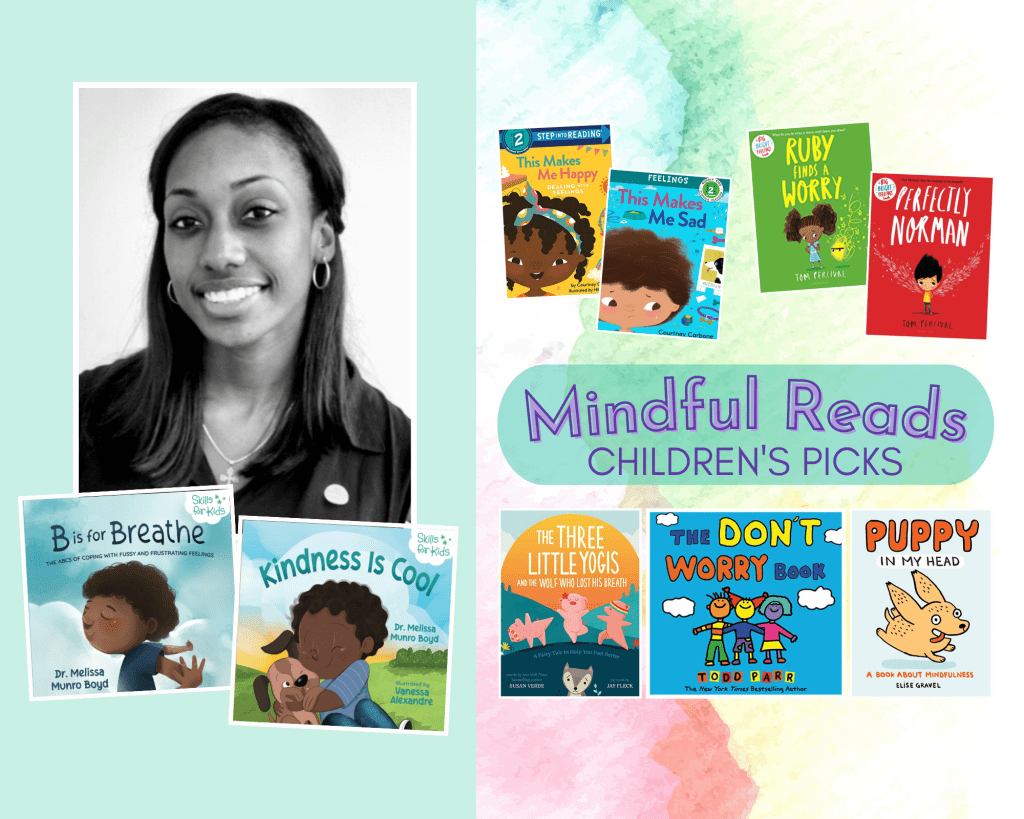
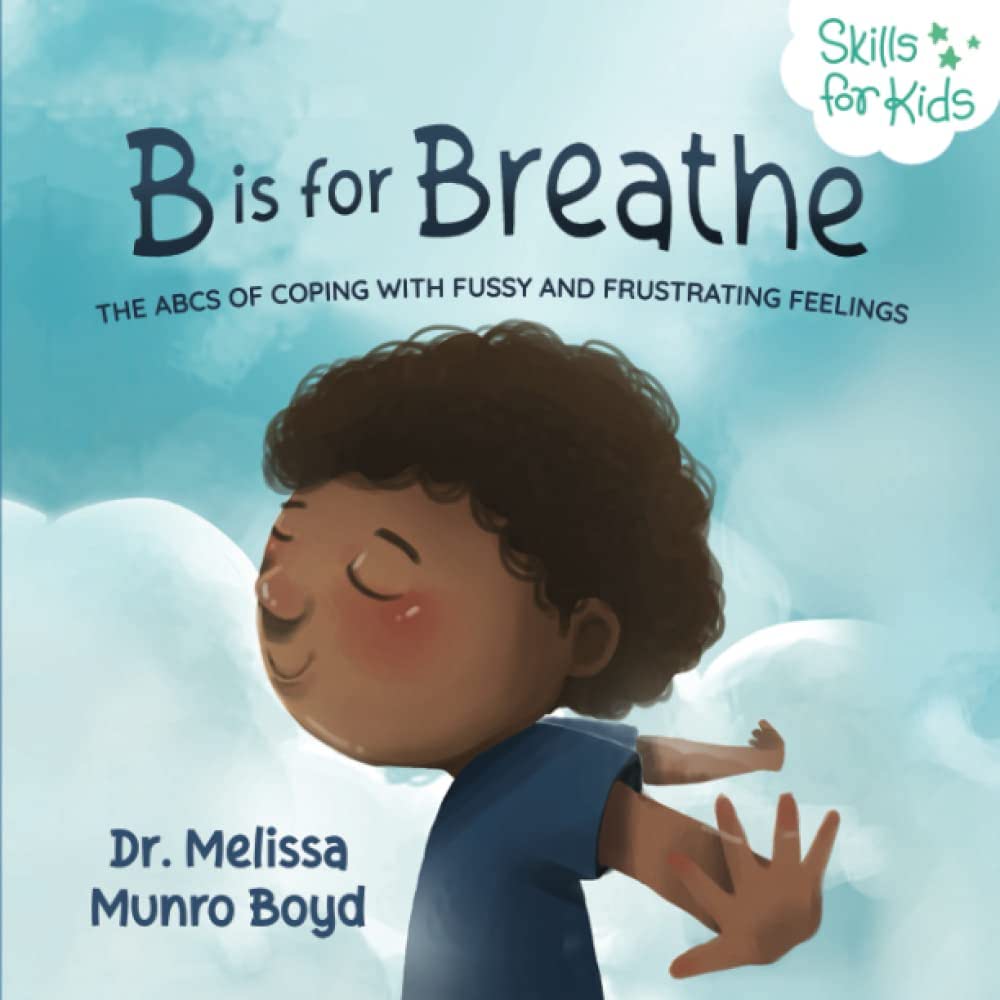
In recognition of Mental Health Awareness Month, Howard County Library System is excited to welcome children’s author Dr. Melissa Munro Boyd to our Miller Branch. A wife, mother of three, clinical psychologist, and officer in the United States Army, Dr. Boyd will read her picture book, B is for Breathe. She then will talk about how to use literature to help children with identifying and expressing their emotions, along with relaxation techniques, including deep breathing and guided imagery. Books available for purchase. More details can be found here.
Each year, the Annie E. Casey Foundation releases the KIDS COUNT Data Book, a 50-state report of recent household data analyzing how children and families are faring.1 In the most recent edition (released in 2022), the focus on youth mental health included a mix of pre-pandemic and current data, shedding light on the extraordinary mental health crisis facing not only Maryland’s children, but American children overall.2One of the most startling figures revealed “an urgent need to address youth mental health, as 1 in 8 young people in Maryland deal with anxiety or depression.”3
The topic of mental health may feel difficult to tackle, especially when thinking of how best to support children. Many people wonder where to begin. Luckily, HCLS offers resources to help. Our children’s collection features many books (in both print and electronic format) that cover the topics of emotions, mental health, mindfulness, and more. Here are a few of my favorites to get you started:
From A to Z, this book shares simple ways for children to express their emotions and practice mindfulness. It provides language for discussing feelings and teaches coping strategies to process frustrating emotions.
A new addition to our collection, this most recent book by Dr. Boyd shows examples of children practicing kindness in the world around them and teaches how simple acts of kindness make our world a better place.
“Once upon a time, there lived a wolf who lost his huff and puff.” For him, this was a big, big problem. One morning, he meets a yogi doing sun salutations. He really wants to huff and puff and blow her house down, but before he does so, the yogi suggests that he “meditate on that.” Similar things happen when he meets a second yogi, and a third, and, with their help, he learns ways to find his calming breath. A fun twist on a classic fairy tale, this story provides readers with breathing exercises they can use to regulate their emotions.
Everyone worries sometime; it is a part of life. This book teaches children that although there may be situations which are scary or overwhelming, there is always something that can comfort them. Todd Parr is known for his simple text and colorful illustrations that are both engaging and provide starting points for conversations on what can be difficult topics to discuss with young children. Other books with similar topics include,It’s Okay to Be Different,The Feelings Book, Be Who You Are, and many more.
Ollie is a puppy, and sometimes runs around barking and jumping when he should be calm and quiet. The problem is, he is inside our narrator’s head, so when Ollie has these feelings, his person does too! How can our narrator teach Ollie to be calm? This story introduces children to techniques to calm their active minds when they may feel stressed or overwhelmed. The analogy of Ollie brings the concept of anxiety to a child level and teaches useful strategies for stressful, busy situations.
Big Bright Feelings seriesby Tom Percival
Looking for a kid-friendly introduction to social-emotional topics? This series of books by Tom Percival is a great place to start! Covering topics from loving yourself (Perfectly Norman) to dealing with worries (Ruby Finds a Worry) and managing anger (Ravi’s Roar), the books provide great opportunities for conversations about mental health, self-confidence, and managing feelings.
Dealing with Feelings series by Courtney Carbone
With titles like This Makes Me Happy, This Makes Me Scared, and This Makes Me Silly, the Dealing with Feelings series of early reader books brings the topics of feelings and emotions to a child-friendly level. Each story follows a different child as they experience a situation or event and learn to identify their emotions and coping strategies. The simple text and vivid illustrations help children learn to read, while giving names to what they may be feeling inside.
Whether you visit one of our branches or check out resources online, we are here for you! Our staff can direct you to community resources available for you and your family and are happy to suggest titles to support you on your journey. We look forward to seeing you soon.
Sylvia is a Children’s Instructor and Research Specialist at the Miller Branch. She enjoys crafting, listening to audiobooks, naps, and walks with her dogs in 75 degree-ish weather.
Come talk food with us! Wednesday, May 24 at 7 pm | Savage Branch Register here.
In Asian American households, food is a love language. Sliced fruit, set gently next to a workspace, is an invitation to take a break, or an apology. Homecomings are ushered in by welcome feasts, and almost every restaurant occasion ends with a polite battle over the bill. Food is affection, and especially in immigrant households, it is a connection to family, to a far-away home, and it is a consistent way of showing (but not telling) love.
Growing up with my Bengali mother, rainy days off meant khichdi (a mix of rice, lentils, and vegetables) and aloo bhaja (thinly sliced fried potatoes) for lunch. My brother and I would scrap over the last few aloo bhaja in the bowl, before our mother would smile indulgently and take a few from her plate to split between us. I’d sit in the kitchen as my mother cooked big, elaborate, multi-course meals, watch her season and spice, and wait for the oil to sputter specifically, never once consulting a recipe. She would have one of her aunts on speakerphone, talking about family back home and interjecting with quick questions on what to substitute to make our American ingredients taste as close as possible to the Indian ones.
I grew to appreciate food, to understand cooking, and to have a standard repertoire of recipes after learning from my mother. It was a common language we shared, this mutual culinary interest. And it’s only grown. I cook with and for friends, I follow cooking blogs and sites and social media accounts, I favorite every restaurant I pass by with an interesting-looking menu, and most of all, I like to talk about food with people. On desk at the library, I’ll see someone flipping through a cookbook I’ve read, and I’ll want to stop and talk. I’ll notice someone looking at a book written by one of my favorite food personalities, and I can’t help but smile at it. And most of all, I love when people share their recipes with me, when I can hear about the food, the stories, and the cuisines that influence them.
It’s important, also, to know about innovators. To know about the people who are pushing the cuisine, who are changing it, who are going back to the roots of a tradition or practice to better understand it. There are so many Asian American chefs who are pushing the envelope on what elevated Asian American cuisine looks like, and there are just as many Asian American chefs who are looking to create the most traditional experience they can with their food. All of that is what makes the cuisine not just Asian, but Asian American. It’s the blend of respect for culture and tradition, and the simultaneous push to the modern that makes Asian American food so unique.
To celebrate all of the above, we’re having a Recipe Exchange on Wednesday, May 24, from 7-8 pm at the Savage Branch. It’s themed around Asian American chefs and Asian American cuisine, where we’ll look at a few highlighted chefs and some of their most popular recipes. I’d love for you to join us and bring a recipe of your own to share. We’ll discuss our favorite tips, tricks, and techniques in community, and do it all the way food was meant to be enjoyed – together.
Sahana is an Instructor and Research Specialist at the Savage Branch. They enjoy adding books to their “want to read” list despite having a mountain of books waiting for them already.
On October 9, 2021, Governor Larry Hogan, joined by First Lady Yumi Hogan, Republic of Korea Ambassador to the United States Lee Soo-hyuck, and Howard County Executive Calvin Ball, officially opened Korean Way in Ellicott City. A five-mile stretch of Route 40 in Ellicott City, Korean Way is home to more than 160 Korean-American owned-businesses that offer everything in the way of authentic Korean cuisine, goods, services, and more.
We are privileged to celebrate the contributions of one of Ellicott City’s largest demographics, and we continue this celebration on Sunday, May 21 from 2 – 4 pm with Global Neighbors: Republic of Korea.
Highlighting the culture, contributions, and accomplishments of the citizens of the Republic of Korea as well as Korean Americans, this exciting day includes performances of the Korean harp, drum, and traditional fan dance. Other performances showcase taekwondo as well as a K-Pop dance with local high school students. Create some Korea-inspired crafts, while supplies last.
Special thanks to our cultural ambassador, Saea Oh!
Peter is an Adult Instructor and Research Specialist at the Miller Branch and is furiously working on learning Korean through Duolingo. That owl is VERY intimidating.
If you ever find yourself having trouble finding your next book to read, take my advice – choose a science fiction novel. I’m sure most people associate the genre with high-tech futures, robot butlers, and mind-bending math equations, but the most important aspect of the genre comes from the wonder of discovery. Experimentation, analysis, deduction: all keys to jump start intellectual excitement. Even if many of Cixin Liu’s novels may touch on those first, stereotypical themes.
The Three-Body-Problembegins in the middle of China’s Cultural Revolution in the mid-1960s. From the perspective of a persecuted academic, the immediate result is a strong emotional hook. A woman, Ye Winjie, watches as her father is killed during a riot. She is sent to a labor camp and then to a hidden scientific facility, where she begins to use her background training in astrophysics. A test radio signal sent up into space results in an unexpected response eight years later. The alien civilization at the other end are the Trisolarians, from Trisolaris. As the book’s title says, they face a problem. Their world orbits three stars in an unpredictable pattern, continuously destroying civilization and leaving the inhabitants to restart. Earth and Trisosolarians become connected, with Earth being the Trisolarian’s new hope at finding a habitable planet. With 450 years to prepare, humans have to figure out what to do.
This highly inventive book jumps between time periods and across the universe. As the story slowly unfolds, the reader is constantly left to wonder, “where is this going to go next?” Keeping in mind that the book is the first in a trilogy, the scale of Liu’s world-building is astounding. The book is definitely not a quick read, but fans of scientific info-dumps will enjoy those sections. Regardless, the time taken to explore tangents and add description is ultimately fascinating and an experience you’ll remember for years. Or at least, until you read the sequels.
If you’ve ever taken an evening walk, you might have noticed signs of some animals that are active at night. Maybe you’ve heard an owl call or seen a bat winging its way through the sky. We call those animals nocturnal, and lots of fascinating nocturnal animals live in our neighborhoods and parks. You can learn more about some of them along with the process of writing a book from Tracey Hecht at our Author Works event on Wednesday, May 17, at 7:30 pm at the Elkridge Branch.
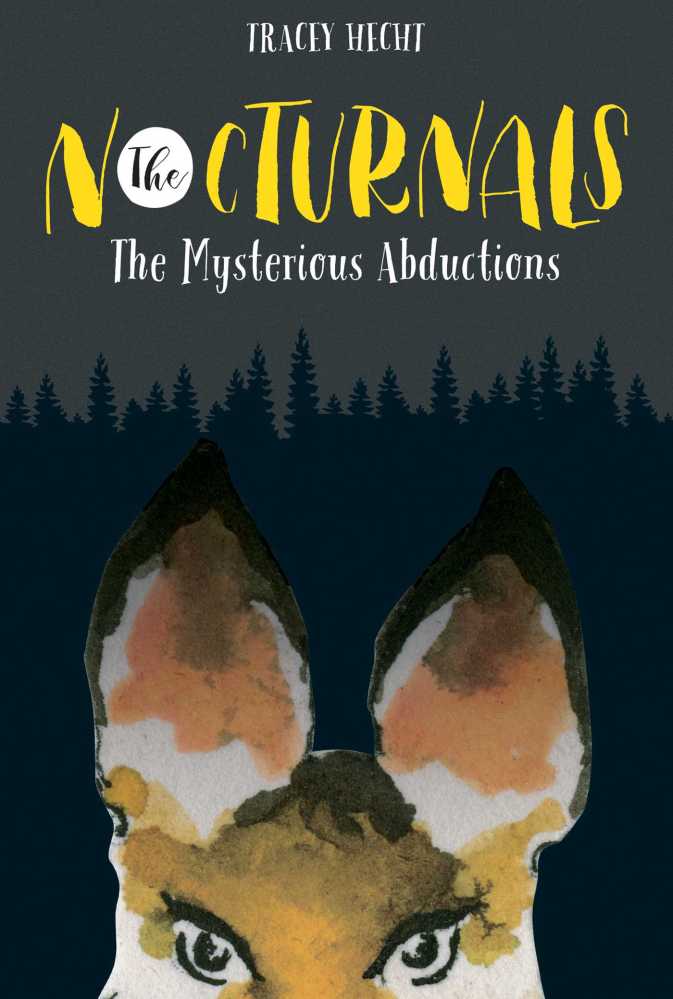
Author Tracey Hecht has written a critically-acclaimed children’s book series called The Nocturnals about a group of unlikely friends who are all animals active at night. Dawn, a serious fox; Tobin, a sweet pangolin; and Bismark, a pint-sized sugar glider, head off on fun-filled adventures in this middle-grade series, starting with The Mysterious Abductions. Early Reader books such as The Moonlight Meeting and The Slithery Shakedown introduce younger readers to these friends while presenting themes that encourage kindness, empathy, and bravery.
Participate on Wednesday evening in an interactive workshop to learn more about the animal science that inspired the books. You can also explore developing characters, creating author voice, and learning how books are made. Visit the children’s desk at HCLS Elkridge Branch before the workshop to collect a mask craft you can make that also reminds you what time the event begins. When you come to hear Tracey speak, you receive a bookmark, and if you’re lucky, you might win a plush fox or a Nocturnals activity book. The workshop is best for children ages 5 to 12 years. Books available for purchase and signing.
About the Author
Tracey Hecht has written, directed, and produced for film. The American Booksellers Association chose The Mysterious Abductions—the first book in her critically acclaimed middle-grade series The Nocturnals—as a Kids’ Indie Next List pick. With the New York Public Library, she created a Read Aloud Writing Program that has since been used in more than 200 schools, libraries, and bookstores. When she isn’t writing, she can be found hiking, reading, or spending time with her family. Tracey currently splits her time between New York City and Oquossoc, Maine, with her husband and four children.
Eliana is aChildren’s Research Specialist and Instructor at HCLS Elkridge Branch. She loves reading, even if she’s slow at it, and especially enjoys helping people find books that make them light up. She also loves being outside and spending time with friends and family (when it’s safe).
Truly walking a mile in another person’s shoes is rarely possible, but when you want to take a stroll, biography and memoir are right here inside the doors of everyone’s favorite library. Aspiring to understand the Jewish experience, readers can check out materials with unique perspectives on Jewish heritage. Consider exploring the lives of three Jews raised in Brooklyn, New York.
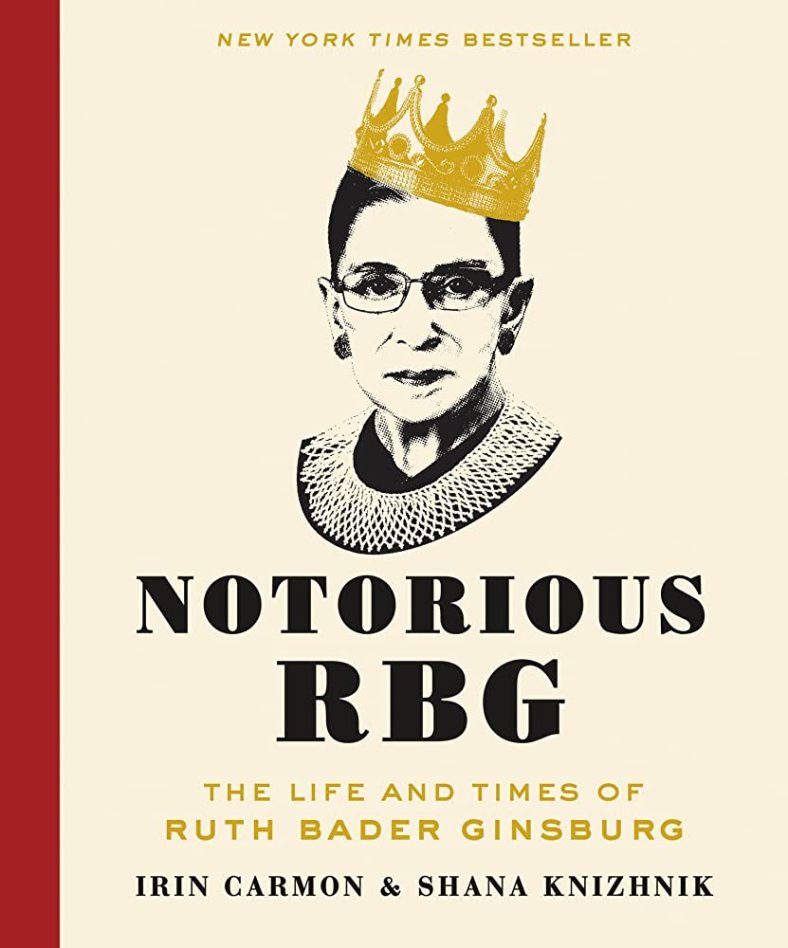
In June 2013, Ruth Bader Ginsburg seized the rare opportunity to read a dissent from the bench of the Supreme Court. Wearing her “dissent collar,” she stated that the court’s majority opinion was a “demolition” of the Voting Rights Act. A slight 80-year-old woman with a soft voice, Justice Ginsburg was already legendary for her groundbreaking work on gender equality as well as her rigorous workout regimen, but her words were her superpower. She may have been the physical opposite of the deceased rapper Notorious B.I.G., but they both used language to pack a punch, and so the Notorious R.B.G. Tumblr (a multimedia blog site) was born. Fact-checked by RBG herself, Notorious RBG: The Life and Times of Ruth Bader Ginsburg, by Irin Carmon and Shana Knizhnik, presents one of the most fun and inspiring biographies available. Packed with tribute art, photographs of folks in RBG costumes, judicial wisdom, and primary sources, tweens and adults alike can embrace this book. There is also a young readers’ edition.
Speaking of art, who does not love Where the Wild Things Areand New Yorker cartoons? Wild Visionary: Maurice Sendak in Queer Jewish Context, by Golan Y. Moskowitz, makes an in-depth journey into Sendak’s legacy. His upbringing and life as a Jewish gay man informed the futuristic outlook he brought to his books. Because they lost so much family in the Holocaust, Sendak’s parents were overly protective, and home felt as if it were filled with “dead Jews.” Considered a literary and artistic disrupter, Sendak believed that books were a way for children to safely explore their natural fears. Throughout his life, Sendak used his art to confront injustice, challenge prejudice, and engage readers in the gravity of children’s emotional lives.
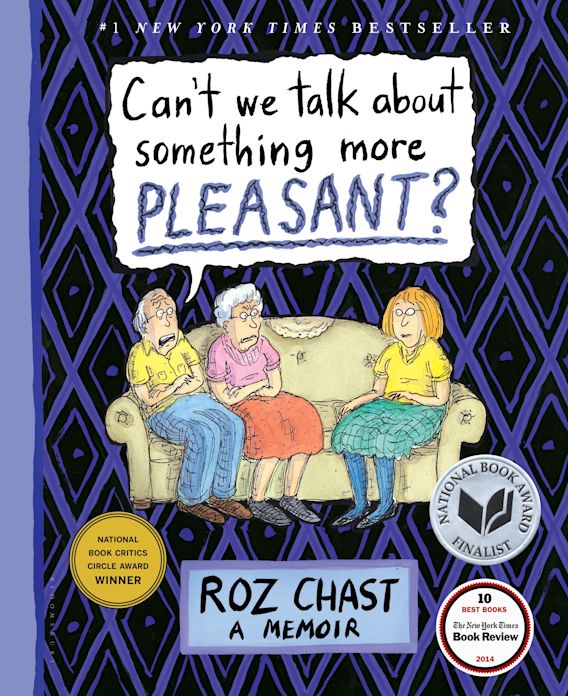
Can’t We Talk About Something More Pleasant is New Yorker magazine cartoonist Roz Chast’s graphic memoir. The art is poignant and funny, provocative and familiar. Doesn’t every family have at least one closet so deep that we never know what was really in it until the person dies and the time comes to clean out its contents? Chast mines the contents of her life, including drawings, possessions, photos, letters, and family anecdotes to create an unforgettable portrait of her upbringing and a piercing view of death. Her relationship with her parents was fraught, making this an uncomfortable read at times. Chast’s dark humor in addressing challenging end-of-life issues resonated deeply with me. Her parents lived into their 90s, and she draws and writes about falls, elder law, dementia, nursing aides, financial fears, incontinence, bed sores, hospice. Filled with universal family truths, the book is one I’ve read and reread, rare for me. It’s a head-on confrontation with the circle of life.
Cherise Tasker is an Adult Instructor and Research Specialist at the Central Branch. When not immersed in literary fiction, Cherise can be found singing along to musical theater soundtracks.
Have you or someone you know and love ever experienced symptoms of depression resulting in contemplating ending your/their life? Chances are you, or someone you know, has had these thoughts and experienced feelings of hopelessness and overwhelming sadness.
Suicide and attempted suicide are widespread in this country. Suicide was the twelfth leading cause of overall death in the United States in 2020, claiming the lives of more than 45,900 people. Suicide was the second leading cause of death among 10 to 14 year olds and 25 to 34 year olds, and the fourth leading cause for people between the ages of 35 and 44 (NIH).
In 2020 alone, the US had one death by suicide every 11 minutes. Despite the prevalence, suicide is a topic that most people feel uncomfortable talking about; one that, unfortunately, carries a great deal of stigma. Those suffering in silence often do not reach out for and receive the help they need, when they need it. A person struggling with thoughts and feelings of suicide is in a deeply painful and dark place, often not knowing how or where to turn for assistance and relief.
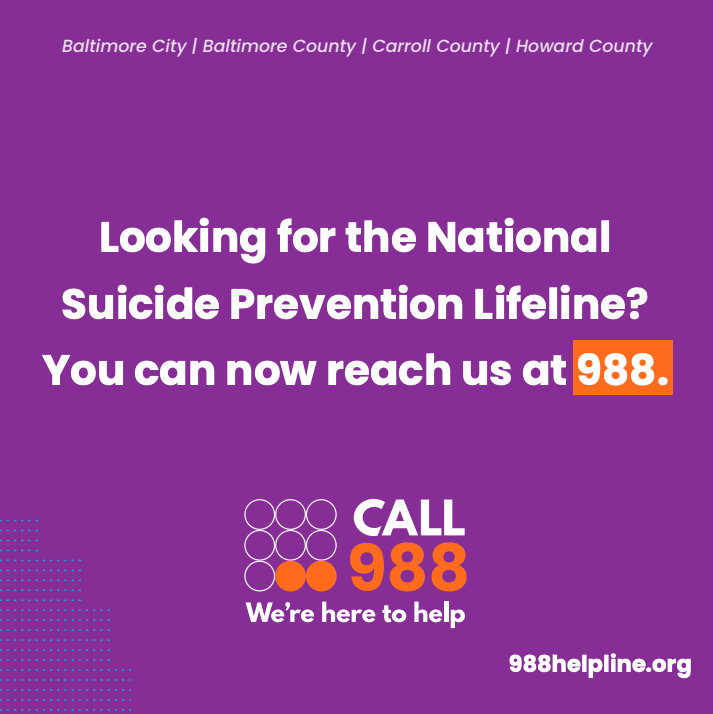
In July of 2022, to provide a resource – indeed, a lifeline – for those struggling, the federal government mandated that the National Suicide Prevention Lifeline change its ten digits to a new, 3-digit number: 988. Making this change has increased awareness, providing more equitable and accessible crisis services to people across the country. The 988 helpline is confidential, free, and available 24/7/365 for anyone experiencing mental health, substance use, or suicidal crisis.
Trained mental health counselors are available through landlines, cell services, and voice-over-internet devices for conversations on the phone or through texts and chats. The counselors are available to listen to each caller, assess their level of need, identify whether they are in a crisis state, and provide them with the connections and resources to help. 988 is a helpline for everyone, of any age, anywhere in the US, regardless of their situation and circumstances.
It is sometimes difficult to know who is suffering or how to help those struggling with overwhelming feelings of stress, anxiety, depression, grief, and/or any number of other stressors and emotional challenges. For this reason, it is important and necessary for everyone in our communities to share the 988 resource with family, friends, neighbors, colleagues – everyone in our social circles. No one is alone in their struggle. Help is here.
In partnership with Grassroots Crisis Intervention Center, HCLS Miller Branch is offering QPR (Question, Persuade, and Refer) Suicide Prevention Training Monday, May 15 at 6:30 pm. Some key components of QPR training include:
How to help someone who is considering suicide
The common causes of suicidal behavior
The warning signs of suicide
How to get help for someone in a suicide crisis
Register here for this training, specifically designed for people who do not have experience in suicide intervention.
In light of HCLS’ community partnership with Howard County General Hospital, Chapter Chats is pleased to have Laura Torres, LCSW-C, as a guest blogger today. Laura is the Behavioral Health Program Manager with the Population Health Department at Howard County General Hospital.












 CHAPTER CHATS