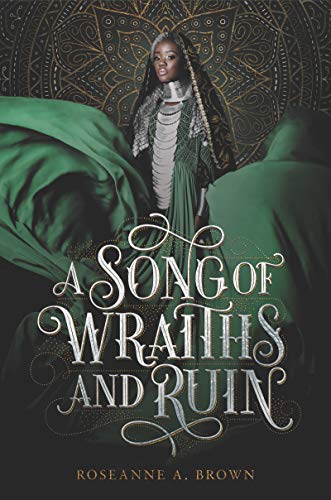
A Song of Wraiths and Ruin by Roseanne Brown

A regal young Black woman with long braids stands in front of a patterned wallwith swaths of green fabric swirling around her.

by Eliana, teen volunteer at HCLS Savage Branch

In true Eliana fashion, I started to blitz through this title as an audiobook. I had to ask my librarian friend, Sarah, “Is it just me or are these characters just the most emotionally stunted dolts I have ever not actually come across?” I love them so much, they make me want to tear my hair out.

Along with the engaging characters, Roseanne A. Brown does an excellent job incorporating African culture into this novel, described on the book jacket as, “The first in a gripping fantasy duology inspired by West African folklore in which a grieving crown princess and a desperate refugee find themselves on a collision course to murder each other despite their growing attraction.” The setting has quiet elements of West African culture, the furnishings, the clothes, the streets, even the characters’ hair.

My favorite part was the hair routine Karina’s maid does with her. Shea butter and the other oils along with twisting are, in fact, accurate to curly hair. It’s part of why I haven’t been braiding my hair so often. My curls look much lovelier when out of their braids. My family is Puerto Rican, and although Puerto Rico takes a fair amount of influence from African cultures, there are also Taino and Spanish influences there as well.

Back to the book: Karina has all the qualities of a good queen, she just needs time to heal and properly grieve her mother (the previous queen). Outside of the eyes of the courtiers, Karina is surrounded by the love of her family and friends, but she’s closed herself off from them. With the way Karina’s trajectory is headed, Karina may completely alienate everyone around her before something happens to shatter her worldview and push her into regaining allies. There is a notable difference between the Karina who does whatever she can to avoid hosting the Solstacia Festival and the Karina who fights tooth and nail to fulfill her duties as a new queen.

Karina is something of a tempest. For much of the novel, she is insecure, grieving, and constantly worried about whether she’s a good enough ruler. She *worries* about her fitness to lead and actively tries to remove the person she deems to be an unfit ruler (herself) from succession. Heck! The whole reason she even gets into reviving her deceased mother is that she believes her kingdom would be better with her mother’s leadership!

Her opposite in the story is Malik, a child who has seen the absolute worst humanity has to offer. His own family and village were horrible to him. The world sees him and his people as awful. And yet he cares. He cares *so much.* He worries about both of his sisters. He pays attention to the servants and even worries for Karina, a person who he is actively trying to kill, when he overhears how the court lambasts her for needing a day to recover from an attempt on her life.

I’m still listening to the book, so I wonder if there is a reason Malik’s people are oppressed like they are. I know that in the real world, oppression often has no tangible reason. In most fantasy media I have interacted with, the oppression is typically caused by some ancient bad-blood event. I appreciate the author’s sensitive and visceral depiction of anxiety and panic attacks, which didn’t trigger one of my own. I like that she included coping strategies. Somewhere out there, a reader will see Malik thinking of his lemon tree and adopt a similar strategy.

One last note to my friend Sarah: I feel like am a parent now. I want to wrap Malik and Karina up in my arms, tell them that everything is okay. I wanna whack them upside the head and ask them, “What were you thinking?!” (affectionately) Are you happy, Sarah? You have ruined me. Everyone should read this book.

Meet the author Roseanne Brown at HCLS Savage Branch (or attend online) on Tuesday, January 25 at 6 pm. Register here. Thirty attendees will be randomly selected to receive a free copy of A Song of Wraiths and Ruins. 

A Conversation & Cooking Demo with Author Laila El-Haddad

The cover of The Gaza Kitchen is a full cover photograph of a wide variety of food, including a whole fish, rice, and hummus.

by Kristen B.

Author and Journalist Laila El-Haddad discusses the history of spices and cuisine from the Middle East and demonstrates some of her recipes in this special virtual event on January 20.

Her book is extraordinary, clearly a labor of love. She talks about living and political conditions in Gaza, while also providing recipes for standard and special dishes of the region. She explains the regional pantry of ingredients and various techniques. I learned that the flavors that separate Gazan cuisine from other Palestinian cooking are hot chilies and dill. I can’t wait to try a couple of recipes (although my family has a notoriously low tolerance for heat), especially for various kebabs.

My favorite parts, though, are the abundance of photography and the personal interviews. This book is simply stuffed full of pictures: food and preparation steps, sure, but also portraits and places. It’s like taking a tour! And El-Haddad included these wonderful side-bar individual interviews, mostly with women and some local farmers. They give such a revealing glimpse into the lives of ordinary Gazan people. My favorite was with one woman, Um Sultan, who was less than happy that her routine, easy kufta recipe was to be included. Who wants to be to be singled out for their good, plain cooking as opposed to something more complicated and impressive? I learned a lot, but mostly was reminded of the power of food to cross barriers and bring people together to enjoy a good meal.

The Fertile Crescent regionโ€”the swath of land comprising a vast portion of todayโ€™s Middle Eastโ€”has long been regarded as pivotal to the rise of civilization. Alongside the story of human development, innovation, and progress, there is a culinary tradition of equal richness and importance. The book includes a quote from Anthony Bourdain on the cover:

“An important book on an egregiously underappreciated, under-reported area of gastronomy. This is old school in the best possible meaning of the word.”

Laila El-Haddad is an award-winning Palestinian-American author and journalist.  She frequently speaks on the situation in Gaza, the intersection of food and politics, and contemporary Islam.  She has written for numerous newspapers and magazines, including the Baltimore Sun, the Washington Post, the Guardian and the International Herald Tribune and has appeared on many international broadcasting networks, including NPR, CNN, Al Jazeera, and CCTV.

She is the author of Gaza Mom: Palestine, Politics, Parenting, and Everything In Between and, co-author of the critically acclaimed The Gaza Kitchen: A Palestinian Culinary Journey, which was the recipient of the โ€˜Best Arab Cuisine Bookโ€™ award from Gourmand magazine, and a finalist at the 2013 MEMO Palestine Book Awards.  She is also the co-editor of the anthology Gaza Unsilenced and contributor to The Immigrant Cookbook: Recipes that Make America Great.  Her forthcoming book, Halal Tayyib: A Muslim American Culinary Journey, explores the history of Islam in America as told through food.  An avid gardener and outdoor enthusiast, she makes her home in Howard County, MD with her husband and their four children.

Thursday, January 20 at 7 pm, online. Please register here.

Sponsored by Muslim Family Center – Howard County, MD and RIVUS Consulting, Howard County, MD

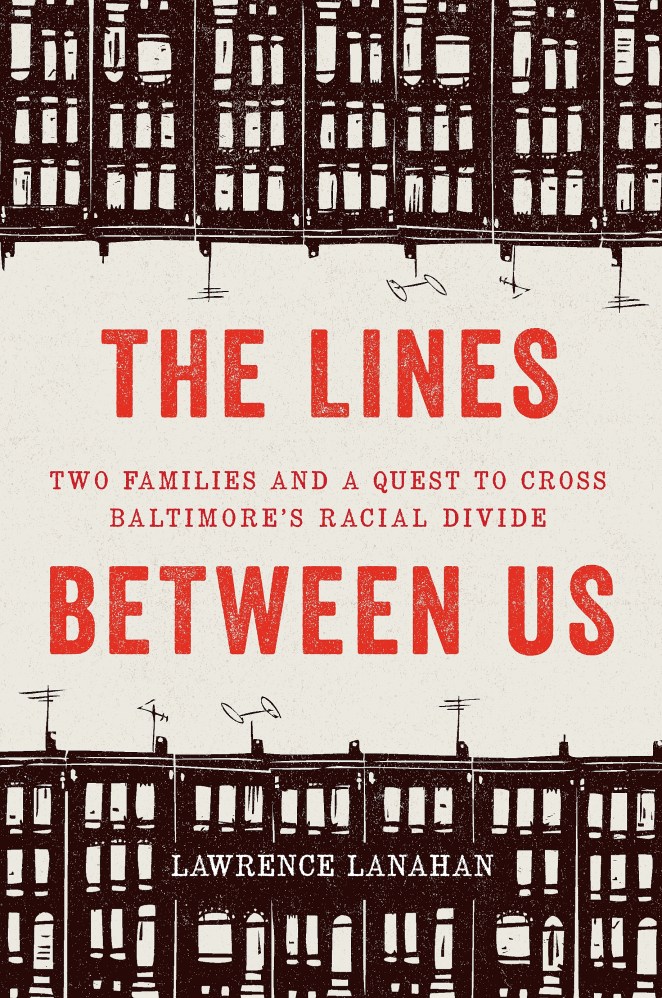
Lawrence Lanahan and The Lines Between Us

Stylized black and white drawing of typical Baltimore rowhouses frame the title.

By Holly L.

Journalist Lawrence Lanahanโ€™s 2019 book The Lines Between Us: Two Families and a Quest to Cross Baltimore’s Racial Divide opens with two epigraphs:

Itโ€™s in the way their curtains open and close.

โ€œRespectable Street,โ€ XTC

I donโ€™t even have to do nothing to you.

โ€œBig Brother,โ€ Stevie Wonder

The first line comes from English post-punk band XTCโ€™s 1981 song about what songwriter and frontman Andy Partridge considered โ€œthe hypocrisy of living in a so-called respectable neighborhood. Itโ€™s all talk behind twitching curtains.โ€ The second lyric is from a track from Stevie Wonderโ€™s 1972 album Talking Book. In the song, Wonder takes the white establishment (Big Brother) to task for only coming to the ghetto โ€œto visit me โ€˜round election time.โ€ He continues his indictment – โ€œI donโ€™t even have to do nothinโ€™ to youโ€ because, from offenses ranging from criminal neglect of its black citizens to having โ€œkilled all our leadersโ€ฆyouโ€™ll cause your own country to fall.โ€

It is fitting that Lanahan chose these words and these voices to begin this story, as his narrative weaves together multiple perspectives but most closely follows the criss-crossing threads of two individuals, one black and one white.

Nicole Smith is a young black woman living with her family in a West Baltimore rowhome owned by her mother, Melinda. When we meet Nicole, she is twenty-five and is contemplating the crossing of a lineโ€”leaving her neighborhood (and family and community) behind in search of security and opportunity for herself and her six-year-old son, Joe. Though she is enrolled in Baltimore City Community College and is on a waitlist for affordable housing in the city, Nicole seems to be on an existential treadmill, running but getting nowhere fast. Sheโ€™s heard of a place called Columbia, a planned community in Howard County, with a reputation for good schools, plenty of jobs, and safe streets. Could she make it there?

Mark Lange is a white man raised in the Baltimore suburbs who, after a spiritual reckoning in his late teens, embarks on a path of service informed by the teachings of Mississippi civil rights activist and Christian minister John M. Perkins, who argued that those who wanted to help communities in need must live among them. As Markโ€™s story begins to be told, he feels a gravitational pull from his comfortable suburban life in Bel Air toward Sandtown, a West Baltimore neighborhood where his best friend Alan Tibbels, a like-minded white Christian with a mission of racial reconciliation, relocated with his family. If he moves, would Mark prove to be just another โ€œwhite saviorโ€ looking to appease his own guilt? Or would be able to form meaningful relationships and help foster change in an impoverished community?

In this meticulously researched book, Lanahan alternates the fascinating tales of Nicole and Joe with the complicated history of Baltimoreโ€™s segregation and the resulting devastating impact on its black communities. Having its genesis as a year-long multi-media series on inequality in the Baltimore area broadcast from September 28, 2012 to October 4, 2013 on WYPR, Maryland Public Radio, the depth and breadth of Lanahanโ€™s reporting is detailed to an almost dizzying degree. But just when a readerโ€™s brain might start to get overwhelmed by the minutiae of historical detail (as mine sometimes did), my attention would come swiftly back into focus as the humanity of Nicole and Markโ€™s stories propelled me through the book. The Lines Between Us should be required reading for anyone who wishes to understand the institutional forces that shape inequality in our region and for those whose understanding of their neighbor might require them to cross a line. And isnโ€™t that most of us?

Join us: Author Works with Lawrence Lanahan
Wednesday, January 12 from 7 โ€“ 8:30 pm
In person, HCLS Central Branch
Register at bit.ly/3pFTq3y

To learn more about the historical policies of redlining, visit the interactive exhibit currently at Central Branch. Undesign the Redline explores the history of structural racism and inequality, how these designs compounded each other from 1938 Redlining maps until today, and the national and local impacts. Join a guided tour on Wednesdays at 11 am and Saturdays at 2 pm.

Holly L. is an Instructor and Research Specialist at the Miller Branch. She enjoys knitting and appreciates an audiobook with a good narrator.

Climate Change Short Stories: An Inconvenient Book Club

The illustration shows a futuristic scene of a woman walking through a green wood; she wears boots and has a long blonde braid down her back. Various creatures in the darkened wood are illuminated as if they were made up of stars from the sky, and there are background stars above as well.
Illustration by Rebekka Dunlap, from the short story “The Tree in the Back Yard” by Michelle Yoon

By Susan Thornton Hobby

Climate change is scary, and cli-fi short stories are here to help.

โ€œRight here, right now is where we draw the line. The world is waking up. And change is coming whether you like it or not.โ€ – Swedish climate activist Greta Thunberg, age 18

Change is coming, both in the climate, and with luck, in human behavior. Reading about climate change is frightening, and sometimes shuts people down. But as many climate activists have explained, there is hope.

Environmental and animal activist Jane Goodall said it well: โ€œI do have reasons for hope: our clever brains, the resilience of nature, the indomitable human spirit, and above all, the commitment of young people when they’re empowered to take action.โ€

But reading alarmist nonfiction doesnโ€™t always reach the heart. Story, however, seems to sneak through our defenses and climb straight into our souls. Climate fiction, a genre of literature sometimes shortened to โ€œcli-fi,โ€ pioneered with J. G. Ballardโ€™s novels of climate change (especially the 1962 classic The Drowned World) and Frank Herbertโ€™s 1965 novel Dune (see the review).

Since March 2019, HoCoPoLitSo recording secretary Susan Thornton Hobby and climate educator Julie Dunlap have led a climate fiction book club at Howard County Library System. Attendees are interested in literature that explores the facts and mysteries of Earthโ€™s changing climate, and we have read and discussed eight incredible novels to date.

Weโ€™re mixing things up in January, and have chosen to read the award winners of a climate fiction short story contest sponsored by Grist Magazineโ€™s Fix Solutions Lab. Organizers of the contest, Imagine 2200: Climate Fiction for Future Ancestors, urged writers to envision the next 180 years of equitable climate progress.

Sponsored by the National Resources Defense Council, the contest is โ€œan uprising of imagination,โ€ as Fix describes it. The winning stories, a dozen pieces of short fiction by authors including Black, Indigenous, disabled, and queer authors, conjure hope, anger, frustration, joy, and contemplation about the future of our planet in the impending climate crisis.

โ€œWhether built on abundance or adaptation, reform or a new understanding of survival, these stories provide flickers of hope, even joy, and serve as a springboard for exploring how fiction can help create a better reality,โ€ writes Tory Stephens, who works at Fix and spearheaded the contest. Join us in reading and discussing these stories on Thursday, Jan. 6, from 7 to 8 pm, at HCLS Miller Branch. Register here. The stories, and a terrific glossary of cli-fi terms, including afrofuturism (looking at you Octavia Butler), solar punk, and ecotopia, are available here.

Susan Thornton Hobby is the HoCoPoLitSo recording secretary as well as co-leader of the Inconvenient Book Club at HCLS Miller Branch.

One Person’s Trash…

The picture us of a leaping reindeer made from colorful tubes of scrolled paper, against a lime green background.
Join us for a reindeer craft on Stress Free STEAM evening!

By Holly L.

One personโ€™s trashโ€ฆ.is another personโ€™s CRAFT!

Holidays have you feeling stressed? Relieve some of that tension and join us for Stress Free STEAM for Adults on Thursday December 2 at 7 pm at HCLS Miller Branch. We will be making easy, seasonal upcycled crafts using everyday materials. Try your hand at some dazzling wall art, paper pillow boxes (perfect for small gifts), or a festive paper tree.

The picture is of two paper pillow box crafts made from recycled cardboard from a Chex box of cereal, both laying on an orange tablecover.
Paper pillow boxes like these made from recycled cardboard are the perfect container for small gifts.

All abilities welcome. Beginners and the non-crafty are encouraged to come. Materials provided.

Registration required. Register here or call 410.313.1950.

For further reading, check out our collection of books on upcycling.

Also, did you know that you can access several crafty magazines such as HGTV, Simply Knitting, and Family Handyman online for free using your library card? Visit Overdrive to browse our complete collection.

Holly L. is an Instructor and Research Specialist at the Miller Branch. She enjoys knitting and appreciates an audiobook with a good narrator.

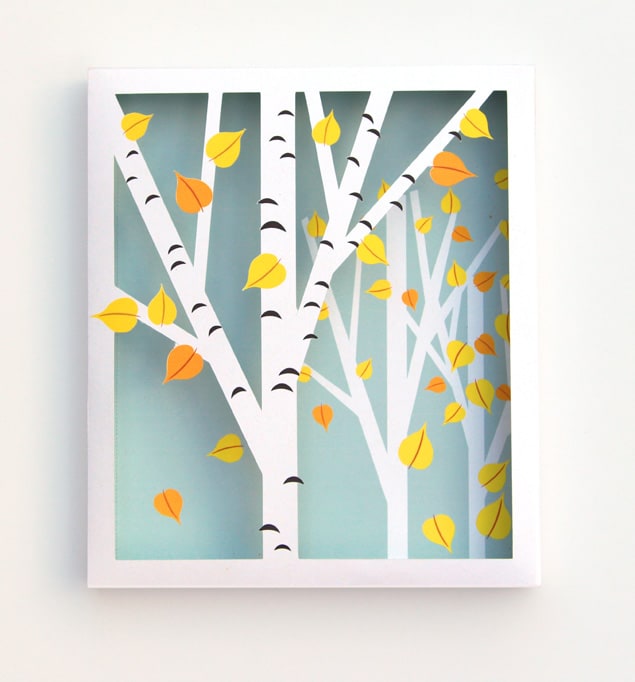
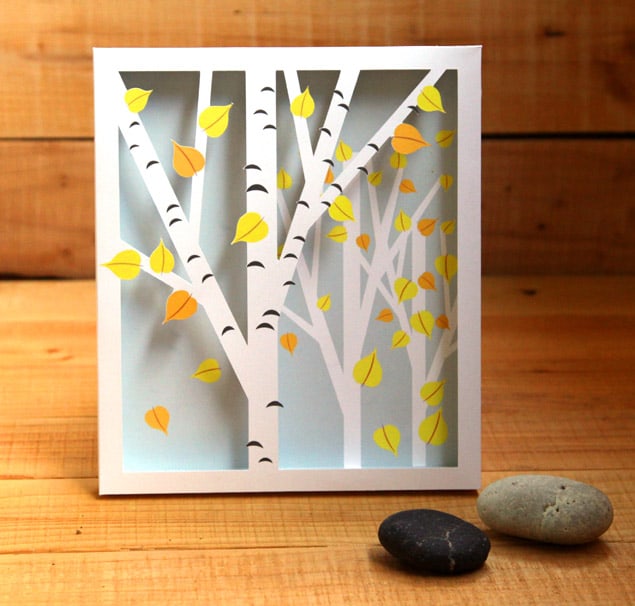
Don’t Underestimate a Good Craft

The photo shows a shadowbox format of birch tree branches and falling yellow and orange leaves against a pale background in a white frame, with a brown and a tan stone in the foreground. All are placed on a wooden tabletop.
Join fellow crafters at Tezukuri Crafternoon on Wednesday, November 10 to create this delightful fall display!

By Peter N.

First of all, a well-deserved welcome back to all of our customers! We have so enjoyed seeing your faces (or at least, half of them) in our branches once again, particularly for in-person classes and events like the one we’re sharing here.

Were you one of the regular participants in Create by Music at the Miller Branch in the pre-pandemic times? Well, good news! We are back but we have re-branded. Create by Music is now Tezukuri Crafternoon. What does that mean? Well, Tezukuri translates to “handmade” in Japanese and Crafternoon…well, that’s just craft combined with afternoon.

The photo shows the word "Tezukuri" in Japanese, followed by "Tezukuri Crafternoon" in English.

Each first Wednesday of the month, join us for a relaxing afternoon hour of crafts and conversation. No artistic talent required! And if you’re looking for a selection of titles from our collection to check out about handmade crafting, please enjoy this list of items from our catalog.

Register for our next Tezukuri Crafternoon on November 10th at 2 pm here. Ages 19+.

Peter is an Instructor and Research Specialist at the Miller Branch and LIVES for the upcoming sweater weather.

Celebrate Native American Heritage

Four pictures in a row picture a storyteller, singer, hoop dancer, and cover of We Are Water Protectors.

Join the celebration of Native American Culture and Resilience on Saturday, Nov 6 from 11 am to 3 pm at HCLS East Columbia Branch.

In an interview with Ani Begay Auld, member of the Navajo Nation and owner of Navabedine.com, she wants you to know, “We are still here. A lot of people put Native Americans into this certain time frame … like we’re relics from the past.” Nearly 600 federally recognized Native Nations exist, with dozens more recognized solely by states. Here in Maryland, the Piscataway Conoy and the Accohannock Nations are recognized, and Howard County sits on land that belonged to the Susquehannock nation. At one time, at least eight nations lived in Maryland.

Auld also recommends that you, “Seek out films or books written by native authors and look at the land that you’re on.” The author of the award-winning children’s book, We Are Water Protectors, will be part of the FREE event that also features dancing, singing, drumming, storytelling, children’s crafts, vendors, Navajo Tacos, and more. The line-up includes:

  • Rose Powhatan, Storyteller
  • Lance Fisher, Singer
  • Angela Gladue, Hoop Dancer
  • Chris Eaglehawk, Traditional Dance
  • Karelle Hall, Nanticoke Toe Dance
  • Sonny Elm, Smoke Dance
  • AND
  • Carole Lindstrom, author and #1 New York Times bestseller and winner of the 2021 Caldecott Medal, at 2 pm

This event is a collaboration between Nava Be Dinรฉ, Howard County Library System, County Executive Calvin Ball, and Howard County Office of Human Rights and Equity.

This free event will be held outside the HCLS East Columbia Branch unless inclement weather causes the event to move inside the branch. Masks are required.

Registration is optional and appreciated.

Stress-Free Steam for Adults

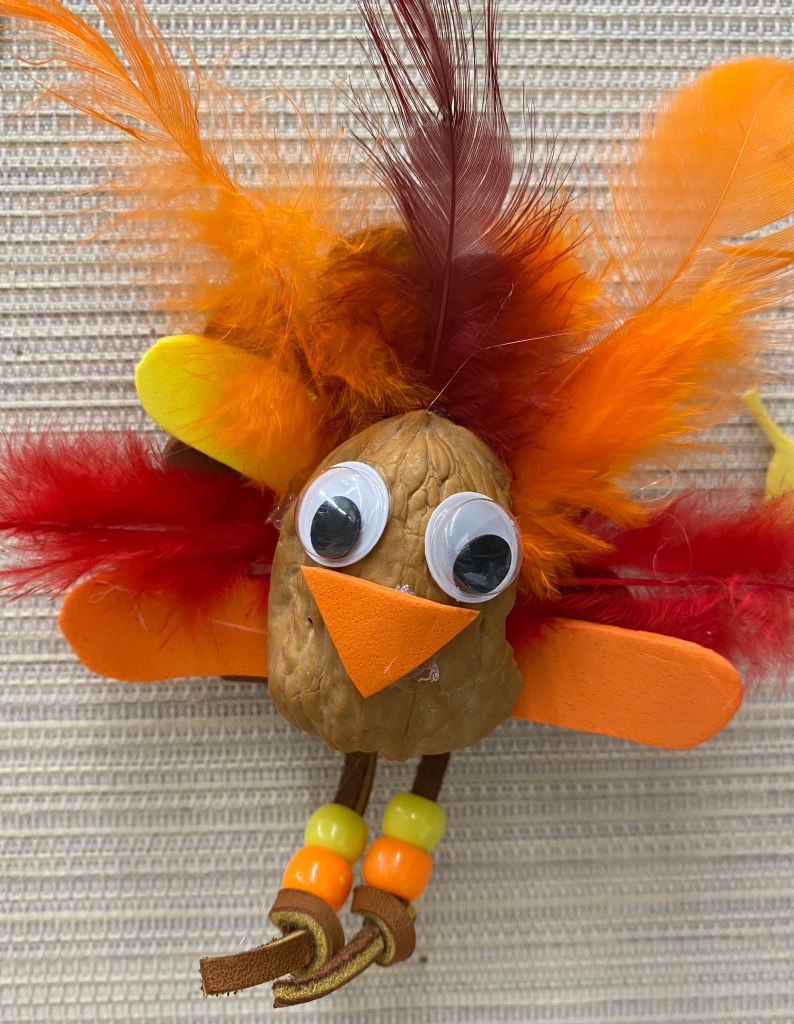
The picture of the craft is of a turkey made from beads, multicolored feathers in fall shades of brown, orange, and red, strips of brown leather for the legs and feet, with a walnut shell for the body.

By Holly L.

Does the prospect of a second pandemic holiday season already have you on edge? Did you feel a pang of sadness when your kids aged out of the family craft classes? Would you like to unwind in a relaxed setting with some calming hands-on fun? Are these questions getting tedious?

If you answered yes to any of the above, please join us on at the Miller Branch on Thursday, November 4 at 7 pm for Stress-Free S.T.E.A.M. for adults. We will provide materials for three fun fall-themed crafts, including a terrific turkey pin, an awesome autumn leaf placemat, and a brilliant beaded harvest corncob.

The fall placemat depicted is of various geometric shapes and fall leaves in different colors, cut and pasted onto a blue background and then laminated.

Focus on one project or make a few, it’s up to you! No prior craft experience needed and all abilities welcome.

Registration required. Please register by clicking here or call 410.313.1950.

The picture shows a craft of an ear of corn, made from beads in fall shades of red, orange, yellow, and white for the kernels, and brown pipe cleaners for the cob.

Holly L. is an Instructor and Research Specialist at the Miller Branch. She enjoys knitting and appreciates an audiobook with a good narrator.


Author Works: Mitch Albom on Nov 4

Adrift in a raft after a deadly ship explosion, nine people struggle for survival at sea. Three days pass. Short on water, food and hope, they spot a man floating in the waves. They pull him in.

โ€œThank the Lord we found you,โ€ a passenger says.

โ€œI am the Lord,โ€ the man whispers.

So begins Mitch Albomโ€™s most beguiling and inspiring novel yet.

The book cover shows five people on an orange lifeboat silhouetted against a bright full moon rising against a dark blue starry sky. The moon is reflected in the ocean in front of them.

New York Times bestselling author Mitch Albom has a genius for finding the sweet spot where the spiritual and the earthly collide in our lives. With such beloved books as Tuesdays with Morrie, The Five People You Meet in Heaven, The Next Person You Meet in Heaven, and more, Mitch has captivated the world. Now, in his captivating and thought-provoking new novel, The Stranger in the Lifeboat, Albom explores the essence of God on earth through a riveting story that is equal parts mystery and parable.

An explosion on a billionaireโ€™s yacht during a gathering of some of the worldโ€™s most influential and innovative movers and shakers leaves ten disparate souls struggling to survive in a life raft. One of them writes an account of the grueling ordeal to his beloved, and those pages are later found, washed up on an island shore on the opposite side of the Atlantic. It falls to a decidedly secular and cynical police inspector to investigate what actually happened on that raft, where it seems one man, pulled from the angry sea by the others three days after the disaster, claimed to be the Lord.

The beguiling narrative alternates between sea and land, between before and after, and between skepticism and belief. What really happened to cause the explosion? Is the mysterious man really who he claims to be?

Mitch Albom has repeatedly challenged our understanding of faith and the necessity of seeking answers where we least expect them. His books have sold more than 45 million copies worldwide. Tuesdays with Morrie is the best-selling memoir of all time, with over 17 million copies sold internationally, and was adapted for the stage and as a television movie which garnered four Emmy Awards. With The Stranger in the Lifeboat, this master storyteller offers a fresh take on themes that have defined his estimable work.

Albom has founded nine charities in the metropolitan Detroit area: SAY Detroit, an umbrella organization for charities dedicated to improving the lives of the neediest, including the SAY Detroit Family Health ClinicDetroit Dream Scholarsand A Time To Help. In January 2015, Albom announced the launch of the SAY Detroit Play Center at Lipke Park, an innovative motivational learning program equipped with state-of-the-art athletic facilities, digital learning center and tutoring program. A Hole in the Roof Foundation helps faith groups of every denomination who care for the homeless repair the spaces in which they carry out their work. 


Mitch Albom will discuss his new book and his writing on November 4 @ 7:30 pm. Per the publisher, this virtual event is ticketed and includes one copy of the book The Stranger in the Lifeboat by Mitch Albom, signed by the author. 

TICKETED VIRTUAL EVENT. Tickets include one copy of the book The Stranger in the Lifeboat by Mitch Albom, signed by the author. Tickets range from $23.99 – $27.99, plus fees. Purchase tickets HERE.

The Walters Art Seriesย 

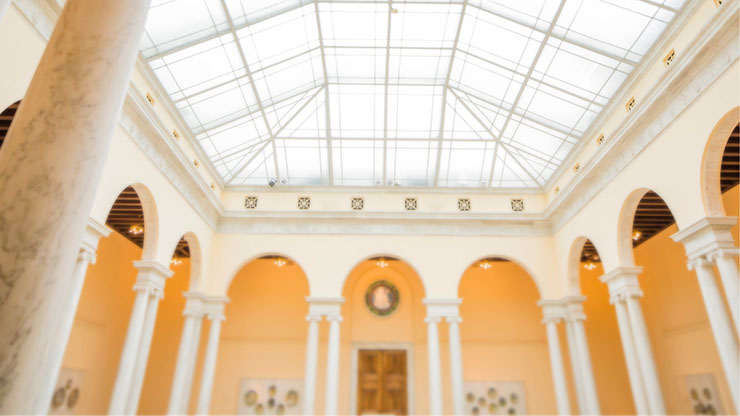
View of the atrium at the Walters Art Museum, filled with bright light, white columns, and creamy golden walls.
View of the atrium at the Walters Art Museum

by Rohini G.

This fall, and continuing into winter, Howard County Library System partners with The Walters Art Museum to bring an educational approach to art as we discuss specific works of art and the themes behind them. This series of four classes launches with The Art of Looking on October 13. Asking us to slow down and take the time to see the details, Docents Jill Reynolds and Bonnie Kind examine, analyze, and interpret artworks. Expertise gained through this session can be applied to the subsequent session on Symbolism in Renaissance & Baroque Art. The winter sessions will have an exciting and other-worldly feel as we explore Fantastical Creatures in sculpture and paintings. This will segue seamlessly into the fourth session on Chinese Ceramics, just in time to celebrate the Lunar New Year.  

Sign up for the series or individual classes that interest you. REGISTER  

The Art of Looking brings forth the concept of Artful Thinking. Developed by Project Zero, Harvard Graduate School of Education, this routine encourages students to make careful observations and develop their own ideas and interpretations based on what they see. By separating the two questions, What do you see? and What do you think about what you see?, the routine helps distinguish between observations and interpretations.

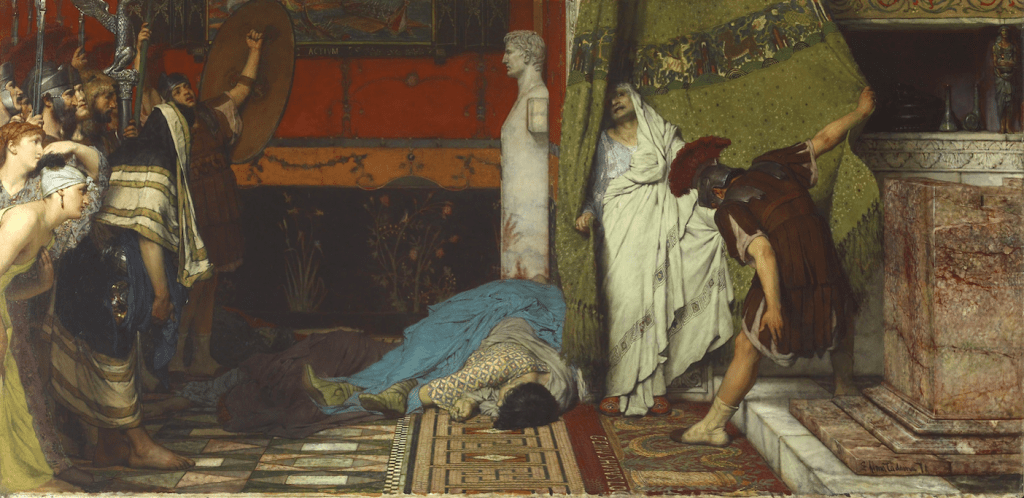
The painting depicts the aftermath of the murder of the emperor Claudius.  Gratus, a member of the Praetorian Guard, draws a curtain aside to reveal the terrified Claudius who is hailed as emperor on the spot.ย ย Beneath the bloodtstained herm in the background lie the bodies of Caligula, his wife Caesonia, their young daughter, and a bystander.  Roman men and women are depicted at the left, overlooking the scene.
Image credit: Sir Lawrence Alma-Tadema, A Roman Emperor: 41 AD, 1871, oil on canvas. Bequest of Henry Walters, 1931, acc. no. 37.165. Courtesy of the Walters Art Museum. 

In this painting titled A Roman Emperor (Claudius), Sir Laurence Alma-Tadema OM RA (1836-1912), depicts the aftermath of a violent historical event. In AD 41, the debauched Roman emperor Caligula was murdered. Gratus, a member of the Praetorian Guard, draws a curtain aside to reveal the terrified Claudius who is hailed as emperor on the spot.  Beneath the herm in the background, lie the bodies of Caligula, his wife Caesonia, their young daughter and of a bystander. The blood stains on the herm* denote the struggle that has transpired as well as the setting, the Hermaeum, an apartment in the Palace where Claudius had sought refuge.

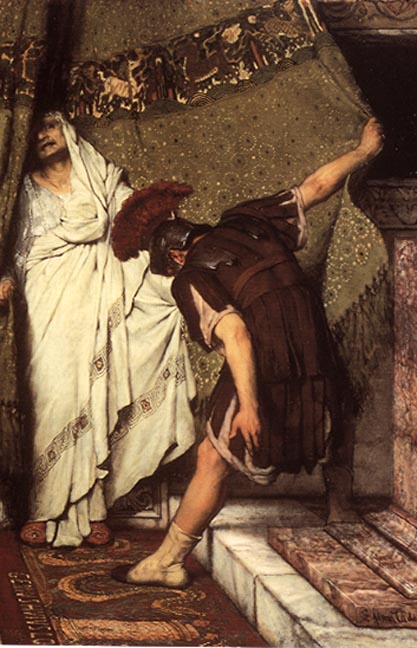
This detail from the painting depicts Gratus, dressed in the brown uniform of the Praetorian Guard, pulling back a green curtain with brown fringe and a white and brown circular pattern, to reveal the emperor Claudius behind the curtain.  Claudius is robed in white and his frightened face is half-hidden behind the curtain.  Gratus is bowing to him.
Image credit: Sir Lawrence Alma-Tadema, detail from A Roman Emperor: 41 AD, 1871, oil on canvas. Bequest of Henry Walters, 1931, acc. no. 37.165. Courtesy of the Walters Art Museum.

In the detail of the painting, we see Gratus pulling back the curtain that has hidden Claudius while bowing and the half hidden, scared face of the new emperor.

What a story!

Sir Laurence Alma-Tadema, the creator of this magnificent artwork, was one of the most renowned painters of late nineteenth century Britain.

Born in Dronrijp, the Netherlands, and trained at the Academy of Antwerp, Belgium, he settled in England in 1870 and spent the rest of his life there. A classical-subject painter, he became famous for his depictions of the luxury and decadence of the Roman Empire, with languorous figures set in fabulous marbled interiors or against a backdrop of dazzling blue Mediterranean sea and sky. One may add that this painting, A Roman Emperor (Claudius), differs from most in the artist’s ล“uvre.

Analyzing paintings and sculptures, their form, symbolism, ideas, and meaning creates a space to understand and interact with history at a deeper level. Bring your curiosity and questions to the experienced and knowledgeable docents Jill and Bonnie as we embark on this journey intersecting Culture and History.  

The Walters Art series:   

Wednesday, Oct 13 at 1 pm โ€“ The Art of Looking REGISTER.  

Wednesday, Nov 10 at 1 pm- Symbolism in Renaissance & Baroque Art  REGISTER. 

Wednesday, Jan 26 at 1 pm – Fantastical Creatures REGISTER. 

Wednesday, Feb 23 at 1 pm – Chinese Porcelain REGISTER. 

Rohini is the Adult Curriculum Specialist with HCLS. She loves literature and rainy days.

*Herm: a squared stone pillar with a carved head on top (typically of Hermes), used in ancient Greece as a boundary marker or a signpost