Gravity’s Rainbow by Thomas Pynchon

A flat full book cover from back across the spine to the front: It is predominately orange with a bright yellow spiral on the front, with the title and author centered, above a row of townhomes. The back has a quote, "A screaming comes across the sky ..."

“This is some kind of a plot, right?” Slothrop sucking from a velvet pipe. 

Everything is some kind of plot, man,” Bodine laughing 

“And yes but, the arrows are pointing all different ways,” Solange illustrating with a dance of hands, red-pointed fingervectors. Which is Slothrop’s first news, out loud, that the Zone can sustain many other plots besides those polarized upon himself . . . that these are the els and busses of an enormous transit system here in the Raketenstadt, more tangled even than Boston’s – and that by riding each branch the proper distance, knowing when to transfer, keeping some state of minimum grace though it might often look like he is headed in the wrong way, this network of all plots may yet carry him to freedom. He understands that he should not be so paranoid of either Bodine or Solange, but ride instead their kind underground awhile, see where it takes him. . . . 

By Ian L.

I fear, dear reader, that in even attempting to describe the manifold plots contained within Gravity’s Rainbow, the constraints by which I am bound have already caused me to fail in my endeavor. Which is to say, this book is a challenge to read but even more so to describe. This novel challenges your understanding of what a novel should be. 

Gravity’s Rainbow, described as the least-read must-read of the English literary canon, is perhaps the post-war post-modern novel. Anthony Burgess, of A Clockwork Orange fame, described the novel as, “the war novel to end all others.” It is often spoken about alongside James Joyce’s Ulysses, another book notorious for being considered either a great work of literature or completely incomprehensible. I am sympathetic to the former, but I understand how people believe the latter. The narrative and prose are confusing from the launch. Gravity’s Rainbow plays with its narrative distance in much the same way that our brains do while we are dreaming. A scene might open on one character and follow them for a beat; then, the focus flies into the head of another and digs deep into their individual psychology, history, or worldview.

While we are following these various and sundry characters, many of whom are not our “main” character (which itself is a harder question to answer than you might expect), the narrative is also running along a track parallel to our real history. Pynchon’s prose is impeccably diverse, in both its form and subject. The story is interspersed with poems and songs sung by and about the people who populate this novel. Several of the “chapters” could easily be independent short stories. The narrative meanders and diverges into reveries on myriad topics: historical events, artistic movements, psychology, chemistry, physics, genocide, philosophy, and even esoteric “sciences.” Pynchon’s words manage to be witty and evocative, beautiful, and hilarious, as well as harrowing and even vulgar. Truly so. I do not have the digital real estate to expand on that point, let alone most aspects of this novel. 

Ostensibly, Pynchon’s novel is set during the final stages of World War II. The German military has been rapidly manufacturing and deploying the V-2 rocket, the first ever long-range guided ballistic missile. It screams across the sky so fast you only hear it if you survive. An initial ensemble of secret intelligence operatives catches word of a strangely serialized rocket and an unknown device included in its schematics. The 00000 Rocket and the mysterious Schwartzgerät form the central gravity well around which this novel’s narrative revolves. It is an awesome medley of carefully researched facts mixed with Pynchon’s creative labyrinth of fiction. The novel is initially disorienting, by design, aimed at confusing the reader’s understanding of what is “actually happening” within the narrative. The characters experience this feeling, too.

One recurrent theme throughout the novel is the ever-mounting presence of paranoia. The characters struggle under overarching and competing plots. They buckle under the questioning of whether anything they have ever done has helped anyone. The War has consumed them, and only too late do they realize the War Machine does not exist on both sides. It is a superposition that collapses all sides into itself. This maddening descent is humanized by Pynchon through his characters, who are irrevocably altered by their situation. Each undergoes a derangement of the self, a severing and mutilation of their minds and bodies, or for some, their souls.  

If there was a word we could use as a through line for the vast wasteland that is Gravity’s Rainbow, it might be “Preterite.” Grammarians probably recognize this word as a fancy term for the simple past tense. I imagine most people are not thinking about Christian Eschatology in their day to day. To put it simply, the Preterite, according to Calvinist doctrine, are those who are not predestined for salvation. The characters we follow are among the Preterite, the passed-over and forgotten who are used by the Elite and the Elect. Those who must live in the wake of what war wrought. It would seem trite to state something so simple as “War is Bad.” Gravity’s Rainbow is full of themes that can seem stupidly obvious when stated outright. It is not these answers that earn Pynchon his accolades, but how he moves toward his answers. That is something that must be experienced, not explained.  

Much like the end of the novel, I want to close this out with an abrupt pivot toward the mystical. Within many mystical traditions, whether hermetic or religious, lies the belief that profound truths cannot be readily grasped by the uninitiated or faithless. To expose these truths too hastily is to rob them of their power. To put it another way, for a revelation to be of any consequence, its content must first be hidden.

Knowledge is like light; the ten-tons of rocket-powered symbolism and the concentric layers of narrative are a prism which refracts and disperses the light into a visible rainbow. Without the prism the light is visible but unfiltered. The diverse cast of characters, the disparate circumstances they find themselves in, even the story of Byron (the sentient immortal light bulb), are all pieces of the prism. Pynchon expertly constructed this obfuscating puzzle to reveal something prescient about the world we inherited. Despite being published 50 years ago, I would wager its relevance has never been less in question. More than ever, we live under the shadow of Gravity’s Rainbow.  

Gravity’s Rainbow is available in print, as well as an e-audiobook and an audiobook on CD. The audiobook, skillfully narrated by George Guidall, brings Pynchon’s words into great relief and were an indispensable aid in completing the book. 

Ian is an Instructor and Research Specialist at East Columbia Branch. After finally finishing Gravity’s Rainbow, he is not sure what to do with himself. Infinite Jest stares at him dauntingly from his shelf. If anyone asks, he – never – did the “Kenosha,” kid.
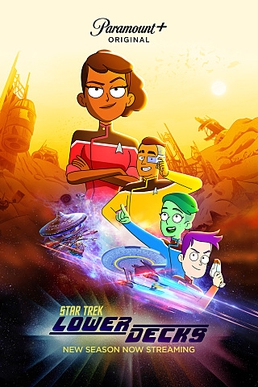
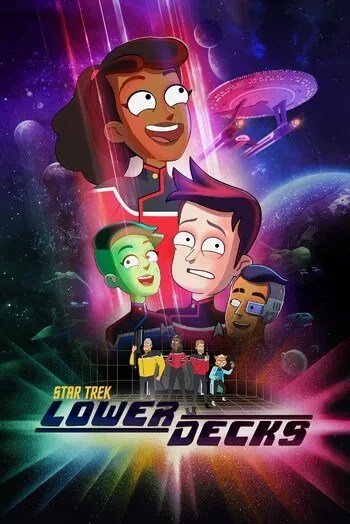
Cerritos Strong!

by Peter N.

Are you a Star Trek fan? No, we’re not going to get into the longstanding Trekkie vs. Trekker debate. I just want to know whether you’d enjoy some good laugh-out-loud fun in the Trek universe. If so, you need to pick up Seasons 1, 2, and 3 of Star Trek: Lower Decks. One of the recent entries in this new golden age of Star Trek, this animated series stars Ensigns Beckett Mariner, Bradward Boimler, D’Vana Tendi, and Samanthan Rutherford aboard the USS Cerritos. In the Star Trek universe, much prestige is held in the name Enterprise. Well, this show isn’t about the prestige of Starfleet, but rather the workhorses behind everything; namely the California Class ships of which the Cerritos is one.

Charged not with the famous first contacts that the Enterprise and other famous ships conduct, the Cerritos and its crew handle second contacts. In other words, follow-up and cleaning up the messes that are left behind by the more famed ships after they’ve left. It isn’t a great job, but the crew takes pride in what they do, even if they get into some weird hi-jinks along the way. They are a ragtag group of rapscallions that somehow get the job done, along with maybe getting terraformed aboard ship or turned into giant killer scorpion creatures.

As a long-standing Trek fan, I wasn’t sure about how I’d like this show when it was first released but it soon became my favorite of the new Star Treks. Created and written by Mike McMahan of Rick and Morty fame, this show is truly a love letter to the franchise. It is filled with humor, adventure, heart, and more than a starbase full of legacy Star Trek references. This show was created by fans for fans!

Pick up Seasons one, two, or three at your local HCLS branch today!

Peter is an adult instructor at the Miller Branch who has too many books in his TBR pile, too many shows and movies to watch, and wishes that Starfleet was real.

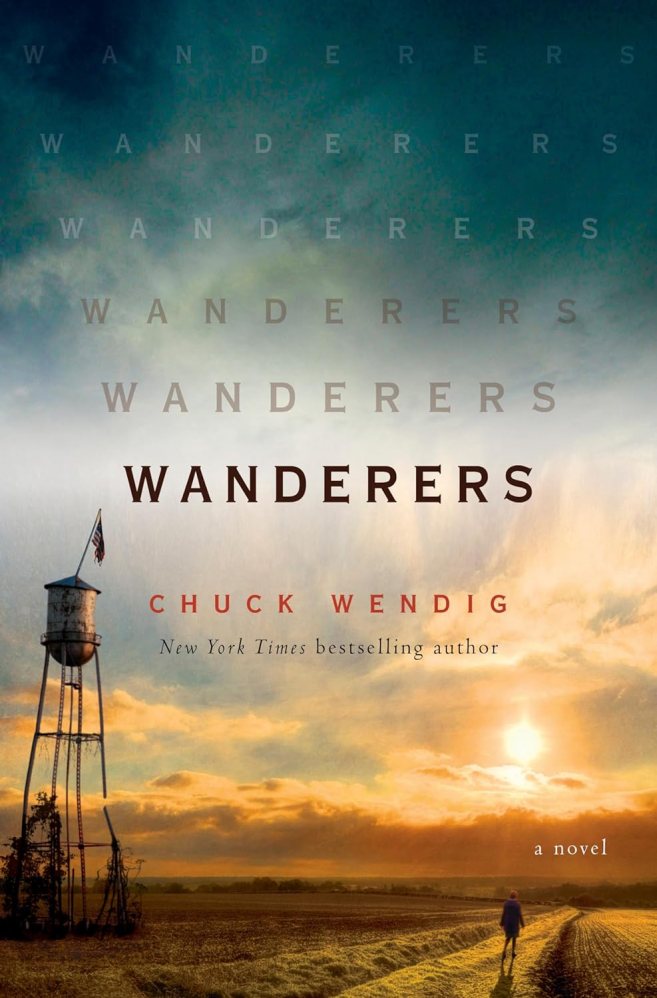
Wanderers by Chuck Wendig

The book cover shows a person with their back to the camera walking down a dusty road in a barren landscape, with the sun peeking over clouds in the distance and an old, broken metal tower to the side, with weeds climbing up at the bottom and an American flag at the top.

By Angie E.

In 1984, during eighth grade, I read The Stand by Stephen King for the first time. Like many other readers of that doorstop novel, I found myself deeply affected. I very well might have read it at too young an age, but don’t horror and middle school often go hand in hand?

The Stand began my fascination with apocalyptic fiction. The genre is like a magnet for our minds, pulling us into worlds where everything we know crumbles. Whether it’s the adrenaline rush of survival, the hope of a new beginning, or the fascination with our own resilience, apocalyptic tales keep us hooked.

Wanderers by Chuck Wendig is a worthy contender in the genre, being a gripping science fiction novel that weaves together mystery, suspense, and a touch of dark humor. The tale begins with Shana, who wakes up one morning to discover her little sister afflicted by a strange condition, sleepwalking, unable to communicate, and inexorably drawn toward an unknown destination. Soon, Shana realizes that her sister is not alone; other sleepwalkers from across America join the mysterious journey. These sleepwalkers are accompanied by “shepherds” who protect their loved ones during this perilous passage. As the sleepwalking phenomenon spreads, terror and violence grip America.

The real danger isn’t the epidemic itself, but the fear it instills. Society collapses, and a brutal militia threatens the sleepwalkers. Wanderers introduces a game-changing shock halfway through the book, and Wendig’s smooth prose and dark humor keep the narrative engaging, even as it explores the end of the world. His storytelling keeps readers hooked from start to finish, making him a worthy contemporary of the master himself, Stephen King.

Wanderers is available from HCLS in print and in e-book and e-audiobook format.

Angie is an Instructor & Research Specialist at Central Branch and is a co-facilitator for Reads of Acceptance, HCLS’ first LGBTQ-focused book club. Her ideal day is reading in her cozy armchair, with her cat Henry next to her.

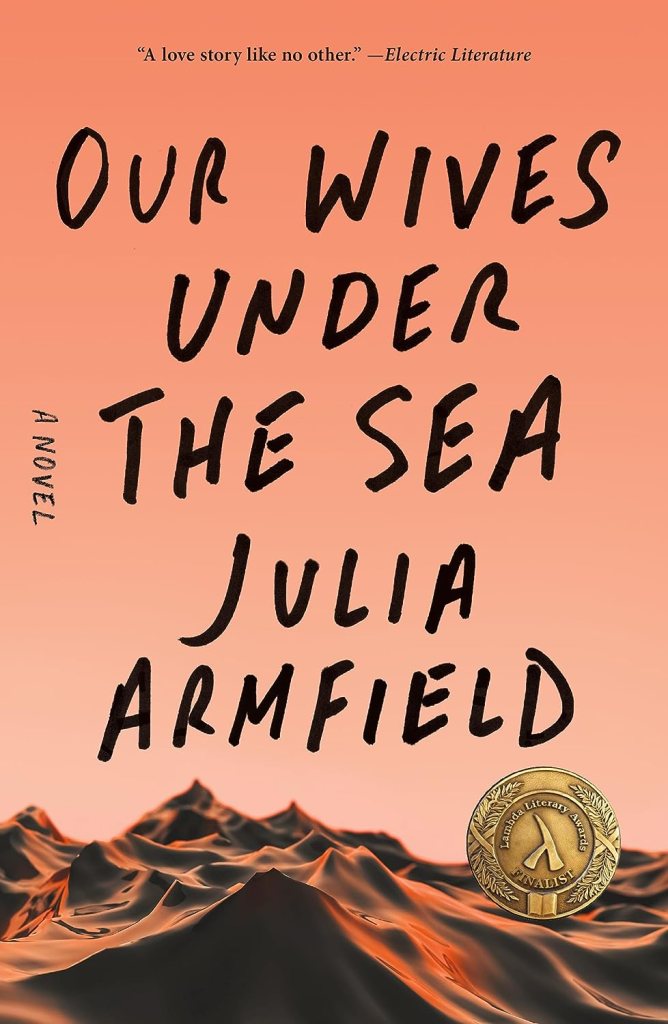
Our Wives Under the Sea by Julia Armfield

The book cover depicts waves against a reddish-orange background, possibly as if the sun is shining down on them.

By Sahana C.

There are books that belong in discussion, that beg to be read in community. Then there are books like this, that I don’t know if I’ll really be able to talk about in a meaningful way. But you deserve to know about it, so I’ll try my best.  

I’ll tell you first that I read this in one sitting. Each turned page made it evident that this book was heart-wrenchingly, desperately, tenderly romantic, and just as tragic. I was reminded of Rebecca by Daphne du Maurier in a lot of ways – the story of the protagonist, Miri, starts in the middle of an existing tragedy, with fog and haze over the order of events in such a way that everything feels like a dream. The classic gothic element where the setting acts as a main character is incredibly present as well – the sea takes its due, from Miri and from her partner Leah, and it is greedy with what it has. The home is a center, as in most gothic tales, and the sea takes the place of home for both Miri and Leah. Armfield writes, “To know the ocean, I have always felt, is to recognize the teeth it keeps half-hidden.”  

Miri thinks something is not quite right about her marine biologist wife, Leah, who has just returned from six months on a deep sea mission that did not end well. Despite Miri’s best efforts, Leah cannot seem to return to life as normal. Miri does what she can, but she can’t escape the fact that she feels she is losing Leah to the sea, somehow, inexplicably. There is a real sense of the liminal throughout the book, but especially in the first chapters as Miri begins to tell the story. Armfield herself says it perfectly, writing about loss but inadvertently summarizing the themes of the novel: “It’s not grief…it’s more like haunting.”  

This idea of haunting is compounded by the ways we learn about Miri and Leah’s relationship throughout the story, in fleeting moments and flashbacks, woven together with this real sense of longing for a time that cannot return, with desperation mounting, and mounting, and mounting, as we need to know what has happened, what will happen, what’s next.  

At some points, this book had a similar energy to one I’ve written about before, Emily Austin’s Everyone In This Room Will Someday Be Dead, with a smattering of “anxious” fiction interspersed among the more gothic notes. The characters are so unfortunately lovable, too, in their desire for one another, and that’s the real tragedy in the novel – Armfield wonders aloud “what happens when love isn’t enough?” The readers are left begging her to stop asking the question.

This book deserves to be read. I read a lot of books; I’m surrounded by them all day, and I can tell you, with full assurance, that this book will make you feel. You’ll bear witness to the love that was there, that was lost, that had something unbelievable change it, and instead of that love living on the paper, in the book, it will belong to you instead.  

Our Wives Under the Sea is available from HCLS in print and as an e-book.

Sahana is an Instructor and Research Specialist at HCLS Savage Branch. They enjoy adding books to their “want to read” list despite having a mountain of books waiting for them already.

The Hunter by Tana French

A small white house sits alone in a field with billowing red clouds behind it.

by Kristen B.

Reading a Tana French novel is a bit like riding an old-fashioned roller coaster. First, you have the huge anticipation of slowly, so slowly, tracking up that first big hill, complete with some hitches and wiggles to keep things interesting. Then, the pause at the top before plummeting down headlong into the fast thrills of bumps and twists and loops.

French excels at that slow build of nerves and excitement, teasing you along the way with hints of danger and drama. Her latest, The Hunter, continues the story of American ex-cop Cal Hooper, retired to the west of Ireland, and local teenager Trey Reddy. It picks up two years after the events of The Searcher (Chapter Chats review), with the two still in close contact doing carpentry and other projects. The “townland” figures Cal as a decent foster parent for young Trey and approves of her having a path toward responsible adulthood. Lena Dunne provides the other part of this found family unit, along with the dogs.

All is well until Trey’s dad, Johnny Reddy, blows back into Ardnakelty talking treasure. Sure, and it’s an awful hot summer with no rain with everyone looking for a little distraction. Playing along with Johnny’s con seems like a grand opportunity – even if only for its entertainment value. But matters don’t stay there (because they never do), and the stakes are steeper than anyone realizes.

Still waters run deep, and Trey has never forgiven or forgotten how things ended two years ago. To her, the whole new situation seems, as most cons are, too good to pass up. She’s after the chance to get back a little of her own. The decisions that affect her relationships with the adults in her life – in her families of birth and choice – offer a rare and wonderful study of a traumatized young woman on the edge of adulthood. The Hunter, at its base, is Trey’s book, and it shines even without all the other shenanigans.

This book follows the first one fairly closely if you want to appreciate all the nuances, but you could read it on its own. Most of the characters from The Searcher return, in fine form and fettle. The language and dialogue evoke the rhythms of small town life, especially how there are no real secrets – and ones that remain could be worth their weight in gold, literally.

There’s a bit of a holds list, so you might want to borrow The Searcher first anyways – available in print, large print, e-book, e-audiobook, and audiobook on CD. (Sure, and it will be good fer ya.)

The Hunter by Tana French is available in print, large print, e-book, e-audiobook, and audiobook on CD.

Kristen B. is a devoted bookworm lucky enough to work as the graphic designer for HCLS. She likes to read, stitch, dance, and watch baseball (but not all at the same time).

Jewish Joy: Windows & Mirrors during Jewish American Heritage Month

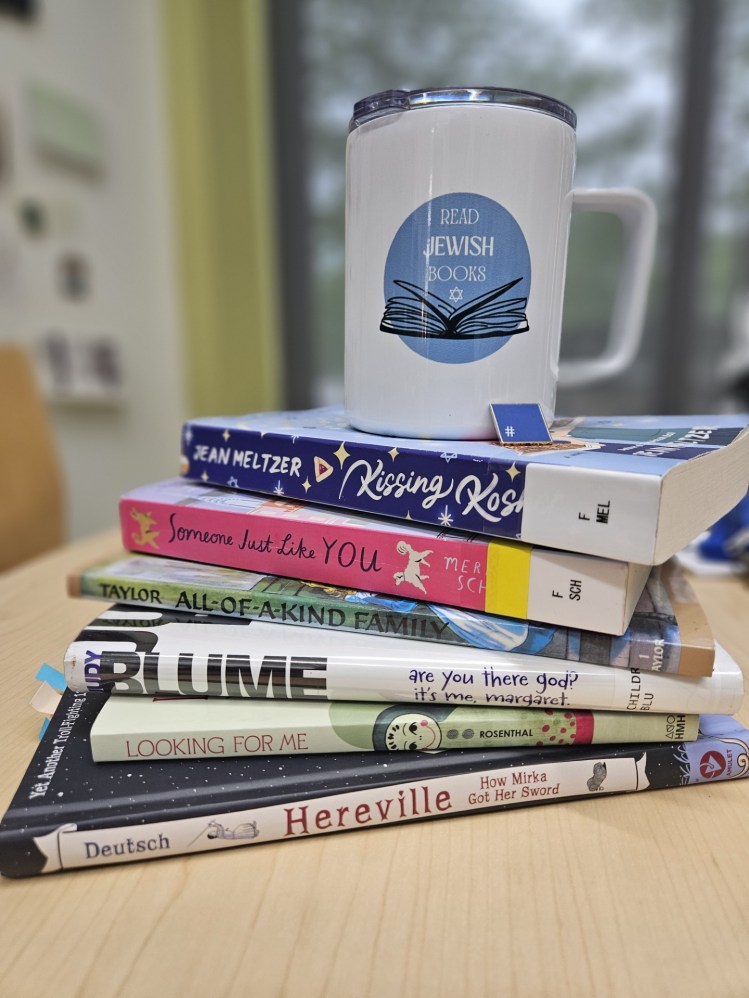
A stack of the books referred to in the blog post, with a blue and white coffee mug on top that says "Read Jewish Books."

by Stacey F.

“They enjoy finding books that are not about Jews in the Holocaust or other hard times, but focus instead on characters who are like themselves and about families that sound like their own.”
– Judy Blume

While trying to frame how I was going to write this post, I found a 2015 article in Hadassah Magazine, where Judy Blume was interviewed. When I was younger and even more so now as an adult, this quote really resonates with me. As pointed out in the article, “…the unassuming way Blume presents the Jewish identities of many of her characters is a welcome surprise for Jewish readers, many of whom articulate their appreciation to Blume.” 

Randallstown in the 70s and 80s, when and where I grew up, was a very Jewish area. An avid reader, I made frequent visits to the Randallstown library, grabbing handfuls of books. These books provided windows to other cultures where I could see what life was like for other people. What I didn’t find so much were books that were mirrors, about people like me. 

Older now and as a librarian, I realized that when most people think about Jewish literature, they think about Holocaust books. Book lists and displays about Jewish literature always seem to highlight Holocaust books as being representative of Jewish literature. We are directed to remember (זכור). To never forget. These books are important, moving, and usually show triumph over oppressors. Powerful literature. However, it is essential to realize, not only for those reading Jewish books as windows but also for those reading them as mirrors, that there is so much more to Jewish literature.   

I now purposefully search for Jewish Joy in books. Again, ordinary people who happen to be Jewish, living their lives, finding humor, and most importantly their happily ever after. We need mirrors! 

The incomparable Judy Blume had a more modern, secular take on Jewish life. In Are You There G-D, It’s Me Margaret, I saw someone Jewish living their regular life. Being Jewish was important, but so were the other things that went on in middle school. When I read Starring Sally J. Freedman as Herself, I certainly didn’t know that I would one day share her last name. 

A blue and green poster for the Sydney Taylor Book Award reads, "It was heavenly to be able to borrow books from the library." An illustration from Taylor's book, All-of-a-Kind Family, is in the background, depicting the children in two rows holding hands as they walk.

Sydney Taylor’s All-of-a-Kind Family was actually one of the first books that I read where the main characters were Jewish. Even though the story took place starting in 1912, the books about an observant family living in New York City still resonated with me: the holidays they celebrated, the food that they ate, the Yiddish words used. One of their favorite activities was their weekly trip to the library! For the first time, parts of my life were reflected in the pages, and I wanted to be a part of their story. This series was so important to me that I read the books aloud to my daughter; I was able to experience Jewish Joy once again as she could see her life mirrored in the pages. Sydney Taylor’s body of work, including All-of-a-Kind Family, inspired the Sydney Taylor Book Award presented annually to outstanding books for children and teens that authentically portray the Jewish experience.

A number of recent romance authors embody Jewish Joy. Some examples are Stacey Agdern, Sara Goodman Confino, Felicia Grossman, Jean Meltzer, Meredith Schorr, and Rachel Lynn Solomon, to name a few.  Characters in these books are living their lives. Some are observant Jews, while others are more culturally Jewish. With her Once Upon the East End series, Felicia Grossman even offers a peek at what being Jewish was like in Victorian England.

These days, you can also find many more children’s books that not only serve as a mirror for young Jewish readers, but as windows for others unfamiliar with Jewish culture. When the American Girl books featured Rebecca Rubin, it was a very big deal for my daughter. They were published in 2009, when my daughter was nine – the same age as Rebecca! Who was an American Girl! And a Doll!  And she’s Jewish! Interestingly, she is from the same era as All-of-a-Kind Family.

A graphic novel series from 2010 remains a favorite, which begins with Hereville: How Mirka Got Her SwordWhile I love the story, I think my favorite part of the book is the tagline on the cover, “Yet Another Troll-Fighting 11-Year-Old Orthodox Jewish Girl”.  Because there are so many of them out there. 

A modern picture book classic is Patricia Polacco’s The Keeping Quilt, a fictionalized memoir of how a very special quilt is passed down through her family from generation to generation, serving as tablecloths, chuppahs, and blankets for babies. She has updated several editions to include how her children have used and cherished the family’s keeping quilt. 

A story written in free verse, Looking for Me by Betsy Rosenthal drew me in because it talks about Jewish life in depression-era Baltimore, which was where my parents grew up, even though they would have been a little younger. 

The graphic novel illustration shows a girl in long dress and work boots dancing atop a big ball of yarn. The title, Hereville: How Mirka Got Her Sword, appear on a banner wrapped around the ball.

I love the diversity found in books with Jewish characters. There is a trend with books where the characters are of mixed heritage: Jewish plus something else, a window and a mirror. Some good examples include My Basmati Bat Mitzvah by Paula J. Freedman about a young woman who is East Indian and Jewish, as well as Not Your All-American Girl by Madelyn Rosenberg & Wendy Wan-Long Shang, featuring a Chinese and Jewish main character.

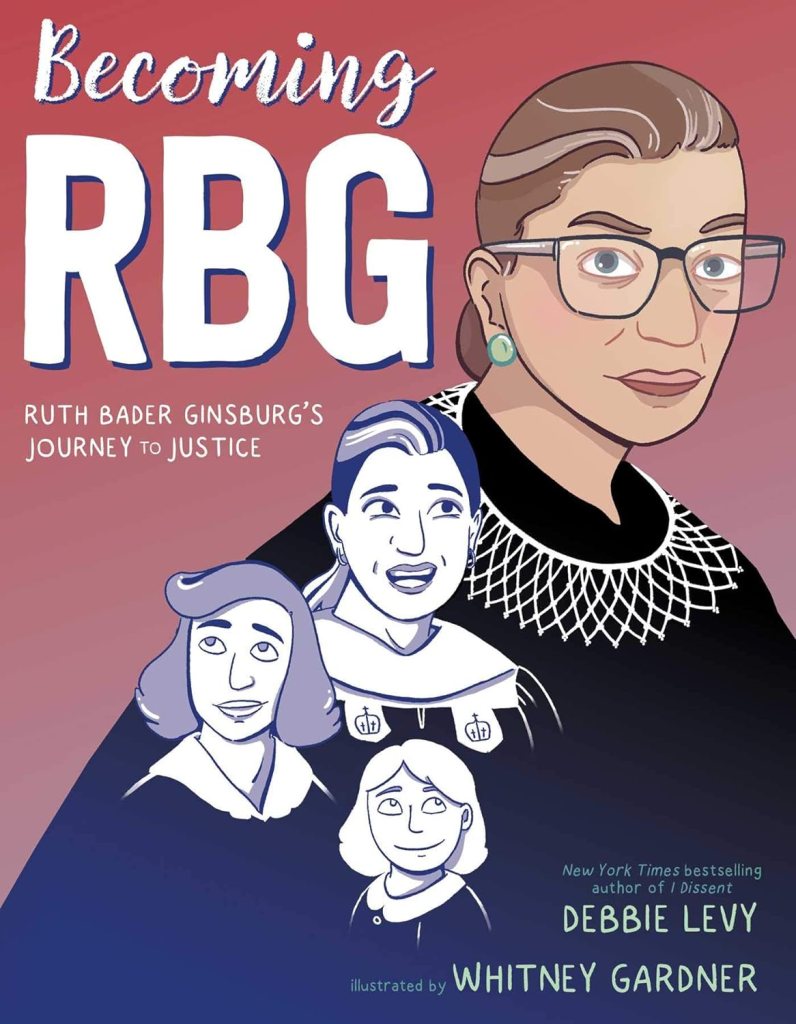
The book cover has cartoon-style illustrations of Ruth Bader Ginsburg at four different stages of life; the largest image depicts her with her favorite collar, a South African beaded collar, as a Supreme Court justice.

Finally, I need to include books about one of my favorite American Jewish women, Ruth Bader Ginsburg. RBG overcame obstacles to fight for what she believed in. You can start with: 

Becoming RBG: Ruth Bader Ginsburg’s Journey to Justice by Debbie Levy

Notorious RBG: The Life and Times of Ruth Bader Ginsburg  by Irin Carmon & Shana Knizhnik

For more titles for Jewish American Heritage Month, here are some great selections:
for children and teens

fiction for adults

nonfiction for adults

References: 

Musleah, Rahel. “Judy Blume.” Hadassah Magazine, 21 Oct. 2015, http://www.hadassahmagazine.org/2015/10/21/judy-blume/. Accessed 1 May 2024. 

Sydney Taylor Book Award.” Association of Jewish Libraries, jewishlibraries.org/sydney_taylor_book_award/. Accessed 1 May 2024. 

Stacey F. is the Children’s Instruction & Research Supervisor at the Miller Branch.  She has been at HCLS since 2004 (this time). Her hobbies include reading romances, playing/teaching mah jongg, and starting sentences with, “It’s funny because….”

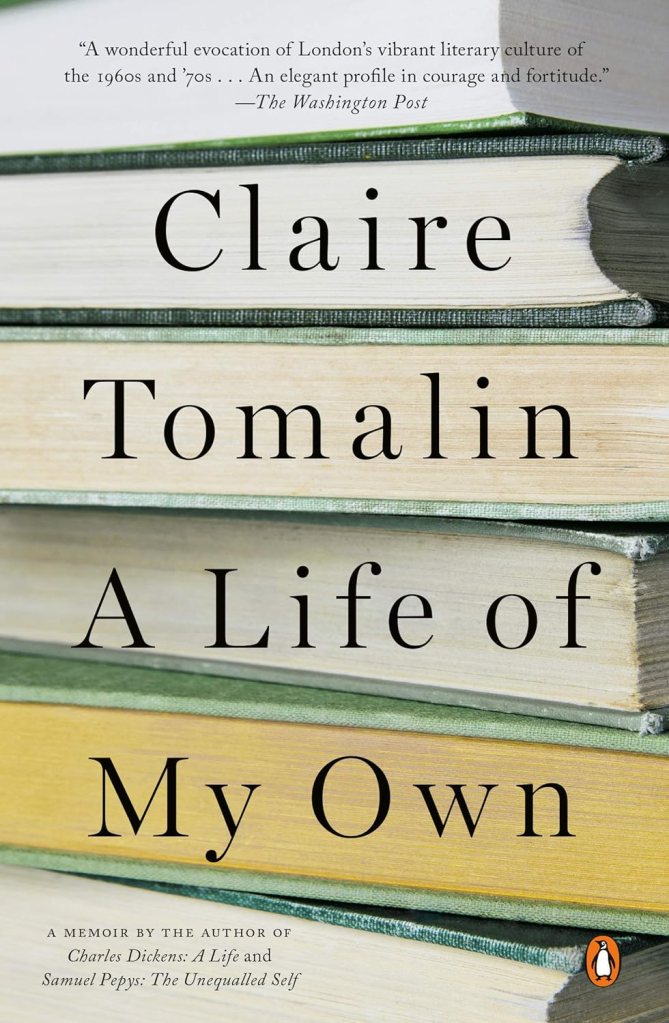
A Life of My Own by Claire Tomalin

The book cover is a photograph of stacked hardcover books in shades of green, yellow, and white.

By Julie F.

British author Claire Tomalin, acclaimed for her biographies of British writers, tackles autobiography in A Life of My Own, which recounts her life and work through the mid- to late-twentieth century among memorable, clever people. Born in 1933, she was the second daughter of a French father and an English mother, two brilliant parents (a scholar and a gifted pianist and writer of music) who ended up despising one another. Both of them loved Tomalin, though, and she was encouraged and well-educated despite their disastrous relationship. Her years at grammar school, boarding school, and eventually at Newnham College at Cambridge were clearly an adventure, but also a “calm and generally cheerful life” (73). Given the era, of course, there were moments of hardship and difficulty. Although “the war made everything odd” (33) and her mother lived in very straitened circumstances due to the divorce, Tomalin frequently mentions her gratitude to various individuals and for the opportunities she pursued. Her early years were a happy and secure life overall.

Still, hers is not a life without heartbreak. Tomalin lost her charming but somewhat errant husband, journalist Nick Tomalin, to a missile strike in the Golan Heights when he was reporting on the 1973 Arab-Israeli war. Her description of the loss is matter-of-fact but so very tragic, including one of the saddest sentences I’ve ever read:

“I had now to telephone Beth, Nick’s mother, and give her the news that the son she loved more than her own life had been killed” (201).

Tomalin’s grief plays out while surrounded by loving and supportive friends and family, and she goes on to forge an amazing career and raise her and Nick’s children, including their disabled son Tom, but the reader gets a profound sense of the isolation she sometimes felt as a widow bereft too early in life.

It was actually the second tragedy she deals with, the loss of her brilliant daughter Susanna, that made me put the book down for a while even though I was close to finishing; it seemed like too much for one woman to bear. But when I came back to her story, I was glad to read that Tomalin found the means to cope, developed her career as an author, editor, and biographer, maintained many friendships with the literati, and found love later in life with playwright and novelist Michael Frayn (I read his book Headlong years ago and highly recommend it. You can request it via interlibrary loan).

You get a wonderful sense of the milieu in which she and Nick (and later she and Michael Frayn) thrived. As literary editor at The New Statesman, she counted Martin Amis and Julian Barnes among her deputies. She lectured in front of John Updike about his work with next to no notice that he would be in the audience (“A nightmare”) and had a delightful encounter with Saul Bellow. Alan Bennett, Christopher Hitchens, Cecil Day Lewis, V.S. Pritchett, and Beryl Bainbridge are just a few examples of the famous figures in British literature and culture she met, edited, worked with, socialized with, and befriended. And, of course, she wrote her notable biographies: Samuel Pepys, Katherine Mansfield, Jane Austen, Nelly Ternan, Charles Dickens, and Mary Wollstonecraft, among others.

But it is still as a wife, mother, and daughter that the reader gains the most intimate and profound sense of Tomalin’s character and personality. She has been devoted to her son Tom all his life, inspired by his example, and proud of how independent he is despite his disability. She was equally devoted to her parents as they were approaching the end of life, and faults herself for not devoting enough time to them, her mother in particular – a genuine, relatable feeling that many women undergo in mid-life.

Now in her nineties (as is Frayn), she talks about how her “seventies and eighties have been easy” (330), describing a life of gardening, writing and editing, traveling, public speaking, concerts, opera, and films. With six surviving children and ten grandchildren between them, the joyful tone of the last chapter had me hoping for many more years for this erudite pair of writers. A delightful memoir despite the sadness; a life of her own, and a life well-lived.

Claire Tomalin is the author of the following biographies available from HCLS:

Julie is an instructor and research specialist at HCLS Miller Branch who finds her work as co-editor of Chapter Chats very rewarding. She loves gardening, birds, crime fiction, all kinds of music, and the great outdoors.

The Frozen River by Ariel Lawhon

The book cover depicts a woman in a red coat from an overhead view, walking down a frozen path with icy trees on either side of the path.

By Piyali C.

Set in a small town called Hallowell in Maine, the year is 1789. Maine is in the throes of winter and the mighty Kennebec River has frozen, entombing a man in the ice. The midwife and healer of Hallowell, Martha Ballard, is called to examine the body and determine the cause of death. Several months ago, the wife of Hallowell’s pastor, Rebecca Foster, was allegedly raped by two prominent citizens of Hallowell; one of them, Joseph Burgess, is the man found dead, stuck in the ice. There are horrific bruises on the body of the dead man to indicate that he may have been murdered before being thrown into the river. This incident pushes the sleepy town of Hallowell into an intricate legal battle, full of conspiracy, power plays, and intrigue. The punishment for rape is death, but proving rape is almost impossible.  

Martha Ballard finds herself deeply entrenched in all of this, as she was the one who determined that Rebecca Foster had been raped after examining her bruised body. By doing so, Martha makes some powerful enemies, and they try to intimidate Martha by targeting her husband and children. But Martha, who has learned to read and write at a time when women were discouraged from doing either, kept records of the weather and her activities in midwifery every day of her life. She is called to be a prominent witness and her journal plays a pivotal role. Having read The Sewing Girl’s Tale by John Wood Sweet not too long ago, I knew that this trial to prove rape and hold the perpetrators accountable in the late 1800s would likely be an exercise in futility. 

This book, unlike Lawhon’s other ones, is inspired by true events but not based on them. She admits that she took real-life characters and while relying heavily on historical facts, she fictionalized certain aspects of the story to make modern readers completely immersed in the plot and the characters. Martha Ballard indeed kept detailed accounts of her daily life, profession, and weather throughout her life. She was called regularly to court to give her professional opinion on cases relating to rape, children born out of wedlock, murder, and female promiscuity at a time when women were not allowed to enter courthouses without the presence of their husbands or fathers. She was respected for her midwifery, and it has been recorded that she made no distinctions between White or Black mothers at the time. There were 12 free Black families living in Hallowell according to the census, and Martha delivered babies of every color. Martha Ballard is the great aunt of Clara Barton, founder of the American Red Cross. And according to the author’s note, “She is also the great-great-great grandmother of Mary Hobart, one of the first female physicians in the United States. She left a medical legacy in this country that is unmatched. And it is thanks to the diary she kept.” 

I had a difficult time putting this book down, not simply because of the mystery surrounding the death of Joseph Burgess or the rape case, but because of the courageous protagonist and her determination to tell the story of women at a time when they were subjugated. The characters are superbly etched. They came alive in my mind as I read the book and so did the frigid winter of Maine. The writing is beautiful, lucid, and atmospheric. I lived in Hallowell in the deep, dark winter, witnessing the events alongside the Ballard family as Ariel Lawhon navigated through the lives of the characters in this book, documenting their joys, sorrows, triumphs, and losses. 

The Frozen River by Ariel Lawhon is available in print and large print, as well as e-book and e-audiobook formats.

Piyali is an instructor and research specialist at HCLS Miller Branch, where she facilitates Light But Not Fluffy and co-facilitates Global Reads. She keeps the hope alive that someday she will reach the bottom of her to-read list.

Ancient History, Modern Tradition

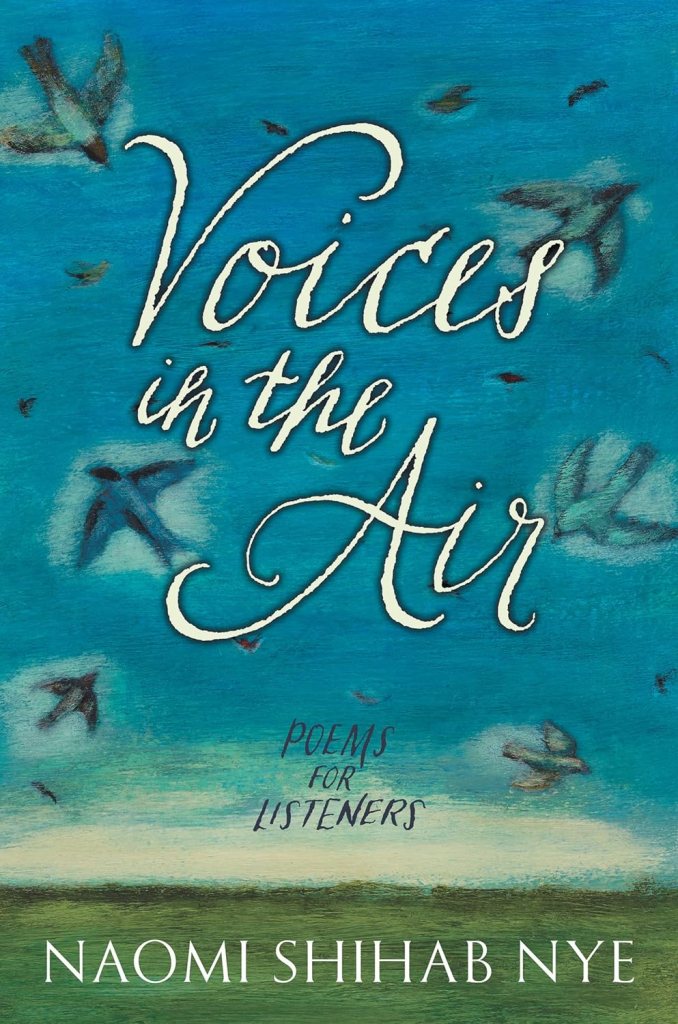
The book cover shows a number of birds that resemble swallows flying and swooping against a blue sky, with clouds in the distant background, low to the ground, and a grassy green landscape at the bottom.

by Sahana C.

I’m not a high school English teacher, so I rarely have an audience that will listen to me lecture about poetic tradition, but April is National Poetry Month, so there’s no better time to try. What if you pick up a book of poetry?

“Which one?” you ask me, as I thought you might.

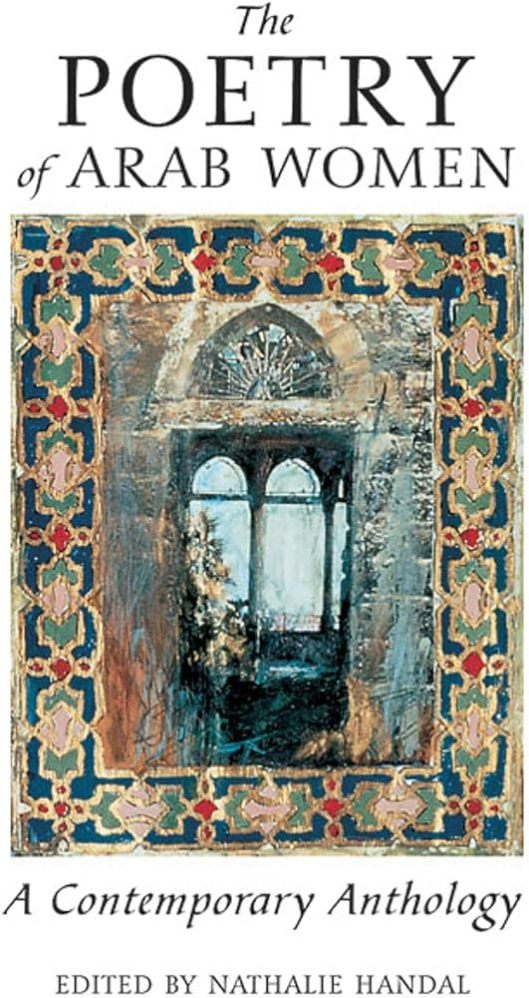
The book cover shows a view through arched window panes of a tree with white blossoms and a blue sky. The wall surrounding the window is constructed of brick and stone and is surrounded by a colorful geometric border in blue, green, and red.

Great question. Did you know that April also happens to be National Arab American Heritage Month?
One of the earliest forms of Arabic literature was poetry, but the oral tradition of Arabic poetry extends far beyond that. Flow, expression, and verbiage are singular in Arabic and the language was chosen by UNESCO as “the language of Poetry and Arts.” It only feels appropriate, then, to celebrate National Arab American Heritage Month alongside National Poetry Month. To highlight the perfect modern continuation of the ancient history, here are some Arab and Arab American poets to get you started:

  • Naomi Shihab Nye is the first Arab American Young People’s Poet Laureate and has several books for teens and children in our collection.
  • The Poetry of Arab Women: A Contemporary Anthology is deeply evocative, tying together the heritage mentioned above and making it accessible in the West, blending established poets and emerging voices.
  • Mahmoud Darwish is a prolific author, world-renowned for his lyrical work and vivid imagery.
  • Charif Shanahan wrote Trace Evidence about intersectional Arab American themes, a sense of place, queerness, and intimacy with oneself and one’s heritage.
  • Written by a wide variety of authors, This Is Not a Border: Reportage & Reflection from the Palestine Festival of Literature contains poems and essays reflected on PalFest and the power of culture.
  • Salim Barakat’s Come, Take a Gentle Stab is a compilation of Barakat’s most lauded work, and is translated to English from Arabic, drawing attention to the power of testing the limits of language.
  • Finally, one of the most celebrated Arab American authors, Etel Adnan’s work, Sea and Fog, cannot be omitted from this list; it’s a tour de force about individualism, place, and interconnectedness.
The abstract book cover, in shades of dark blue, turquoise, and grey, is painted in thick brushstrokes that could represent the ocean and/or bodies of land with a grey foggy sky in the background.

Check out the works above from your closest branch or online, and try poetry this month – there’s a reason poetry has such an ancient history, and it still hasn’t gone away.

Sahana is an Instructor and Research Specialist at the Savage Branch. They enjoy adding books to their “want to read” list despite having a mountain of books waiting for them already.

Spinster: Making a Life of One’s Own

The book cover has the title in stylized gold lettering and the subtitle with the appearance of handprinted red lettering against a cream-colored background.

By Angie E.

In her book Spinster: Making a Life of One’s Own, Kate Bolick invites us into a thoughtful consideration of remaining single. She weaves her own experiences with those of pioneering women from the past century, women who defied societal norms and forged their paths. These women include:

  • Neith Boyce: A columnist who challenged conventions.
  • Maeve Brennan: An essayist whose wit and insight left an indelible mark.
  • Charlotte Perkins Gilman: A social visionary who advocated for women’s autonomy.
  • Edna St. Vincent Millay: A poet whose passion resonates across time.
  • Edith Wharton: A novelist who crafted stories of love, longing, and independence.

Bolick’s exploration reminds us that the pursuit of a good life transcends societal expectations. Whether young and unencumbered or middle-aged and free, our years are ours to savor, not bound by convention.

One of the most liberating aspects of Spinster is its rejection of the notion that a woman’s worth is in and of itself tied to her marital status. Bolick celebrates the idea that a woman can lead a fulfilling and meaningful life without adhering to traditional expectations. She eloquently challenges the societal pressure to conform and encourages women to define their own paths, unapologetically.

Her exploration of solitude as a source of strength rather than a symptom of loneliness is especially affecting. In a society that can still view unmarried women past a certain age with pity or suspicion, Spinster is a rallying cry for independence, self-determination, and the dismissal of societal pressures.

As a 21st century old maid, I find comfort in the words of Kate Bolick and her celebration of the unconventional. And while I am all for defending singlehood at any age and claiming my cat lady status with pride, I have to confess to a part of me that loves fiction, especially romantic, which features old maids and spinsters who end up in love after all. The following are just a few titles that tickle my fancy:

The book cover depicts a redheaded woman in a long, flowing light blue off-shoulder gown, with a vase of white flowers on a pillar behind her, gazing out a curtained window at a snowy outdoor scene.

Devil in Winter by Lisa Kleypas

  • Heroine: Evangeline Jenner, a shy and unconventional woman
    Plot: Evangeline proposes a marriage of convenience to the notorious rake, Sebastian St. Vincent.
The book cover, all in shades of blue and purple, is an illustration of a manor house surrounded by trees and foliage.

Romancing Mr. Bridgerton by Julia Quinn

  • Heroine: Penelope Featherington, a witty wallflower
    Plot: Penelope secretly writes a gossip column while harboring feelings for her best friend’s brother, Colin Bridgerton.
The book cover depicts a woman in an off-shoulder coral-colored gown with a bejeweled waistline and fluffy hemline. She is visible below the nose; the view does not reveal her eyes.

Nine Rules to Break When Romancing a Rake by Sarah Maclean

  • Heroine: Lady Calpurnia Hartwell, a spinster with a list of daring adventures
    Plot: Calpurnia seeks adventure and love, breaking society’s rules along the way.
The book cover has an illustration of a kneeling man in a suit, reaching out for the hands of the woman standing in front of him, who is wearing a magenta gown and high-heeled shoes. What appears to be a marriage proposal is taking place in front of a gazebo decorated with pink flowers and green foliage, and there are trees and stars in the background.

A Spinster’s Guide to Danger and Dukes by Manda Collins

  • Heroine: Poppy Delamare, who flees an “odious” betrothal to live in London as quiet and unassuming Flora Deaver
    Plot: Poppy agrees to marry the Duke of Langham to save her younger sister, but that’s only the beginning!

Being a cat lady and embracing spinsterhood doesn’t mean missing out on love. It means defining love on your terms, just as the heroines in these novels do. So, raise a cup of tea (or a cat) and embrace the joy of being unapologetically you! 📚🐾

Angie is an Instructor & Research Specialist at Central Branch and is a co-facilitator for Reads of Acceptance, HCLS’ first LGBTQ-focused book club. Her ideal day is reading in her cozy armchair, with her cat Henry next to her.