The Pull of the Stars

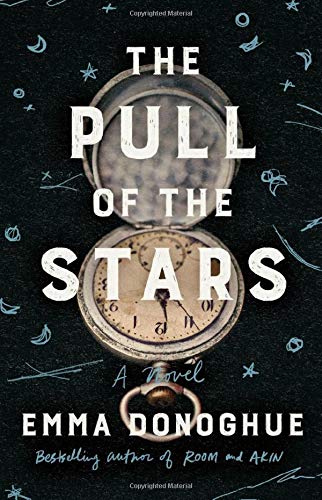
The cover shows an old-fashioned, open pocket watch against a dark blue background, with simple hand-drawn celestial objects including moons, stars, and planets scattered around it.

By Julie F.

Many novels depict the brotherhood of men at war. Donoghue celebrates the sisterhood of women bringing life into the world and those who help them along this perilous journey.” – Wendy Smith, The Washington Post, July 21, 2020

The Pull of the Stars by Emma Donoghue mesmerizes in the best possible sense. Both the pacing and the claustrophobia of this novel are intense – but it’s claustrophobic in a way that fully serves the plot, as the reader finds themselves in the tiny, overcrowded pandemic maternity ward of a Dublin hospital in 1918, basically the size of a closet, with the Spanish flu raging and World War I coming to a close. The little room is witness to so much – grief, pain, joy, love, trauma, fear, friendship, teamwork, unity, discovery – with the stories of nurse Julia Power and her influenza-ridden patients at the forefront of the action. The reader is propelled through the story, into this place where the characters’ trials and triumphs, representative of those experienced by women across the globe and across millennia, are so poignantly described. It is a story that will impress the reader with its introspective attention to detail and historical accuracy.

Nurse Power is a formidable character: efficient, tenacious, fearless, full of seemingly inexhaustible reserves of energy. Yet she is still young and, although not naive, full of uncertainty in a world where children randomly end up orphaned, babies and/or mothers die in childbirth, unequal outcomes are dependent upon wealth and social class, and soldiers like her brother Tim return from the war front unable to speak – or don’t return at all. She tries so hard to keep a cheerful spirit for her patients and for her young volunteer, Bridie Sweeney, yet at one point finds herself asking, “Back to this moment – what would be asked of me this morning?” (169). Her story echoes those of countless women who served their communities and countries in wars past, nurses and doctors and midwives and ambulance drivers who never shirked what was asked of them.

Post-2020 readers will find much of the pandemic description sad and uncannily eerie; Donoghue delivered the manuscript to her publishers in March of 2020, two days before Covid was declared a pandemic. But at heart, while still managing to address the random heartaches individuals experience in a world rent asunder by war, disease, and traumatic personal loss, The Pull of the Stars remains a hopeful, inspiring story (as is the author’s more famous and equally claustrophobic Room), about women’s solidarity and strength when tackling what seem to be insurmountable medical issues.

The Pull of the Stars is availalble from HCLS in print and large print, and also as an ebook and an eaudiobook from Libby/OverDrive.

Julie is an instructor and research specialist at HCLS Miller Branch who finds her work as co-editor of Chapter Chats very rewarding. She loves gardening, birds, books, all kinds of music, and the great outdoors.

Starfish by Lisa Fipps

The book cover depicts a girl in a peach bathing suit with lavender, white, and gold flowers and greenery, floating on her back against a blue watery background, as if in a swimming pool. Her arms and legs are outstretched in a formation resembling the starfish of the title.

by Carmen J.

I know you are going to find this hard to believe, but our society isn’t kind to people that are overweight. People like me. While I’m over here living my best life and admiring the body positive messages from the Lizzos and Ashley Grahams of the world, there is still much work to do when it comes to fat acceptance and body shaming.

On this year’s Summer Reading list (coming soon!), there is a gem of a book called Starfish. It highlights this message in bright lights. The debut novel by Lisa Fipps centers around Ellie, an 11-year-old, who is bullied for her weight. Not just by her classmates but also by her own family. From her sister, who nicknamed her Splash for her body’s impact when she swims, to her so-called well-intentioned mother researching bariatric surgery and dieting articles, Ellie is sent the consistent message that she doesn’t fit in. She doesn’t fit in with her peers; she doesn’t fit in the right clothes. 

In the water, Ellie is weighless and free – free of societal pressures, free of side eyes and judgment. There are no what-ifs or “if you only lost weight” or “your face is so pretty,” etc. 

Yet, it’s not all doom and gloom for Ellie. She finds refuge and support in her new therapist and her father, who advocates for her, even when advocacy leads to arguments with Ellie’s mom. Her new neighbor, Catalina, sees Ellie for her true self and beyond her physical appearance.

What sets this beautiful story apart from other similarly told stories is that the happy ending isn’t one where the main character finally loses weight and suddenly becomes liked by all. (As if a smaller-sized body guaranteed a happier life or popularity, which unfortunately is never guaranteed.) I won’t spoil the story for you, but I think you’ll find in Starfish an out-sized, hearty message with positive rippling effects on our youth.

Carmen J. is a teen instructor at HCLS East Columbia. Among her favorite things are great books, all things 80s, shamelessly watching The Bachelor, gardening, and drinking anything that tastes like coffee.

Spring Arrives with Children’s Books

The cover depicts three little white kittens looking up at the cherry blossoms above as well as the title, superimposed in yellow script against a blue sky. A bumblebee flies above them and a robin perches in an overhead branch.

By Eliana H.

Spring has sprung! Or has it? As Kevin Henkes says in When Spring Comes, “It changes its mind a lot.” But whether you’re certain spring is here to stay or want to get in the mood to welcome it when it is, we have books for you. Here is a collection of books to share with young children focusing on themes of spring, especially growth and change. For more recommendations, visit your local branch and ask a member of our staff. We will be happy to help!

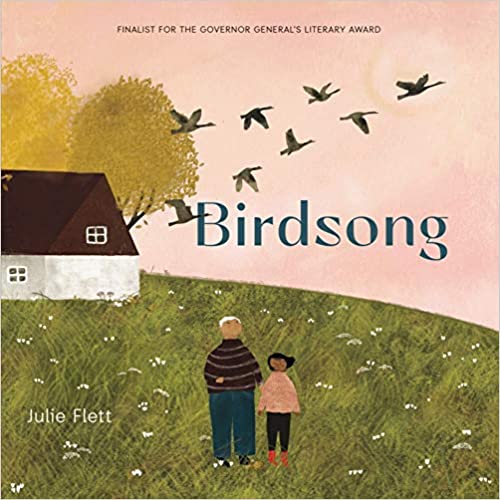
The book cover depicts a man and a girl in the foreground, on a green grassy hill, with a white house with a brown roof, trees with yellow-green foliage, and geese in formation in the sky in the background.

Birdsong by Julie Flett

First Nations author, illustrator, and artist Julie Flett brings her tender story to life with soft, striking illustrations in this beautiful book. It begins in spring, when a young girl is moving with her mother away from their home by the sea to a new house in the country. As the seasons pass, she grows used to her new home and gets to know her elderly neighbor, with whom she connects over their mutual love of art and nature. As spring returns, the young girl finds ways to comfort her ailing neighbor and realizes that she truly sees this new house as home now.

The book cover is a photograph of yellow and white flowers against a hazy background of gold and green foliage. The title is superimposed in white over the photograph.

Bloom Boom! by April Pulley Sayre

Seeing all the different flowers bloom is many people’s favorite part of spring. This volume showcases large photographs of a variety of blossoms in all different habitats accompanied by simple, rhyming text. The end includes notes about blooms in diverse ecosystems as well as details about the specific plants (and sometimes animals) on each page.

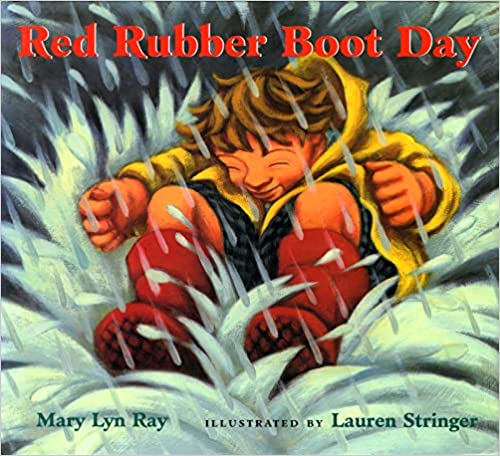
The book cover depicts a child in red rubber boots and a yellow rain jacket splashing in a puddle as raindrops fall and land on the ground.

Red Rubber Boot Day by Mary Lyn Ray, illustrated by Lauren Stringer

What do you like to do on a very rainy day? Simple text and acrylic paintings bring readers along with an unnamed child in this book, as rain pours down and different activity options are explored. Share this with little ones and start a discussion about favorite things to do in different kinds of weather.

The cover depicts an older woman in a lavender traditional Japanese kimono, seated on the ground with a young girl in yellow pants, white top, and rose sweater. A branch with cherry blossoms hangs above them, with the title in rose-colored script.

Sakura’s Cherry Blossoms by Robert Paul Weston, illustrated by Misa Saburi

Sakura, named for the cherry blossoms she loves enjoying with her grandmother, has to move to America with her parents and leave all that she knew behind. Told in a series of tanka poems, a traditional Japanese poetry form similar to haiku but with two additional lines, this story follows Sakura as she becomes accustomed to her new life. Along the way, Sakura finds new friends and unexpected joys in this place so different from her former home.

The cover depicts a white rabbit against a background of green hills, with a budding sunflower to the left and a sunflower in full bloom to the right. The larger flower has a ladybug on one of the leaves.

What Will Grow? by Jennifer Ward, illustrated by Susie Ghahremani

Spring is a time when many of us become especially aware of the life cycles around us, as we can witness much of the change and growth happening. In this book, bright illustrations with friendly creatures accompany short, descriptive text on each page, which includes the title question followed by the answer. Some pages fold out, down, or up to show a larger plant, and notes at the end offer simple instructions for planting different kinds of seeds, along with an overview of the life cycle from seed to plant.

The book cover illustrates two children caught in the wind, one clutching a red cap and one covering ears with hands, as the wind blows leaves around them.

Wind by Carol Thompson (also available in a Spanish edition, Viento)

Blustery days are a sure sign of spring’s arrival. This simple board book uses line drawings with lots of movement to show young children experiencing wind. The sensory experience of a windy day is highlighted with a range of descriptive words, ending with the final quiet as the wind dies down. Other titles in the series explore different types of weather with Rain, Snow, and Sun (available in Spanish as Lluvia, Nieve, and Sol).

Eliana is a Children’s Research Specialist and Instructor at HCLS Elkridge Branch. She loves reading, even if she’s slow at it, and especially enjoys helping people find books that make them light up. She also loves being outside and spending time with friends and family (when it’s safe).

National Library Week: Connect with Our Library!

National Library Week logo: Connect With Your Library. Connect is a white mouse with cord on a blue background. A black and white image of a plug on a deep yellow goes with "with your, and "library" is on red with an illustration of two hands getting ready to clasp.

Those of us who write for Chapter Chats want to connect with you, and want you to connect with the library. Most of the time, we’re going to share with you something new and different to read or watch. We enjoyed those titles so much that we want you to experience them, too. Check out recent popular reviews of the The Thursday Murder Club by Richard Osman or A Song of Wraith and Ruins by Roseanne Brown. If you’re an audiobook listener, we have you covered as well.

But the library has so much more to offer than books, and we want you to know about those things, too. Here’s a brief list of some blog posts that look at the other ways we’d like to connect with you:

Have you had a chance to visit Central Branch and tour the Undesign the Redline exhibit? It’s only here a little bit longer. Christie Lassen talks all about it in this Interview.

Have you been to Glenwood Branch recently? There’s so much that’s new for you! Visit the Makerspace and see the wonderful new play stations.

Our most liked blog post since Chapter Chats began about two years ago lets you know how to use the library’s subscription services to avoid news paywalls.

Do you like to craft? Or maybe bake? The DIY Center at Elkridge Branch may be able to help. The staff there can also help you with tools to get your yard cleaned up after winter and ready for spring fun.

And, now that it’s actually spring and random snow flurries have finally ended, take a drive to Ellicott City to visit the Enchanted Garden at HCLS Miller Branch.

One of our teen volunteers who frequents the Savage Branch (and writes for the blog) recently discovered that we lend toys. She is entirely on board with this idea.

We are even bringing the library to you with our PopUp Library van, which visits neighborhoods and community events.

So, take this as a reminder and an invitation to stop by frequently and see what’s going on in the blog – and at the Library. We love our library and connecting with you in all the ways we can imagine.

The Girl with the Louding Voice by Abi Daré

An indigo blue cover features paper cutout art of red flowers with dictionary pages folded in and the portrait of a young Black woman in profile, wearing a multi patterned top.

by Holly L.

So good. It’s so good.” This was the recommendation from my discriminating and well-read colleague at Miller Branch. I had already gravitated toward this novel based on the cover art alone. The royal blue background offsets bold canary yellow text: The Girl with the Louding Voice by Abi Daré. The all caps letters hinting at what a “louding voice” might look like when spelled out. The artwork appears to be a collage, with red paper flowers adorned with petals cut from the pages of a book, what appears to be a dictionary. Trace the flowers down to their stems and they seem to be blooming from the silhouette of a young woman. We see little else but her elegant profile, pitch black but for some bursts of fuchsia and crimson highlighting her features and hair, her headband and clothing vivid strips resembling Ankara fabric. Her expression is unreadable. Studying this striking cover, I wondered what exactly this girl had to say.

Ready to listen, I donned my earbuds and became quickly engaged by the sonorous voice of the audiobook’s narrator Adjoa Andoh, a veteran of British stage and screen and narrator of many audiobooks. The prologue, an excerpt from the “The Book of Nigerian Facts,” highlights the persistence of widespread poverty in Nigeria despite being it the richest country in Africa due to being a major crude oil exporter. I continued to listen as the first chapter began and I was confronted with a different voice (though the same reader), that of the main character, Adunni. After her father beckons her to come close, the fourteen year-old reflects:

“I know he want to tell me something bad. I can see it inside his eyes; his eyesballs have the dull of a brown stone that been sitting inside hot sun for too long. He have the same eyes when he was telling me, three years ago, that I must stop my educations. That time, I was the most old of all in my class and all the childrens was always calling me “Aunty.” I tell you true, the day I stop school and the day my mama was dead is the worst day of my life.”

Adunni speaks not in the pidgin English that is common in the author’s native Nigeria, but a broken English borne from Daré’s imagination. I admit that it took me several minutes to get used to this dialect but once I acclimated to Adunni’s voice I found myself enthralled by this tenacious and resilient young woman. Rich in determination but poor by birth and circumstance, she lacks what she most passionately desires—an education. 

When the story begins young Adunni learns that her poor father has sold her into marriage with a prosperous and wretched old taxi driver named Morufu. After a few agonizing months as Morufu’s third wife, Adunni flees after a tragic event. She finds her way to bustling Lagos, where she is placed as a maid for a wealthy business owner named Big Madam, an imposing woman whose laugh, “sound like a rumble, a big rock rolling down a mountain.” While she labors around the clock as a domestic servant to Big Madam and her predatory deadbeat husband, Big Daddy, Adunni looks for opportunity wherever she can find it. With the help of Ms. Tia, a kind and well-connected woman, Adunni’s vision of a path toward independence becomes clearer. She begins to stake a place for her own future while paving a way for other young women and girls from small villages like her own. As her mother insisted before passing away in her forties, “your schooling is your voice.” Adunni took this advice to heart, forever insisting on her right to an education. 

I found so much to admire in the character of Adunni, with her seemingly bottomless reserves of strength and optimism despite the ongoing trials that threaten to break her. This is a young woman whose dream of a better life will not be denied, her “louding voice” lifting not only herself up, but anyone willing to share in her story.

I’m so glad I took the time to listen.  

Holly is an Instructor and Research Specialist at the Miller Branch. She enjoys knitting, preferably with a strong cup of tea and Downton Abbey in the queue. 

Master of the Game: Henry Kissinger and the Art of Middle East Diplomacy by Martin Indyk

Below title in red block letters, the cover shows a black and white photo of a young Henry Kissinger gesturing off the page. His suit blends into the black background.

by Tony B.

Foreign policy is rightfully in the collective conscious right now. Martin Indyk’s newest work Master of the Game: Henry Kissinger and the Art of Middle East Diplomac takes an insider’s look into the mind and methods of one of the godfathers of foreign policy, Henry Kissinger. The book serves as an academic and personal review of Henry Kissinger’s diplomatic expertise in the Middle East, specifically his work in the peace negotiations from the Yom Kippur War forward. Indyk’s analysis is that Kissinger’s performance was brilliant for his vision, strategy, and understanding of history. While Kissinger was by no means flawless, his understanding of the delicate balances of power, willingness to take risks, and Machiavellian understanding of his own influence made him the master of the game.

Master of the Game is richly detailed, with sources pulled from American, Arab, and Israeli sources, as well as eight personal interviews with Kissinger himself. I was struck by how Indyk captured a lot of Kissinger’s personal style of dealing with foreign counterparts and patterns of thought from those interviews. For example, Kissinger said that he missed Golda Meir’s stubbornness once Yitzhak Rabin’s government was sworn in. In this regard, the book provides highly desirable insight into Kissinger’s diplomatic thinking.

The author is an accomplished Middle Eastern statesman in his own right, both as special assistant to President Clinton and envoy to President Obama for the Israeli-Palestinian negotiations from 2013-2014. In serving in these diplomatic circles, Indyk has met, worked, and formed a relationship with his subject. These combined experiences make for a unique and well-informed assessment of Henry Kissinger’s diplomatic triumphs. Master of the Game deftly incorporates personal reflection and academic research of Henry Kissinger’s diplomatic efforts. Plentiful, factual citation meets anecdote and lived experiences to bring a personal understanding to Kissinger’s Realpolitik.

Tony is a Customer Service Specialist at HCLS Elkridge Branch. He is a history student at UMGC and enjoys not quite finishing books and falling down Wikipedia rabbit holes.

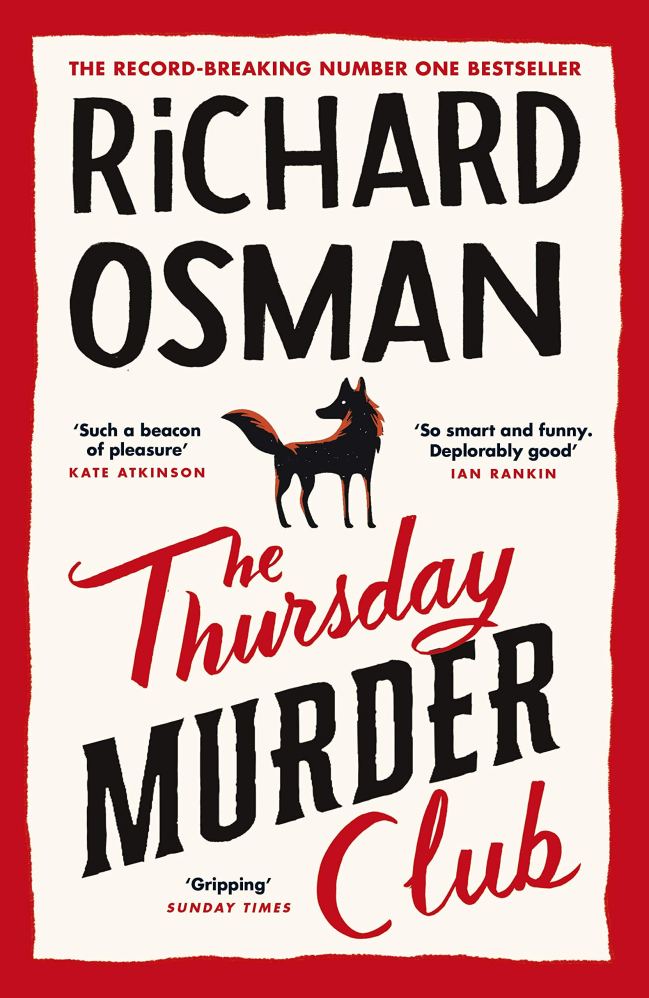
The Thursday Murder Club by Richard Osman

A fairly plain cover with a red edge and the title in script and the author's name hand lettered. A small wolf stands between author and title lines.

by Sahana C.

I read the introduction on Goodreads: “Four septuagenarians with a few tricks up their sleeves, a female cop with her first big case, a brutal murder. Welcome to…The Thursday Murder Club” and immediately placed a request for this book. Then I waited for a few weeks and was thrilled when I finally got the notification that the novel was ready for me. I finished it the day I started, because, first things first, the book is hilarious. I paged through, intent on the mystery and trying to pick up the clues scattered through the pages and thinking about the details of the case, then suddenly remembered that the characters are using and abusing the privileges of their old age. One of the main characters pretends to have her handbag stolen to talk to a police officer, while another pretends that his memory is going in order to get a detective to give him what he needs. All of them are ever-so-charming when they’re trying to get their way, and you suddenly remember that the point-of-view character is a seventy-something year old who is casually discussing (and excited about investigating!) murder.  

The novel happens in a retirement village, Cooper’s Chase, and centers on four friends who genuinely seem to have absolutely nothing in common and no real reason to like each other. (Except Joyce: “I think we all like Joyce,” says Ibrahim. Ron and Elizabeth nod their agreement again. “Thank you, I’m sure,” says Joyce, chasing peas around her plate. “Don’t you think someone should invent flat peas?” (p 13)). The four meet weekly (on Thursdays, to no one’s surprise) in the Jigsaw Room to solve cold cases, especially murders. There’s Ron, a loudmouthed, passionate rabblerouser whose biggest role in the group comes from his unwavering suspicion of any sort of authority. Ibrahim, a retired psychiatrist, serves as the group’s resident tech expert, who is wildly proud of his technological prowess while also organizing and keeping the data on all of the crimes the club discusses. Joyce, the first point of view readers are introduced to, is a former nurse and the newest member of the group, who is steadfast and practical, keeps her head down, and bakes a mean cake in almost every other scene. Finally, rounding out the four and one of the founding members of the Thursday Murder Club is Elizabeth, who remains infinitely mysterious, with a checkered past, who always manages, somehow, to get her way.  

Through trickery and subtle coercion, they involve themselves in the investigation of a murder that occurs adjacent to their retirement village, bringing two detectives into the fold: Donna, a young woman looking to prove herself, and Chris, a detective who feels a bit past his prime. The detectives quickly realize the importance of our Murder Club, never take them for granted, and come to realize that the Thursday Murder Club’s influence and investigative effort is absolutely necessary to solving the crime. Through it all, we get an actual well-constructed mystery, one that leaves bread crumbs and truly utilizes each of the ensemble cast of characters to the full extent of their humor and intelligence. It keeps the plot moving from beat to beat.  

No real moral judgements are made in the story. The retirement village is full of rich and accomplished people who are ready for some time out of the spotlight, but who have their own secrets and problems, which in turn allows them to confront the criminals without any real superiority. The only judgements are for the truly obnoxious characters (one in particular, who simply has no manners), and even comes across as more of a grandparent’s headshake of disapproval than any real condemnation. 

The Thursday Murder Club is a cozy mystery full of humor, vitality, and life, more than I anticipated for a book about murder and retirement villages. It is available in print, eBook, and eAudiobook

Sahana is an Instructor and Research Specialist at the Savage Branch. She enjoys adding books to her “want to read” list despite having a mountain of books waiting for her already.

Film Femme Phenoms

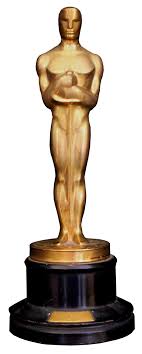
An Oscar award statuette.

by Cherise T.

The Oscars. The Super Bowl for film lovers and stargazers. Since the 94th Academy Awards and Women’s History Month converge this year, let’s highlight Oscar-winning women. The accomplishments of women in the film industry grow each year as crews’ diversity increases and acting roles encompass a broadened range of realistic characters.

Front and center for many a bibliophile is screenwriting. In 2021 with Promising Young Woman, Emerald Fennell (also known as Camilla in The Crown) became the first woman in 13 years to win for Best Original Screenplay. Fennell also produced and directed. Then travel back to 2007 when Diablo Cody won for Juno. To date, nine women have won in this category, but only five as solo writers; the other three being Sofia Coppola, Lost in Translation; Jane Campion, The Piano; and Callie Khouri, Thelma & Louise.

For Best Director, 2021 also brought an Oscar to a woman, Chloé Zhao, for Nomadland (also a book). Only one other woman has won in this category, Kathryn Bigelow, for The Hurt Locker. Only seven women in total have even been nominated.

Best Costume Design boasts many female winners. Edith Head was nominated 35 times and won eight. For total Oscar nominations and victories, she is surpassed only by Walt Disney. Her winning films are The Heiress, Samson and Delilah, All About Eve, A Place in the Sun, Roman Holiday, Sabrina, Facts of Life (not available), and The Sting. For more recent winners in 2018 and 2019, check out the work of Ruth E. Carter in Black Panther and Jacqueline Durran in Little Women.

Best Supporting Actress has been won more than once by only two women: Dianne Wiest for Hannah and Her Sisters and Bullets over Broadway (not available) and Shelley Winters for The Diary of Anne Frank and A Patch of Blue (available through interlibrary loan). Last year’s winner was the first for a Korean actress, Youn Yuh-jung, in Minari.

Now for the star power that is Best Actress. Katherine Hepburn was nominated 12 times and won a record-setting four: Morning Glory (available through interlibrary loan), Guess Who’s Coming to Dinner, The Lion in Winter, and On Golden Pond. Meryl Streep has been nominated a record-setting 17 times for Best Actress, winning twice for Sophie’s Choice (available with an HCLS library card on Kanopy) and The Iron Lady, and nominated four times for Best Supporting Actress, winning for Kramer vs. Kramer. Frances McDormand became a triple champion in 2021 for Nomadland. She also won for Fargo and Three Billboards Outside Ebbing, Missouri.

If you’re a fan of the Academy Awards, enjoy, and be sure to check out these and other noteworthy Oscar winners in the HCLS catalog.

Cherise Tasker is an Adult Instructor and Research Specialist at the Central Branch. When not immersed in literary fiction, Cherise can be found singing along to musical theater soundtracks.

Selkie Tales for Irish Heritage Month

Poster for the animated movie shows a large blond man, his two children, a dog, and a bunch of seals gathered close on a rock with waves splashing all around. A bright blue sky show a lighthouse in the distance.

by Kristen B.

According to President Biden and Governor Hogan, March 2022 is officially proclaimed as Irish American Heritage Month, coinciding with St. Patrick’s Day on March 17. I boast of wee bit of Irish heritage from my mother’s side of the family. We drink tea, eat soda bread, and watch The Quiet Man in March. To be fair, we drink tea year round. There are so many wonderful books and movies that show off the Emerald Isle to its best advantage – from films such as Waking Ned Devine and Dancing at Lughnasa (available via Interlibrary Loan) to authors such as Colm Toibin and Maeve Binchy.

Beyond the mainstream, I have always loved the folktales and mythology of the Celts, and of Ireland in particular. Are the Fair Folk involved? I’m in! One of my favorite traditional tales involves the selkies, the shapeshifting folk who transform into seals in the sea and humans on land. There are countless stories and songs about the Selkie Wife, wherein a fisherman (most usually) or a sailor falls in love with a selkie and hides her sealskin while she is dancing upon the shore. They are usually wonderfully, truly in love, but she is trapped living only half her life. When she finds her skin again, she leaves him and their children to reclaim her life in the waves. As with so many traditional Irish tales, it’s the sense of tragedy that makes it beautiful.

Selkie tales have also made their way into plenty of film and books. Seanan McGuire’s long-running urban fantasy series featuring changeling detective October Daye includes selkies as important characters that you can find in several of the titles. Tanya Huff’s modern fantastical Gale Girl books are a ton of fun, with a family full of odd magics and dangerous aunties. The Gale family boasted a young girl named Dorothy and her Auntie Em, once upon a time. The second book in the trilogy’s plot hinges on a supposed selkie colony off the coast of Maritime Canada being threatened by oil drilling. It’s a quick, fun read full of selkies, traditional music festivals, and the occasional dragon.

As for movies, probably my favorite selkie movie is The Secret of Roan Inish, which tells the story of a young girl, Fiona, and her determination to find and bring home her lost younger brother, Jamie, who is living among the seals. The rhythms of the movie are quintessentially Irish, and it needs very little in the way of special effects or soundtrack to keep me engrossed. Song of the Sea is an animated film that tells a slightly different version of the Selkie Wife. When lighthouse keeper Ben’s wife disappears after giving birth to their second child it leads to all sorts of family and fey drama. The creative team behind this gorgeous, lyrical tale first made The Secret of Kells, concerning the famous illustrated manuscript during the burning of the Irish monasteries by Vikings – and at a time where the old magics may still have been found in the wilderness. These movies have a particularly rich animation style of that borrows from ancient Irish art. While animated, they aren’t necessarily just for children.

I wish you a wonderful St. Patrick’s Day! Enjoy one of these suggestions … or any of the other wonderful poems, stories, music, or movies that celebrate our Irish heritage.

Kristen B. is a devoted bookworm lucky enough to work as the graphic designer for HCLS. She likes to read, stitch, dance, and watch baseball (but not all at the same time).

Mysteries and Spices!

Thursday, March 17 @ 6:30 pm REGISTER

Conversation and Parsi Cuisine Demo with Authors Sujata Massey and Niloufer Mavalvala.

Navroze Mubarak!

Navroze or “New Day” in Farsi (Parsi) marks the first day of the spring equinox for the northern hemisphere, which falls on March 20/21 each year. It reminds us that the cold is coming to an end, and it’s time to cleanse our homes that have remained closed over the wintry days – a new year to start afresh. The occasion is celebrated with friends, families, and neighbors, sharing what we are fortunate enough to have with others. (Mubarak means congratulations.)

On March 17, we bring you a specially curated and deliciously crafted evening where we discuss the richly detailed and intricately plotted Perveen Mistry mystery series with Author Sujata Massey. Sujata’s immensely popular book The Widows of Malabar Hill seamlessly weaves together historical, political and social layers–suffocating colonialism, societal systems more concerned with appearance than equity, racial and gender disparities. Through Perveen Mistry, Sujata brings to life Bombay in the 1920’s and captures the fine details of Parsi culture

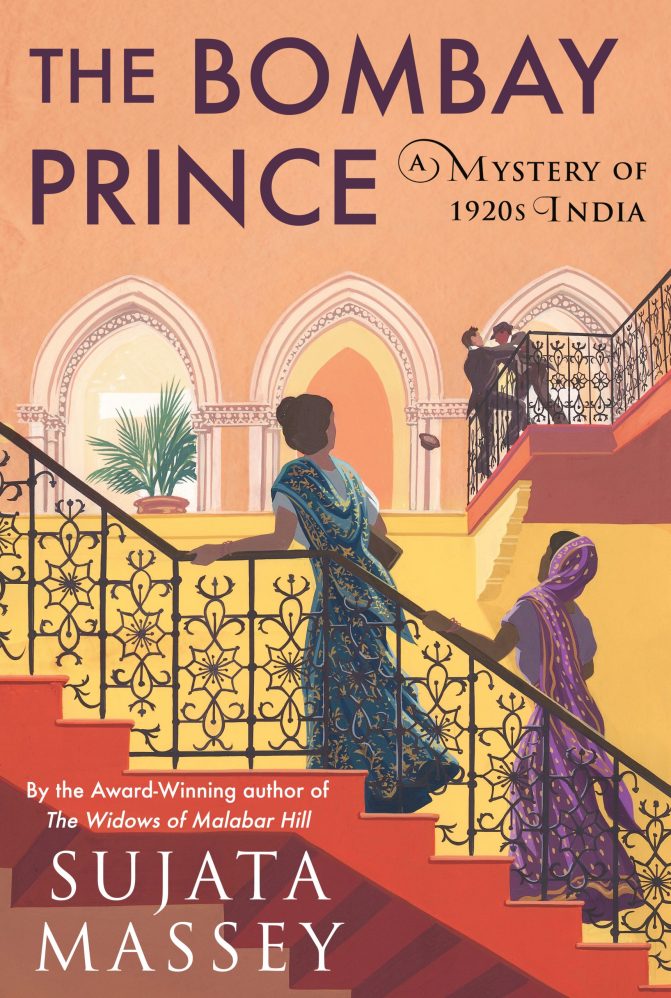
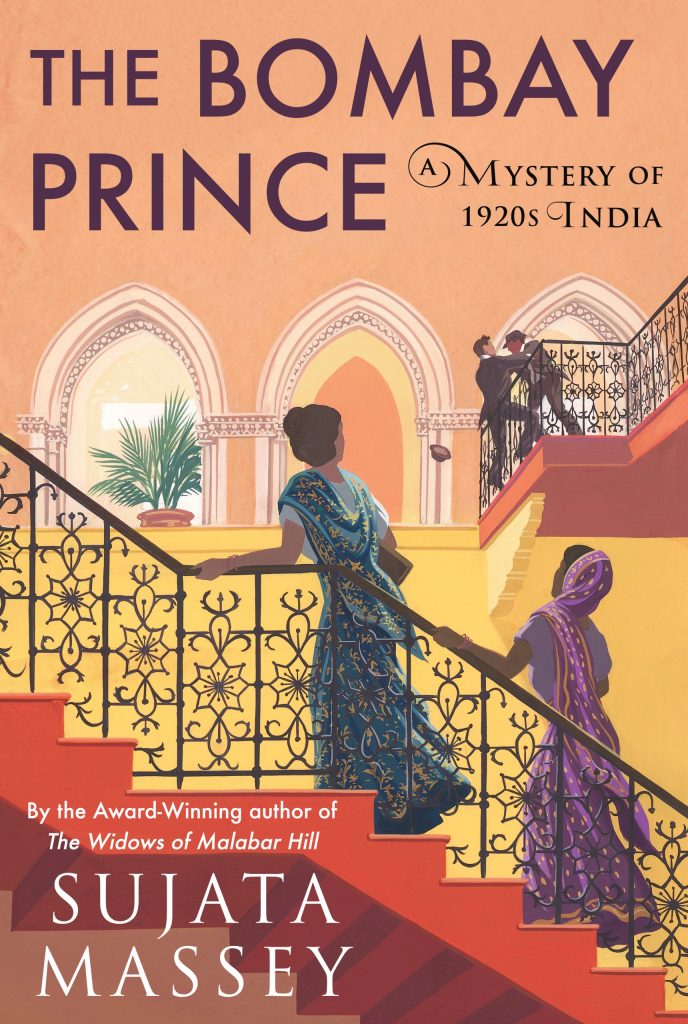
The cover of The Bonbay Prince shows two women in saris ascending a staircase with a decorative banister, looking up as two men in suits appear to be fighting on a balcony above them.  A potted palm tree is visible through a window on the landing.

“Graceful prose and mastery of period detail . . . [The Bombay Prince] propels a rich story of female empowerment during a pivotal era.” -Kirkus Reviews

A favorite with our book groups, Perveen Mistry, the spunky, sari-clad lawyer, tackles mysteries with wit and a shrewd intelligence. Reviewing The Bombay Prince, Kate Quinn, New York Times bestselling author of The Rose Code says, “Perveen’s investigation into the mysterious death of a young university student coincides with the imperial visit of the future Edward VIII, and the resulting trail of breadcrumbs through royal receptions, street riots, squalid jails, and lavish hotels makes for a deliciously satisfying read!”

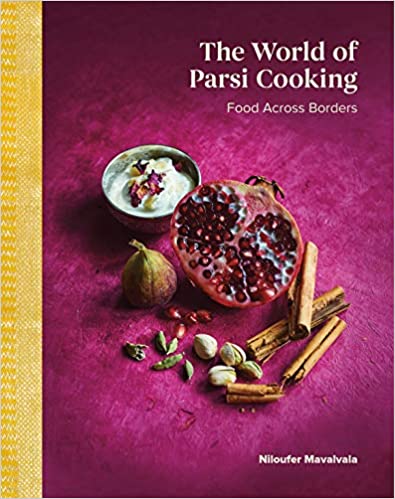
In conversation with Sujata is Parsi culinary expert and author Niloufer Mavalvala. Niloufer has written two lavishly illustrated cookbooks with a treasure trove of authentic Parsi recipes. The Art of Parsi Cooking: Reviving an Ancient Cuisine and The World of Parsi Cooking: Food Across Borders are great for beginners as well as experienced cooks. 

The cover of The World of Parsi Cooking shows a pomegranate with a bowl of dip, and various spices and seeds including cinnamon sticks and cardamom pods, against a bright pink tablecover.

Niloufer was born and raised in Karachi, Pakistan and her love for food combined with extensive world travel from a young age inspired her to experiment with world cuisines. She has written articles published in a variety of magazines, journals, and newspapers, and she has been a guest chef at Le Cordon Bleu in London and on the television show for The Cooks Cook in New Hampshire and, more recently, on Voice of Canada.

Niloufer warmly invites us into her home and kitchen as she demonstrates her favorite quick-n-easy recipe and details the unique history and culture of the Parsi community.

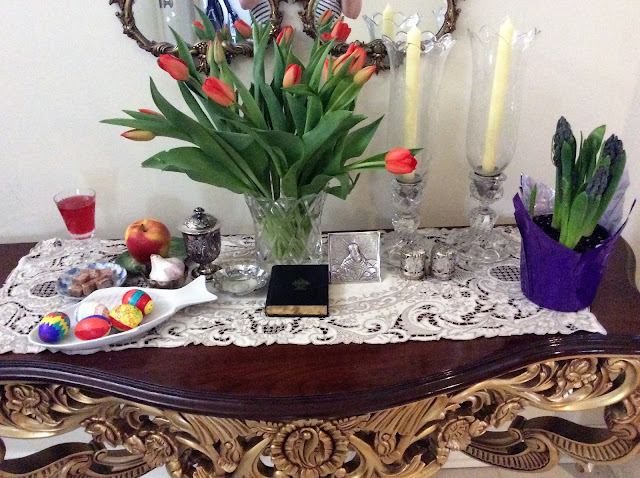
The photograph is of a Haftseen table, with tulips and lilacs, an apple and colored eggs, salt and pepper shakers and candlesticks, and a crystal goblet with a beverage, all on a lace tablecover on an ornate wooden table.

The Haftseen table is a symbolic tribute to the seven creations of the universe; fire, water, air, earth, metal, and the plant and animal kingdoms. It thanks the universe for what we have and pray for continuity in the days to come. It is called Haftsheen or Haftseen, where seven items that start with the sound ‘S’ or ‘Sh’ are placed on the table alongside other symbols. 

Join us for Mysteries and Spices on Thursday, March 17 @ 6:30 pm. REGISTER