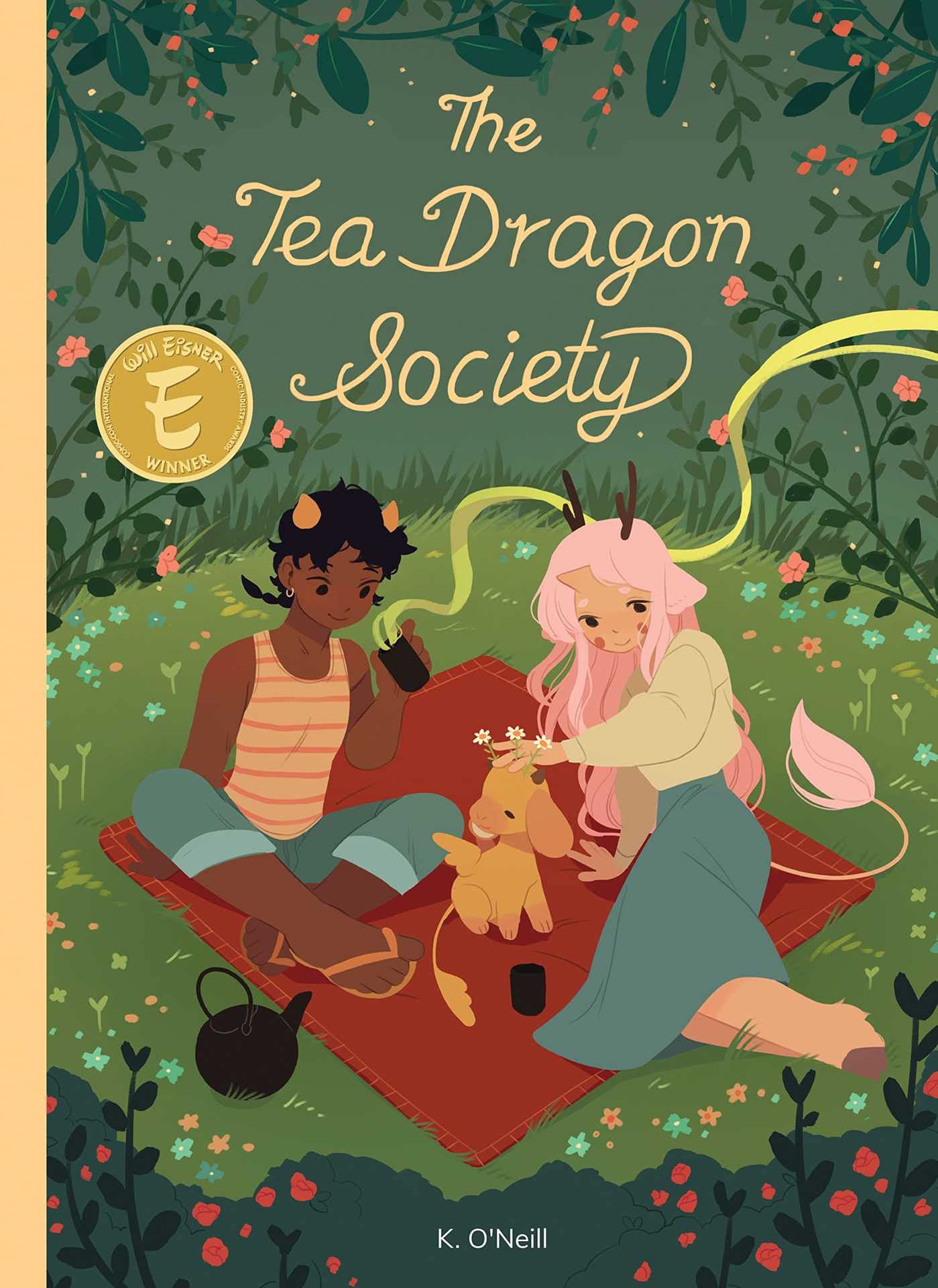
The only way to describe Kate O’Neill’s series The Tea Dragon Society is that she has crafted a world that feels just like a soft warm blanket.
In the first book we are introduced to Greta, who is learning blacksmithing from her mother. While in town she finds an injured tea dragon and returns it to Hesekiel and Erik. She’s then introduced to the world of tea dragons and Minnette, a young girl who was training to be a prophetess and inadvertently lost her memory. Through the seasons, Greta and Minnette grow closer while learning more about themselves, Hesekiel and Erik, and the power of memory.
In the second book, which serves as a prequel, Rinn is an aspiring cook and lives deep in the woods. During a day of foraging, they meet Aedhan who has pulled a Rip Van Winkle and been asleep for 80 years. Aedhan, guardian dragon of Rinn’s village, was enchanted into sleep by a mysterious forest spirit. To atone for “disappearing” for all those years, he begins to help out around the village, getting to know its inhabitants and striking up a close friendship with Rinn. Through their friendship and the acceptance of the villagers, we learn to let go of guilt and accept what life gives you.
In the third (and hopefully not the last) book, we once again see Greta who is trying her best to take care of her tea dragon to no avail, as well as training to become an apprentice. Minnette has also been dealing with her own demons and must learn to discover herself again. And we are treated to seeing Rinn and Aedhan again when they come to visit Hesekiel and Erik. This book is a culmination of the Tea Dragon story and teaches about grief, loss, and most of all, growth.
A good cup of tea is comforting, familiar, and warms you from the inside out. Take it from me, these books will do the same.
Peter is an Instructor and Research Specialist at the Miller Branch and collects way too many things.
Do you believe in destiny? Can you inhabit someone else’s?
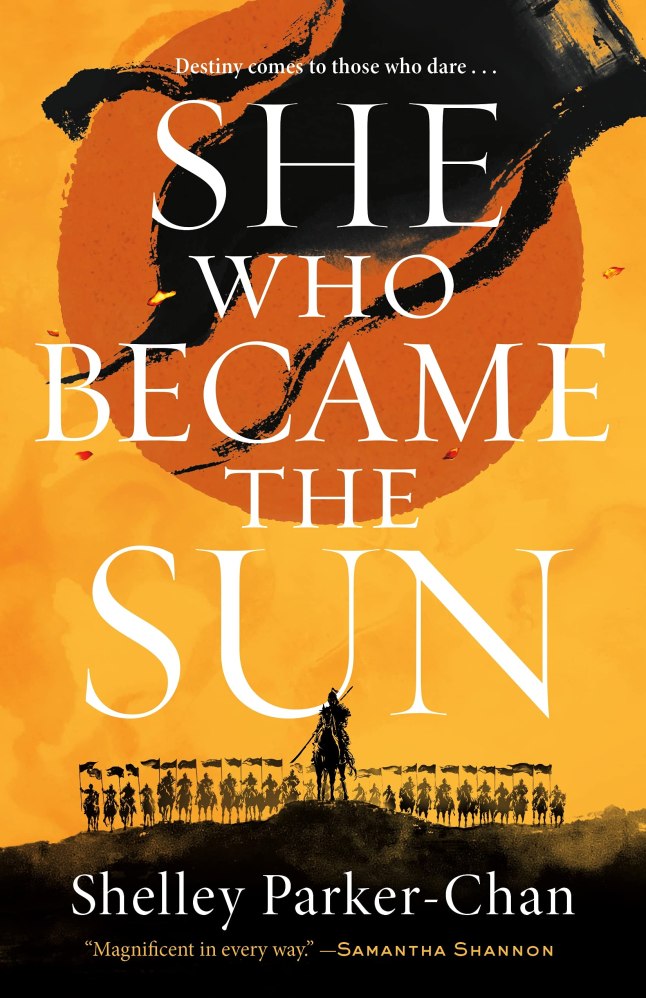
The main character of She Who Became the Sun spends the length of the book reflecting on these questions. Zhu Chongba “steals” her brother’s foretold fate of greatness and wrestles with what it means to be great. Little sister (never gets her own name) is the only member of her family to survive famine and bandits, and, as an act of desperate will, decides that her brother’s fortune is still Heaven-mandated and waiting to be claimed. So, she becomes him. Throughout the rest of the book, Zhu Chongba is her name even though her pronouns remain female. Sometimes, it was jarring because of how thoroughly Zhu Chongba lives that persona.
The newly claimed identity takes her to a monastery, where she gains an education and makes a lifelong friend in the rascal Xu Da. Eventually, the monastery falls to the politics of rebellion between the native southern Chinese and the ruling Mongolian dynasty, the Great Yuan. Zhu Chongba seizes every opportunity that comes her way and ends up as a general in the rebel Red Turban army. There’s more to it than that, but it’s rather breathtaking how quickly the story moves.
The Red Turbans claim the right to rule because they possess the Mandate of Heaven, in the person of a child prince. In this book, the Mandate of Heaven manifests as actual physical (colored but not hot) flame. The politics within the rebel government is cut-throat, almost literally, and Zhu Chongba has to negotiate through fraught situations without choosing (or appearing to choose) sides. As part of this, she befriends another woman caught up in court politics. Ma Xiuying (Yingzi) has a kind but clear-eyed perspective that Zhu Chongba comes to value.
On the other side of the equation, General Ouyang commands the Mongolian Prince of Henan’s forces. He is a rare eunuch and the only surviving member of his family, all of whom were killed for treachery. Instead of being killed, he was castrated and enslaved to the Prince of Henan’s oldest son, who ended up befriending Ouyang and promoting him through the army. However, Ouyang nurtures rage and revenge in his heart and has his own plans for destroying the family that executed his. The Henan province’s ruling family is beyond dysfunctional with an overbearing father, a people-pleasing heir, and an adopted son who spitefully refuses warrior ways to administer the family estates and fortune.
I don’t know how much of the Mongolian part of the story follows historical precedent, but it provides a fascinating counterweight to Zhu Chongba and her ambitions. Both Chongba and Ouyang grapple with their senses of self, internally and in relation to those around them. The continued nuanced exploration of gender identity and body perception only adds another layer of depth to the characters and the overall themes of the story. Destiny sometimes is very personal.
I ended up having to do a quick dive into Wikipedia to learn more about this historical era. This gender-bent, queer retelling adheres fairly closely to the basic outline of the founding of the Ming Dynasty, which spanned an almost 300 year timeline beginning in 1368. The Red Turban rebels fought successfully to bring down the Mongolian ruling class, which I suppose is not really a spoiler since it’s history. I love to think about this period of Chinese conquest and building corresponding to the beginning of European colonialism and the Renaissance. I wish we learned more about it in our schools.
Despite the galloping pace of this fantastical novel, I found myself putting the book down to make the experience last longer. Zhu Chongba’s sheer stubborn belief in a destiny of greatness does not allow for any other outcome, despite severe setbacks. It’s impossible to read the book and not share in that conviction.
Kristen B. is a devoted bookworm lucky enough to work as the graphic designer for HCLS. She likes to read, stitch, and make soup in the winter.
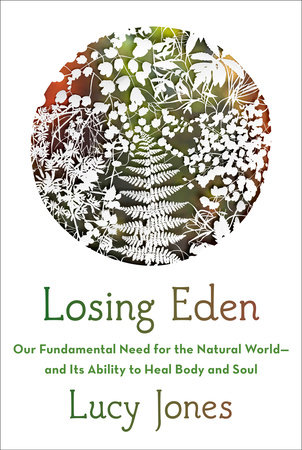
Losing Eden is informative, thought-provoking, and well researched. I found inspiration in its pages. I found it comforting and distressing. Sometimes it’s comforting to read a whole book about how the world is hurtling toward disaster instead of dozens of headlines, short articles, op-eds, and social media posts. Reading Losing Eden made me feel like Ethan Hawke in First Reformed, except I have a daughter and I don’t pour Pepto-Bismol in my whiskey.
Losing Eden is glued together with memoir paste, but it’s mostly an academic, research-based treatise on the importance of time spent outdoors, the immense value of plants and animals, and the urgent need to protect the natural world. Jones uses climate change, mental health, socio-economics, and racial equity as reasons to care about this green world. She also references dozens, if not hundreds, of studies, books, and research projects running the gamut from the social effects of green space in Chicago to the importance of the Białowieża Forest, a primeval area in Poland and Belarus.
She cites Robert Pyle’s theory of the extinction of experience. Pyle’s general idea is that the less we interact with nature, the less we will care about it. Extinction leads to extinction of experience and then to more extinction. Jones writes, “Over the past fifty years the populations of mammals, birds, reptiles, and fish have fallen by 60 percent worldwide.” Passages like that are distressing.
Jones explores the possible emotional impact of spending time outdoors. The answer might be in the dirt. A bacteria found in dirt, mycobacterium vaccae, has been linked to increased happiness. In 2004, oncologist Mary O’Brien created, “a serum that contained M. vaccae, a species of bacteria found in soil.” It did not have the desired effect, a cure for cancer, “but, strangely, those who received the immunization reported feeling happier.” Dr. Christopher Lowry was separately working on a similar research project and found that ,“mice injected with the bacterium exhibited fewer anxiety- or fear-like behaviour and were 50 percent less likely to have stress-induced colitis.” It’s dangerous to label nature as a panacea for mental health issues, but I think Jones makes a compelling argument, while being careful not to stray into an irresponsible reliance on nature as a magical cure.
Jones also mentions chronic inflammation and its connection with mental health. She writes, “people with depression, anxiety, schizophrenia, and other neuropsychiatric disorders have been found to have higher levels of inflammation biomarkers.” Cytokines are a biomarker for inflammation, and “studies show that just two hours In a forest can significantly lower cytokine levels in the blood, soothing inflammation. This could partly be caused by exposure to important microorganisms.” If you’ve never heard of shinrin-yoku, this book is for you.
She also approaches the topic from a socioeconomic angle. She writes that “people in lower socio-economic groups or from racial and ethnic minorities usually have less access to green space and parks than those who are white and affluent.” She traces this issue back to the 17th century and the enclosure acts in England: “the practice of enclosing land from the British people began in earnest with the passing of over 5,200 Enclosure Acts between 1604 and 1914, which fenced off 6.8 million acres of previously common land.” I particularly loved this part of her book because the enclosure acts were an integral part of my thesis on pastoral poetry. If you’re ever in the UMBC library, check out: “Borrowed Weeds: Courtiers in Disguise in Renaissance Pastoral.” I guarantee you’ll be the first person to ever check it out.
Jones saved one of her most compelling arguments for last. She cites the research of Professor Rich Mitchell from the University of Glasgow. His idea of “equigenesis” is full of real-world applications. The basic idea is that “If an environment is equigenic, it may reduce the gap between the rich and the poor by weakening the link between socio-economic inequality and health inequality.” Prof. Mitchell realized that the massive changes needed to address inequity weren’t going to happen, so he searched for other solutions. A 2015 study looking at more than 20,000 people in 34 European countries showed that, “access to nature was the one characteristic that reduced socio-economic inequality in mental well-being (by 40 percent).”
Her evidence is compelling. Jones accumulated loads of research and attacked the question from many angles. I had a lot of takeaways from her book. I should definitely encourage my daughter to play in the dirt. I should garden. I should spend time outdoors. Should I buy a chicken to diversify my microbiota like Jones did? Maybe?
I’ll definitely encourage my daughter to continue to watch squirrels, look for the moon during the day, and watch for chubby hawks in the trees.
Ben Hamilton works at Project Literacy, Howard County Library’s adult basic education initiative, based at HCLS Central Branch. He loves reading, writing, walking, and talking (all the basics).
Over the past few years, Real Housewivesof New York has become one of my go-to comfort shows. Is the premise of the show a bit shallow? Maybe it is, at least on the surface. Following a group of wealthy women who’ve been identified as “housewives” does sound vapid at first glance, but watch the show and you’ll realize there’s a lot more to it. We watch as the Housewives support and quarrel with each other, marriages dissolve, Housewives run into trouble with the law, Housewives embark on new business ventures. Once you dig deeper, Real Housewives provides an almost anthropological peek into the lives and relationships of women across the country – from Beverly Hills, CA to Potomac, MD.
In 2021, fans of Bravo’s Real Housewives franchises were in luck – two insider accounts detailing the franchises’ histories were released. Only one of these books (Dave Quinn’s account) had the official blessing of Bravo executives, which led to a bit of drama, not unlike the shows!
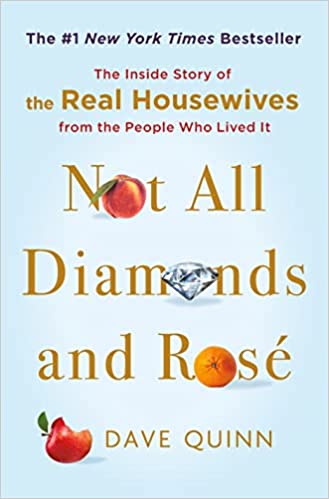
Dave Quinn’s Not All Diamonds and Rosé(also requestable as an ebook from Libby/OverDrive) is a fun and invigorating trip down memory lane for Housewives fans. It reads like one of the end-of-the-season reunions on the shows, when all the ladies gather to rehash big arguments and drama in hopes of resolving any unfinished business. Quinn dedicates a chapter to each franchise and guides us through the most memorable scenes. With constant commentary from the Housewives themselves, secrets are revealed and new perspectives are offered on some of the most iconic moments.
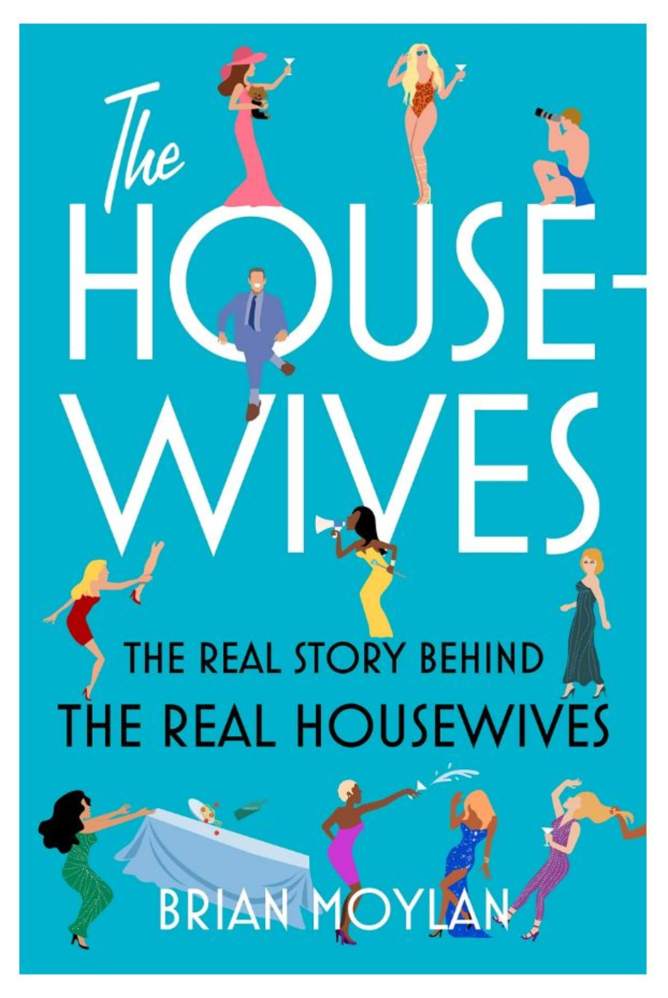
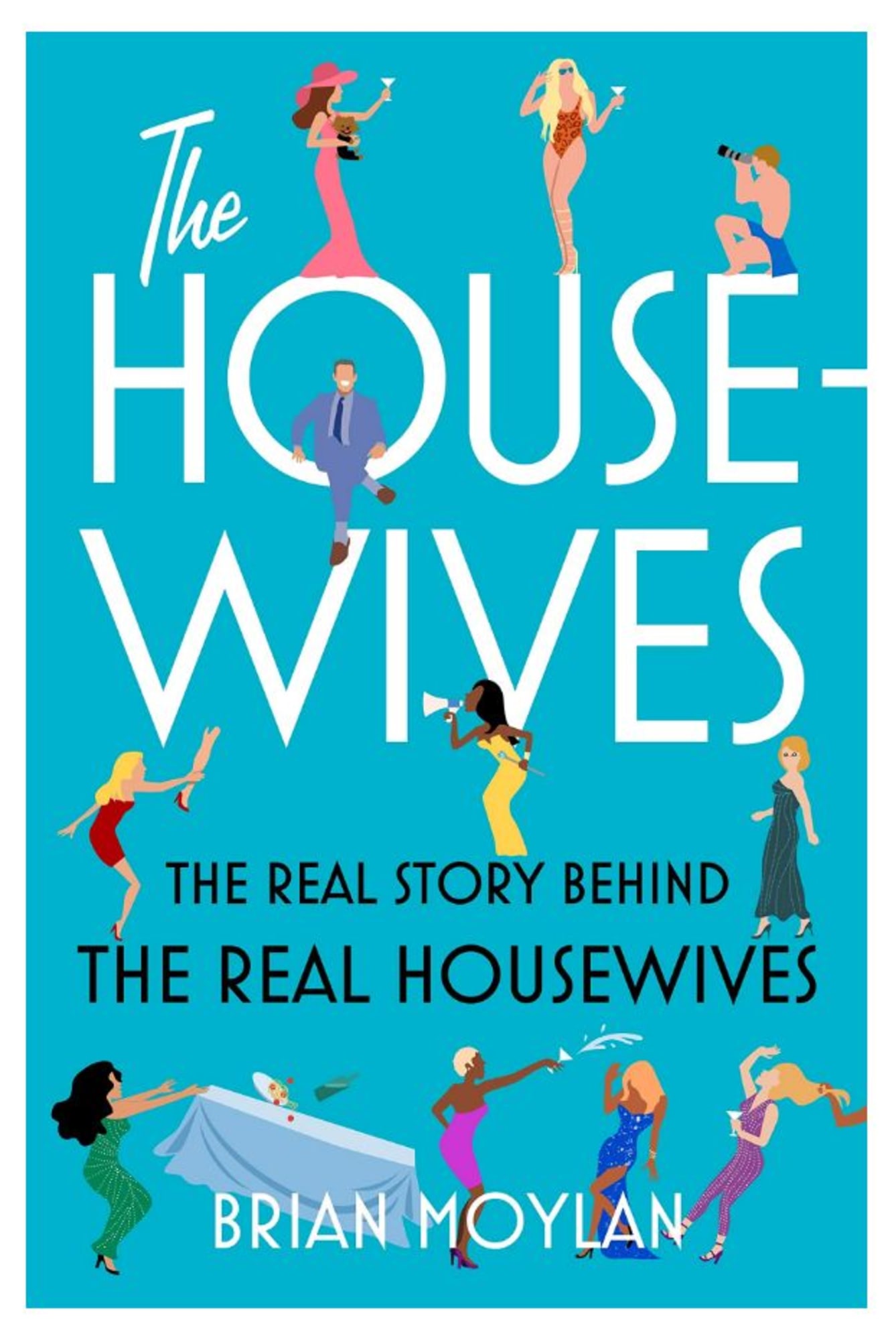
Brian Moylan’s The Housewives (also available in ebook and eaudiobook format from Libby/OverDrive) doesn’t offer quite as many juicy tidbits as Not All Diamonds and Rosé, but it’s no fault of Moylan’s. He wasn’t willing to bend to Bravo’s rules for the book and, thus, the Housewives were asked not to speak with him. This book, however, excels in its examinations of the fanbase and their perspectives. One of the most interesting chapters details a fan-attended Vicki Gunvalson weekend trip to Puerto Vallerta, where Moylan details his interactions with fellow super fans and Vicki herself. Moylan peppers in lists detailing essential episodes for first-time viewers as well as his ranking of Housewife-released dance singles.
I highly recommend both of these books to any Real Housewives fan or to anyone curious to take a peek behind the scenes of a long-running reality franchise.
Emily is an Instructor & Research Specialist at the Central Branch. She enjoys reading, listening to music, and re-watching old seasons of Survivor.
Are you looking for a lyrical novel to savor slowly, perhaps while sipping tea (or your warm beverage of choice) on a quiet day? The type of novel that can break your heart and then put it back together, over and over again?
Well then, reader, do I have the perfect suggestion for you.
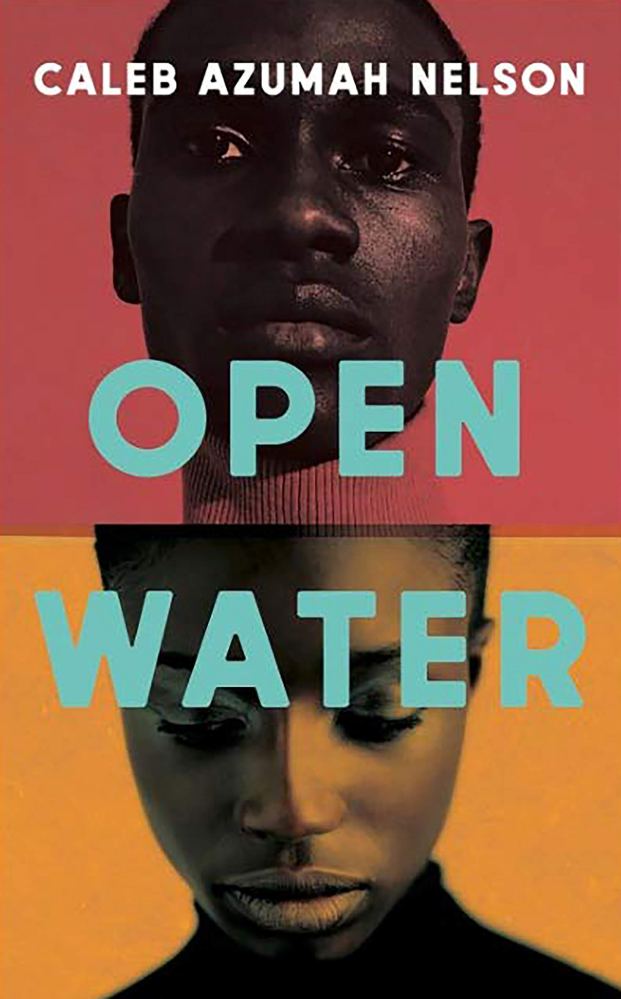
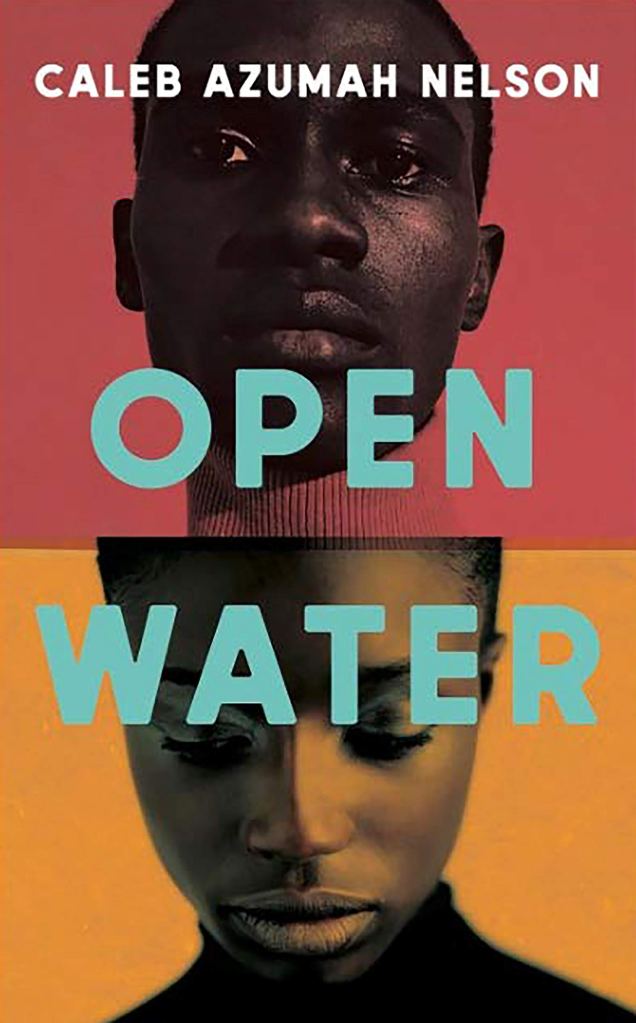
Open Water is the debut novel from Caleb Azumah Nelson, a 26-year-old British-Ghanaian writer and photographer living in south-east London, and wow, what a debut! Consider me truly impressed – in fact, if I had to recommend a single 2021 release for you to catch up on, it would be this one. (Yes, it is that good)!
A love story at its core, Open Waterfollows two young artists, one a photographer and the other a dancer, as they develop an intimate friendship that challenges the boundaries of platonic and romantic relationships.
However, the connection between these two is complicated not only by the details of their initial meeting, but also by the realities of life as Black British young adults; experiences of falling in love are not mutually exclusive with experiences of racism. The desire and affection two people feel for each other can be healing, but it does not create an impermeable bubble from fear, pain, and violence. So, this is absolutely not “just” a love story. (Not that there’s anything wrong with those, either, but Open Water is a different vibe).
Nelson masterfully balances Black joy and creative expression – especially descriptions of music and the South East London cultural scene – with experiences of racial profiling and the policing of Black bodies. Life is so beautiful yet so painful, and Nelson captures this complexity with ease.
He writes with insight into vulnerability and mental health in a style that is understated yet breathtakingly poignant. Also, the narrative is told in second-person, which might be off-putting to some readers, but I found it to be all the more engaging. You know that saying about walking a mile in someone else’s shoes? Nelson skillfully places the reader inside the inner world of his protagonist through this use of second-person perspective. It’s brilliant.
Months have passed since I actually read this book, but I still can’t get over the flow of Nelson’s writing – it truly is like water, smooth at some times and turbulent at others. If you enjoyed On Earth We’re Briefly Gorgeous by Ocean Vuong with its poetic vignettes, but would appreciate a more hopeful tone or different subject matter, you will love Open Water.
And even if this doesn’t sound like what you would typically read, I would still recommend this book to just about anyone. I’m nearly begging for more people to read it at this point, if I’m being honest. I’m so desperate for this book to get the attention it deserves!
At under 200 pages, the slim size of the book isn’t intimidating, and despite this short length, there is so much to get out of this book. You might even want to keep a camera (or, you know, your smartphone) close by in order to take photos of all the beautiful quotes you don’t want to forget. That’s certainly what I did, as well as repeatedly putting the book down throughout to marvel at what I had just read. I got chills. I felt literal aching in my heart. I was reminded what an utterly tender, yearning type of human I am. I loved, loved, loved this book. I hope you will too!
Open Water by Caleb Azumah Nelson can be requested here. It is included in both our regular Adult Fiction collection as well as our Equity Resource Center collection.
Ash is an Instructor & Research Specialist at Central Branch. This time of year, they are especially fond of reading while cuddling with their golden retriever and sipping hot cocoa or tea.
Until recently, if someone mentioned Stephen King around me, all I pictured were the usual horror staples: clowns, spiders, dark hallways, mysteriously red and sticky substances. Of course my familiarity with King’s work was about the same as the average media consumer – starting and ending with the Hollywood blockbusters like It and The Shining. As a reader who prefers historical fiction over horror, I never ventured into his dizzyingly enormous body of work.
It was not until my recent read of King’s 2019 novel The Institute that I realized I may have been missing out on his ever-developing literary skills. The Institute delivers on a terrifying antagonist, but rather than supernatural, the bad guys in this story are all-too human. In the “Institute,” inmates with telekinetic abilities are kidnapped, imprisoned, and tormented with unexplained experiments. The inmates are children. The story primarily revolves around Luke Ellis, a 12-year old with extraordinary genius, as he wakes up in the Institute and attempts to navigate the sadistic staff and build peculiar friendships. As he and his newfound friends and allies learn more about where they are, readers come to understand that those working for the Institute believe they serve a higher good, and that there exists a place for cruelty with a purpose. The staff members in charge of the children would show up to work, run their terrifying tests, stop for coffee in their breakrooms, chat and flirt, then head home each night. Even as Ellis and his fellow captives live their days bouncing between mysterious injections and surreally normal basketball games, the real horror is apparent in the quiet complacency towards child abuse as a necessary evil, and at its worse no more than daily routine.
How could children survive in a place designed to strip them of dignity and humanity? Could they even survive? The Institute weaves together a story of unimaginable scale with the most authentically human characters: policemen, innkeepers, custodians. And yes, there is a 12-year old genius and kids who can read minds, but their abilities are the least important things about them. Their moments of anger, sadness, courage, and joy are their characters’ truly grounding elements.
While definitely a tough read, it surprised me how much I enjoyed this novel. Ruthless and brutal, but at times captivatingly heart-warming. If you’re interested in making a foray into the Stephen King sphere, The Institute is a great book to pick up and get absorbed into.
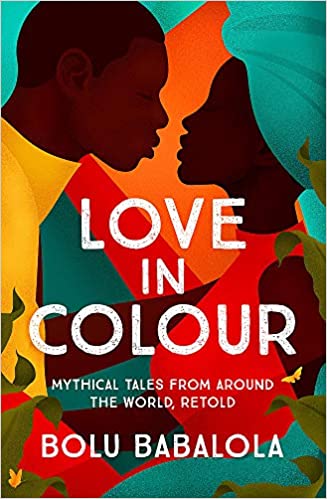
Some really popular retellings of myths are going around now: The Song of Achilles, Circe, and The Women of Troy, to name a few. But all three have one thing in common: they center Greek and Roman mythology. The world of myth is much more vast than Greek and Roman mythology, and Bolu Babalola weaves her magic around folktales from West Africa, the Middle East, and even China, alongside Greek and Roman myths that she writes through a more diverse slant. She brings these often untold tales to the forefront with her compilation of short stories, Love in Color: Mythical Tales from Around the World, Retold.
More than just retellings of these myths, however, Babalola brings each story fully into the modern world. Instead of Scheherazade being a trapped princess, she’s a journalist managing some dangerous new sources. Psyche works for Eros’s mother in a fiercely corporate world that she wants to break free from. This, too, is a break from tradition among popular retellings today, and it adds to the timeless nature of the stories by showing just how universal each love story really is.
The stories are not too long, with just enough context and world building in each to make readers fall firmly in love with the world, to build a new universe around these characters, and make them fall in love with each other. These stories don’t necessarily keep all the magic and mythic details consistent, but the essence of the myth, what it would mean in the modern context, remains the same. Instead of magic crocodile skins that cause them strife in their personal lives, for example, characters have vitiligo, a skin condition that they have to learn to love about themselves.
Personally, Nefertiti’s story, Zhinu’s, and Thisbe’s have been at the forefront of my mind since reading, each taking the original myth and twisting it into something lovely and appropriate for a modern age, while retaining a timeless quality. The stories revolve around love; love and POC joy are centered with every character. In the ordinarily Eurocentric realm of mythology, Love in Color is the best of romance: poignant, beautiful, complex in plot but simple enough to convey its message.
I would lean towards reading up about each myth before reading the stories, however. The myths that I had context for, I enjoyed more upon a first read than the others, but after doing some research on the other stories, I went back and enjoyed the less familiar stories just as much on a reread.
The publisher review for the anthology notes the diversity of the source material, saying, “Focusing on the magical folktales of West Africa, Babalola also reimagines Greek myths, ancient legends from the Middle East, and stories from long-erased places. With an eye towards decolonizing tropes inherent in our favorite tales of love, Babalola has created captivating stories that traverse across perspectives, continents, and genres.”
Love in Color: Mythical Tales from Around the World, Retold by Bolu Babalola is available in print.
Sahana is an Instructor and Research Specialist at the Savage Branch. She enjoys adding books to her “want to read” list despite having a mountain of books waiting for her already.
In Jennifer Keishin Armstrong’s When Women Invented Television, she talks about the early days of television and the rise of popular TV programs that defined what America was watching for decades to come. But four women in particular were TV powerhouses who foretold the coming of modern-day television personalities we have come to love, such as Ellen DeGeneres or Oprah, and sitcoms such as The Golden Girls. They were among the first of television’s pioneers during the transition from radio to television as America’s most popular medium of entertainment.
There once was a woman by the name of Gertrude Berg, and what a woman she was! She was the creator behind the much-lauded radio show The Rise of the Goldbergs, an NBC radio show showcasing the lives of a Jewish family living in the Bronx and cared for by their matriarch Molly Goldberg, as played by Gertrude Berg. After years of high ratings on radio, she worked tirelessly to bring her show to a fledgling new medium called television, and when she succeeded there was no stopping her. At its peak, The Goldbergs was dominating the airwaves, and much if not all the credit goes to the woman behind it all, Molly Goldberg…I mean, Gertrude Berg. She was creator, writer, and star behind her hit show and nothing could stop her. What she accomplished in a time when patriarchal views and traditional family values were taking hold is nothing short of astounding.
It’s Time to Say Hello Again…
Ah, Betty White. What can I say about Betty White that hasn’t already been said countless times? Sadly, at the time of this post, she will have gone to that great TV studio in the sky to join her husband, Allen Ludden. Betty White was made for television. From her early days on KLAC hosting with Al Jarvis for 5.5 hours a day, to being the main lead on the sitcom Life with Elizabeth, to hosting her own talk show, The Betty White Show, she was unstoppable. Her infectious smile, dimples, and radiant personality won over countless millions, and at one time she was having to turn jobs away because she was working too much! She loved to work and one could say that show business was the love of her life. She fought against prejudice against her during the early days of television as a single woman not trying to settle down and have a family. Through it all, she would continue to be invited into the living rooms of her legion of fans for years to come.
The Guiding Light
Irna Phillips was the guiding (pun intended) force behind The Guiding Light, the longest running soap opera on television. Its earliest incarnation was as a popular radio show, which is why Irna Phillips knew that it would be just what television needed. Working tirelessly for years along with raising two adopted children and doing the best that she could possibly do, she finally was able to bring her show to TV. She was not only a single mother of two children when it was believed families should have a mother and a father, but with the success of The Guiding Light, she became the figurative mother of the soap opera genre in a time when that genre was still very much maligned. Her works have reverberated through daytime television through her own shows as well as mentoring Agnes Dixon, creator of many other long-running soap operas. This was a woman who tried not to let anything stand in the way of bringing her creation to life.
The Hazel Scott Show
In a time when racial segregation was still running rampant, Hazel Scott managed to become one of the first African American people to headline their own show on network television. Already an accomplished musician and used to playing to large crowds, she brought her talent to The Hazel Scott Show to great reception and ratings. Her television career was cut short when she was targeted by the infamous publication Red Channels, which listed suspected communists in various areas of entertainment. She bravely defended herself, but she could not recover her TV career. However, she persevered and returned to her roots as a musician and touring. Her TV stint was brief but powerful all the same.
These four women were astonishing and it was a pleasure to read about their accomplishments, their legacy, and the effects they’ve had on popular culture. One can only imagine what they could have done had they not been impeded by the politics of their era.
When Women Invented Television is available in print and as an eBook and an eAudiobook from Libby.
Peter is an Instructor and Research Specialist at the Miller Branch and is continually grateful to Lucille Ball and Desi Arnaz not only for pioneering methods of television production that enabled generations to experience the brilliance of early television, but also for taking the chance on a small sci-fi show that still endures 50 years later.
During this time of year, we are bombarded by messages trying to convince us to buy things for “that special someone.” Flowers, chocolate, jewelry, and more. Not everyone celebrates Valentine’s Day, but I hope we all have people we love. Research shows that a loving bond with a caregiver helps young children thrive. Share these picture books about love with your little one, or any other stories you like, to help develop that bond. For more tips from The Basics about maximizing love and managing stress, visit https://thebasics.org/brain-boosts/maximize-love-manage-stress/.
With simple words and watercolor illustrations, this book gently invites readers to think about how they can show love. The author and illustrator work seamlessly together to show how we can support ourselves and each other with specific, concrete loving actions. Heart-opening yoga poses and a heart meditation accompany the author’s note at the end of this title.
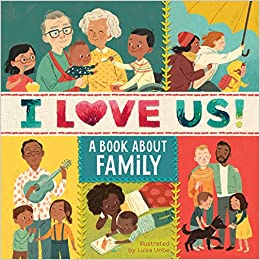
A wonderful read to share with your youngest loved ones, I Love Us! shows various families participating in loving activities together. After you read, talk about the things you love about your family and what it does. A mirror at the end lets you and your little one imagine yourselves in the story! But if you want to complete the family tree activity on the final page, please do it on a separate page and not in a library copy of the book.
If you’ve ever read a Todd Parr book before, you will immediately recognize his unique style. With brightly colored illustrations and simple, rhyming text, Parr invites readers to love activities that support the community and specific parts of themselves. Throughout the book, in full-page spreads, we are reminded to “Love yourself. Love the world!” Invite your little one to talk about all the things they love after reading this volume.
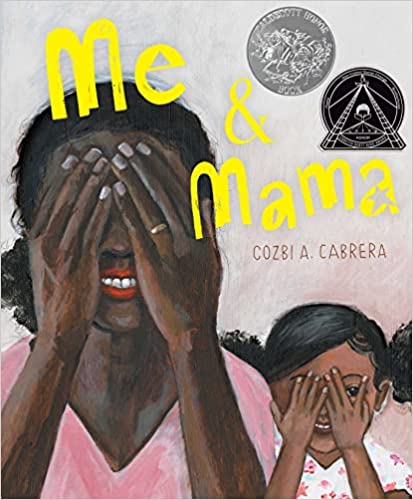
This quiet, beautiful book celebrates the special bond between a little girl and her mama. As she says on the first page, the little girl wants, “to be everywhere Mama is.” She shows readers things that are hers and her mama’s before bringing us along on a walk in the rain. As day ends and she falls asleep, the little girl remembers parts of the day, especially “me and Mama.”
Many grandfathers don’t say “I love you” in words, although some certainly do. Even those that aren’t saying it out loud display their love for grandchildren through their actions. A wide range of animal pairs show grandfather-grandchild relationships in the illustrations of this book, all participating in a variety of activities that demonstrate loving feelings they share. Follow a reading with a discussion of the ways that we can show love to a special person.
When Aidan was born, everyone thought he was a girl. It took some time, but Aidan’s family all adjusted to make sure his life fit who he is. Now Aidan’s mom is expecting a baby, and Aidan knows that being a big brother is an important job. He helps his parents get things ready for his new sibling, but he also worries that he won’t be a good big brother. Thankfully, Aidan’s parents remind him that loving someone is the most important part of that job.
Eliana is aChildren’s Research Specialist and Instructor at HCLS Elkridge Branch. She loves reading, even if she’s slow at it, and especially enjoys helping people find books that make them light up. She also loves being outside and spending time with friends and family (when it’s safe).
I’ve been reading a lot of short stories lately. I’d contend the short story is really its own art form, of which I’m a big fan. In fact, in my book discussion group, Read. Think. Talk., we’ve spent the past quarter reading exclusively short story collections. It makes for a different sort of discussion, and in some ways the long form – a novel or novella – lends itself a bit better to a book discussion. Personally, I like to discuss the characters and situations that change throughout a novel. However, as a group we’ve done short stories plenty of times, and it’s a great opportunity to discuss which ones you like, which ones you didn’t like, and generally how the stories worked, or didn’t, in a short number of pages.
I’ve always enjoyed short stories for their brevity. They are especially well-suited for the time-challenged, modern world we live in. You can just jump into a story when you have a brief period of time, or perhaps need a short respite from whatever else you’re reading (e.g., maybe you’re a student reading textbooks and academic periodicals and would like some fiction in your life). I’ve read some great collections lately.
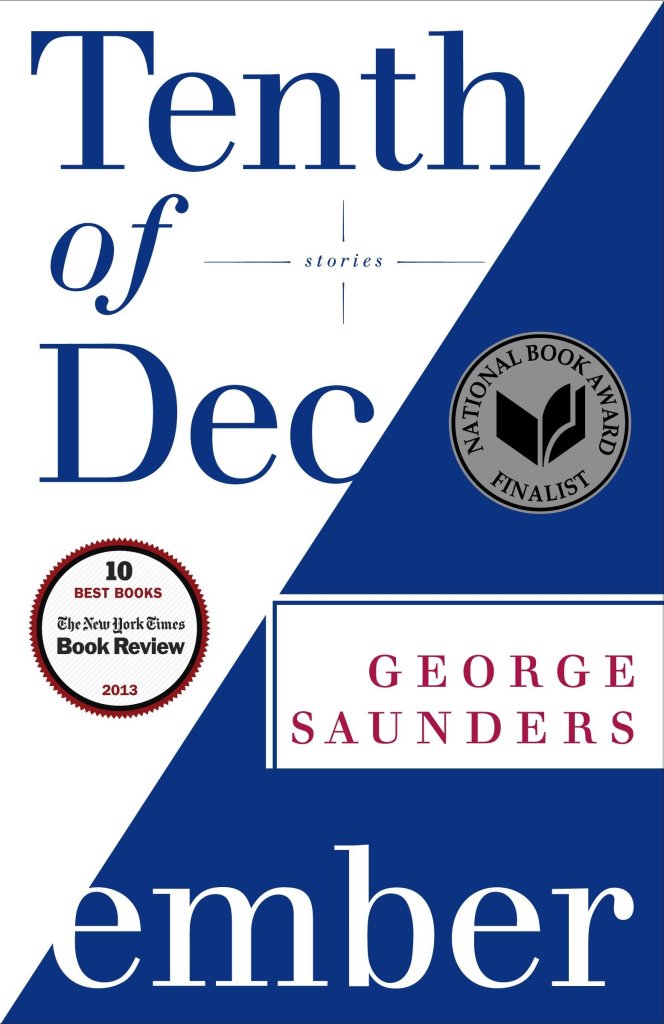
George Saunders, who mainly writes short stories, is remarkable in the field. His collection Tenth of December is by no means a feel-good read, but the stories are an abstract satirical take on modern-day America. They are collected from The New Yorker, where Saunders contributes stories regularly and where I read a great interview with the author to prepare for our book group discussion. Most of the stories concern disastrous situations and terrible characters that frankly scare you a bit, but somehow they don’t end catastrophically. I would even describe the stories as ending on an optimistic note, which seems like the opposite of how they’re presented on the surface. They’re definitely worth a read, or two.
The Refugees by Viet Thanh Nguyen is a companion to his excellent book The Sympathizer. Although I’d recommend the latter over the former, I don’t want to denigrate the story collection; it’s just a tall order to compete with that great book about the Vietnamese immigrant experience in America after the Vietnam war. (Please read my review of The Sympathizer here.)
The stories are all colored by Nguyen’s personal experience of being a refugee as a child. Dedicated to “refugees everywhere,” I think the book speaks to the importance of expanding our understanding of what it means to be a refugee. In my mind’s eye, I see people walking with their few possessions without a land or place. While a physical journey of this sort sometimes happens, the next step deals with the ongoing psychological effects of living in a foreign land. Particularly, one that is politically and culturally controlled by people different than you. Nguyen deftly tells stories from the perspective of a man, a child, a younger woman, and an older woman. There is even an interesting commentary about how some refugees perceive others as having it better when one character laments the fact that they’re not Korean.
In February, the book group is considering Welcome to the Monkey House by Kurt Vonnegut, one of my favorite writers, and the library just procured some fresh copies. I’ve always loved his wit, humanism, and the cynical optimism that flavors his satire. Vonnegut began his career and was able to support himself and his family as a writer by selling stories. I learned this recently by watching the documentary Kurt Vonnegut: Unstuck in Time. The collection is worth checking out if only for the great tale “Harrison Bergeron.” I first read this in a freshman college English class (even a slacker like me was game for this short story). Vonnegut tells the story of a futuristic society that has attempted to forcibly make itself completely equitable via technology. For example, if you’re intelligent your brain is zapped when you start to think too much; if you’re physically gifted, you’re saddled with weights; if you’re attractive, you wear a mask, etc. It’s a complicated message that I think I get, or at least I have my own interpretation. However, I don’t want to influence yours. I enjoy art like this, though, and I’d describe it as open-ended and open to interpretation.
Although I could go on about all the great short story collections I’ve read, I won’t. However, I’d like to mention one final great one. Stone Mattress: Nine Wicked Talesis by Margaret Atwood, another author I love for her wit and great social commentary. These tales are sort of “light horror” stories, which is how I would describe much of Atwood’s writing. I hope it’s not heresy to state here that I think the collection is better than The Testaments. The stories should be read in order, as some are connected. The overarching theme throughout is the experience of being a woman and aging, and they’re all wondrously done.
I have always marveled at those who do the short story well. To tell a story in just a few pages takes craft, specifically, to get people to invest in the plot, scene, and characters. Try it, sometime. It’s not easy.











 CHAPTER CHATS