As the weather turns crisp and we start preparing for fall holidays, you might be looking for books to get little ones into a spooky mood. Our staff have selected some picture books to share with the family this season. Whether you are looking for thrilling tales, heartwarming narratives, or sillier stories, there is something for you.
Jasper Rabbit loves carrots, especially the ones from Crackenhopper Field. His love turns to fear once he swears he starts to see the carrots following him everywhere! Are the carrots really following him, or is Jasper just imagining it? Read this clever tale to find out.
Find out what this witch has brewing in her kitchen in this fun, interactive tale. Choose to flip the flap left or right and see what you find! Will it be a nasty trick, or a delicious treat?
Each year, on the eve of Halloween, Fright Club meets to go over their plans for scaring kids on the biggest day of the year for scares. Only the scariest monsters are allowed in Fright Club, but this year, a group of adorable critters want to join. Vladimir, the leader of the club, refuses to let them join, but these cute little critters can be scarier than they look.
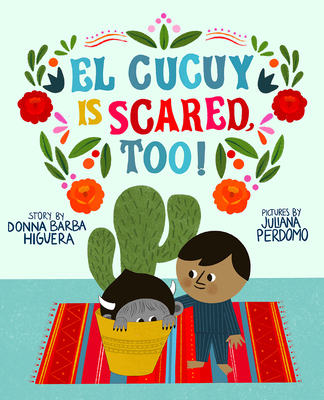
Ramón and his family recently moved, and he is scared about his first day at his new school. When he talks to El Cucuy, the Mexican Boogeyman used to scare children into good behavior, El Cucuy shares his own fears and worries. With Spanish interspersed through this heartfelt picture book, Ramón and El Cucuy build each other up and remind each other of how strong and brave each of them is.
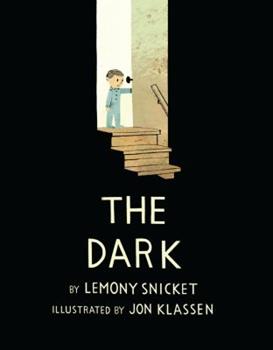
One night, Laszlo’s night light – which has always kept the dark at bay – goes out. Laszlo is afraid of the dark, which lives mostly in the basement, and tonight it invites Laszlo down the stairs. The tension builds in this beautifully-illustrated book, but in the end, the dark only wants to help.
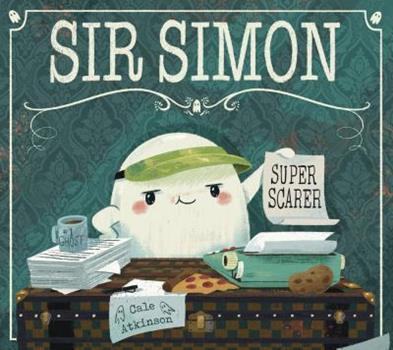
After haunting other things, including a forest, a bus stop, and a potato, Sir Simon is finally being transferred to his first haunted house! Expecting only old people, Simon is surprised to discover a kid has moved in with his grandma. As Simon and Chester try to help each other with their chores, they discover they’re better at being friends together than trying to take the place of the other. Plenty of fun details will have adults laughing along with the story as well.
Eliana is a Children’s Instructor and Research Specialist at HCLS Elkridge Branch. She loves reading, even if she’s slow at it, and especially enjoys helping people find books that make them light up. She also loves being outside and spending time with friends and family (when it’s safe).
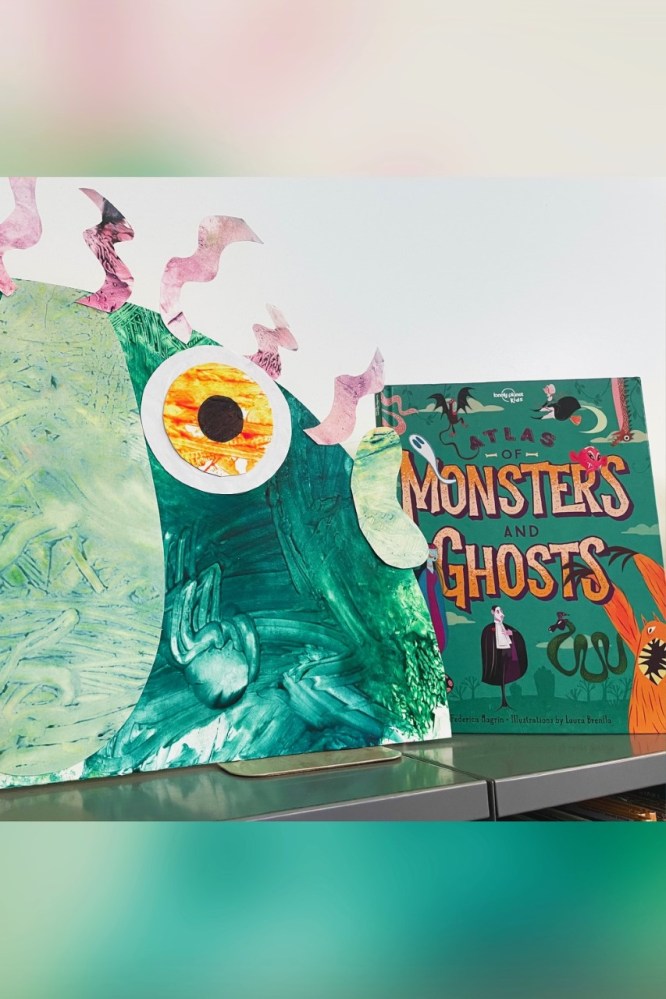
Ok, I’ll admit it: I love Halloween but I’m not the biggest fan of scary things. You won’t catch me at a movie theater watching the latest film from the Halloween franchise or reading IT by Stephen King. I tend to focus on the lighter side of the season. Yet, when I was browsing through some of the oversized books that live upstairs at the Miller Branch, I stopped at a bright teal atlas filled to the brim with whimsical illustrations and trips around our world. However, instead of historic sites and tourist destinations, this atlas is filled with MONSTERS and GHOSTS!
Atlas of Monsters and Ghosts by Federica Magrin, with immensely detailed illustrations by Larua Brenlla, takes readers on a ghastly trip to hunt down the most fearsome creatures known to humanity. Each continent is covered throughout the pages, highlighting monsters and ghosts with cultural significance. I’m sure most of us already know of Bigfoot, King Kong, and the Boogeyman through classic stories and tales. But have you heard of the Smok Wawelski from Poland, a fearsome dragon from the cave at the foot of Wawel Hill? Or Krasue, the spirit from Thailand with the floating head who feeds on anything in her sights? These monsters and spirits are not only highlighted, but their stories are tied in with learning about each country’s tales and fables. One particular feature of the atlas that I enjoyed was that it gave special sections to the monsters and spirits of Greek Mythology and the ones from Japanese folktales, both of which have been spotlighted in various other stories, movies, and video games.
One fair warning for all my budding Monster Hunters: some of these stories, no matter your age, are not for the faint of heart despite its art style and its publisher, Lonely Planet Kids. Nevertheless, it was an interesting, spooktacular read, one that may send a chill up your spine, but which will definitely teach you something new along the way. What I learned is to not visit the places where these creatures have been spotted! I think I’ll opt for a warm beach instead.
You can borrow or request Atlas of Monsters and Ghosts at all HCLS locations for your horrific, spooky enjoyment.
Claudia J. is an Instructor and Research Specialist for Howard County Library System. She enjoys stories in all forms, from books to graphic novels, movies to video games: you name it!
What happens if the chosen one fails? What if the hero fails to defeat the dark lord?
Brandon Sanderson’s original Mistborn trilogy imagines what that could look like.
Full disclosure, I haven’t finished the trilogy yet, but I love the first two books so much (The Final Empire and The Well of Ascension) that I can’t resist writing a review. I’ll write a retraction if the third book is garbage (but it won’t be).
A thousand years ago, someone gained access to a source of power, defeated something called the Deepness, and… remade the world into a dull, cruel, lifeless, ash-strewn place. He is now the Lord Ruler and has ruled over the world for a thousand years in what he ominously calls the Final Empire.
The nobility live in finery in castles and vast manors, and the skaa are their hopeless and ragged servants. There is no middle class. Skaa are treated as subhuman.
Vin is our protagonist. She is a half-skaa street urchin, thief, and con-artist. A mysterious thief named Kelsier rounds up a thieving crew for one huge job. He collects those with magical abilities and Vin rounds out his team.
The magical systems are Allomancy, Feruchemy, and Hemalurgy. Allomancy is the most common and the most relevant for this review. Magic users ingest tiny amounts of metals (like copper, steel, or gold) and “burn” them in order to gain abilities. Some metals make you powerfully strong, some metals allow you to pull and push against other metals, basically giving you the ability to fly or hover, and some metals allow you to influence people’s emotions.
The books mostly take place in Luthadel, a city that feels like Dickensian London seen through an Orwellian lens. There are elements that feel steampunky to me (Yes, I do think steampunky is a totally acceptable adjective). The main thrust of the plot for The Final Empire is the preparation for Kelsier’s big heist. À la Ocean’s Eleven, we slowly get introduced to each character and each character’s ability.
Once the crew is assembled, Kelsier reveals that the scope of the heist is grand beyond imagining. Sanderson does a phenomenal job writing action sequences using his magic systems. They are a blast to read with real page-turning action.
If you read Mistborn, pay attention to the theme of disguise and appearance. I’d argue that clothing and dissimulation are major themes. Can the clothes you wear change how you feel? Change your personality? Change your characteristics? Are you a fraud if you look like something you don’t feel you are? What happens when you start to feel like the thing you’ve been pretending to be? Vin and company wrestle with a lot of these questions as the story unfolds.
Speaking of epic-fantasy (smooth segue and recommendation alert), Brandon Sanderson’s Stormlight Archive series is incredible (and set in the same extended universe as Mistborn).
He is also the man responsible for finishing Robert Jordan’s sprawling TheWheel of Timeseries. Sanderson wrote the last three books of the 14-book series, and he wrapped up the epic story beautifully. Although it took me about 10 years to finish, you might be able to finish the books before the series premieres on Amazon on November 19.
If you have the fantasy itch, try Sanderson’s Mistborn books. You won’t be disappointed. If you are, come talk to me at the Central Branch and I’ll try to convince you that you’re wrong.
Ben Hamilton works at Project Literacy, Howard County Library’s adult basic education initiative, based at HCLS Central Branch. He loves reading, writing, walking, and talking (all the basics).
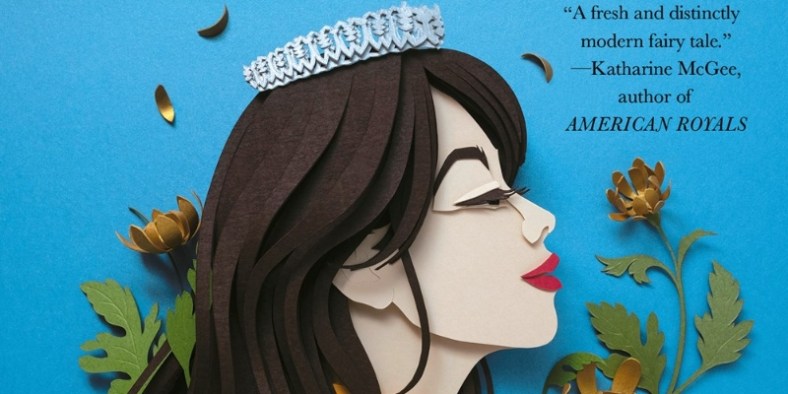
High schooler Izumi’s life is relatively uneventful with her single mom, her bad tempered terrier mix Tamagotchi, and her Asian Girl Gang (AGG), comprised of three other girls from diverse ethnicity in their primarily white Mount Shasta High School. Sure, it is not always easy being Japanese American in a mostly white Mount Shasta, California but Izumi has made it work so far. She even changed her to name to Izzy from Izumi for a while to make it easy for others until her friend Noora convinced her otherwise. Izumi’s mother, a Harvard educated botanist, has tried her best to raise Izumi alone with love and support and, for the most part, Izumi is content. She would, however, like to know who her father is. Izumi’s mom refuses to divulge any information about her father. All Izumi knows is that her parents met at Harvard when both were students there, and Izumi is the product of their brief liaison. Izumi’s father does not even know she exists.
One day, while snooping around in her mom’s room ransacking her expensive make-up stash, Izumi’s friend Noora comes across a book Rare Orchids of North America. Noora flips open the book to find a poem in ‘slanted handwriting’ dedicated to Izumi’s mom, Hanako, by someone named Mak. A little research by Noora reveals that the aforesaid Mak is none other than Makotonomiya Toshihito, the Crown Prince of Japan and also Izumi’s father. In other words, Izumi is a princess.
Within days, Izumi’s life is turned upside down when a simple email sent by her to her parents’ common friend inquiring about the Crown Prince results in her father finding out that she exists. She travels to Japan at her father’s invitation, a country she always dreamed of visiting, as a princess, complete with Royal Imperial Guard and cavalcade. But being a princess comes at a cost. Izumi has to navigate palace protocols, conniving cousins, royal etiquette, learning a new language, paparazzi, and her own romantic feelings for the head of her Royal Imperial Guard. On top of all this, she has to build a relationship with her father, the Crown Prince. Both the father and daughter grow and evolve in their relationship as they learn to be a parent and child. But life is not a fairy tale even in this modern day fairy tale. A betrayal of trust almost destroys Izumi’s budding relationship with her extended imperial family, her love as well as her newly found father.
While writing a heart warming, happy story of love and discovery, Emiko Jean very effectively interweaves the universal dilemma of Asian Americans (or any minority for that matter) about whether they belong or where they belong. Izumi is never ‘fully’ American in Mount Shasta, California and she is never ‘fully’ Japanese when she travels to Japan. That uncertainty is true in the lives of most immigrants and the author makes a very convincing case in her delightful novel Tokyo Ever After.
Pick up this book when your brain craves some respite from all that it is dealing with. Let this book take you to a world where you know the end will be happy even if the means to the end is full of twists and turns, ups and downs. Let the story convince you of ‘happily ever afters.’
David Yoon, author of Frankly in Love, sums the book up perfectly – “Emiko’s flair for sumptuous detail —- Food! Castles! Swoony confessions! Court Drama! Cherry blossoms by the million! —locked me up helplessly into a world of splendor I never wanted to leave.” This young adult story elicited a satisfied yet wistful sigh from me as I turned the last page and it also ignited a burning desire to visit the city of Kyoto. One day…..
Piyali is an instructor and research specialist at the Miller Branch of HCLS, where she co-facilitates both Global Reads and Strictly Historical Fiction.
Since the onset of the coronavirus pandemic, I haven’t had the desire nor the motivation to read. I know that’s a horrible thing to say as an employee of a library (a 5-Star Library system as a matter of fact), but it took me quite a while to get back into reading novels. So you know what I did? I did what I’ve suggested to many a parent who has come in trying to find something to get their child to like reading; I picked up a graphic novel.
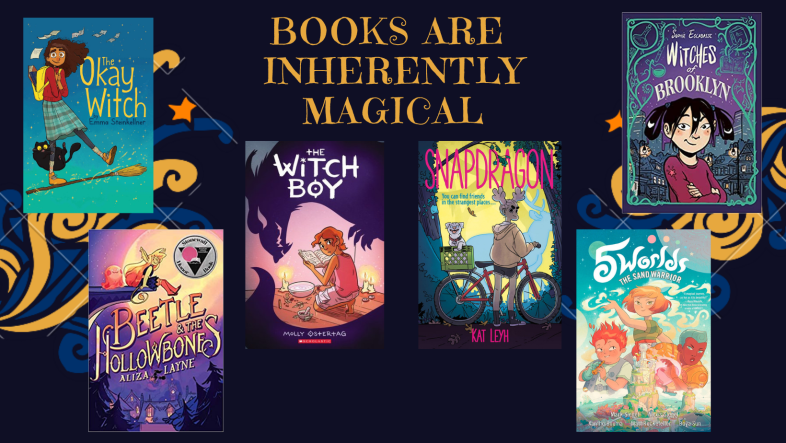
Graphic novels can be about literally hundreds of subjects across any number of genres. Many authors have written wonderful original stories as well as graphic representations of classic novels. When a parent needs a suggestion for a book for their reluctant child or when someone wants something interesting to read, I almost always suggest a graphic novel. Why? Well, as a visual learner, I find myself more engaged with the story and with the characters when I see them visually represented, and it’s easier for my brain to follow along without distraction. Since the start of the pandemic, I’ve read graphic novels for adults, teens, tweens, and children. From the many I’ve recently read, here are six picks that teach everyone to be who you are unapologetically, and if you can, be a little magical, too.
What I loved about this book is that it challenges the gender norms in Aster’s family and society. In his family, the girls are raised as witches while the boys are raised as shape-shifters. But that isn’t who Aster is, and he practices in secret since it is forbidden for boys to study magic. He desperately wants to be a witch but is afraid of his family finding out. When trouble brews and his magical skills are what’s needed to help save the day, he has to find the courage within himself to be who he feels in his heart that he is meant to be.
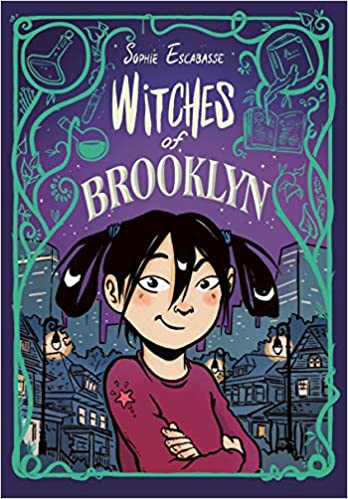
Many will see the similarity between the events of the Salem witch trials and the events of Founder’s Bluff in this book. Moth has always loved all things witchy and magical, so when her powers emerge, she is immediately thrust into a world where the history of her hometown is intertwined with that of her own family. She discovers that her mother was once a member of a powerful coven of witches who separated from a world that despised them but broke away to live a life free of magic. As she discovers this history, she must come to terms with being a witch (which she finds kind of cool) along with the existence of people in town descended from those who discriminated and hated her family and those like her. What’s a fledgling young witch with a talking cat to do?
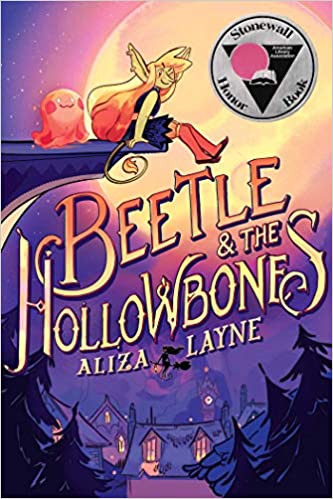
Beetle and the Hollowbones is a tale of outgrowing what society expects you to be, standing up for your friends even if it means standing up to them, and embracing and loving who you are. Much like the Witch Boy, Beetle is a goblin and goblins are only supposed to do a specific type of magic and none other. One day she meets Blob Ghost, a, well, ghost blob haunting the local mall that is inexplicably tied to its location. So when the mall is due to be demolished, it is up to Beetle to find out why he’s connected to the mall and rescue him. Along the way she reconnects with an old friend (and love interest) who needs to be reminded about their friendship, who they are, and to stand up to family even if they are family.
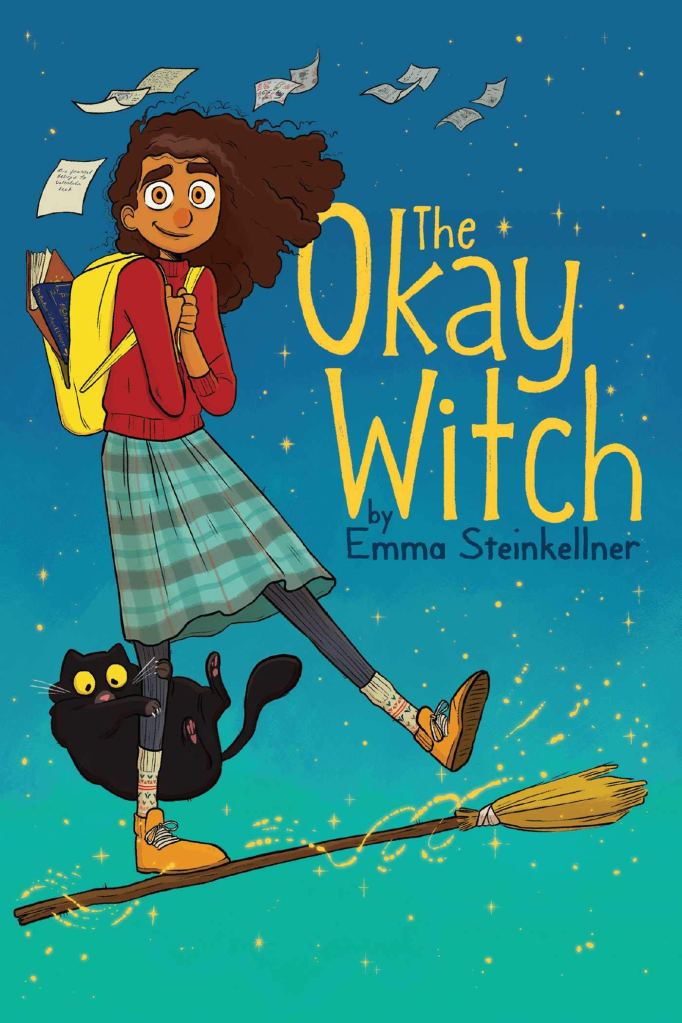
How would you feel if your life was turned upside down and inside out all of a sudden? That’s what happens to Effie. Having lost her mom and the only home she ever knew, she is suddenly taken to live with two estranged aunts. Once there, Effie learns more about her family than she ever thought possible, including the fact that they can do magic! This newfound knowledge and ability is almost too much for Effie, and it rears its ugly head at the worst of times. She soon starts to accept that this is her life now, that magic is a part of it, and that zany things are going to happen, including helping one of her favorite singers when she comes to Effie’s aunts for help with a nasty curse.
Snap’s town has a witch. Maybe. Possibly. At least that’s the rumor going around. When Snap needs help from the town “witch”, she learns that there’s more than meets the eye and discovers the power she has within herself. Aside from the super cool supernatural elements, the characters are all a delight to read. And especially the children. They’re the perfect example of prejudice being made, not born, because when given an upbringing that doesn’t include any of that, they can be perfectly accepting of everyone around them without thinking it’s “weird.” They celebrate and encourage uniqueness.
What happens when three friends are brought together by unforeseeable circumstances and their group, particularly young sand dancer Oona Lee, is what stands between saving the five worlds and their destruction? Oona must find the power within herself that she didn’t know she had, as well as the confidence to travel the five worlds, light all the beacons, and fend off attacks from the evil hiding in the shadows. Between all of this, she has to save her friend An Tzu, who also has mysterious origins and a tie to what can save everything, from a mysterious ailment. Beautiful art, rich characters, and full of world-building elements, you’ll love this series!
Disclaimer: There are a number of graphic novels on the same subject but these are only the most recent I’ve read. Please visit any Howard County Library branch to learn more!
Peter is an Instructor and Research Specialist at the Miller Branch and LOVES graphic novels and dogs. Especially fluffy dogs.
“Next Year in Havana” is apparently a traditional toast for those of Cuban descent living in the US. It’s also the title of a thought-provoking historical novel that takes place in 1959 and the present.
I have to admit … I know almost nothing about Cuban politics and history beyond the obvious. The ongoing, repressive Castro regime brings communism to our back porch, cars are beautifully well-preserved old models, and Miami is home to exiles/immigrants. The revolution happened before I was born, and these are fleeting impressions left from public school and news programs.
Next Year in Havana added some details to that rough sketch. In the first timeline, Elisa Perez is the wealthy, privileged daughter of a sugar “king,” who supports Batista … or at least has every interest in maintaining the status quo. In the present day, her granddaughter Marisol returns to Havana after Elisa’s death to fulfill her final wishes. Beautiful descriptions of the island, the sea-walk, the old city, and the beaches complete this love story Cleeton has written to the country her family left.
As Castro’s forces are lobbing bombs, Elisa sneaks out one night with her older sisters to a party in a working class neighborhood where a friend of a friend of a boyfriend is throwing a get-together. Here she meets Pablo, a university student who is part of the 26th of July movement. Also, Elisa’s brother has been disowned for being part of the rebellion, but he works with a different faction. It all gets complicated, and it all goes wrong.
In the opening scene, the Perez family flees Havana for Coral Gables, Florida, where they rebuild their fortunes. As she and her sisters become the family matriarchs, Elisa essentially raises Marisol. And so we transition to the present, when Marisol makes arrangements to stay with her grandmother’s best friend and old neighbor, Ana, as she returns her grandmother’s ashes to Havana. Ana’s grandson, a professor of history and underground blogger, picks up Marisol from the airport, and their attraction is immediate and electric. Luis becomes her guide to Cuba, both physically and historically. The addition of a Perez scion in his life attracts the wrong sort of attention from the government, for both of them.
Everyone has to make hard choices entangled by expectations, family dynamics, and politics. Money and power have very little grace for young lovers, either 60 years ago or now. While the stories share certain parallels, the women carry these plots each in their own way. The supporting cast of sisters/aunts and extended family makes it all more believable. These characters truly behave like people grounded in their families, cultures, and belief systems.
This book, however, is not really a romance – despite the couples at the heart of both stories. The soft focus packaging is disingenuous marketing and does this excellent historical novel no favors. This book is a sucker punch of how real world choices can have devastating consequences. I enjoyed this book immensely. It may have helped that I read it during a weekend at the beach, with the sounds of the ocean in the background.
[Content warning: sexual assault, PTSD, bullying, homophobia, and racism]
“If I don’t pull apart things I actually did wrong from things that weren’t my fault, I’ll never really be able to really apologize for anything. Deciding everything is your fault is, in the end, as meaningless as deciding nothing is[…] I need to apologize for what is my fault, for what I did wrong, but not for the wrong that was done to me.“
Ciela Cristales just might be my favorite protagonist of 2021.
The story begins with her dropping off an unconscious boy at the hospital on the night that changed her life – the night that she and this boy, whom she does not know, were both assaulted at the same summer party. She drops the boy off and intends to seal off the memories of the event as if they never happened.
However, this proves difficult when the trauma she experienced results in the loss of the magical gift she inherited from her grandmother: the ability to sense exactly what type of pastry someone wants before they even know it themselves. If this doesn’t sound like a big deal, then consider how this ability, “the most precious thing my bisabuela could ever have left me,” has passed down for generations and is part of the success of her family’s pastelería business. For Ciela, losing this magic is losing a part of herself – but it wasn’t just lost, it was taken through the cruelty of her peers.
I’ll be honest, I was a bit hesitant to read this one because of the intensity of the storyline’s subject matter. I personally tend not to read heavy books, as they can leave a significantly negative impact on my mental health. However, I knew from reading their social media that McLemore put a lot of care into this story, purposefully including hope and healing along with an emotionally accurate representation of trauma. (McLemore themself is a survivor.)
This information from the author, combined with my pre-existing love of their writing style, was enough to motivate me to give The Mirror Season a try… so I threw myself into reading it, and wow, did it devastate me in the best type of way. Honestly, few books have ever made me cry as much as this one did, and it provided me with some much-needed catharsis.
Ciela is gradually forced to confront the extent of her trauma – including specific details of the event that she represses through most of the book – due to the development of her relationship with Lock, the boy who was assaulted at the same time she was. They are able to form a unique friendship due to their shared experiences of sexual violence, connecting to each other in ways that other folks might not understand; for example, making jokes out of their trauma as a coping mechanism. McLemore crafts these characters, and their world, so well and with so much care. They truly felt like living, breathing people with real, raw, messy lives that are worth learning about and empathizing with.
Stylistically, McLemore combines elements of YA contemporary fiction with what they do best: magical realism written in lush, atmospheric prose. It’s the type of writing where the reader is left with some uncertainty regarding “is this all literally happening, or is this metaphorical?” during certain passages. For much of the book I questioned whether Ciela was perceiving some of these things as an expression of her trauma, or if real objects were legitimately turning to mirrored glass – and I believe that this uncertainty is well-suited for the representation of Ciela’s experience of reality after such a traumatic event. McLemore does not shy away from portraying the difficulties of PTSD, including nightmares and flashbacks, which can cause challenges in discerning between one’s past and present realities.
I haven’t been through anything anywhere near what these characters have been through, but reading this book honestly helped me process my own feelings of the sexual harassment I have experienced as a queer trans person: the shame, the anger, the visceral disgust when remembering the event, the internalized victim blaming, and the sense that other people are entitled to disrespect the bodies and the personhoods of Othered individuals. In the case of Ciela, her Latina and pansexual identities create intersections in the ways she is objectified and harassed by her white, straight, cisgender peers.
One aspect of this representation that I appreciate so much is that while this is a story about a queer person experiencing trauma, this is not a Queer Struggle story. Her struggle is not about being queer specifically. The classmates that assaulted her throw the word “lesbian” at her in a derogatory manner, but Ciela is not struggling with coming out or coming to terms with her sexuality. She is open about being pansexual (i.e., attracted to people regardless of gender) and her prior same-gender relationships, and she is accepted for it by herself, by her loved ones, and by Lock. Personally, I felt like the vibrant queer world around Ciela far outweighed the homophobia, so the overall tone of the book is queer pride, resistance, and joy. This, combined with the arc of Ciela of coming to terms with how to cope with her trauma in a healthy way, makes for an ultimately empowering story of growth and courage. I honestly could see this taking the place of Speak by Laurie Halse Anderson in future high school classrooms.
So yes, this is a very emotionally challenging book, and no doubt will be highly triggering for some readers, but it is very healing. I really encourage anyone interested in this book – teens and adults alike – to give it a try, while being mindful of what you need to care for yourself. Check in with your current mental health and support system as you find the space and time to process this story in whatever way you need. I truly hope this book reaches as many readers who will benefit from it as possible. Copies of The Mirror Season can be requested through HCLS here.
For resources regarding sexual violence, visit www.rainn.org. For local support, community engagement, and more, check out HopeWorks of Howard County (formerly the Domestic Violence Center of Howard County) by visiting hopeworksofhc.org.
Ash is an Instructor & Research Specialist at Central Branch and is a co-facilitator for Reads of Acceptance, HCLS’ first LGBTQ-focused book club. Ash is an eternal lover of coming-of-age stories, especially those that center queer and trans joy.
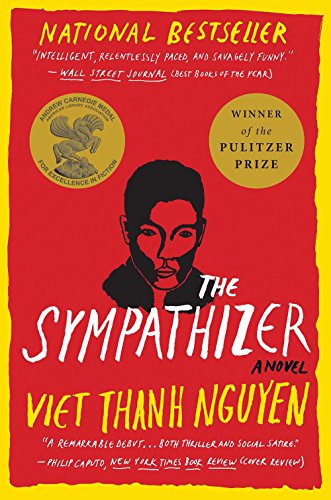
I may have opened another post like this, but if you’ve not read The Sympathizer by Viet Thanh Nguyen, do yourself a favor. It won the Pulitzer Prize in 2015, and awards aside, it’s a great book.
The Sympathizer is an “epistolary-like” novel, as the entire thing is written as a confession of a spy from the north who has deeply infiltrated the south, and the American support apparatus. He is an aide to a general, and really has a good feel for the elite as well as those of lower social stature.
Superficially, it is the story of the child of a Vietnamese teenager and a French priest, who does not fit in because of his parentage and is teased and taunted. In turn, this creates a protagonist of conflicted mind and spirit who artfully chronicles his experiences in Vietnam and America. He makes the profound comment that it is really the immigrants who should be the anthropologists of American society, as well as many other insightful observations throughout the book.
He chronicles the chaotic escape from Vietnam (you’ve probably seen the footage) when the United States withdrew in 1975. When one views this sort of thing, they’re horrified by the carnage and desperation, but I’d not considered the bureaucratic tasks such as making lists of who evacuates and the intermediary steps. Spoiler alert: the Vietnamese don’t just land in their suburban American homes on a direct flight from Saigon. Sadly, these events seem apropos right now irrespective of your feelings about American wars and intervention globally. I could not even imagine trying to escape my country for fear of political reprisal.
As someone of a certain generation, I grew up watching the fictional films about the Vietnam War and worried about the specter of the reinstatement of the draft. Perhaps, more broadly, the Vietnam War was the degradation of the cultural capital and hubris that the United States, as a country, carried until this loss. I always felt for the boys who were involuntarily ripped from their lives and sent across the world as soldiers in an ideological battle they likely only rudimentarily understood. It’s a logical reaction, since they were the protagonists of these films, if not the heroes at least sympathetic anti-heroes, and they were like me.
A Vietnamese character comments that this cold war has always felt hot to them. That said, it’s enlightening for me to read a work of art by a Vietnamese expatriate like Nguyen (by the way, it’s set to be an HBO miniseries). The details concerning the quotidian lives that many of his compatriots lead in the US (California to be specific), and how it’s difficult for former men of power to become relatively powerless in their new country, are very well done. One portion of the book even chronicles the protagonist’s experience working as consultant for a movie about Vietnam, loosely based on Apocalypse Now (if you have not seen this film, borrow it and watch it).
The Sympathizer (also available as an eBook) is a page turner, a spy novel, a thriller, and oddly humorous; however, I would not describe it as straight satire. In my opinion, what makes this debut novel great is that it is the work of a free thinker and an excellent writer. It may seem banal to say that there is a lot going on in this novel (it may even be worth a second read), but I’m not sure how else to phrase this. Nguyen’s writing is dense, but not difficult to read, and the story just flows. I intend to read his collection of short stories, The Refugees, and eventually the sequel, The Committed, which was published in 2021. Try them, you may like them.
Produce from weekly farmers market at HCLS Miller Branch.
By Holly L.
Low-Fat. Mediterranean. Atkins. Whole 30. Keto. Paleo. Vegan. Pegan. Pegan? (That’s paleo meets vegan.) While there is little consensus as to which diet is the best, there is near universal agreement that a healthy diet includes abundant produce – fruits and, especially, vegetables. But most of us still aren’t getting enough. According to the USDA’s most recent Dietary Guidelines for Americans, 90 percent of the US population does not get its daily recommendation of vegetables.
Whether you are already getting your five servings a day, we have a cornucopia of titles in our cookbook collection to help you incorporate more plant-based foods into your diet.
Meera Sodha’s East: 120 Vegan and Vegetarian Recipes from Bangalore to Beijing is an inspired collection of vibrant recipes, many originally published in her Guardian food column,”The New Vegan.” In her introduction, Sodha recalls when she first agreed to write the column that not only was she not vegan, she was in the middle of a major life change, having recently given birth to her first child. Excited by the writing challenge when she was seeing the world anew through her daughter’s eyes, she embarked on a journey to discover vegan recipes that would satisfy not just vegans but meat-eaters like herself. With a culinary background (and two prior cookbooks) rooted in her Indian heritage, Sodha broadens her horizons in East, with vegetarian and vegan recipes inspired by her travels in East and South Asia. The book is divided into chapters such as Snacks & Small Things, Curries, Flour and Eggs, Legumes, and Sweets. A few pages of “alternative contents” are also helpful, with categories such as Quick Dinners and From the Pantry, in addition to seasonal categories for those who like to cook by the calendar. This fall, I am tempted by Autumn Pilau with squash, lacinato kale, and smoked garlic, perhaps followed by some Pineapple Love Cake or Salted miso brownies.
The title Mostly Plants echoes a line from author-journalist Michael Pollan’s 2008 book In Defense of Food: “Eat food, not too much, mostly plants.” While recognizing the nutritional and cultural value of meat, he champions a diet of moderation composed mostly of whole foods, with meat being demoted from star to supporting player. In Mostly Plants: 101 Delicious Flexitarian Recipes from the Pollan Family, Michael Pollan’s mother, Corky, and sisters Tracy, Dana, and Lori have created a cookbook full of healthy, flavorful recipes designed to be on the table in 35 minutes or less. Each Pollan has her own dietary preference, some eating meat and others not. Their goal with the book is not to promote one particular diet but rather to shift “the ratio from animals to plants.” Each recipe features easy-to-read icons indicating if it is vegetarian, vegan, dairy-free, gluten-free, and/or fast, as well as helpful hints for adaptations (to make a vegetarian recipe vegan, for example). Beautiful photos fill the pages, highlighting such recipes as Mesclun greens with persimmons and Manchego cheese and Udon Noodle Soup with miso-glazed vegetables and chicken. The book finishes with a chapter devoted to sweets, the Apple Galette Rustique with apricot glaze sounding to me like a perfect fall dessert.
Fans of chef-activist Bryant Terry may know him as the author of the celebrated 2014 cookbook Afro-Vegan: Farm-fresh African, Caribbean and Southern Flavors Remixed. In his more recent book Vegetable Kingdom: The Abundant World of Vegan Recipes, Terry explores the realm of vegetables in all their glorious parts, from seeds to roots. In his introduction, subtitled “Fennel for Zenzi,” Terry credits his two daughters as his inspiration. “I wrote this book to make a diversity of foods from the plant kingdom irresistible to them, to inspire their curiosity.” Even the structure of the book, with recipes sorted into chapters based on which part of the plant is used (flower, bulb, etc.) came from his older daughter Mila’s gardening class assignment. The recipes exhibit a further geographical reach than his previous books, with influences from East and Southeast Asia, reflective of his wife’s heritage. The book offers a feast for the senses, not just for the eyes and the palate, but for the ears, too. Terry includes a song pairing for each recipe. Before I prepare Dirty Cauliflower with tempeh, mushrooms, scallions, and parsley, I will be sure to queue up the suggested track, “Flat of the Blade” by Massive Attack. Terry does not include a chapter on sweets, but I imagine that he would approve of my default easy dessert—a few squares of dark chocolate which is, of course, vegan.
If you are interesting in healthy plant-based cooking, consider joining HCLS Elkridge Branch for Plant-Based Nutrition: Everything You Want to Know and More! on Thursday, October 7 at 6:30 pm. University of Maryland Extension teaches participants about plant-based nutrition, the benefits of a plant-based diet, and how to shop and plan meals using plant-based foods.
Holly L. is an Instructor and Research Specialist at the Miller Branch. She enjoys knitting and appreciates an audiobook with a good narrator.
If I Had Your Face drew me in at the beginning, lost me a little bit in the middle, and captivated me again towards the end. Through the eyes of four narrators, Ara, Kyuri, Miho, and Wonna, Frances Cha brings us not only the personal stories of these women but also the social tapestry of modern South Korea in terms of beauty standards, feminism, women in the work force, a challenging economy, sexuality, matrimony, and societal expectations.
Kyuri works as a room salon girl – an opportunity afforded to only the “prettiest 10 percent.” She accompanies and caters to the sexual needs of rich men, who in turn ply her with designer bags and expensive makeup. Kyuri has surgically altered her entire face to attain the flawless beauty that is vital to her job and, ultimately, her prosperity. (Interestingly, according to businessinsider.com, “with the highest rate of cosmetic surgeries in the world and nearly 1 million procedures a year, South Korea is often called the world’s plastic surgery capital.”) Although her life seems enviable, Kyuri is in heavy debt and emotionally wrecked. On top of everything, she makes one bad decision that threatens her entire livelihood.
Ara has lost her voice due to some violence in the past. The author piques our interest, hinting about the violence throughout Ara’s narrative and disclosing the incident towards the end. She is a hair stylist and a huge K-Pop enthusiast. Ara’s K-Pop fantasy is her escape to a dreamworld that is very different from the harsh reality of her life.
Miho is an orphan who won a scholarship to study art in New York City, who obsessively creates art influenced by her friendship with a girl named Ruby. Ruby dazzled Miho with her personality, wealth, influence, and charisma. She also introduced Miho to the upper echelon of South Korean society. Miho, however, can simply look into the lives of the rich from the periphery. She is not allowed in.
Wonna, who lives in the same building as the young women, is trapped in an uninspiring marriage. She is pregnant and terrified of losing her baby. She has to hide her pregnancy for as long as she can so she does not lose her job. Moreover, she does not know how she and her husband will raise the baby in South Korea’s brutal economy with their combined meager salaries.
Then there is Sujin who works at a nail salon and yearns for Kyuri’s surgically altered, perfect jawline because her goal is to emulate Kyuri and become a room salon girl herself. She is willing to go through painful jaw surgery and subsequent complications from it if she can attain the beauty that society dictates women ought to strive for. She is Ara’s roommate, and we know about her mostly from the narratives of her friends, Ara and Kyuri.
All our protagonists come from impoverished backgrounds. They are desperate to leave their past behind and move up in life despite the barriers that society constructs for them. But when their friendship is put to test in their quest for upward mobility, what do they do? Does societal pressure shatter their tentative friendship, or will their friendship ultimately save them?
The book tells the unique story of these women and their relationship with one another. While each individual story is interesting, the picture of South Korean society that emerges from the collective stories and through the perspectives of these unique individuals is what makes If I Had Your Face a captivating read. Frances Cha, a former travel and culture editor for CNN in Seoul, writes her vivid and realistic debut novel which Publishers Weekly hails as, “an insightful, powerful story from a promising new voice… Cha navigates the obstacles of her characters’ lives with ease and heartbreaking realism.”
Piyali is an instructor and research specialist at the Miller Branch of HCLS, where she co-facilitates both Global Reads and Strictly Historical Fiction.












 CHAPTER CHATS