Did you know that there are more than 100 LEGO pieces per person on the planet? The word Lego comes from an abbreviation of the Danish words leg and godt, which mean play well. Lego was founded in 1932, and since then their “play well” philosophy continues to inspire citizens the world over. This universal building block connects generations and bridges language barriers – anyone can build Lego. Here are just a few resources from HCLS to inspire Lego fans of all ages – whether you’re an AFOL (adult fan of Lego), TFOL (teen fan of Lego), or KFOL (kid fan of Lego), here are some finds to get you in the mood to build!
A Lego Brickumentary is a fun and fact-filled foray into the fandom that is Lego. In a documentary that the whole family can watch together, animated Lego scenes are interspersed with interviews and awe-inspiring Lego builds. It explores the history and evolution of the world’s second biggest toy company and how it has become a catalyst for innovation. I was inspired through the artists, master builders, designers, architects, and therapists that have utilized this simple building brick to transform ideas and imagination into reality. This film runs 1 hour and 35 minutes, is rated G, and is available on DVD from HCLS.
Beautiful Lego is a full color portfolio of Lego artworks from 77 different contributors and a compendium of so many fantastical designs – from minimalism to monsters. This gorgeous book boasts more than 200 pages of inspiration. I loved the incredibly detailed model of an imaginary extraterrestrial city – the same one featured on the cover art. The book features unusual usage of different types of bricks in creating textures, expressions, and models of everyday objects. For fans of art, fans of Lego, and fans of both.
100 Ways to Rebuild the World is a children’s book full of ideas of how to encourage kindness, positivity, community, and responsibility. It features fun bright Lego illustrations and issues challenges to inspire kids to care about themselves, others, and the planet. My favorite challenges were “Start a chain of creativity” and “Step into their shoes.” It is a great resource for parents who are looking for ways to help their children connect with the community and the world around them.
A collage of the creative work of participants in the Lego Engineering Challenge class.
Lego Engineering Challenge is a biweekly prerecorded class produced by Ms. Julie. She issues four unique challenges in every class – encouraging children in grades K-8 to use their imagination and problem solving skills to complete fun tasks. After each session, Ms Julie compiles participants’ submissions and shares them to encourage budding engineers and artists. Pictured are just a few submissions from past classes. It is always fun to see so many creative solutions to the same challenge. Find the next class by clicking here, then register to receive a link to the next session.
Brick by Brick: How Lego Rewrote the Rules of Innovation and Conquered the Global Toy Industry is an eAudiobook available on Cloud Library. It explores the business management and innovation practices of the Lego Group through anecdotes and case studies. This book was written to be an inspiration for business owners as a model of how innovation practices evolved at the Lego Group, and how the company used their 2003 brush with bankruptcy to realign, reconnect, and reemerge as a leader in the toy industry.
Inspired to create your own Lego masterpieces? Share them with the world through the Lego Ideas website. This is one of the Lego Group’s most successful innovations. A crowd-sourced idea generator, it began in 2008 as Lego Cuusoo (Cuusoo means “imagination” or “wish” in Japanese, and it still available as an archive here). On the Lego Ideas website, you can submit your own proposals for new Lego sets, vote on global submissions, and participate in activities and contests with other Lego lovers.
Kimberly J is a DIY Instructor and Research Specialist at the HCLS Elkridge Branch. She enjoys reading, photography, creating, crafting, and baking.
I grew up reading comics. In hindsight, it was one of the things I can recall being really into, certainly more than books or sports. I loved the stories, the characters, and the artwork. In the 1980s, the stories became a bit more interesting and complex, giving the characters more depth than in previous periods. My love was bolstered by the fact Steve Geppi, on his way to becoming comic distribution magnate and part-owner of the Baltimore Orioles, owned and operated several comic shops around Baltimore. I won’t reminisce here, but the one I frequented with my brother was a pretty amazing place, created by a guy who quit his job at the post office to own a comic shop. (In other words, he had passion.)
At any rate, I still occasionally read some comic and graphic novels, my book discussion group has read and discussed a few of the best, and I still enjoy going to my local comic shop to browse (less frequently lately, obviously). The medium has a come a long way, with the work of some talented writers and artists. More importantly, the graphic medium is much more diverse and inclusive these days. HCLS has a great graphic novel collection. Sometimes I look through and find things I’ve not heard of or a book adapted into a graphic novel that I was not aware of previously.
Ta-Nehisi Coates and I are the same age, and he’s from the west side of Baltimore, around where the city meets the county. I, too, hail from west side of Baltimore, spent my first few years just on the county side, and spent a lot of time in those areas. The differences in our respective experiences could probably make for more than a blog post, but nevertheless I’m always happy to see local people do well. (I guess we all like that sort of thing so we can imagine some sort of shared experience.) Commonalities notwithstanding, I’m a fan of Coates’ thoughtful work and was moved by his piece on reparations. He has authored several excellent books of fiction and nonfiction on race, and perhaps you have heard about his “twitter battle” with Dr. Cornel West.
At any rate, and certainly not to take away from any of these accomplishments, I recalled reading that he was a comics kid. I was elated to read that this intellectual had realized his childhood dream of writing for Marvel Comics, Black Panther in particular. I can only imagine I’d feel the same and felt incredibly happy for him! My first guy was Aquaman, I was blonde and liked the ocean. Next was Spider-man, the flawed character who struggled with pretty much everything in his personal life. That said, I had characters with whom I could relate, which is important, and I was very happy to read Coates had his, too.
You may have seen the Black Panther character in the Marvel films, but Coates built on the source material created by people of color he had admired as a young person. He writes comics narratives about power, opposing points of view, the African continent, and nature. Coates also recognizes that comics and graphic novels are a collaborative work, and he acknowledges how the great art of Brian Stelfreeze brings a graphic story to life. Coates subsequently moved on to Captain America and wrote about his good reasons for wanting to do so. He mentioned that some may see Cap as the embodiment of nationalism or the character from the films, but he’s much more nuanced and conflicted than that.
I have to feel a sort of kindred spirit with someone that can recognize this in Captain America and comics in general. So, if you have not, read his articles in The Atlantic (available via RBdigital), read his books, and don’t be afraid to read his graphic novels, which are collected as trade paperbacks and available via HCLS.
Eric is a DIY Instructor and Research Specialist at HCLS Elkridge Branch. He enjoys reading, films, music, doing nearly anything outside, and people.
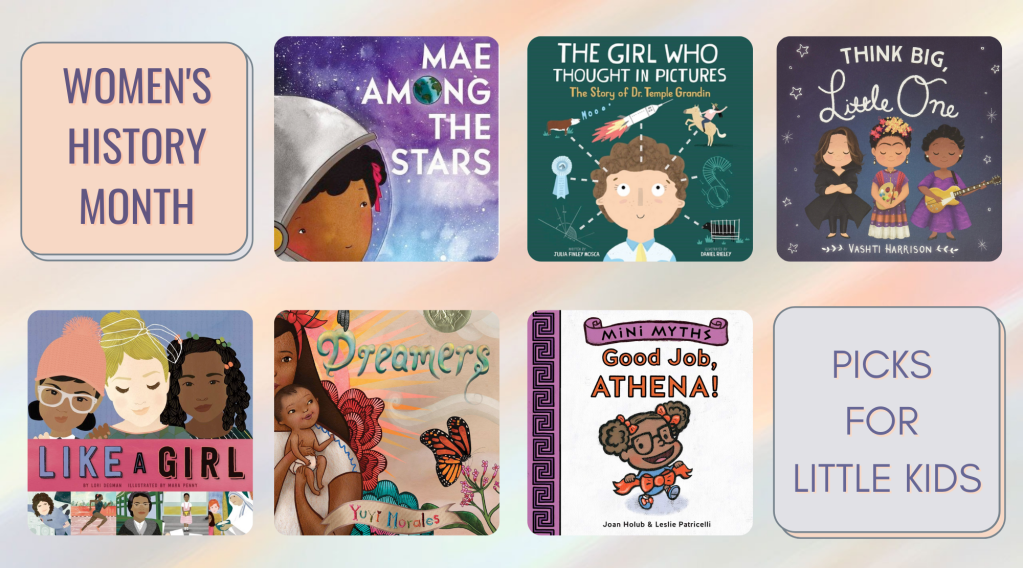
Every March, we celebrate Women’s History Month in the United States. March 8 has been honored as International Women’s Day since 1911, with nations around the world celebrating the movement toward women’s rights. This annual celebration gives us the opportunity to honor women past and present who have paved the way for continued progress for all. This includes trailblazers in politics, arts, sports, science, and more. Look back at those who have come before and be inspired to soar to new heights with these reads for all ages about amazing women.
Little ones will love the delightful pictures and rhyming verse in this true American shero story. Diagnosed with autism as a girl, Temple Grandin embraced her unique way of thinking to help her invent revolutionary new ways to take better care of farm animals. A special note from Temple Grandin to readers is also included, along with a timeline and fun facts.
Join your little one in reading this picture book inspired by the real-life story of Dr. Mae Jemison. Mae starts off with a dream to see the earth and later becomes the first African American woman in space. Burrington’s illustrations bring this story to life and will inspire your little one to reach for the stars!
Like a Girl by Lori Degman, illustrated by Mara Penny
In this beautifully illustrated tribute to girl power, readers are introduced to 24 women who blazed trails in their respective fields. The author highlights all the wonderful things you can do “like a girl” and invites her audience to think about the ways they can change the world. More details about each subject are included in the back of the book.
Coraline, a curious and adventurous young girl, moves into a new flat with her parents. While exploring her new home, she discovers a door to another world where she finds another mother and another father who want her to stay and be their daughter forever. At first, Coraline thinks this world is better than her own, but she soon realizes things are not as they seem in this other world and something terrible lurks behind its perfect facade.
Forget about a princess needing a knight (or anyone else) to save her. These collections of folk tales from a wide range of countries showcase smart, strong, brave women. Learn about heroes who overcame harsh conditions, rescued their people, and fought for what was right as you explore cultures from around the world. The first title is an updated version of the second, with two additional stories.
At 13 years old, Aĭsholpan Nurgaĭvyn became the first woman – and youngest person – to ever win Mongolia’s famous Golden Eagle Festival. In her inspiring memoir that will resonate especially with tweens and young teens, Aĭsholpan takes pride in sharing about her legendary Kazakh heritage, while also challenging traditional gender customs to train and compete with her beloved eagles. To learn more about Aĭsholpan’s amazing experiences, you can also check out the award-winning subtitled Kazakh-language documentary of her story – available on DVD.
The word feminism makes some uncomfortable, and many people define it in different ways. This book introduces readers to pioneers of feminism in the United States along with modern leaders who continue to fight to empower women in every arena. Explore what feminism is and what it means to you as you read the range of ideas and perspectives presented in Feminism: Reinventing the F-Word.
Cecile Richards grew up in Texas, where her parents, one of whom was the first woman governor of the state, taught her the importance of working for change, including making trouble. This young reader’s edition of her biography shares the lessons Richards learned along the way and highlights the people who have supported her in her journey. Read Make Trouble to feel inspired to push for progress and empowered to fight for what is important to you.
Last year celebrated the 100th anniversary of the 19th Amendment to the Constitution, which gave women the right to vote in the United States. The fight to reach that goal encompassed decades of passionate work, including marches, protests, and even lawbreaking, on the part of many women working together. Votes for Women! provides a glimpse into the lives and experiences of many suffragists, including the uglier moments in the battle for women’s right to vote.
In a witty, conversational, and occasionally sarcastic tone, Hannah Jewell explores the extraordinary lives of 100 women throughout history from all over the world. Sorted into chapters like Wonderful Ancient Weirdos, Women Who Wrote Dangerous Things, and Women Who Punched Nazis, the stories of these women range from triumphant to tragic, but never fail to inspire, and Jewell’s humor and enthusiasm for her subjects never fails to entertain.
That’s What She Said offers a brief introduction to over thirty influential women from various areas of life – some well-known and some women with whom readers may not be familiar. Author and artist Kimothy Joy’s beautiful watercolor illustrations add to the enjoyment of this informational book. This is a great place to start for an overview of women’s history, or to find women or subjects that inspire deeper investigation.
Ursula K. Le Guin’s classic The Left Hand of Darkness is a book about political intrigue and a forced epic journey across an icy planet (probably the fodder for a good miniseries). The book has the drama and action of an arduous journey as well as a personal journey of the protagonist to appreciate those different from him through the relationship he builds. The protagonist, an envoy from another planet, struggles to understand a gender-neutral people using the social constructs of his own culture.
If you want to explore more exhibits and offerings in honor of Women’s History Month, take a look at the Library of Congress’s Women’s History Month page.
The Elkridge Branch + DIY Education Center opened the doors of its new building in March 2018. All our staff wish that we could see you in person, but we are happy to help you discover new reads while we are apart.
For families talking with children about death and grieving, the words we want can be especially hard to find. But we are not alone. Heartfelt picture books are one of my favorite sources of solace. In aiming to speak clearly to children, the best ones are both simple and profound. They can help us open doors to deeply meaningful conversations. When we invite a child to read these stories together, we offer a special comfort.
“Anything that’s human is mentionable, and anything that is mentionable can be more manageable. When we can talk about our feelings, they become less overwhelming, less upsetting, and less scary. The people we trust with that important talk can help us know that we are not alone.”
Maybe a child is grieving the death of a pet, friend, or family member. Maybe they are struggling to understand the tragedy of the current pandemic. Even if death is not on the doorstep right now, the following books can help a child understand what death means, the emotions that can come with it, and how they can process it all with someone they trust.
Read through these books before inviting your child to share them. See how they suit you and if they are appropriate for your child’s age and experience. Don’t be afraid to change up the stories to personalize them to your child’s circumstances. Or, simply look through the pictures while your child tells a story or talks about their own experience. Sometimes a child just needs someone to listen.
When her beloved grandfather dies, a young girl’s cherished memories of all their seasons together help her grieve and honor their forever bond. (Ages 4+)
When a child wishes to comfort a grieving neighbor, her own grieving process comes to include creative and supportive expressions of condolences and connection. (Ages 5+)
A young girl and her grandfather honor the many circles of life they see, placing birth and death in a bigger picture of nature’s cycles and family traditions. (Ages 5+)
Through a backyard funeral ceremony for his cat, a young boy finds comfort in memories and the circle of life. Questions of the afterlife are raised and left open. (Ages 5+)
Death itself takes the personified form of a compassionate cloaked visitor in this gentle story of four siblings coming to terms with their grandmother’s imminent death. (Ages 5+)
For further support for your child, please be sure to reach out to your child’s physician, school, religious or spiritual community, or a mental health professional.
Brandon Hobson, author of The Removed, believes that good fiction starts with a question.
“The big question here was how do we grieve, and how do we heal. But I’m also interested in the question of what is home?” Examining these questions is the starting place for his writing, Hobson says in an interview with Zibby Owens.
In The Removed, Hobson hauntingly weaves together two strands. First is the story of personal loss experienced by the Echota family; second, the devastating loss experienced by the Cherokee Nation – the traumatic heritage of the Trail of Tears, the forced removal by the U.S. government from 1830 to 1850 of an estimated 100,000 indigenous people (including Cherokee, Creek, Chickasaw, Choctaw, and Seminole, among other nations) from their homes.
After fifteen years, the Echotas are still struggling to come to terms with the death of their son, Ray-Ray, who was killed in a police shooting at the mall. Maria tries to keep the flame of remembrance alive for her son, as she deals with her husband Ernest’s struggle with Alzheimers, son Edgar’s meth use, and daughter Sonja’s detachment. As the family’s annual bonfire approaches – an occasion marking both the Cherokee National Holiday and Ray-Ray’s death – Maria takes in a foster child, Wyatt. Buoyant and quirky, Wyatt is a born storyteller, spinning gripping tales about snakes and birds and an underworld, called the Darkening Land.
While reading this book, I was enthralled with the way Hobson shifted perspective with each character and got into the skin of that person, especially Tsala, a Cherokee spirit who tells a story of his own murder for refusing to be removed. Written in a lyrical, minimalistic style, The Removed is a a powerful story, a profound yet quick read, available in book format and also as an eaudiobook and ebook from Libby/OverDrive.
Hear author Brandon Hobson in person on Wednesday, March 10. For information, click here.
Hobson is an enrolled citizen of the Cherokee Nation of Oklahoma, with a PhD in English and seven years’ experience as a social worker for disadvantaged youth. His previous book, Where the Dead Sit Talking (also available as an eaudiobook from Libby/OverDrive) was a finalist for the 2018 National Book Award for Fiction and winner of the Reading the West Book Award. He is an assistant professor of creative writing at New Mexico State University and teaches in the MFA program at the Institute of American Indian Arts.
A RECOMMENDED BOOK FROM
USA Today * O, the Oprah Magazine * Entertainment Weekly * Harper’s Bazaar * Buzzfeed * Washington Post * Elle * Parade * San Francisco Chronicle * Good Housekeeping * Vulture * Refinery29 * AARP * Kirkus * PopSugar * Alma * Woman’s Day * Chicago Review of Books * The Millions * Biblio Lifestyle * Library Journal * Publishers Weekly * LitHub
Rohini is the Adult Curriculum Specialist with HCLS. She loves literature and rainy days.
Something kind of funny happened at the holidays: every member of my family was gifted a cookbook. I’m not sure if this is in recognition that we all like to play in the kitchen or the need to find some new recipes as we have grown seriously bored with our old usuals. Both?
Last year in a gift exchange, a colleague presented me with Plenty by Yotam Ottalenghi. I was only vaguely familiar with the author’s name but was no particular fan. He’s an Israeli-English chef, restauranteur, and cookbook author. He owns several delis and restaurants in London and specializes in Middle Eastern flavors and cuisines. I was immediately intrigued by the beautiful photography and the series of recipes that concentrate on types of foods. Vegetables, grains, and other plants are often side dishes on my table, and this book shows how to make them the stars. While some of the recipes required ingredients I don’t always keep on hand and the time to think my way through a new process, the couple I have tried have been wonderful. The green couscous, overflowing with fresh herbs and scallions, was a lovely addition to summertime meals.
For Christmas, my son gave me Ottolenghi Simple by the same chef author, having noticed my enjoyment of the previous book. As the name suggests, this book contains simpler recipes. SIMPLE is an acronym for recipes that stands for: Short on time, Ingredients ten or fewer, Make ahead, Pantry-led, Lazy-day dishes, and Easier than you think. Not every recipe partakes of all the categories, but it offers a nice shorthand at the top of the page. Ottolenghi’s pantry differs significantly from mine, but shopping provides part of the fun of new recipes. Discovering different tastes and textures is the main reason I like to check out cookbooks and get busy in the kitchen. I have tried one recipe from this book already: Baked rice with confit of tomatoes and garlic. Baked rice was easy and turned out perfectly. Next time, though, I will halve the recipe because we ended up eating it all week. I posted a picture of my newfound deliciousness on Facebook (like you do) and promptly recommended this book to a friend who wanted the recipe.
The library owns a wide array of cookbooks for you to borrow, from celebrity chefs such as Ottolenghi to cooking with certain kitchen appliances (Do you have an Instapot or slow cooker?) or even for specific dietary needs. Celebrity chefs is one of the current topics for Bundle Bags, where staff will browse the shelves for you. Or, you can always chat with us about what you’re looking for. I wish you happy cooking!
Kristen B. is a devoted bookworm lucky enough to work as the graphic designer for HCLS. She likes to spend winter reading, baking, and waiting for baseball to return.
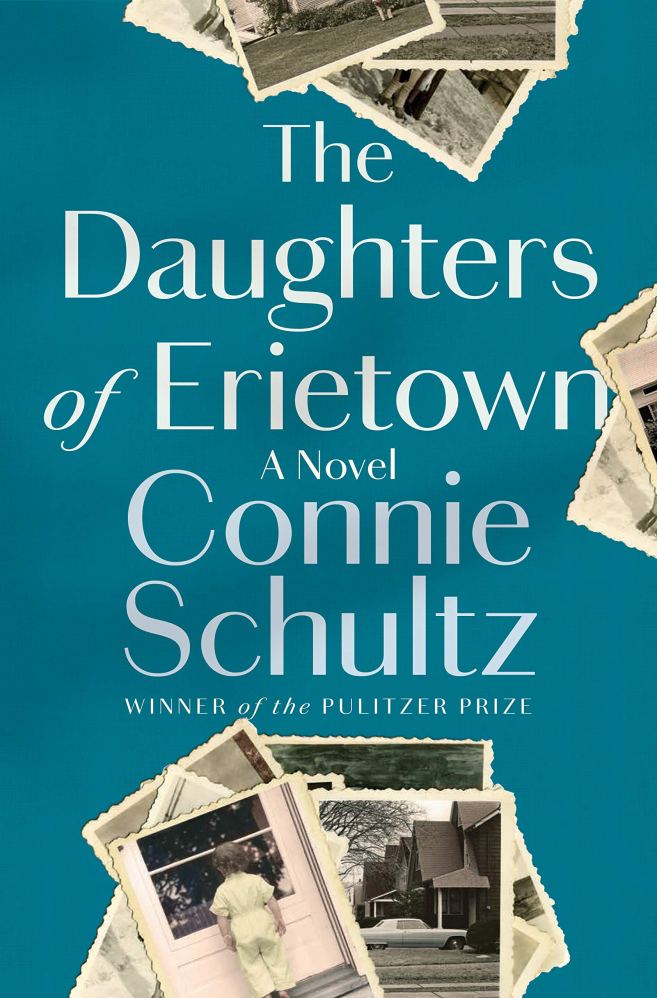
Connie Schultz is one of my favorite columnists; her sweet daily reminders on Twitter to “breathe” are a vital moment each evening in a busy routine. Her debut novel, a summer highlight, is full of moments reflecting on the secrets and struggles of working-class families in Ohio, from 1956 through 1994.
Brick McGinty marries Ellie Fetters just before they graduate from high school; there are no other options in the late 1950’s for a young couple about to become parents. Brick and Ellie both know and accept this, but they also accept that teenage dreams will be postponed or even eliminated – Ellie’s to train as a nurse, and Brick’s to accept a sports scholarship and become a teacher and coach. Both come from broken families who couldn’t escape the numbing, self-fulfilling dictates of their class, and both had hoped for a better future for themselves and each other. They remind me of the heartbreaking line from Bruce Springsteen’s “The River”: “And for my nineteenth birthday, I got a union card and a wedding coat.”
Ellie resolves to be a good mother, but also yearns for substance and fulfillment. When disappointments seem likely to break her, Ellie tells her daughter Samantha not to rely on the men in her life. “The sad look on Sam’s face made Ellie wish, for the first time, that she’d had only sons… No matter what she did, Ellie would never be able to save her daughter from that heartache waiting to ambush her” (395). Progress awaits with the upheavals of the sixties and seventies, though, and Sam grows, asserts her independence, and fulfills her ambitions in a way that Ellie and her generation couldn’t have imagined. I love the moment where Sam reckons with her own questioning personality: “To go through life just coasting? That’s unthinkable” (733).
Brick, meanwhile, makes huge mistakes that temper his expectations with the bitterness of devastating consequences. His misogyny and racism are in keeping with his small-town upbringing as a white male who has never had to consider his position in society in relation to others. Brick is an imperfect father, husband, and son, and he knows it, deep down. But he makes progress and attempts in small ways to atone, specifically with his son, with Ellie, and with Sam. Brick’s little family is the best thing to ever happen to him, and despite the glaring gap between promise and reality, his strength is loving them through all the pain and disappointment.
If you love sweeping stories that develop the collective life of a family through successive generations, the journey of the McGintys across the decades will captivate and absorb you. Schultz, whom the Pulitzer committee described as writing “pungent columns that provided a voice for the underdog and underprivileged,”advocates for people from those communities throughout her work, in part because of her working-class background. Her TED Talk about the women of her generation, “A Woman Over 50: A Life Unleashed,” shares more insight into the themes of this novel, including single motherhood, women’s place in the world, and not listening to “that voice of ‘no’ in your head.”
I love listening to audiobooks. Anytime I have the option to occupy my ears (driving, washing dishes, mowing the lawn), you can be sure an audiobook is playing in the background. Despite all the benefits of audiobooks, sometimes when we finally get a book that’s been on hold for six weeks – we are disappointed to discover that we can’t relate to the narrator. A narrator can make or break our impression of a title. While we all have different preferences as to how a book is read, here a few audiobooks that, I feel, enhance their novel’s stories.
Bonus tip: to avoid those long waits only to return the book after five minutes of listening, try the “Play Sample” feature on Libby for a short preview of the narration.
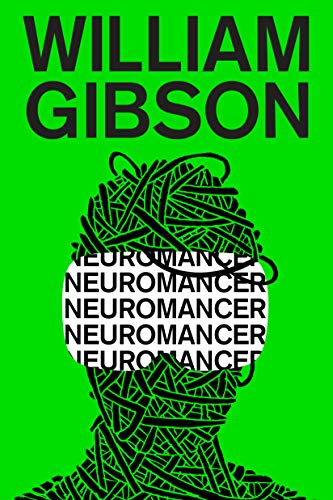
Neuromancer by William Gibson Read by: Robertson Dean Available through: Overdrive/Libby
If you are science fiction fan, you have probably run across William Gibson’s Neuromancer. We first meet Case, an ex-computer hacker, in Chiba City, Japan – broke, drug addicted, and at rock bottom. After stealing from his former employer, Case is injected with a toxin, damaging his central nervous system and leaving him unable to access the virtual reality database known as the Matrix. He lands himself on the hit list of Wage, an infamous drug lord. On the verge of suicide, Case meets Molly, a cyborg working for a mysterious hacker, Armitage. Armitage agrees to help Case heal and regain access to the Matrix in exchange for his services as a hacker. Desperate, Case accepts the trade, not knowing Armitage’s motives or what services he must provide.
Why choose the audiobook?
If you have not read Neuromancer (or if it’s time for a re-read), I highly suggest listening to the audiobook. Written from the perspective of Case, Dean’s spot-on embodiment of the character, along with his ability to shift into other unique and relatable characters, adds another level to this already iconic story.
If you are new to science fiction (i.e., not quite ready to tackle the intricacies of the Dune universe), Dark Matter provides an excellent place to start. If, however, you are a science fiction boss… you should still read Dark Matter. Is there a little bit of plot hole time magic? Yes, but look past it – it’s worth it. The story is told from the perspective of Jason Dessen, a college physics professor. On his way home, Jason is approached by a man he presumes to be a mugger. In an instant, Jason finds himself abducted, drugged, and waking up in a world that is not his own.
Why choose the audiobook?
I originally began this as a printed book, but switched to audiobook. Though the story quickly grabs your attention, Crouch’s use of fragmented sentences and one-line paragraphs makes this a clunky read. After starting in on the audiobook, I was able to experience these fragments as they were intended, as the sporadic thoughts of an abducted man.
While Michael Crichton is best known for Jurassic Park (a must read and must watch), he has a huge body of work that contains some of my favorite sci-fi reads. Sphere follows psychologist Norman Johnson and a team of other scientists who are recruited by the US Navy to explore a foreign spacecraft discovered at the bottom of the Pacific Ocean. After gaining access to the ship, the team encounters an alien intelligence named Jerry. Communicating through a large sphere found on the ship, Jerry exhibits a child-like and temperamental demeanor that sparks an interest in Johnson. After unexplainable events start to threaten the team’s safety, Johnson becomes desperate to understand Jerry and explain the phenomena taking place around him.
Why choose the audiobook?
While technically science fiction, Sphere is also a psychological thriller. As Johnson dives deeper into Jerry’s thoughts, the reader constantly questions who is in control of the conversation. Brick’s narration enhances the suspense, so much so that it is worth reaching for the audiobook.
I know, I know, I’m late to the game on this one. Honestly, when this book first came out, the virtual reality video game setting just didn’t spark my interest. But with the release of sequel Ready Player Two, I decided to give it a try… and it was definitely worth it. The story follows eighteen-year-old Wade Watts who spends the majority of his time in the global virtual reality network known as the Oasis. The late Oasis creator, James Halliday, left his enormous fortune to any person who could solve the puzzle he hid within his creation. Wade, like many other “gunters,” has dedicated his entire life to learning everything about 80s–obsessed Halliday and winning his fortune.
Why choose the audiobook?
This book is just fun to listen to. I am definitely not a gamer, but the intensity in the narration of this book made me feel as if I were behind the controller. I am not sure if I would have developed the same level of excitement and suspense in the narration of this book if reading a printed copy. Oh, did I mention, it’s read by Wil Wheaton… why wouldn’t you choose the audiobook!
Sleeping Giants by Sylvain Neuvel Read by: Andy Secombe, Eric Meyers, Laurel Lefkow, Charlie Anson, Liza Ross, William Hope, Christoper Ragland, Katharine Mangold, Adna Sablyich Available through: OverDrive/Libby
This story opens with eleven-year-old Rose Franklin falling from her new bike into what seems like the center of the earth. When Rose’s fall is broken, she finds herself in the cradled of a giant mechanical hand. Seventeen years later, the mystery of the buried artifact remains, and Rose, now a physicist, is consumed with solving it. The story unfolds as a series of question and answers conducted by an unidentified interviewer. The unnamed man attempts to reveal the mystery of the artifact through the accounts of Rose and her team, all of whom have had encounters with parts of the artifact.
Why choose the audiobook?
Neuvel’s question-and-answer structure lends itself very well to audio. While listening to this story, I really did find myself duped into feeling as if I was listening to an archive of interview tapes, investigating the mystery for myself.
An Absolutely Remarkable Thing by Hank Green Read by: Kristen Sieh, Hank Green Available through: OverDrive/Libby
A Beautifully Foolish Endeavour by Hank Green (sequel) Read by: Kristen Sieh, Joe Hempel, Jesse Vilinsky, Nicole Lewis, Kevin R. Free, Hank Green, Robert Petkoff, Angelo Di Loreto, Oliver Wyman, Hillary Huber, P.J. Ochlan, Gabra Zackman Available through: OverDrive/Libby
Hank Green and his brother John Green (author of The Fault in Our Stars) have made names for themselves, via writing and their YouTube channel Vlogbrothers, along with other online content. Throughout An Absolutely Remarkable Thing, Green examines our newfound concept of internet fame while also delivering a funny, thrilling, and engaging science fiction story. While I have had opinions on this topic, I am not an internet celebrity (in case you were wondering). So, I was really interested to learn how Green (who has a lot of experience with internet fame) tackles this subject.
This two-book series follows April May, a twenty-something living in New York City. When April finds what she believes to be a Banksy-inspired art installation, April and her friend, Andy, decide to create a YouTube video to introduce the giant robot sculpture (dubbed “Carl”) to the rest of the city. When a total of sixty-four Carl statues appear simultaneously all over the globe, April finds herself in the spotlight.
Why choose the audiobook?
While I definitely would recommend listening to both of these novels, the audio production of A Beautifully Foolish Endeavor knocks it out of the park. An Absolutely Remarkable Thing is written from the perspective of April, while the sequel switches perspectives among the core group of characters. I was already familiar with the characters from the first book, but I had doubts about relating to them if they were read by different narrators. I was extremely impressed with the attention taken in choosing the narrators for this book, and how well they embodied each of the characters.
Becky is an Instructor and Research Specialist at the HCLS East Columbia Branch who enjoys art and everything science.
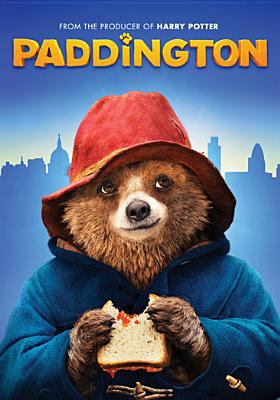
I must confess a librarian’s sin: I always mix up Paddington the bear with Corduroy (who is also a bear). Three decades after first reading these books, I only remembered a cute lil’ guy, riding up an escalator, getting into good-hearted mischief. Yet over the past few years, I’ve read amazing reviews of the two Paddington films. Critics said these are some of the best family movies ever made – high praise! But like the thousands of movies, novels, albums, memoirs, histories, and graphic novels I’ve been recommended, I filed these films away in the bursting file cabinet in my mind, labeled “To Check Out, Sometime Later.”
Well, I wish I hadn’t waited so long. These films operate not only as delightful living cartoons, but they’re optimistic, contemporary, and totally absurd in that specific UK comedy way. The director, Paul King, is most famous for having worked on The Mighty Boosh, a British comedy show from the 2000s best described as visual and narrative anarchy. Here, though, he turns what might be a humdrum kids’ book adaptation into a compelling and confoundingly fun romp.
The premise is simple, but sorta weird, as you see it happen with real actors (and a small, talking animal). Our protagonist bear (from “Darkest Peru”) is sent north by his auntie and ventures into London alone, with a small tag around his neck reading, “Please look after this bear. THANK YOU.” Upon arriving at Paddington station, he meets the Brown family, who take him in for the night, dubbing him “Paddington” (since they can’t pronounce his name in roars of Bearish). They hope to find a new home for him, the one promised decades ago by an explorer his aunt and uncle met, who extended his hospitality should they ever visit London. Thus, the film properly begins.
This is when Paddington sets itself apart from its PG peers. We’re introduced to the Brown family through a Wes Anderson/Royal Tenenbaums-style montage; these carefully shot sequences detail their unique personalities. Like young Judy, who suffers from an incurable case of “embarrassment,” worried about introducing her middle school crush to her family. Or the younger Jonathan, who can’t tell his school chums that he just loves steam engines. Mrs. Brown illustrates children’s books, but can’t come up with a hero, while Mr. Brown is a work-weary insurance investigator, very dry and worried. They’re just as strange as an immigrant bear with a floppy red hat, and each Brown family member discovers and accepts this over the course of the story.
Of particular note is Hugh Bonneville, who played the regal father in Downton Abbey, as Mr. Brown, who doesn’t much like the idea of living with a bear (alluding to issues around immigration and housing, a surprisingly contemporary twist). Before long, Bonneville warms to the little scamp, as they search across London for that welcoming explorer, getting into some Monty Pythonesque escapades.
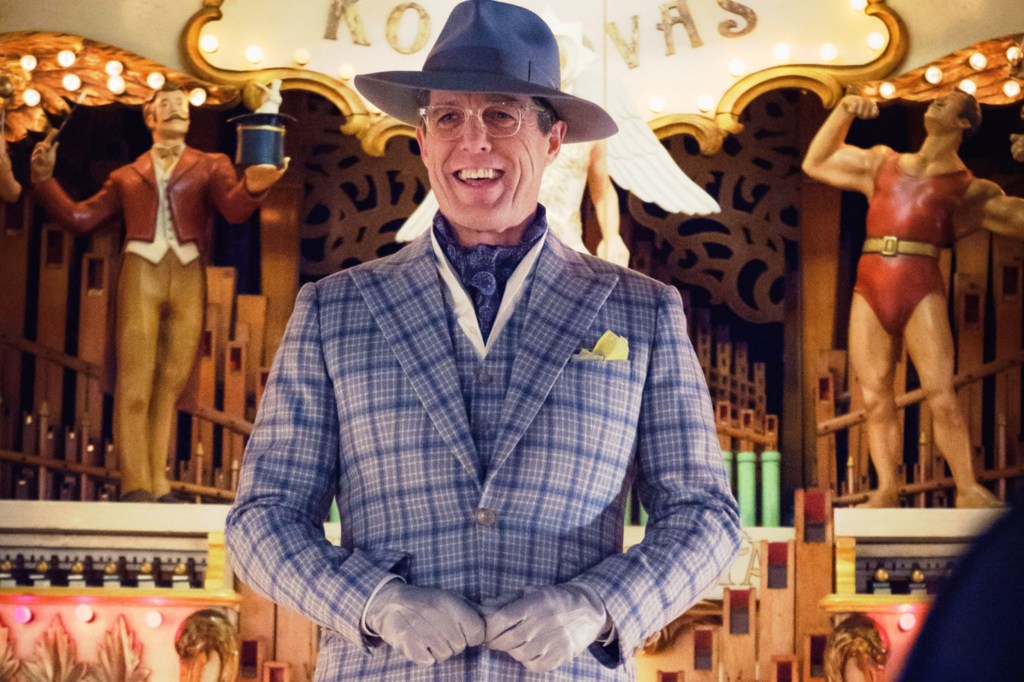
Joining him is Nicole Kidman, as a mad taxidermist intent on capturing Paddington, and boy! she really gives it her all! I haven’t seen a “serious, dramatic” actor lean so hard into being a goofy yet menacing villain in a long while – though in the second film, Hugh Grant one-ups her. He plays a washed-up actor turned thief, dressing in all sorts of costumes to steal what he needs, while performing many ridiculous accents. If you can believe it, he claims this to be his finest work. On top of that, we get delightful supporting performances by BBC regulars, like Jim Broadbent, Peter Capaldi, and Brendan Gleeson, each stealing their scenes with panache.
Hugh Grant, depicted in Paddington 2.
I could go on and on about these films! I haven’t even mentioned the Rube Goldberg stunt scenes. Paddington makes some simple mistake, usually based on a misunderstanding of technology or culture, and sets off a chain of chaos. In one scene, he begins by trying to clean out his ears (a gross-out gag for the kids), but ends up flooding the Brown family’s bathroom to the ceiling, as he floats in the tub. It’s pure Looney Tunes stuff, but the combination of CG with real-world props makes it seem grounded in reality…a reality where people don’t think it’s strange that a bear can talk, but a reality all the same.
So, whether you have kids to entertain, have a fondness for British wackiness, or just want to see a very polite but confused bear bungle about London spreading chaos and also understanding, you must see Paddington and Paddington 2. I cannot recommend these two movies enough, as a spirit-lifting way to spend two evenings.
Khaleel has worked at the Miller Branch since 2015, though he’s been back and forth between HCLS and high school, college, and graduate school since 2003.
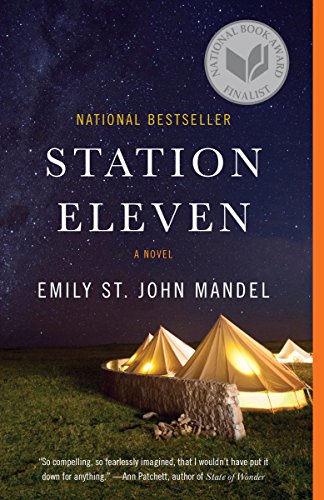
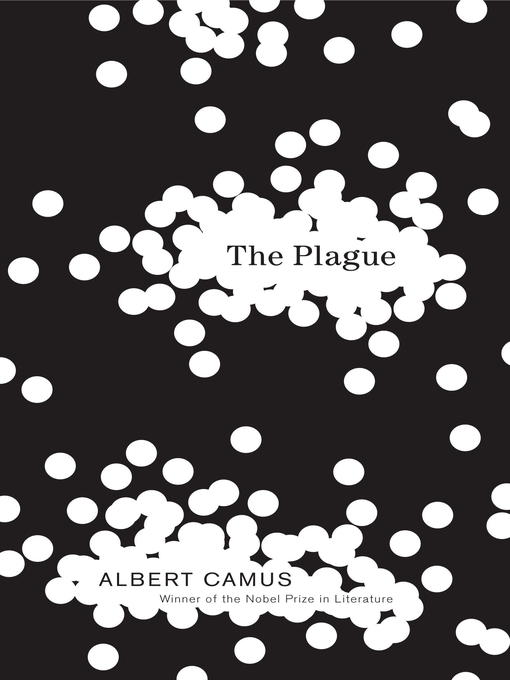
If you’re reading this, you probably like books. And you may, like me, find and pick stories to read that you can relate to irrespective of time and place. That said, thanks to the fantastic members of my HCLS book discussion group (Read. Think. Talk. First Monday of the month at 7 pm) for suggesting Station Eleven by Emily St John Mandel (also an ebook, eAudiobook, and an audiobook on CD) and The Plague by Albert Camus (also an eAudiobook). We discussed the former title as a group and it made for a good conversation.
I tend to want to know about the human experience, although some things are just too sad right now. To be sure, both of these books are sad, but I’ve definitely read more melancholy stories. What’s more, I’d contend these reads put the global pandemic in perspective. So, if you feel as though you’re up to it, I recommend these titles (I can completely understand if you’d prefer not to read about plagues and pandemic.).
Station Eleven was a good book, a suspenseful page turner with many likeable characters and some interesting commentary on the modern world and celebrity. It is scheduled to be an HBO miniseries, but unfortunately the filming was stopped due to the pandemic. Emily St John Mandel’s latest book (The Glass Hotel) made President Obama’s Best of 2020 list.
A nonlinear story, the book recounts a much deadlier and contagious flu from the outbreak to the post-apocalyptic world that remains after much of the population and civilization are wiped out. The story revolves around an aging actor and his tangential relationships. The characters include his two ex-wives (one of whom is a shipping executive/comic book artist and writer), a self-declared prophet, his business consultant best friend, a paramedic, a child actor, and a Shakespearean acting troupe and symphony traveling around the Great Lakes region of North America. The individual daily experiences told from the perspectives of these characters, pre, during, and post the pandemic, are compelling. Moreover, their individual stories intersect in creative ways.
As mentioned before, I will concede that Station Eleven has some disturbing parts. For me, and probably for most American readers existing in relative comfort, the transition from the modern world to a more primitive existence is frightening. In some ways the inability of society to stop the unraveling seems improbable, but not impossible. I do think a cursory analysis of what holds society together can be a bit horrifying.
After completing Station Eleven, I really wanted to read The Plague by Albert Camus. Camus is known as a philosopher of sorts, although he denied being an “existentialist,” he is perhaps an “absurdist.” Put simply, Camus’ books examine the random aspects of human existence but not in as overly academic way. Instead, I’d contend he uses fiction to spin a thoughtful tale. I’ve read The Stranger and The Myth of Sisyphus, and I recommend both, but The Plague is particularly apropos right now.
The Plague describes the beginning of an outbreak of a plague in a small coastal town that is too busy to be bothered with such things. The story gets much deeper into the actual outbreak and day-to-day management of the plague from the perspective of a narrator whose identity is only revealed in the end (I found this interesting).
The reactions of the characters to the plague vary and are indicative of human feelings throughout time. For example, one character is determined to break the law and escape the quarantined town to be with a loved one. Camus adroitly addresses the feelings we all share to some extent, immortality, and that need to believe that it won’t happen here, happen to me, etc. These sentiments shape our collective response to situations like a pandemic. This is in no way an indictment, but rather a recognition of human nature. I certainly recalled my similar reaction to other epidemics, and I assumed the Coronavirus would unfold for me in a similar way. That is, abstract, contained, and impacting other people, but not my daily life.
Camus’ idea is that terrible things, such as plagues, are inevitable. Moreover, we are all susceptible to some random demise. My favorite character in Station Eleven, Clark, recognizes this fact and angrily points it out to religious zealots who believe they’re in some way chosen because they survived. I don’t think it’s healthy for us to ruminate about the fact we could cease to exist at any minute. (It is odd that Albert Camus met what he would’ve described as an “absurd” end in a car crash at age 46.) Perhaps living through these things, will enable us to remember and collectively take it more seriously, sooner. Some contend that Camus’ recognition of the fragility of humans and society is to engender a kinder world.
So as not to end this post on a very depressing note, I believe both authors are optimistic about humanity. Camus and Mandel both highlight the joy that comes from being with each other and the many pleasures of life. They describe the simple pleasures of swimming, dancing, art, friendship, dogs (I certainly love all these things). These are the things that keep the characters from giving up despite grave circumstances. Conversely, both authors astutely highlight the things that perhaps we deem important, but really are not.
Here’s hoping I’m reading and writing about books concerning rainbows next year!
Eric is a DIY Instructor and Research Specialist at HCLS Elkridge Branch. He enjoys reading, films, music, doing nearly anything outside, and people.











 CHAPTER CHATS