The Violin Conspiracy by Brendan Slocumb

You see the face of a Black man peering through the f-hole on a violin.

by Kristen B.

One of the reasons I love to read is to gain new perspectives on what it’s like to live an entirely different life. The Violin Conspiracy by Brendan Slocumb offered just that in a smooth, beautifully written package. While the framework of the story is the mystery of who stole a valuable violin, the book is all about living your dreams and working hard to realize them. It almost doesn’t matter “who did it,” as long as the violin is returned. That’s what kept me reading – does Ray get his precious violin back?

Imagine being a violin prodigy. But here’s the rub: no one recognizes or supports you as such because of the color of your skin and your socio-economic status. Rayquan McMillian was born in rural North Carolina and seemed destined to leave high school early to get a job so he could help his mom pay the bills. His true love in life was playing with the high school orchestra and in a local gig group for weddings and such. He brought in enough money to placate his mom.

Now, imagine finding out your grandfather’s dusty old violin moldering in the attic is actually a Stradivarius. Ray’s Grandma Nora was his fiercest defender (and my favorite character), who loved him wholeheartedly and supported his love of music. She encouraged him to look for his grandfather’s violin in the piles of family detritus in the attic. Eventually, he found it, fought to have it minimally restored at a local shop, and had an instrument to call his own.

When auditioning for the local honors orchestra, Ray got the opportunity of a lifetime when he was discovered by a strings professor from a local college. When offered a full scholarship, he seized the opportunity and never looked back. When it was time to start auditioning, his mentor encouraged him to find a new violin. He then got a call that changed his life: Did he know what he had? He had no idea that he owned a $10 million piece of musical history.

All of this combines into a wonderful, heart-warming story of one person’s determination to be true to his talents and to live in the world of music. Ray had few illusions about his chances to succeed, but he rose to perform at the most prestigious places within classical music: Carnegie Hall, the Chicago Symphony Orchestra, and the Tchaikovsky Competition. You read about the hours and hours of practice, learning technique and struggling to gain mastery over fantastically difficult music, and through it all, how much Ray loves the various pieces and connects to the music. The writing through these passages is lovely and lyrical.

The book opens with Ray discovering the theft of his violin, then gives you his story until it all catches up at the Tchaikovsky Competition. Ray, his girlfriend Nicole, and his college mentor travel together. As Ray heads to the most important performance of his life, he has to worry about insurance policies, lawsuits from two different sets of relatives, and whether he’ll get his beloved instrument back so he can play the way his grandmother dreamed he would. The book navigates family expectations, professional politics, and international intrigue all through the point of view of a good kid who just wants to play music for people. I rooted for Ray through the entire book!

The author’s website has a Spotify playlist, which I discovered after reading. It brought new levels to understanding how difficult some of the music selections truly are. Slocumb is a professional musician and clearly is writing what he knows – not just the world of being a professional musician, but how much more difficult it is to be a Black professional musician with racism and condescension at every turn.

The Violin Conspiracy by Brendan Slocumb is available in print, large print, and e-audiobook.

Kristen B. is a devoted bookworm lucky enough to work as the graphic designer for HCLS. She likes to read, stitch, dance, and watch baseball (but not all at the same time).
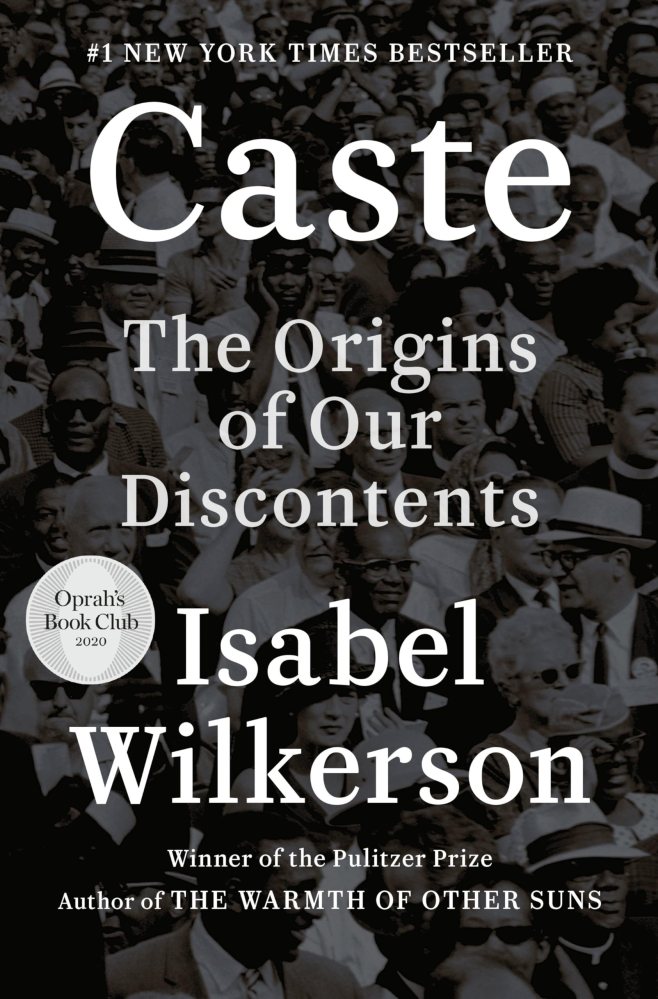
Caste and The Warmth of Other Suns by Isabel Wilkerson

Isabel Wilkerson’s indelible books The Warmth of Other Suns and Caste: The Origins of Our Discontent have, both of them, won awards and have been properly lauded; they don’t need to be touted by me but tout them I shall. They are meticulously researched, precisely written, and pack a devastating emotional punch.  

I have a long commute to work (shout out to my 795 and 695 buds), and I need to fill that time with something. I’m obdurately old school and prefer CDs and radio to podcasts. When NPR is too much (Esther Ciammachilli is never too much) and the Orioles aren’t playing, I check out nonfiction audiobooks from the library. I listened to The Warmth of Other Suns a few years ago and Caste this year; I learned so much from both. The sheer number of primary documents cited is overwhelming. The personal narratives are enlightening and heartbreaking.  

Side note: I’d listen to Robin Miles read a Comcast contract. She narrates both books and she’s a national treasure. I feel like she should win an Oscar or a Grammy – or something. 

The Warmth of Other Suns tells the story of the Great Migration, the movement of millions of African Americans from the South to more Northerly states, through the lives of three people who made the journey. It is intense. I’ve been known to cry in the car, and there were tears.  

Caste is an incredibly persuasive comparison of the caste systems in Nazi Germany, India, and the United States. Wilkerson’s central conceit is that the caste system in America is, in many ways, the most oppressive or violent system. She writes, “Jews in Nazi-controlled Europe, African-Americans in the antebellum and Jim Crow South, and Dalits in India were all at the mercy of people who had been fed a diet of contempt and hate for them” (151). The results of a diet of hate and contempt are unfortunately predictable. Wilkerson explores the grotesque, hateful, and banal violence of the caste system in depth. She writes, “African-Americans were mutilated and hanged from poplars and sycamores and burned at the courthouse square, a lynching ever three or four days in the first four decades of the twentieth century” (155). I won’t focus on the physical violence in this review, but it is all here, and it is terrible.  

Wilkerson includes illuminating episodes from her own life along with historical comparisons. While traveling for the book and for work (at the New York Times), Wilkerson is mistreated by academics, flight attendants, businessmen, and small-business owners, as well as being unjustly accosted by the DEA, all because of her position in America’s caste system. Based on her personal experience, she writes, “this was the thievery of caste, stealing the time and psychic resources of the marginalized, draining energy in an already uphill competition” (223). Outside of the obvious physical violence wrought by the caste system, Wilkerson highlights the daily mental and emotional violence, and that seems really important. 

I’ll end this review with a few more words from Wilkerson on the more subtle ways the caste system continues to do harm. She bluntly writes, “The friction of caste is killing people” and “Societal inequity is killing people” (304). This is not someone who writes for dramatic effect without evidence to support her claims. To back up her claims, she cites a study by a Harvard scientist, “’High levels of everyday discrimination contribute to narrowing the arteries over time,’ said the Harvard social scientist David R. Williams. ‘High levels of discrimination lead to higher levels of inflammation, a marker of heart disease” (306). This struck me. This internal manifestation of external discrimination is horrendous.

The American caste system is real and it is, overtly and insidiously, violent. The study goes on to find that, “People who face discrimination…often build up a layer of unhealthy fat, known as visceral fat, surrounding vital organs, as opposed to subcutaneous fat, just under the skin. It is this visceral fat that raises the risk of diabetes and cardiovascular disease and leads to premature death” (307). There are dozens of powerful and insightful passages I could have highlighted, but I wanted to highlight the above passages because they so powerfully illustrate how the American caste system continues to destroy black and brown bodies from without and within.

Caste: The Origins of Our Discontent by Isabel Wilkerson is available in print, large print, e-book, e-audiobook and audiobook on CD.

The Warmth of Other Suns: The Epic Story of America’s Great Migration by Isabel Wilkerson is available in print, e-book, audiobook on CD, and as a Playaway.

Ben works at Project Literacy, Howard County Library’s adult basic education initiative, based at HCLS Central Branch. He loves reading, writing, walking, and talking (all the basics).

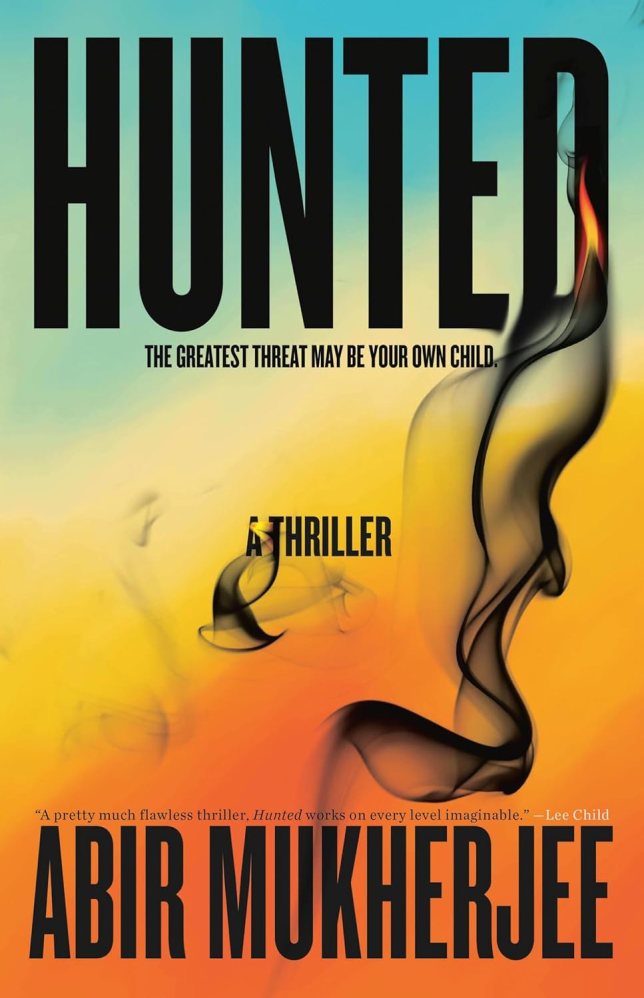
Hunted by Abir Mukherjee

The book cover depicts wisps of smoke and flame against an orange-yellow background, bordered by clouds and a blue sky above.

By Piyali C.

Before I delve into the review of Hunted, I want to let everyone know that I am writing this review under protest. Why, you ask? I have nothing against the book. It was a great thriller, and I am even writing a review for it. My protest is against the author’s decision to leave us with a cliffhanger in his Wyndham and Banerjee series, the last book of which is The Shadows of Men. I was counting days…no, years, for the next one in the series to come out. I was stalking the author’s Instagram profile. Then I saw that he was publishing a stand-alone – Hunted. I will read anything that Abir Mukherjee writes, so of course I got on the holds queue right away and read the book in exactly two sittings. By the way, if you love historical mysteries, you can check out A Rising Man by Abir Mukherjee, the first book in the Wyndham and Banerjee Series. 

Based in the fractured landscape of American politics, Hunted is a fast-paced thriller that had me glued to the pages, so much so that I forgot to look up to enjoy the beauty of the crashing waves in front of me. Yes, I read this book at the beach. 

There has been an explosion in a mall in L.A, and the Sons of Caliphate has claimed responsibility for the carnage. While checking the grainy CCTV footage of mall security, FBI Special Agent Shreya Mistry spots the scared face of a young girl, Yasmin Malik, who had supposedly planted the bomb. Through intuition and clever deduction, she is just one step behind the culprits who have threatened to cause further mayhem as the country is gripped by election fervor. A right-wing candidate is in a tight race against the Democratic vice president, who is running for the presidency of the United States.

Is it really the work of some militant Islamic jihadist group who wants to tip the balance? From the first evidence, it certainly looks that way. Forces within the Bureau want Shreya to back off from this particular case, since Shreya endangers her life repeatedly in her pursuit of the perpetrators. But, is that the only reason that higher-ups want her off this case? Shreya Mistry, on the other hand, feels like she must work doubly hard to prove her worth in a male-dominated agency, being a woman as well as a person of South Asian origin.

A father in London finds out that his 18-year-old daughter has joined the Sons of Caliphate. A mother in the United States also fears that her son is part of this militant group. Neither of them can believe that their children are cunning or cruel enough to pull off this horrible crime. They feel their children are victims themselves, kidnapped by the group. These two parents come together, determined to find their children and take them home. Will they be too late? 

The thriller is certainly a roller coaster ride and definitely a page turner. Like Mukherjee’s other mysteries in my beloved Sam Wyndham Series, social issues are as important to the plot as the mystery. We read about gender inequality, racism, Islamophobia, and other pertinent social issues that are present in our world. The one critique that I have is that the characters lack depth, unlike the characters in his other books. But then again, Mukherjee has set the bar high for his fans. The action and the suspense make up for the less than realistic characters, though. If you are looking for a fast-paced, crisp, suspenseful thriller, look no further.

I grudgingly admit this was an interesting stand-alone, but bring back Sam Wyndham and Sergeant Banerjee, sir. We are waiting!

Hunted by Abir Mukherjee is available in print format. 

Piyali is an instructor and research specialist at HCLS Miller Branch, where she facilitates Light But Not Fluffy and co-facilitates Global Reads. She keeps the hope alive that someday she will reach the bottom of her to-read list.

The World Wasn’t Ready for You by Justin Key

The book cover depicts a variety of geometrical images - a funnel, some parallel lines, and an X - and an arachnid, in various jewel tones against a black background.

by Angie E.

Imagine a collection of stories where Black Mirror (Netflix series) meets Get Out, reminiscent of Octavia E. Butler’s work, blending science fiction, horror, and fantasy to tackle issues of race, class, and prejudice. This thrilling and often heartbreaking debut introduces an extraordinary new voice.

Justin C. Key has been fascinated by monsters since childhood. Growing up reading R. L. Stine’s Goosebumps, he pictured himself heroically battling monsters. However, watching Scream 2, where the only Black couple is swiftly killed off, made him realize that Black and Brown characters in his favorite genre were often the victims or villains—if they appeared at all. In The World Wasn’t Ready for You, Key broadens and redefines the horror genre to delve into themes of race, class, prejudice, love, exclusion, loneliness, and the essence of humanity, exposing the inherent horror within us all.

The opening story, “The Perfection of Theresa Watkins,” begins as a sci-fi love story, but quickly turns nightmarish when a husband employs new technology to transfer his deceased Black wife’s consciousness into the body of a White woman. To secure an early release, a Black inmate joins an experimental medical study in “Spider King” and soon faces disturbing side effects. In the collection’s title story, a father strives to protect his son by teaching him how to maneuver a prejudiced world that perceives him as a threat. “The Quantum Mechanics of the Heart” is an examination of both quantum physics and emotional connections, poignant and intellectually stimulating. Another keeper, “The Last Library,” transports readers to a world where libraries are sentient beings, safeguarding knowledge and memories. The sad beauty of this tale lingers long after the last page.

Key’s writing is lyrical, infused with wonder and empathy. His ability to evoke emotions through speculative scenarios is commendable. Whether it’s a grieving astronaut seeking solace among the stars or a time-traveling violinist chasing echoes of lost melodies, Key’s characters grapple with universal truths. The World Wasn’t Ready for You is a testament to the power of speculative fiction. It challenges conventions, celebrates diversity, and invites readers to question their own existence. Key’s storytelling transcends genres, leaving an indelible mark on the literary landscape.

Angie is an Instructor & Research Specialist at Central Branch and is a co-facilitator for Reads of Acceptance, HCLS’ first LGBTQ-focused book club. Her ideal day is reading in her cozy armchair, with her cat Henry next to her.

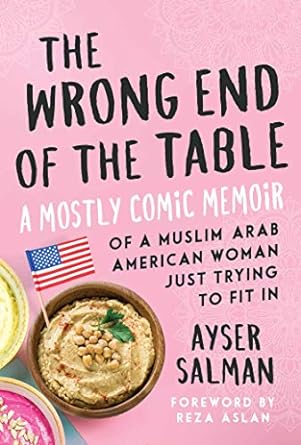
The Wrong End of the Table: A Mostly Comic Memoir of a Muslim Arab American Woman Just Trying to Fit in by Ayser Salman 

The book cover shows a wooden bowl of hummus topped with chickpeas and cilantro, with an American flag on a toothpick poking out of the bowl at the side.

By Piyali C.

I always seek out memoirs written by immigrants, because I am curious whether my experiences in a new country mirror the experiences of others. Everyone’s life is unique; however, facing micro aggressions, intentional or unintentional, seems to be a common theme in each of our stories. That, and trying to find a place at the table. It takes time for immigrants to understand the culture and traditions of the country they emigrate to and it also takes time for them to be understood. An immigrant expends time and energy making sense of their new environment and is accepted (hopefully). The process is not seamless or easy, though. Often, we find ourselves at the wrong end of the table. Ayser Salman explains this beautifully in her memoir, The Wrong End of the Table: A Mostly Comic Memoir of a Muslim Arab American Woman Just Trying to Fit in.

The oldest child of an Iraqi family who fled the fascist regime of Saddam Hussein to give their children better opportunities in the United States, Salman found herself to be the only child in her Columbus, Ohio school of Arab descent, someone who had trouble pronouncing rr’s in the way that the English language demands. In Ohio, little Ayser discovered McDonald’s Egg McMuffins, Barbie dolls and, much to her surprise, kids playing doctor everywhere. This was also a time of struggling to fit in and assimilate with her blonde and blue-eyed White peers. Often confused, often treated differently, often facing derogatory comments about ‘her people’ being terrorists, Ayser Salman navigated through her life, pursuing her career in films and gaining strength of character as an independent Arab American woman. Her parents raised her to be a strong woman and a proud Muslim. While growing up, Salman felt misunderstood and discriminated against due to her identity as an Iraqi American woman, but once she understood intersectionality, she realized the extent of intersectionality existing in our society and felt like she belonged.

Her family, during her teenage years, moved to Saudi Arabia for a few years before returning to Lexington, Kansas. Despite the oppressive rules governing women during the 1980s in Saudi Arabia, Ayser found a sense of belonging among the girls she went to school with, as they shared her religion, culture, and traditions. In Saudi Arabia, she did not stick out like a sore thumb like she did in America. She related to the girls she went to school with, and they formed deep friendships as they experienced puberty together. It was a great irony that in a country where women were repressed, Ayser felt a certain kind of release. 

Once Ayser left for college, she ceased being ‘different ‘ and found acceptance among her peers to some degree. College, unlike her high school, was a microcosm of the world, where people with diverse identities came together for higher education. There was a level of acceptance of differences that Ayser had never experienced before. But 9/11 brought new challenges and she again found herself at the wrong end of the table, vociferously trying to prove to the world that Muslims are not terrorists.  

Ayser Salman talks about racism and micro aggressions in her memoir, but she coats them with a veneer of lighthearted, witty narrative. The racism is made more poignant due to her self-deprecating humor. She writes about her dating experiences with both Arab and non-Arab men, as well as her strong female friends who always had her back but sometimes failed to understand her culture or were insensitive about her Arab identity. She also pays homage to her fierce mother, her scholarly father, and her siblings. Ayser’s conversations with her mother made me laugh out loud, reminding me of similar conversations I have had with mine. 

Ayser Salman’s writing is lucid and flows beautifully. Her humor in describing and responding to serious subjects makes the reading experience delightful. If you are interested in memoirs and/or learning about immigrant experiences like I am, this is a great book for you.  

The Wrong End of the Table: A Mostly Comic Memoir of a Muslim Arab American Woman Just Trying to Fit in by Ayser Salman is available in print format.

Piyali is an instructor and research specialist at HCLS Miller Branch, where she facilitates Light But Not Fluffy and co-facilitates Global Reads. She keeps the hope alive that someday she will reach the bottom of her to-read list.

Celebrating Juneteenth

Juneteenth: Freedom Day appears inside a yellow square atop swashes of color in red, black, green, and yellow.

by Brandon B.

Juneteenth is considered one of the longest-running African American holidays. Juneteenth (short for “June Nineteenth”) is the day in 1865 that federal troops traveled to Galveston, Texas to free all enslaved people living in the state. The troops’ arrival came a full two and a half years after the signing of the Emancipation Proclamation, which abolished slavery in U.S. states that were part of the union. While other citizens were freed from bondage and captivity, the citizens of Texas endured continued hardship and pain. On June 17, 2021, President Joe Biden established Juneteenth as a federal holiday.

We should not look at Juneteenth as simply a day off from work, but a celebration of freedom, peace, and a continued fight for social equity and equality. Though Juneteenth is a day in which we recognize the end of slavery in the U.S., we must also recognize other injustices and freedoms that are worth fighting for. Racism has been a pervasive and powerful tool in preventing minorities from advancing to elite status and higher growth in society. It took one hundred years after Juneteenth to sign the Voting Rights Act of 1965, which allowed people of color the franchise. Even now, gerrymandering and voter suppression efforts seek to prevent people of color from exercising their right to vote. We continue to witness violence against minorities through law enforcement and vigilantism.

We must answer these questions: Are people really free? Has America freed all its citizens from inequality or are we just repeating history? In order to make progress, we must study our dark past. We can change laws and policies, but America has to first change its heart through empathy and understanding.

A great place to visit and study subject matters like Juneteenth is your public library. HCLS has a variety of books and audio-visual materials in our new Equity Resource Center located at the Central Branch. The Equity Resource Center highlights the contributions of individuals from different cultures and select social groups. Let’s continue to serve others and show empathy towards the less fortunate. Happy Juneteenth, America!

Brandon is a Customer Service Specialist at Central Branch who loves reading, football, and taking nice long walks around his neighborhood.

The Solidarity Dividend

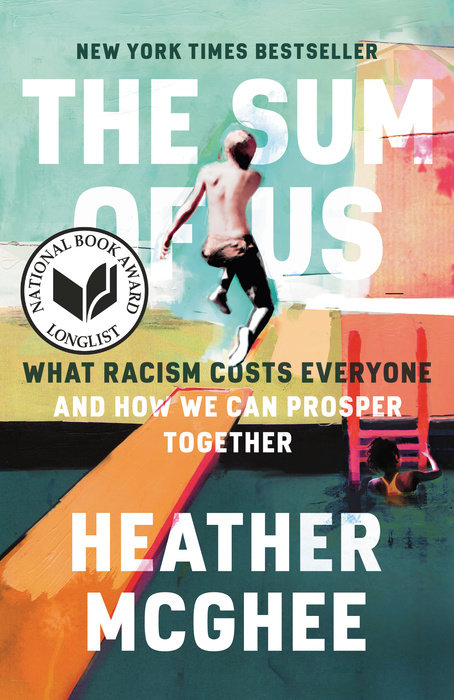
The Sum of Us by Heather McGhee: A cover full of color blocks resolves as a diving board into swimming pool with a white boy jumping off the end and a black girl climbing the ladder.

“I’m a white male, and I am prejudiced.” In August 2016 on C-SPAN’s Washington Journal, public policy expert Heather McGhee, answered the challenge presented by Garry, a caller from North Carolina. He asked, ”What can I do to change, you know, to be a better American?” The video went viral due to McGhee’s reasoned, compassionate response. Thanking the caller for being honest while acknowledging we all have prejudices, McGhee proceeded to offer advice including, “In order to be a demos that is united across lines of race and class and gender and age, we have to foster relationships. We have to get to know who one another actually is.” When McGhee’s book, The Sum of Us, was published, I was curious to learn more from her. After reading it, I especially appreciate McGhee’s insight into how the mentality of “us and them” was built and how we can break it down. 

The Sum of Us: What Racism Costs Everyone and How We Can Prosper Together describes how all ethnic and class groups suffer when racism influences government policy. McGhee researched the roots of economic disparity in the United States and explored causes and solutions from a perspective of unity rather than division. She argues that many problems with wage distribution, education, health care, housing, and environmental policy arise from the concept of a zero-sum game. When citizens perceive one racial group’s gain as another group’s loss, we cannot work for a common good. She documents how everyone loses out when racial hierarchy guides legislation. When public pools are filled with cement to circumvent enforcement of desegregation legislation, all the kids whose parents can’t afford private pools can’t go swimming. Using the concept of the public pool as a central metaphor, McGhee deconstructs how the US reached today’s level of political division and how American society can move forward, allowing all races, ethnicities, and classes to thrive. 

Of course, the idea of “what helps you, hurts me,“ goes beyond kids not being able to cool down in a pool in the summertime. The Sum of Us carefully traces trade union busting, healthcare access gaps, rising costs of public colleges, and the sub-prime mortgage crisis back to racial profiling. The resulting wage stagnation, benefit cuts, student debt, and foreclosures affected all racial groups.  

McGhee’s empathy raises The Sum of Us to a higher level than some other books I’ve read on similar topics. For example, as a self-proclaimed data nerd, she clearly explains the economics of the 2007-2010 financial crisis but then goes beyond the numbers to show, “what was risky wasn’t the borrower; it was the loan.” I gained understanding not only of the economics of the crisis, but the societal toll. Although predatory loan practices were initially targeted at low-income Blacks, later, the loans were pitched to everyone, regardless of their credit status. Many borrowers were eligible for prime mortgages but were manipulated to accept sub-prime mortgages because of the financial bonanza for the lender. McGhee presents this as yet another situation where racism eventually hurt everyone. 

McGhee has coined the phrase “Solidarity Dividend” for the benefits arising from communities collaborating across the racial divide. From minimum wage increases to investment in affordable housing development to improvement in air and water quality, the Solidarity Dividend boosts the economy while enhancing quality of life. “Getting white support to address those different levels of need, and to acknowledge the racism that caused these differences, is never easy – particularly when the zero-sum mental model turns every concession into a threat of loss,” McGhee writes. The Sum of Us demands to be read both for the well-researched documentation of the past and the message for our future.  

By the way, Heather and Garry, a disabled Navy veteran, built a friendship. Garry continues to work on understanding racism and realigning his own thinking. 

Cherise Tasker is an Adult Instructor and Research Specialist at the Central Branch. When not immersed in literary fiction, Cherise can be found singing along to musical theater soundtracks. 

Valentine by Elizabeth Wetmore

The book cover depicts a dust storm across a dry landscape of orange dirt,  with oil rigs and a solitary tree in the distance and purple stormclouds in the sky above.

by Aimee Z.

Content warning for book: sexual assault

1976, Odessa, Texas. The wild oil boom brings equally wild young transients from as far away as Arkansas and the Carolinas. These “roughnecks” work and play hard, drinking all night at the local cantina. When Gloria, a rebellious fifteen-year-old Mexican girl, accepts a truck ride from such a blue-eyed stranger who calls her “Valentine,” she doesn’t expect to be raped, beaten, and left for dead on the dusty Texas range.

She surely doesn’t expect to awake at dawn, shoeless, black-eyed, her spleen ruptured, ribs and jaw busted, watching her rapist sleep off his drunk in the cab of his old truck. But she does. Stealthily, Gloria wills herself over sagebrush and shale, to what first seems a mirage – a farmhouse. 

Gloria bangs on the door and a child answers followed by one of the most gloriously grounded characters in recent fiction, the very pregnant Mary Rose. Gloria is in the worst shape Mary Rose has ever seen. She sees something else, too – way out on that dusty red road, a sky blue truck is racing toward her. 

Mary Rose yanks Gloria inside, shushes her little girl, and waddles out to the front porch to meet Gloria’s sweet-talking rapist with her rancher husband’s Winchester .22.  He’s intent, too, in getting back “his little Mexican gal.”

I found the prose taut and gorgeously written by first-time novelist Wetmore, whose affection for Texas is only surpassed by her fierce and pragmatic women — Mary Rose, Corrine, Gloria, and more. You’ll love them for their pushback, for their ‘Me Too” attitude against the structural racism and ingrained misogyny that defined West Texas oil boomtowns in the 70’s.

Elizabeth Wetmore’s Valentine is also available in eBook and eAudiobook format from Libby/OverDrive. 

Aimee Z. is part of the adult research staff at HCLS East Columbia Branch. She lives on a lake with her two labs, Dixie and Belle, who enthusiastically approved the content of this review in exchange for a peanut butter and jelly biscuit.

Crooked Letter, Crooked Letter by Tom Franklin

The book cover shows two boys running in silhouette against a dark foreground and blue sky with clouds, between two leafy trees.

by Aimee Z.

In a small, forgotten Mississippi town, a vicious crime and a missing girl are like déjà vu for hapless farmer and hermit, Larry Ott. Decades before, the man the whole town still calls ‘Scary Larry,’ took local girl Cindy Walker on his first and only date. The girl never came home, and her body was never found.

Blame fell on Larry Ott, and he became a pariah to everyone, including his parents. But the one person Larry could not bear to lose was his best friend from childhood, Silas Jones. Silas “32” Jones, a black man, once dirt poor, worked hard over the years to earn the respectability he covets as the town’s lawman.

Now another girl – a politician’s daughter – has gone missing. Once more, the town is certain Larry did it. The last thing Silas needs is anything to do with Larry Ott – until he responds to the 911 call: Larry Ott’s been shot by an intruder and is now in intensive care. It doesn’t look good.

Silas’s struggle to do the right thing is what makes this book a small gem. Readers will settle in to assume that this is another insignificant southern town, bristling with economic despair and racism, but they’ll be wrong. Sure, Franklin creates an oppressive atmosphere where heat and kudzu vines flourish, and neighbors get back at neighbors with the occasional cottonmouth snake in the mailbox. Urban legends, racism, ignorance, child abuse, and the small-town need for a whipping boy abound. We need a hero, and refreshingly, Franklin has given that role to Silas.

At the same time, any connection to Larry Ott could put Silas back on that precipice of racism. But as he investigates and pursues the perpetrator, unearthing the bones of an old crime, Silas’s conflicted emotions press to a breaking point. Will he admit to the complicated part he once played in the harrowing life he shared with Larry Ott? If only he could forget turning his back on Larry when Larry needed him most.

Part thriller, part literary fiction, Crooked Letter, Crooked Letter is still a book I want to press into everyone’s hands. I think it should also be part of the high school curriculum. An eloquent and tender story, it will shape any reader’s collective consciousness regarding race and what it means to be a friend. 

Crooked Letter, Crooked Letter is also available from HCLS as an ebook from Libby/Overdrive, and in audiobook format on CD.

Aimee Z. is part of the adult research staff at HCLS East Columbia Branch. She lives on a lake with her two labs, Dixie and Belle, who enthusiastically approved the content of this review in exchange for a peanut butter and jelly biscuit.

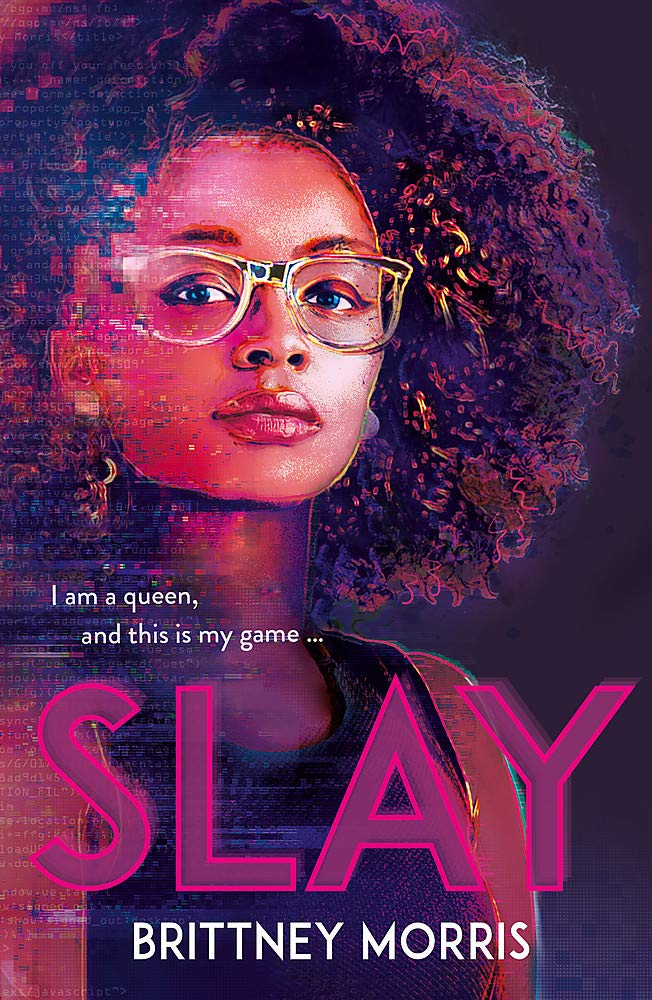
Slay by Brittney Morris

A slightly pixelated picture of a young Black woman with long natural hair and glasses features the quote, "I am a queen and this is my game."

by Eliana H.

“We meet at dawn.” Characters in the online virtual role-playing game Slay confirm duels with that line. In Slay, author Brittney Morris builds two worlds. She shows us the real-life world of high school senior Kiera Johnson, one of the only Black students at Jefferson Academy. We also get a glimpse inside the world of Slay, a video game that Kiera built from the ground up to celebrate Black cultures from around the world. In the game, Kiera is Emerald, a queen who cares for the tens of thousands of players, who use cards inspired by everything from Louis Armstrong to natural hairstyles to battle virtually. But the game Slay is a secret from everyone in Kiera’s real life, as she is confident that none of her friends or family would really understand and appreciate it. The only person Kiera can talk to about the game is Cicada, a friend she met through the game who is now a moderator, but Cicada and Emerald only exchange messages on Whatsapp and don’t know each other’s real names or locations. 

Kiera is preparing to graduate high school, looking ahead to her life in college and beyond, and planning for her future with her boyfriend, Malcolm. She is doing pretty well handling the stress of keeping her worlds separate, until one day when she sees on the news that a boy in Kansas City was killed in his sleep over a disagreement based in Slay. Kiera is devastated, tortured by the guilt she feels that what she created could lead to such a horrific event. Was it her fault? Adding to her distress is the analysis from pundits discussing whether Slay – which is designed specifically for Black players, and which you need a passcode to join – is racist. Of course, many “experts” declare that anything made for Black people and not explicitly welcoming white people is inherently racist. But all Kiera wanted was a place where others like her, who so often find themselves in a world trying to erase them, could shine as the kings and queens that they are. 

Over the course of the book, readers see snippets of other players’ experiences and journey with Kiera through her struggles to face the hard truth of who is threatening to destroy everything she worked so hard to build. 

Slay is also available from HCLS as an ebook through OverDrive/Libby.

Eliana is a Children’s Instructor and Research Specialist at HCLS Elkridge Branch. She loves reading, even if she’s slow at it, and especially enjoys helping people find books that make them light up. She also loves being outside and spending time with friends and family (when it’s safe).