The Stars Too Fondly by Emily Hamilton

The Book Cover depicts two young people, one wearing blue and one wearing brown and gold, reaching out for each other while moving through space in front of a bright heavenly body., with distant stars in the background.

by Eliana H.

What makes someone a person? What is needed to fall in love? How might society grapple with a significant and mystifying setback in their efforts to secure a safe new home for humanity? What might another dimension be like? What are the moral ramifications of destroying a sentient species we can’t begin to comprehend if it means saving humanity? Readers of The Stars Too Fondly by Emily Hamilton may find themselves pondering these and other questions, while also laughing, crying, and maybe falling a little bit in love themselves.

Twenty years ago, humanity’s hope suffered a huge blow. The Providence I, a spacecraft powered by a dark matter engine, was supposed to take its crew of more than 200 people to a planet orbiting Proxima Centauri, where they would establish the first human colony on an exoplanet. Instead, the entire crew vanished at the moment of launch, leaving the empty ship and a very confused populace behind. Cleo McQueary and her best friends were children when the Providence I crew was preparing to launch and then disappeared, and they have grown up under the shadow of the mystery, wondering what happened. 

Due to a troubled relationship with her father, Cleo spends most of her time with those best friends who have become her chosen family, Abe, Kaleisha, and Ros. Each of them was profoundly influenced by the anticipation of the Providence I launch and the disaster of the crew’s disappearance. Now adults, they have spent the past two decades frustrated by Earth’s abandonment of space exploration after being unable to determine what happened to the Providence I crew. And of course, the situation on Earth has continued to deteriorate since then as well. 

Cleo’s insatiable curiosity has led the four friends to devise a “space heist,” where they will break into the abandoned facility owned by now-defunct Erebus Industries and explore the Providence I for themselves. The friends are able to reach the ship surprisingly easily, but things do not go according to plan from there. The dark matter engine activates at Cleo’s touch, and they find themselves heading toward Proxima Centauri B. None of them are trained astronauts, and they haven’t even said goodbye to their families. Thankfully, their topics of expertise are fairly relevant. They also have unexpected help from a holographic version of the original mission’s captain, Wilhelmina Lucas. Captain Lucas looks just the same as they remember, but she’s 20 years behind on what has been happening. And, of course, she’s a computer construction of the real Captain Lucas’s consciousness. 

This particular computer has a lot more personality than readers may be used to, and the book invites readers to consider what constitutes consciousness and sentience – is this version of Billie, as Captain Lucas invites her unexpected passengers to call her, a person? Cleo and her friends certainly come to see her as one, even without ever being able to physically interact with her. The relationships they develop with her certainly push the boundaries of what one would imagine might develop between a human and a hologram. As the group tries to solve the problem of returning home to Earth, they also work to unravel the mystery of exactly what happened on the Providence I all those years ago. Will they be able to find the missing crew? Will they make it home themselves? What else will they discover on their travels? To learn the answers, check out The Stars Too Fondly, a debut described by the publisher as “part space odyssey, part sapphic rom-com.”

Eliana is a Children’s Instructor and Research Specialist at the Elkridge Branch and co-chair of the HCLS Equity Committee. She loves reading, even if she’s slow at it, and especially enjoys helping people find books that make them light up. She also loves being outside and spending time with friends and family (when it’s safe).
Escapism in Science Fiction & Fantasy

by Eliana H.

In the summer of 2022, I had the privilege of attending the American Library Association Annual Conference, which took place in Washington, DC. It was an exciting experience and gave me the chance to meet colleagues from across the country, discover new titles, and expand my professional skills. One of the sessions I attended at that conference has been coming to mind recently. It was called “Finding Joy: Escapism in Science Fiction and Fantasy and Its Impact on How We Approach Our Reality,” and it consisted of a moderated discussion with a group of four women authors of science fiction and fantasy books. The description read: 

You can’t advocate for a world you can’t imagine. Genre fiction has long been a go-to for escapist reading. What makes science fiction and fantasy stories natural places for our hopes and dreams? Can we imagine a world where wishes come true, prejudices are not baked in, and the sky is the starting point and not the limit? We will discuss the worlds of pure imagination and those fueled by a dream for a better tomorrow. 

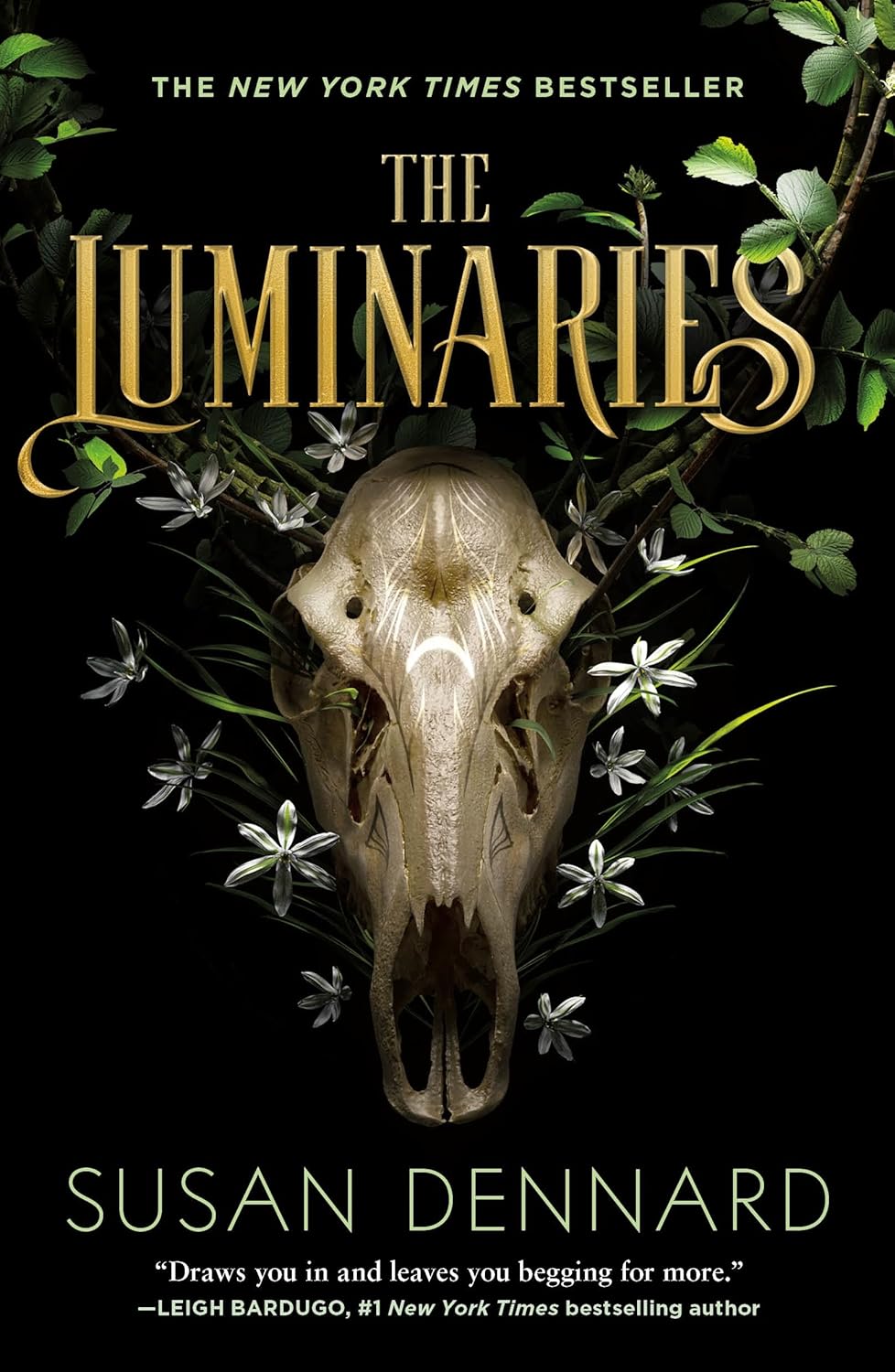
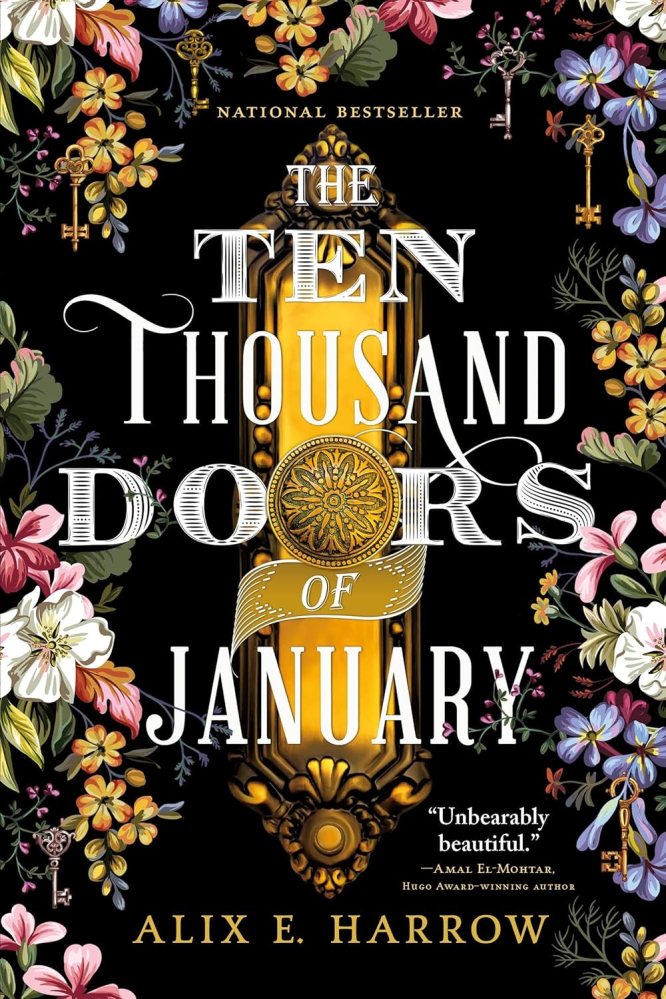
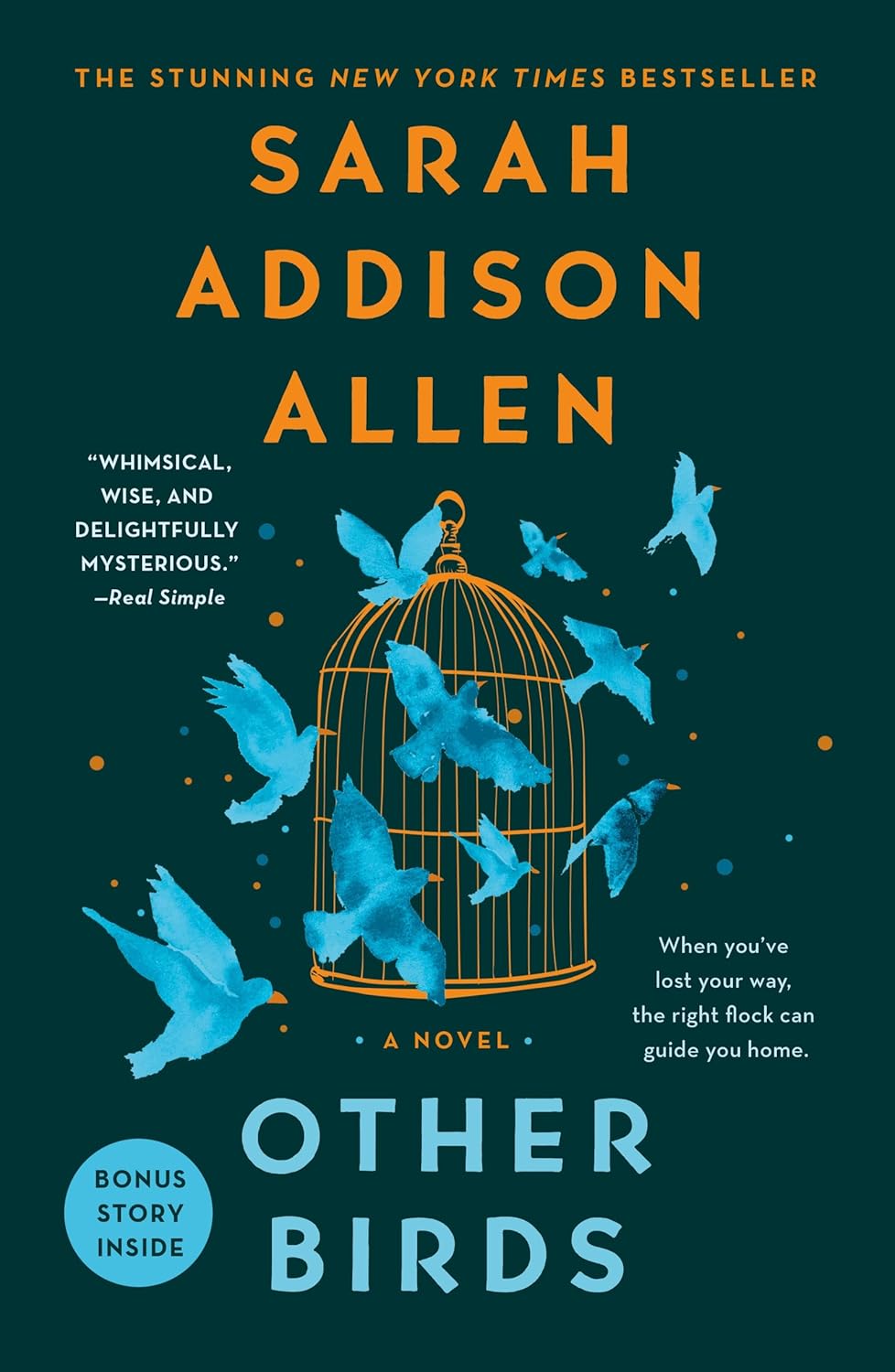
The authors speaking at this panel were Sarah Addison Allen, Alix E. Harrow, Ryka Aoki, and Susan Dennard, and attendees had the opportunity to meet the authors and ask them to sign books after the conversation. How exciting! I will admit that I have not yet made it through all of the books that I picked up at that session – my TBR list takes on a life of its own, and priorities and moods shift over time – but I have read at least one title by each of the authors who participated. 

Even without having read the specific titles they were highlighting, hearing from these authors was impactful. I am a fan of the science fiction and fantasy genres overall, and the focus of this dialogue particularly spoke to me. Being able to imagine a different future for ourselves and our loved ones is powerful. We cannot move toward a reality that we cannot envision. One of our Adult Reading Challenge prompts this summer is to read a book that has supernatural or magical elements. In addition to the titles suggested in our reading journal (stop by any branch to pick one up if you haven’t yet!), books by these authors would be a great fit to complete that challenge. 

Current events can be overwhelming, to say the least. Books provide an opportunity for readers to transport themselves elsewhere, and genre fiction lends itself especially to such departures from everyday life. Even if science fiction and fantasy are not your preference, other genres offer similar getaways. There is a book out there that will provide just the right escape for you. Of course, if you are struggling to find the right title, our staff are happy to share recommendations. Visit one (or more) of our branches this summer and discover exactly the book you need to read right now. 

Eliana is a Children’s Instructor and Research Specialist at the Elkridge Branch and co-chair of the HCLS Equity Committee. She loves reading, even if she’s slow at it, and especially enjoys helping people find books that make them light up. She also loves being outside and spending time with friends and family (when it’s safe).

Mossa and Pleiti series by Malka Older

by Kristen B.

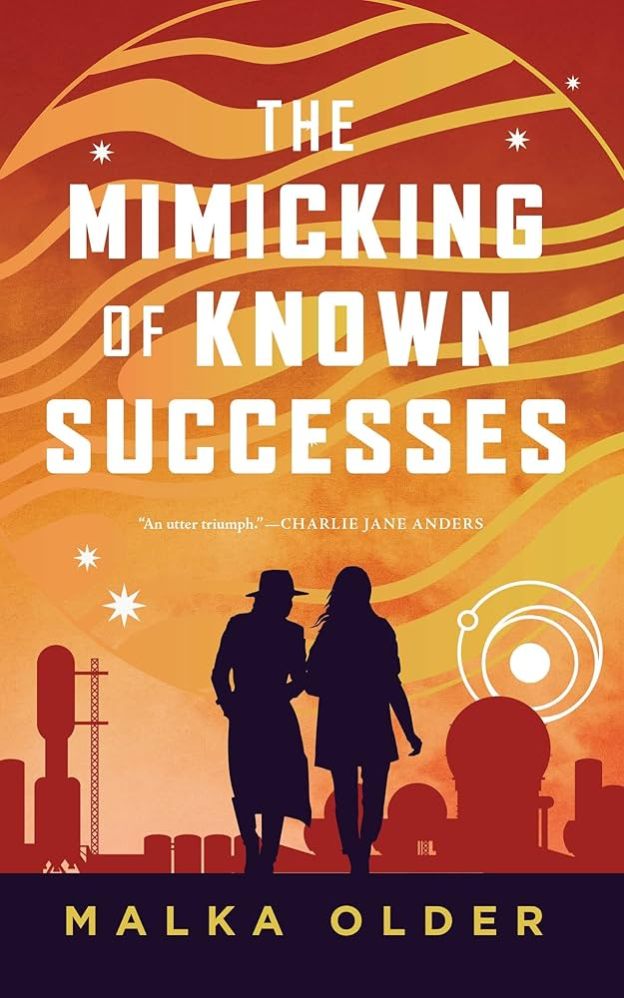
The first two books in a series by Malka Older take place about 500 years in the future. Humanity no longer lives on Earth, a planet we have rendered uninhabitable. Instead, we colonized Jupiter – known as Giant – and some of its moons. A series of platforms and railways encircle the big gas planet, on which farms, businesses, and Valdegeld University exist (or in some cases, subsist). There are three major schools at the university: Classics, Modern, and Speculative. Classics studies literature, history, biology, and more from our planet of origin, trying to figure out how the pieces of well-balanced biospheres (ones not continually in crisis) operate. Modern looks at the issues facing the populace where they are now. Speculative also looks to return to Earth, among other goals, but not (necessarily) to restore it to its former glory. University-level research appears to be the biggest enterprise and employer, upon which the survival of the species relies. It’s rather a pointed observation, given the modern American penchant to argue with experts and deny scientific advancement.

I pieced together most of this synopsis from the information around the edges of Older’s first two short novels in a mystery series that is planned to run for at least five books. Pleiti is tenured faculty at Valdegeld, with a specialty in classic literature. Mostly, she researches how the various elements of biospheres worked together by reading books published when those animals lived on Earth. Mossa is an Investigator, the equivalent of a police detective, who spends most of her time searching for lost people. The two were lovers in their past, who, as the series begins, perhaps look to rekindle their romance.

The two installments to date are a lovely combination of science fiction, college politics, and detective mystery. Pleiti and Mossa are enigmatic people, but you find yourself wanting to know more about them as individuals and a couple.

The Mimicking of Known Successes: A man from the university takes a railcar to a remote platform, then promptly disappears. Mossa is pretty sure that he didn’t jump to his death into the planet, and she ends up at Pleiti’s campus asking questions and looking for help. University politics and personalities mix badly with personal ambitions to see Earth restored. Favorite pieces include atmoscarves, the sheer quantity of scones and tea consumed, and the existence of the mauzooleum where “ancient” breeds of animals are carefully bred and studied. I had to make an effort to keep reading through a fairly slow set-up and was rewarded with an exciting, and rather unexpected, conclusion.

The Imposition of Unnecessary Obstacles: I enjoyed this one more, when I could enjoy the mystery without working to understand the world-building. Mossa and Pleiti once again join forces to solve a case involving missing persons – and a subsequent murder – that requires them to do a fair amount of traveling, including to the moon Io and the far side of Giant. Gourmet snacks once again play a not-inconsiderable role as our valiant pair completes some quality sleuthing. There’s also the mention of an opera named Murderbot, which was a high-quality tidbit. I gobbled up this book over a weekend and appreciated the slightly faster pacing and tighter timeline.

A third installment is scheduled to be published in June, The Potency of Ungovernable Impulses, and I’m already looking forward to it.

Kristen B. is a devoted bookworm lucky enough to work as the graphic designer for HCLS. She likes to read, stitch, dance, and watch baseball (but not all at the same time).

The World Wasn’t Ready for You by Justin Key

The book cover depicts a variety of geometrical images - a funnel, some parallel lines, and an X - and an arachnid, in various jewel tones against a black background.

by Angie E.

Imagine a collection of stories where Black Mirror (Netflix series) meets Get Out, reminiscent of Octavia E. Butler’s work, blending science fiction, horror, and fantasy to tackle issues of race, class, and prejudice. This thrilling and often heartbreaking debut introduces an extraordinary new voice.

Justin C. Key has been fascinated by monsters since childhood. Growing up reading R. L. Stine’s Goosebumps, he pictured himself heroically battling monsters. However, watching Scream 2, where the only Black couple is swiftly killed off, made him realize that Black and Brown characters in his favorite genre were often the victims or villains—if they appeared at all. In The World Wasn’t Ready for You, Key broadens and redefines the horror genre to delve into themes of race, class, prejudice, love, exclusion, loneliness, and the essence of humanity, exposing the inherent horror within us all.

The opening story, “The Perfection of Theresa Watkins,” begins as a sci-fi love story, but quickly turns nightmarish when a husband employs new technology to transfer his deceased Black wife’s consciousness into the body of a White woman. To secure an early release, a Black inmate joins an experimental medical study in “Spider King” and soon faces disturbing side effects. In the collection’s title story, a father strives to protect his son by teaching him how to maneuver a prejudiced world that perceives him as a threat. “The Quantum Mechanics of the Heart” is an examination of both quantum physics and emotional connections, poignant and intellectually stimulating. Another keeper, “The Last Library,” transports readers to a world where libraries are sentient beings, safeguarding knowledge and memories. The sad beauty of this tale lingers long after the last page.

Key’s writing is lyrical, infused with wonder and empathy. His ability to evoke emotions through speculative scenarios is commendable. Whether it’s a grieving astronaut seeking solace among the stars or a time-traveling violinist chasing echoes of lost melodies, Key’s characters grapple with universal truths. The World Wasn’t Ready for You is a testament to the power of speculative fiction. It challenges conventions, celebrates diversity, and invites readers to question their own existence. Key’s storytelling transcends genres, leaving an indelible mark on the literary landscape.

Angie is an Instructor & Research Specialist at Central Branch and is a co-facilitator for Reads of Acceptance, HCLS’ first LGBTQ-focused book club. Her ideal day is reading in her cozy armchair, with her cat Henry next to her.

Cerritos Strong!

by Peter N.

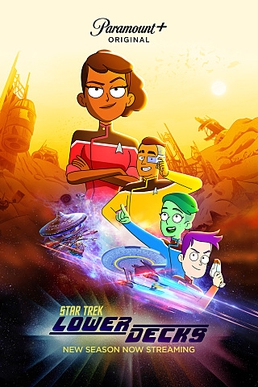
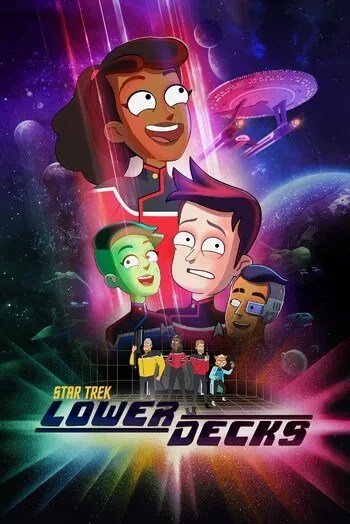
Are you a Star Trek fan? No, we’re not going to get into the longstanding Trekkie vs. Trekker debate. I just want to know whether you’d enjoy some good laugh-out-loud fun in the Trek universe. If so, you need to pick up Seasons 1, 2, and 3 of Star Trek: Lower Decks. One of the recent entries in this new golden age of Star Trek, this animated series stars Ensigns Beckett Mariner, Bradward Boimler, D’Vana Tendi, and Samanthan Rutherford aboard the USS Cerritos. In the Star Trek universe, much prestige is held in the name Enterprise. Well, this show isn’t about the prestige of Starfleet, but rather the workhorses behind everything; namely the California Class ships of which the Cerritos is one.

Charged not with the famous first contacts that the Enterprise and other famous ships conduct, the Cerritos and its crew handle second contacts. In other words, follow-up and cleaning up the messes that are left behind by the more famed ships after they’ve left. It isn’t a great job, but the crew takes pride in what they do, even if they get into some weird hi-jinks along the way. They are a ragtag group of rapscallions that somehow get the job done, along with maybe getting terraformed aboard ship or turned into giant killer scorpion creatures.

As a long-standing Trek fan, I wasn’t sure about how I’d like this show when it was first released but it soon became my favorite of the new Star Treks. Created and written by Mike McMahan of Rick and Morty fame, this show is truly a love letter to the franchise. It is filled with humor, adventure, heart, and more than a starbase full of legacy Star Trek references. This show was created by fans for fans!

Pick up Seasons one, two, or three at your local HCLS branch today!

Peter is an adult instructor at the Miller Branch who has too many books in his TBR pile, too many shows and movies to watch, and wishes that Starfleet was real.

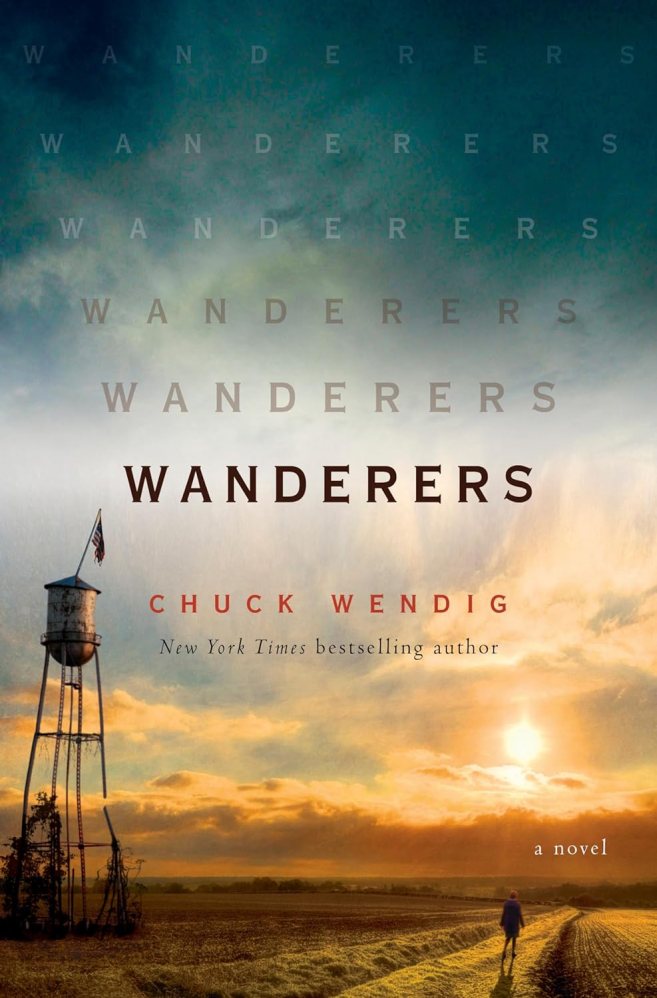
Wanderers by Chuck Wendig

The book cover shows a person with their back to the camera walking down a dusty road in a barren landscape, with the sun peeking over clouds in the distance and an old, broken metal tower to the side, with weeds climbing up at the bottom and an American flag at the top.

By Angie E.

In 1984, during eighth grade, I read The Stand by Stephen King for the first time. Like many other readers of that doorstop novel, I found myself deeply affected. I very well might have read it at too young an age, but don’t horror and middle school often go hand in hand?

The Stand began my fascination with apocalyptic fiction. The genre is like a magnet for our minds, pulling us into worlds where everything we know crumbles. Whether it’s the adrenaline rush of survival, the hope of a new beginning, or the fascination with our own resilience, apocalyptic tales keep us hooked.

Wanderers by Chuck Wendig is a worthy contender in the genre, being a gripping science fiction novel that weaves together mystery, suspense, and a touch of dark humor. The tale begins with Shana, who wakes up one morning to discover her little sister afflicted by a strange condition, sleepwalking, unable to communicate, and inexorably drawn toward an unknown destination. Soon, Shana realizes that her sister is not alone; other sleepwalkers from across America join the mysterious journey. These sleepwalkers are accompanied by “shepherds” who protect their loved ones during this perilous passage. As the sleepwalking phenomenon spreads, terror and violence grip America.

The real danger isn’t the epidemic itself, but the fear it instills. Society collapses, and a brutal militia threatens the sleepwalkers. Wanderers introduces a game-changing shock halfway through the book, and Wendig’s smooth prose and dark humor keep the narrative engaging, even as it explores the end of the world. His storytelling keeps readers hooked from start to finish, making him a worthy contemporary of the master himself, Stephen King.

Wanderers is available from HCLS in print and in e-book and e-audiobook format.

Angie is an Instructor & Research Specialist at Central Branch and is a co-facilitator for Reads of Acceptance, HCLS’ first LGBTQ-focused book club. Her ideal day is reading in her cozy armchair, with her cat Henry next to her.

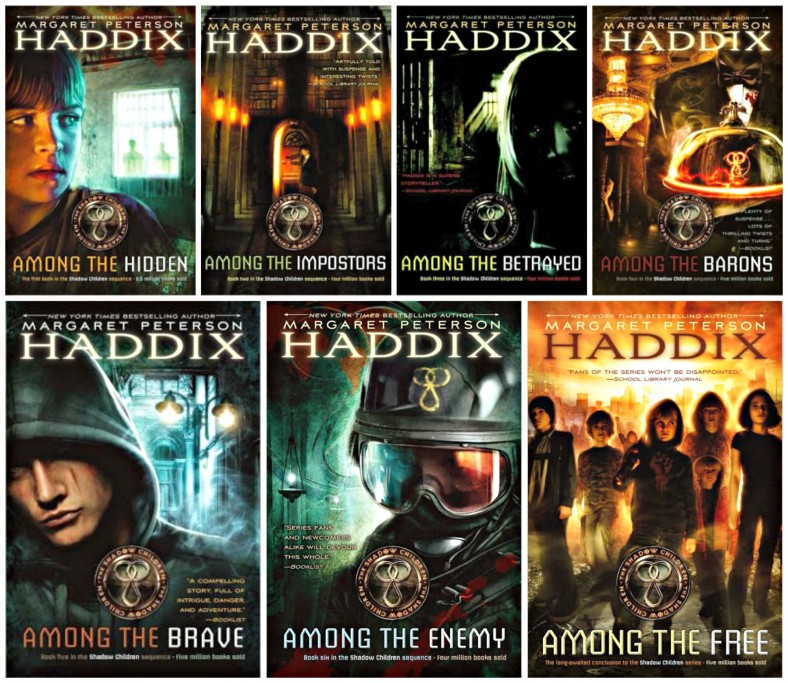
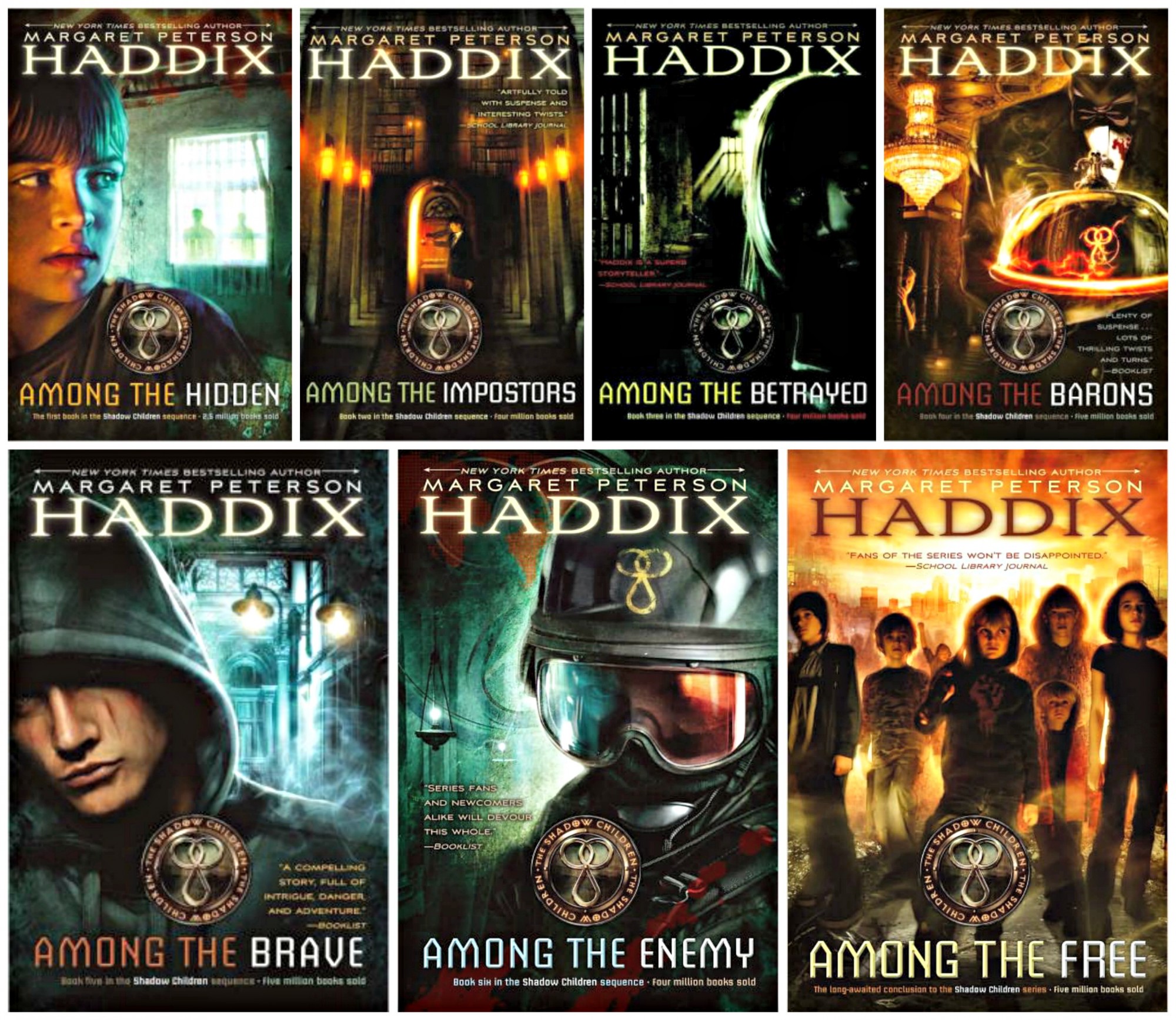
The Shadow Children Series

A compilation of the seven book covers in Margaret Peterson Haddix's children's series, The Shadow Children.

by Monae R.

Normally I would ask, “Have you ever wanted to stay home from school for a few days and just sleep or read or play video games? To be able to do absolutely nothing, minding your own business in your home?” However, the world just went through that exact thing. Some of us had to work, some of us did not. Some of us sat and read books that whole time and some of us played outside and celebrated.

Remember being stuck in the house, unable to go to the store, unable to get groceries. Now go one step further and imagine you could not open your windows to see the outdoors; you could not listen to music, the radio, or TV. Imagine you could not go anywhere, see anyone, or entertain yourself at all. You could only sit and hide, reading or quietly playing cards, until your family came home, and even then, you still had to hide away from them while you ate.

The Shadow Children series by Margaret Peterson Haddix has an entirely new feeling and meaning now that we have experienced something similar. There is not a global pandemic or plague, but instead, the government has made it illegal for folks to have more than two children. Our main character, Luke, is on a journey to change that. He has spent 13 years as an illegal third child.

Luke’s mother, his father, his two brothers, and their farm are all he has ever known. He could run and play at the farm without anyone seeing him, with the forest surrounding his house so he could feel the breeze on his face, watch the leave change colors in the fall, feel the rain falling as it watered the crops. His farm was soon taken away. With nowhere to hide and nothing to shelter him from view, he was forced back inside, into the attic, into the dark. This was the last straw for Luke and he couldn’t bear it anymore. He needed a friend.

We follow his feelings as a third child, the relationships he develops, and the danger he flees after close encounters with the population police. Read to find out if he succeeds in making all third children free. Can a third child survive in the world when all they had was a poor family’s farm and a book that explained nothing of the world outside the attic?

Start With Book 1: Among the Hidden (also available in e-book and e-audiobook formats)

Then continue with the rest of the series. Have you read them all?

Book 2: Among the Imposters

Book 3: Among the Betrayed

Book 4: Among the Barons

Book 5: Among the Brave

Book 6: Among the Enemy

Monae is a Children’s Instructor and Research Specialist at HCLS East Columbia Branch.

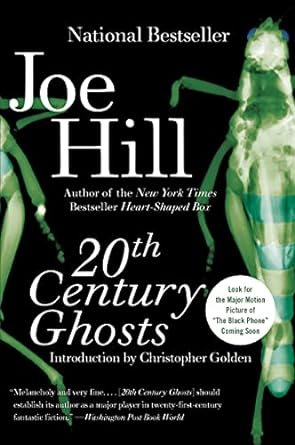
Twentieth Century Ghosts by Joe Hill

The book cover has glowing images of two bugs in iridescent green and blue against a black background.

by Angie E.

I like Joe Hill’s fiction, no matter which selection it is. I am particularly drawn to and sometimes revisit his amazing anthology 20th Century Ghosts. The collection comprises 15 short stories, each with its own unique theme and style. Joe Hill’s versatility shines through as he explores various aspects of horror, from traditional ghost stories to psychological thrillers. The stories are infused with elements of fantasy, science fiction, and dark humor, creating a diverse and engaging reading experience. 

The opening story, “Best New Horror,” sets the tone for the entire collection. It tells the tale of a jaded horror fiction editor who stumbles upon a manuscript that takes him on a horrifying journey into a world he could never have imagined. Hill’s use of meta-fiction in this story adds layers of complexity to the narrative, leaving readers with much to ponder. 

Joe Hill’s ability to create compelling characters makes his fiction unforgettable. Whether it’s a young boy who can transform into a living comic book character in “Pop Art” or the ghost of a movie projectionist in “The Projectionist,” his characters have a depth and humanity that gives the supernatural elements all the more a stirring and relatable feel. Hill’s skill in creating atmospheric settings also permeates the collection. Whether it’s a creepy movie theater, a haunted tunnel, or a sinister roadside attraction, the locations in these stories are as much a part of the narrative as the characters themselves. The sense of place adds to the overall immersion and tension in each tale. 

While horror is its primary genre, 20th Century Ghosts doesn’t rely solely on scares. Many of the stories delve into deeper emotional territory, exploring themes of love, loss, and the complexities of human relationships. “Better Than Home” and “Voluntary Committal” are poignant examples of Hill’s ability to tug at the heartstrings. Joe Hill’s imaginative storytelling is a defining feature of this collection. He doesn’t rely on clichés or tired horror tropes; instead, he constantly surprises the reader with fresh ideas and innovative twists. “My Father’s Mask” and “The Black Phone” are prime examples of his originality and the ability to keep readers on the edge of their seats. 

The titular story, “20th Century Ghosts,” is a beautiful and melancholic piece that serves as a fitting conclusion to the collection. It explores the idea that we are all haunted by the past in one way or another, and Hill’s prose resonates long after the final page is turned. 

Angie is an Instructor & Research Specialist at Central Branch and is a co-facilitator for Reads of Acceptance, HCLS’ first LGBTQ-focused book club. Her ideal day is reading in her cozy armchair, with her cat Henry next to her.

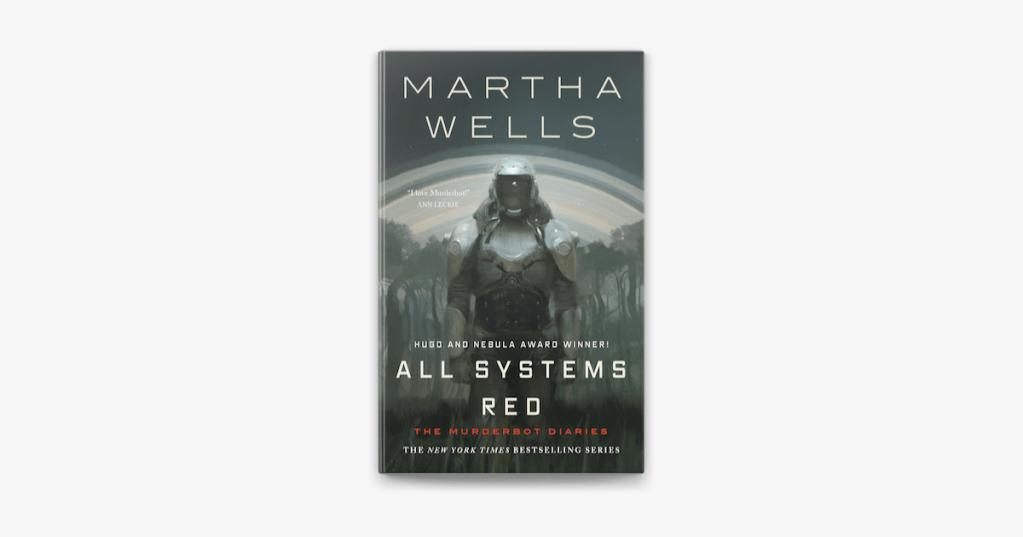
The Murderbot Diaries by Martha Wells

The cover has a grey palette, showing a space-armored figure with a closed helmet with a lit arch behind them.

by Tony B.

Ever wondered what an intelligent security robot would do without a functioning governor module? Murder? Watch Netflix? Save innocent lives? Contemplate sentience?

The Murderbot Diaries, a series by Martha Wells, explores answers to all these questions. Free of their governor module, the eponymous Murderbot leads us through their adventures with corporate warfare, angry megafauna, the (mostly) human experience, and the need for a nice quiet spot to watch interstellar tele-novellas. The first four novellas operate as a one long story arc, even with each book being a complete story, about why Murderbot has named themself in such a way and the repercussions from that particular episode. Along the way, Wells introduces Dr. Mensah and her family, who become important, along with ART – another high functioning artificial intelligence.

Originally a normal Security Unit (SecUnit for short) deployed by The Company, a security bond corporation, Murderbot hacks and destroys their controlling governor module which normally would zap the brain of any SecUnit displaying less-than-utterly-obedient behavior. Now free to do whatever they want, MurderBot inexplicably keeps working for the corporation but with newfound access to the wider net of media with which to distract themselves. 

The Murderbot Diaries are full of dry wit and snarky observations of the human condition, notably that humans tend to put themselves in a lot of unknowing danger. Compound that with galactic dangers and MurderBot ends up as one very busy SecUnit. The series now has six installments (four novellas and two novels) that follow Murderbot and a recurring cast of characters.

MurderBot’s interaction with risk-averse humans is one of the driving issues, beginning in All Systems Red. To MurderBot, the clash between how humanity is portrayed through their favorite space soap operas and how humans actually behave is a constant dissonance which leads to a healthy distrust of the human condition. Hence their thoughts along the lines of, “freedom to be treated like a real human? No thanks.”

Seeing sci-fi action through the lens of a non-human thought process is interesting, where priorities are generally “protect the weak humans from whatever stupid situation they find themselves” and less “be the hero.” SecUnit often ends up being a hero in the end despite themself and equally isn’t sure how to feel about it. MurderBot experiences emotion rather strongly at times but codes, to some degree, as being on the autism spectrum. They have a difficult time expressing those emotions and processing others’ emotional states, as well as the confusion at not always being able to control emotions that well up within them.

As a series, I give it a 9/10. Obvious tropes are usually immediately made fun of a la “oh that’s what the space soaps would do.” MurderBot also reminds me heavily of the 2015 movie CHAPPiE, about a robot who gains independence, but who is perhaps more impressionable in relation to humans than MurderBot ever is.

The Murderbot Diaries, a Hugo and Nebula award-winning series, consists of the following books, available from HCLS in these formats:

The seventh book, System Collapse, is due to be published in November 2023.

Tony is a Customer Service Specialist at HCLS Elkridge Branch. He has a degree in history and a renewed interest in science fiction.

The Three-Body Problem by Cixin Liu

A science fictional cover shows floating object in front of a mysterious pyramid, with strange devices in the background, all done in a monochromatic blue palette.

By Gabriela P.

If you ever find yourself having trouble finding your next book to read, take my advice – choose a science fiction novel. I’m sure most people associate the genre with high-tech futures, robot butlers, and mind-bending math equations, but the most important aspect of the genre comes from the wonder of discovery. Experimentation, analysis, deduction: all keys to jump start intellectual excitement. Even if many of Cixin Liu’s novels may touch on those first, stereotypical themes.

The Three-Body-Problem begins in the middle of China’s Cultural Revolution in the mid-1960s. From the perspective of a persecuted academic, the immediate result is a strong emotional hook. A woman, Ye Winjie, watches as her father is killed during a riot. She is sent to a labor camp and then to a hidden scientific facility, where she begins to use her background training in astrophysics. A test radio signal sent up into space results in an unexpected response eight years later. The alien civilization at the other end are the Trisolarians, from Trisolaris. As the book’s title says, they face a problem. Their world orbits three stars in an unpredictable pattern, continuously destroying civilization and leaving the inhabitants to restart. Earth and Trisosolarians become connected, with Earth being the Trisolarian’s new hope at finding a habitable planet. With 450 years to prepare, humans have to figure out what to do.

This highly inventive book jumps between time periods and across the universe. As the story slowly unfolds, the reader is constantly left to wonder, “where is this going to go next?” Keeping in mind that the book is the first in a trilogy, the scale of Liu’s world-building is astounding. The book is definitely not a quick read, but fans of scientific info-dumps will enjoy those sections. Regardless, the time taken to explore tangents and add description is ultimately fascinating and an experience you’ll remember for years. Or at least, until you read the sequels.

The title is available as a book, an e-book, and an e-audiobook.

Gabriela is a customer service specialist at the Miller Branch. She loves long walks, reading with her dog, and a good cup of coffee.